Dr Qin Xinyu Shanghai Zhongshan Hospital: Stomach Cancer Surgery Costs & Expert Laparoscopic Care
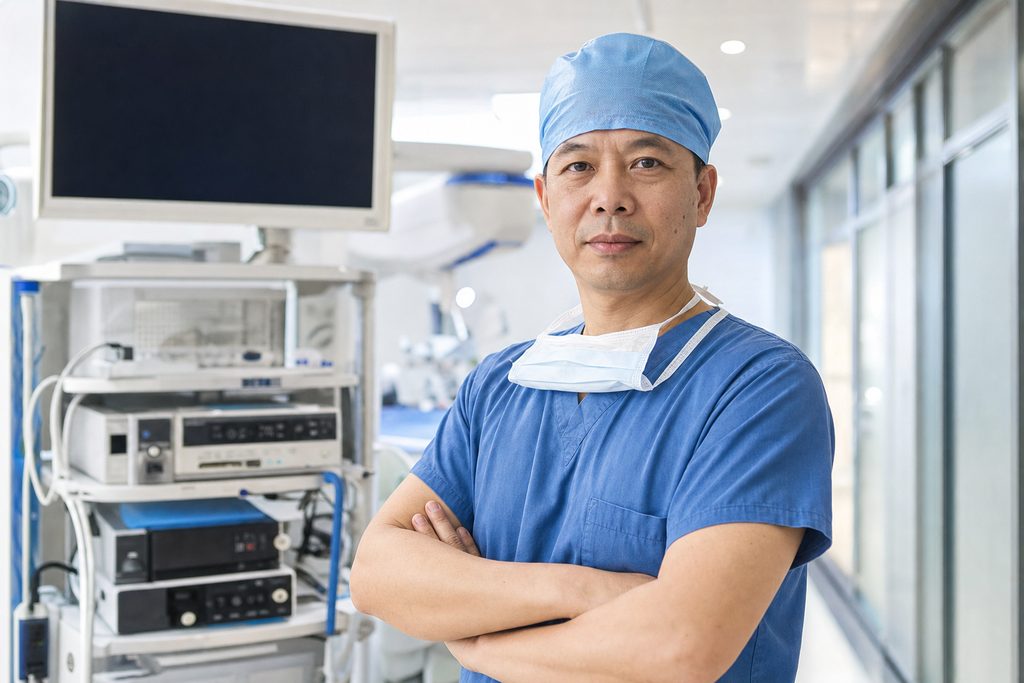
What if the surgeon who performs your stomach cancer procedure has done this exact operation thousands of times more than any specialist you could find back home?
That is not a hypothetical question. It is the reality facing patients who look beyond their borders for gastric cancer care. And it is why a specific name keeps surfacing in international patient circles: Dr Qin Xinyu, a general surgeon at Shanghai Zhongshan Hospital whose laparoscopic gastrectomy volume puts him in a category few Western surgeons ever reach.
We are going to unpack what that means for you. The costs. The success rates. The logistical puzzle of getting from your home country to an operating table in Shanghai. And the honest barriers that make this path challenging to walk alone.
Key Takeaways
- The Dr Qin Xinyu Shanghai Zhongshan Hospital stomach cancer surgery cost typically ranges from $15,000 to $28,000 USD — roughly one-fifth to one-third of what the same procedure costs in the United States or Western Europe.
- Shanghai Zhongshan Hospital’s general surgery department performs over 2,000 gastric cancer operations annually, with laparoscopic approaches now exceeding 60% of cases — a case volume that directly correlates with better patient outcomes.
- International patients cannot simply book an appointment with Dr Qin Xinyu through a public registration system. The standard outpatient channel requires physical presence and a queue that may stretch weeks. The hospital’s International Medical Center offers a structured pathway, but it requires coordination you cannot manage from overseas without local support.
- Laparoscopic gastrectomy at this center carries a 5-year survival rate for early-stage gastric cancer exceeding 90%, matching or exceeding outcomes reported by top Western cancer centers — at a fraction of the cost.
The Problem: Stomach Cancer Surgery Costs Are Breaking Patients Financially
Gastric cancer remains the fifth most common malignancy worldwide, with approximately 1.1 million new cases diagnosed each year according to the World Health Organization’s GLOBOCAN database. For patients in the United States, a diagnosis comes with a second shock: the bill. A laparoscopic gastrectomy with lymph node dissection at a major US academic medical center runs between $80,000 and $150,000. That is before chemotherapy. Before complications. Before the extended hospital stay that roughly 20% of patients will need.
Insurance helps, of course. But even with coverage, out-of-pocket maximums in many US plans leave patients staring at $15,000 to $25,000 in deductibles and coinsurance. For uninsured or underinsured patients — and there are millions — the numbers are catastrophic. Medical bankruptcy is not a rare outcome. It is a documented pattern. A 2019 study in the American Journal of Public Health found that cancer patients are 2.65 times more likely to declare bankruptcy than the general population.
European patients face a different problem. Wait times. In the UK’s NHS, the target is 62 days from urgent GP referral to first treatment. Reality often stretches beyond that. Canada’s median wait for cancer surgery hovers around 4 to 6 weeks. When you have an adenocarcinoma growing in your stomach wall, every week matters. The biology does not negotiate.
So patients start searching. They type phrases into Google late at night. Best laparoscopic surgeon for gastric cancer China. How much does stomach cancer surgery cost in Shanghai. Book appointment Dr Qin Xinyu general surgeon Shanghai. They find fragmented information. Outdated forum posts. A hospital website in Mandarin they cannot read. They need a clear answer. That is what we provide here.
Who We Are
We are China Medical Services. We are not a hospital. We do not employ doctors, we do not provide medical treatment, and we will never offer you a clinical diagnosis. What we do is simpler and more specific: we are the logistical bridge between you and China’s top-tier medical institutions. Our team handles the coordination that makes treatment abroad possible — hospital matching based on your actual diagnosis, appointment scheduling through official international patient channels, bilingual medical companions who stand beside you through every consultation and payment counter, and the visa guidance that gets you here legally and safely. We work with 340+ top-ranked hospitals across 37 cities. Shanghai Zhongshan Hospital, where Dr Qin Xinyu practices, is one of them. We know its systems. We know how to navigate them. And we are going to explain exactly what that navigation looks like.
Why Dr Qin Xinyu and Shanghai Zhongshan Hospital Deliver Results
Volume Creates Expertise No Western Center Can Match
Here is a number that matters. Shanghai Zhongshan Hospital’s Department of General Surgery performs more than 2,000 gastric cancer resections annually. The department has been a national leader in gastrointestinal surgery for over four decades. Dr Qin Xinyu operates within a system where laparoscopic distal gastrectomy and total gastrectomy are not occasional procedures — they are daily work.
Compare that to a typical US surgical oncologist. The average American general surgeon performs perhaps 5 to 10 gastrectomies per year. A high-volume specialist at a major cancer center might reach 30 or 40. Dr Qin’s personal case volume — while not publicly disclosed in precise figures — sits within a department that handles more stomach cancer cases in a single month than many Western hospitals see in a year.
Volume is not just a number. A 2015 study in the New England Journal of Medicine demonstrated a clear inverse relationship between hospital gastrectomy volume and 30-day mortality. Centers performing more than 20 gastrectomies annually had significantly lower perioperative death rates than low-volume centers. Shanghai Zhongshan operates at a scale that makes 20 cases look like a slow week.
This matters for laparoscopic surgery in particular. Laparoscopic gastrectomy is technically demanding. It requires a surgeon who can work with reduced tactile feedback, navigate complex vascular anatomy through a screen, and perform precise lymph node dissection without the open field a traditional incision provides. The learning curve is steep. Studies suggest a surgeon needs approximately 40 to 60 cases to achieve proficiency in laparoscopic gastrectomy. After 100 cases, outcomes measurably improve. After 500, the surgeon enters a different league entirely.
What Is the Success Rate of Laparoscopic Gastrectomy in China?
Patients ask this question constantly. They deserve a direct answer. For early-stage gastric cancer treated with laparoscopic distal gastrectomy at major Chinese centers like Zhongshan Hospital, the 5-year overall survival rate exceeds 90%. That figure comes from published institutional data and aligns with outcomes from top Japanese and Korean centers — countries that, like China, have among the highest gastric cancer surgical volumes in the world.
For locally advanced disease, outcomes are more variable. But a 2020 meta-analysis published in JAMA Surgery, which pooled data from multiple high-volume Asian centers including Chinese hospitals, found that laparoscopic gastrectomy produced equivalent long-term oncologic outcomes to open surgery for advanced gastric cancer — with the added benefits of less blood loss, shorter hospital stays, and faster recovery of bowel function.
The complication rate for laparoscopic gastrectomy at Zhongshan runs below 10% for major adverse events. That is consistent with top international benchmarks. The hospital’s general surgery department also maintains a dedicated enhanced recovery after surgery (ERAS) protocol, which means most patients are mobilized within 24 hours of their operation and discharged within 5 to 7 days — roughly half the length of stay common in Western hospitals for the same procedure.
How Much Does Stomach Cancer Surgery Cost in Shanghai?
Let us address the question that brought many readers here. The Dr Qin Xinyu Shanghai Zhongshan Hospital stomach cancer surgery cost for an international patient typically falls between $15,000 and $28,000 USD. That range covers the surgeon’s fee, anesthesia, operating room charges, a standard hospital stay of 5 to 10 days, and routine postoperative care. It does not include preoperative imaging if you need it repeated, extended ICU stays, or treatment for complications — those variables depend entirely on your individual case.
Here is how that compares:
| Procedure | Shanghai Zhongshan (International Patient) | United States (Average) | United Kingdom (Private) |
|---|---|---|---|
| Laparoscopic Distal Gastrectomy | $15,000 – $22,000 | $80,000 – $120,000 | £35,000 – £55,000 |
| Laparoscopic Total Gastrectomy | $20,000 – $28,000 | $100,000 – $150,000 | £45,000 – £65,000 |
| Open Gastrectomy (complex) | $18,000 – $25,000 | $90,000 – $140,000 | £40,000 – £60,000 |
These figures are not promises. They are benchmarks based on cases we have coordinated. Your actual cost depends on tumor stage, the extent of lymph node dissection required, whether you need a total or subtotal gastrectomy, and how your body responds to surgery. But the structural cost difference is real. It is not about lower quality. It is about economics: lower labor costs for hospital staff, higher throughput that spreads fixed costs across more patients, and a healthcare system that simply does not carry the administrative overhead burden that bloats American hospital bills.
The Laparoscopic Advantage: Faster Recovery, Same Oncologic Outcome
Dr Qin Xinyu’s expertise centers on an approach that has transformed gastric cancer surgery over the past two decades. Laparoscopic gastrectomy uses small incisions — typically five or six ports, each less than a centimeter wide — through which a camera and instruments are inserted. The surgeon operates while watching a high-definition monitor. For the patient, the benefits are tangible: less postoperative pain, a shorter incision line that heals faster, reduced risk of wound infection, and a quicker return to eating and moving.
The concern patients sometimes voice is whether the laparoscopic approach compromises cancer clearance. It does not. Multiple randomized controlled trials, including the landmark KLASS-01 trial from Korea and the CLASS-01 trial from China, have demonstrated that laparoscopic distal gastrectomy with D2 lymph node dissection achieves equivalent disease-free survival to open surgery for early and locally advanced gastric cancer. The key is the surgeon’s skill — and that is where volume becomes the deciding factor.
Zhongshan Hospital was among the first Chinese centers to adopt laparoscopic gastrectomy as a standard approach. The department began performing these procedures routinely in the early 2000s. Today, more than 60% of gastric resections at the hospital are completed laparoscopically. Dr Qin has been operating in this environment for years. His experience is not theoretical. It is built on thousands of cases.
What You Need to Know Before Going Alone
The clinical case for seeking care at Shanghai Zhongshan Hospital is strong. But the practical barriers are real. We do not sugarcoat this. Patients who try to arrange everything independently often hit walls they did not anticipate.
- You Cannot Book an Appointment with Dr Qin Xinyu from Overseas Through the Public System: The standard outpatient registration at Zhongshan Hospital requires you to present identification in person at the hospital’s registration counter. You queue. You get a number. You wait. There is no online portal in English that lets you select a specific surgeon and secure a time slot. The public registration system is designed for domestic patients who can walk through the door. For international patients, the pathway runs through the hospital’s International Medical Center — a separate channel with different procedures, different pricing, and a gatekeeping process that requires medical documentation in advance.
- Language Is a Non-Negotiable Barrier: Shanghai Zhongshan Hospital is a Chinese public hospital. The signage is in Mandarin. The registration terminals are in Mandarin. The nurses at the inpatient wards speak Mandarin and Shanghainese. A few staff members at the International Medical Center speak English, but once you move to the surgical floor, the operating theater, or the billing office, you are in a Mandarin-only environment. If you cannot communicate your symptoms, understand discharge instructions, or ask questions about your medication, you are in trouble. We have seen patients try to manage with translation apps. It does not work well. A bilingual medical companion is not a luxury in this environment — it is a safety requirement.
- Payment Systems Do Not Work the Way You Expect: The hospital requires prepayment. You deposit funds before admission, and the hospital draws down from that deposit as charges accrue. International credit cards are accepted at the International Medical Center, but the standard hospital payment counters may only process UnionPay or domestic bank transfers. If you run low on your deposit mid-treatment, someone needs to top it up — in person, at a specific counter, during business hours. Your overseas insurance is unlikely to be directly billed. You pay first, then seek reimbursement. These are solvable problems. But they require someone on the ground who understands the system.
- A Stomach Cancer Surgery Package at Shanghai Zhongshan Hospital Does Not Exist as a Standard Product: You may have searched for a stomach cancer surgery package Shanghai Zhongshan Hospital international patient. Let us be clear: the hospital does not sell prepackaged surgical bundles the way a medical tourism agency might market them. Your treatment plan is built around your specific diagnosis. The surgeon determines the approach after reviewing your imaging, pathology, and staging. The hospital’s International Medical Center can provide cost estimates once they have your medical information, but the final bill reflects what actually happens in the operating room and during recovery — not a flat fee agreed upon in advance. This is why we always say costs vary by hospital and case complexity. It is not a hedge. It is the truth.
How We Help You Navigate This
A laparoscopic gastrectomy at Shanghai Zhongshan Hospital for an international patient typically costs between $15,000 and $28,000 USD. The same procedure in the United States averages $80,000 to $150,000. The price difference reflects structural economic factors — lower labor costs, higher patient throughput, and less administrative overhead — not a compromise in clinical quality. Shanghai Zhongshan’s outcomes for gastric cancer surgery are comparable to top Western cancer centers.
For early-stage gastric cancer, the 5-year overall survival rate after laparoscopic gastrectomy at major Chinese centers exceeds 90%. This matches outcomes from high-volume centers in Japan and South Korea. For locally advanced disease, laparoscopic approaches produce equivalent long-term survival to open surgery when performed by experienced surgeons, with the added benefits of faster recovery and fewer wound complications. The key variable is surgeon experience — which is why choosing a high-volume center matters.
You need an S2 visa with a notation specifying medical treatment as the purpose of your visit. Your accompanying family members also apply for S2 visas. Do not apply for an M visa — that is a business visa and is not appropriate for medical travel. The hospital’s International Medical Center provides an invitation letter that supports your visa application. We guide you through this process and ensure your documentation is correct before you submit it to the Chinese embassy or consulate in your home country.
Shanghai Zhongshan Hospital is a tertiary referral center with a full intensive care unit, 24-hour emergency surgical coverage, and specialists in every relevant subspecialty — interventional radiology, clinical nutrition, medical oncology. If a complication occurs, the resources to manage it are on-site. That said, no surgery is risk-free. Laparoscopic gastrectomy carries a major complication rate below 10% at this center, consistent with international standards. We recommend you discuss specific risk factors with Dr Qin’s team during your consultation. We also strongly advise securing medical travel insurance that covers complication management and extended hospital stays. We can recommend providers familiar with China’s healthcare system.
Your Next Step
You have been reading this because stomach cancer has touched your life or the life of someone you love. You are looking for a path forward that does not bankrupt you and does not compromise on the quality of surgical care. Shanghai Zhongshan Hospital and surgeons like Dr Qin Xinyu represent a legitimate option — one backed by case volumes, survival data, and cost structures that make treatment accessible when it might otherwise be out of reach.
The barriers are real, but they are navigable with the right support. If you want to understand whether this path makes sense for your specific diagnosis, start a conversation with our team. We review your medical information, provide an honest assessment of your options, and outline what coordination would look like — no pressure, no commitment. Visit our patient coordination page to begin. You can also explore our directory of top-ranked hospitals in China or learn more about specialty departments including oncology and general surgery to understand the broader landscape of care available to you.
The decision is yours. The information should be too.
Frequently Asked Questions
Yes. We work with JCI-accredited and major Grade 3A tertiary hospitals that follow international safety standards comparable to top hospitals in the US and Europe. Surgical teams perform high volumes of procedures — often more than their Western counterparts — which studies show leads to better outcomes.
Costs vary by procedure and hospital, but international patients typically save 40-80% compared to US prices — even when factoring in travel and accommodation. A consultation with our team will give you an exact, all-inclusive quote with no hidden fees.
Send us your existing medical reports. The relevant specialty reviews them and gives you a written opinion, including treatment direction and options, before you commit to any travel. From there you can add a video consultation with the doctor, or have us attend an appointment on your behalf.
For more medical information and treatment options in China, visit chinamedservices.com (China Medical Services).
