Cancer Hospital Wait Times in China: Guide for International Patients
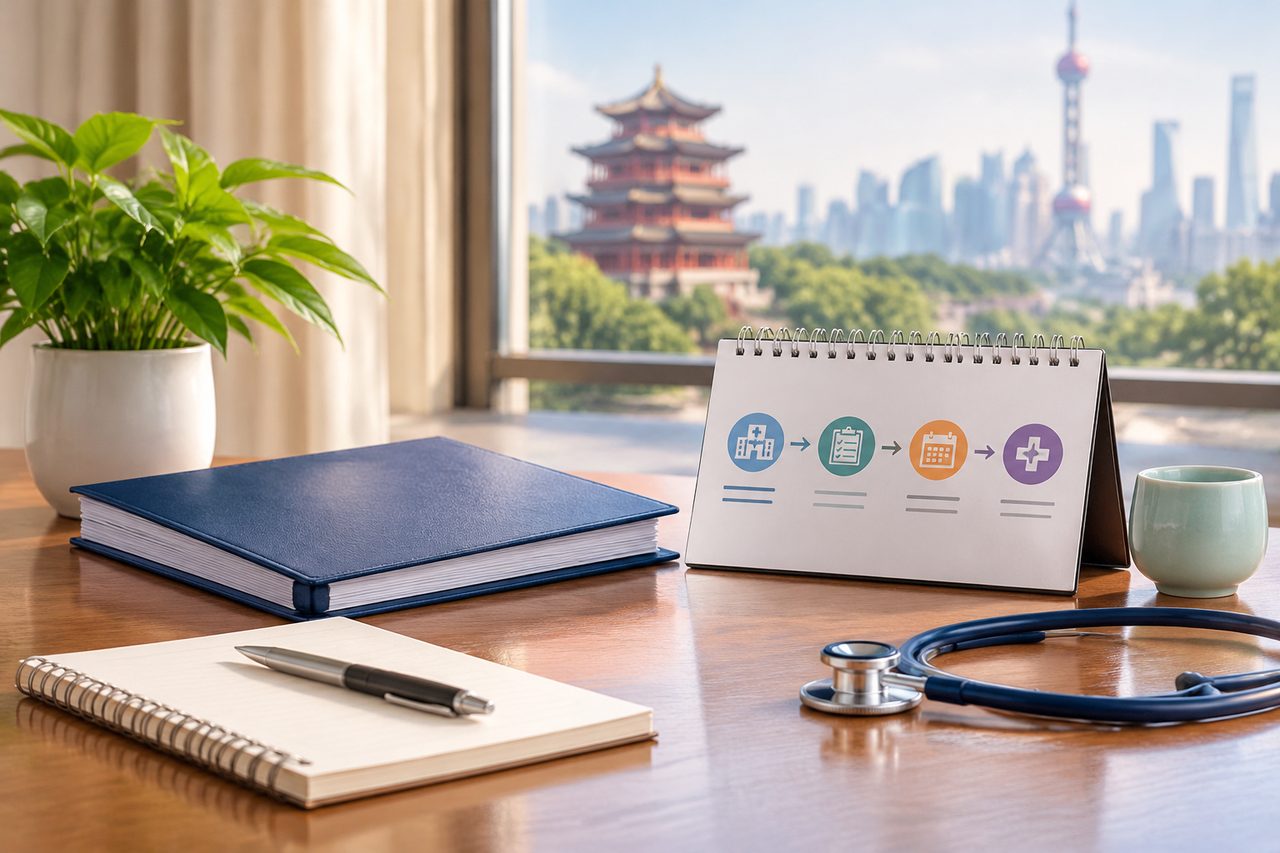
How This Actually Works, Step by Step
If you are considering cancer care in China, the first thing to understand is that there is no single national waiting list. Access runs through individual hospitals, and the path from first contact to treatment is a sequence of separate steps, each with its own timeline. Understanding that sequence is more useful than any single “wait time” figure, because the number you read online rarely matches your own situation.
In practice, the journey looks like this. You gather your existing records — pathology reports, imaging (CT, MRI, PET scans), biopsy results, blood work, and any treatment history — ideally translated into English or Chinese. A Chinese specialty team reviews those records, either as a written second opinion or through a video consultation, and tells you whether your case is one they can meaningfully help with and what further workup would be needed. Only after that evaluation does it make sense to discuss travel. If you proceed, the next step is an in-person consultation at the hospital, because in Chinese public hospitals surgery and most active treatment are scheduled only after a doctor has seen the patient face to face. Registration, the hospital medical card, and the appointment itself are handled through the hospital’s international department or a coordination service. From there, admission and the treatment plan follow the hospital’s own rules and the specialist’s judgment.
That is the honest shape of it. The wait is not one queue — it is the sum of several smaller waits, and some of them you can shorten while others you cannot.
What “Wait Time” Really Means for Cancer Care in China
The phrase “cancer hospital wait times in China” gets searched as if there were a published number, like an emergency-room clock. There isn’t one, and any article that hands you a single figure — “two weeks,” “three months” — is simplifying something that varies enormously by hospital, department, cancer type, and how urgently your case is classified.
It helps to break the wait into its parts. The first is record review and remote evaluation, which typically takes days to a couple of weeks depending on how complete your documents are and how quickly translations are ready. The second is appointment lead time — how far ahead a given department’s international clinic is booked. At busy oncology departments in major cities, this can range from a few days to several weeks. The third is the diagnostic gap: Chinese specialists will often want their own imaging or pathology before committing to a plan, and repeat tests add time. The fourth is scheduling of treatment itself — surgery, radiation, or systemic therapy — which depends on operating-room availability, the specialist’s caseload, and whether additional preparation (such as pre-operative assessment) is required.
One structural fact shapes all of this. China’s top public hospitals are very large, with outpatient volumes that can exceed ten thousand visits a day at the biggest institutions. General outpatient registration is typically same-day and queued in person; it cannot usually be reserved from abroad in advance. That is precisely why international departments and VIP channels exist — they offer scheduled appointments, English-speaking staff, and a more predictable process, at roughly 1.5 to 2 times the standard-channel price. Understanding which channel you are in tells you far more about your likely wait than any general statistic.
How Cancer Hospital Cost China and Wait Times Interact
Wait times and cost are not separate questions. The channel you choose affects both, and the diagnostic workup you complete before traveling affects both as well.
On cost, the widely reported advantage of treatment in China is real but must be stated carefully: for comparable procedures, published comparisons frequently place Chinese tertiary-hospital fees at a fraction of U.S. charges — often cited in the range of one-fifth to one-tenth for major surgery. Those figures describe procedure-level fees at top public hospitals and vary by hospital and case complexity; they are not all-inclusive quotes and do not include travel, accommodation, interpretation, or the cost of complications. Private international hospitals with JCI accreditation and direct insurance billing sit at a different price point entirely, closer to Western rates but with Western-style service and English-speaking staff throughout.
The practical link to waiting is this: arriving with a complete, translated record set and a remote evaluation already done means you spend less time in China before treatment starts — and time in China is money. Conversely, arriving without records often triggers a repeat workup that adds both days and expense. A staged approach — written second opinion first, then a decision about travel — usually reduces unnecessary early trips. Our team at China Medical Services structures consultations this way for exactly that reason.
A Realistic Timeline
General outpatient registration at public hospitals is typically same-day and in person, so it usually cannot be reserved from overseas. International departments and VIP channels do allow scheduled appointments, generally at 1.5 to 2 times the standard-channel price. A coordination service can help secure an international-department appointment, though no service can guarantee a specific doctor or date.
For comparable major procedures at top public hospitals, fees are frequently reported at one-fifth to one-tenth of U.S. charges, but this varies by hospital and case complexity and excludes travel, accommodation, and interpretation. Private international hospitals cost considerably more. Always request a written estimate for your specific case.
This does happen, and it is valuable information. You would return home with a written assessment to share with your own oncologist. A reputable coordination service will not pressure you to proceed against medical advice.
Your Next Step
Wait times in China are not a single number but a sequence you can partly control — and the earlier steps, especially record preparation and remote evaluation, are the ones that save the most time. China Medical Services connects international patients with top-ranked Chinese hospitals and handles the logistics of getting there; we are not a medical provider and do not make clinical decisions or promises about outcomes. If you would like to understand what is realistic for your situation, you can request a free consultation and we will walk through the options with you, without pressure.
This article is for general information only and is not medical advice. Treatment decisions should always be made with a qualified physician who has reviewed your individual case.
For more medical information and treatment options in China, visit chinamedservices.com (China Medical Services).
