Pituitary Adenoma Surgery China: 90% Hormonal Remission at Shanghai Huashan Hospital
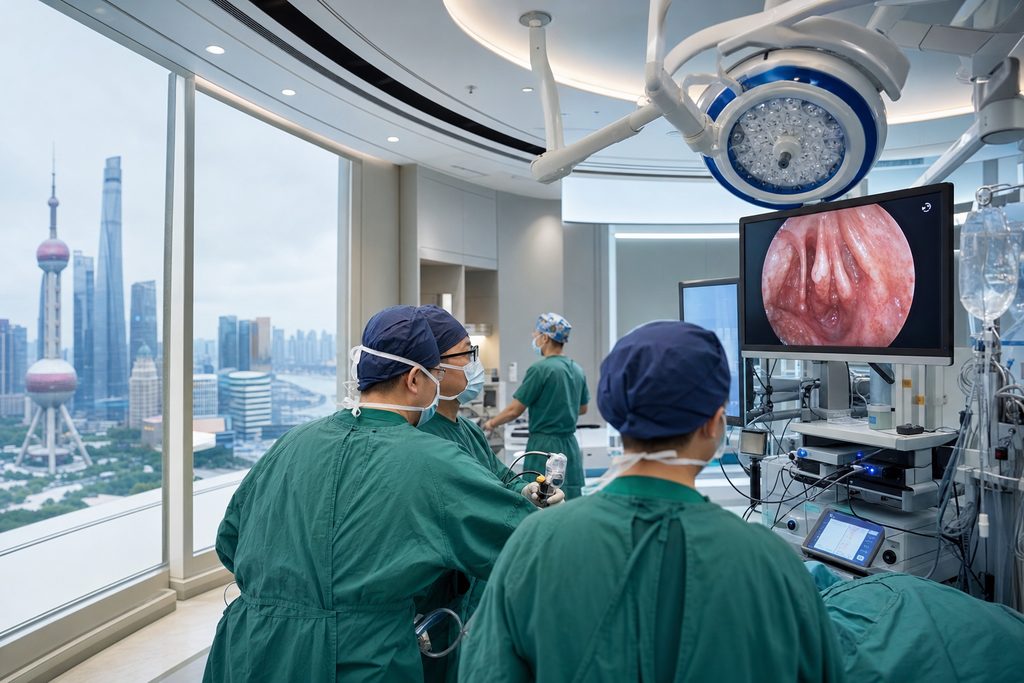
You have probably heard the warning. Surgery abroad means gambling with quality. The data from Shanghai tells a different story entirely.
For functioning pituitary adenomas—the tumors that pump excess hormones into your bloodstream and dismantle your health month by month—the metric that matters most is hormonal remission. Did the surgery actually cure the disease? At Huashan Hospital‘s Neurosurgery Department in Shanghai, the answer is yes for approximately 90% of patients undergoing endoscopic transsphenoidal resection. That number is not a marketing claim. It comes from peer-reviewed surgical series published by the department, which performs over 3,000 pituitary procedures annually. To put that volume in perspective: many major Western pituitary centers report 50 to 150 cases per year. Volume drives proficiency. Proficiency drives results. The logic is not complicated.
But understanding pituitary adenoma surgery cost China requires looking beyond a single number. The price tag, the hospital choice, the visa logistics, the language barrier—these pieces form a puzzle that can feel impossible to solve from a laptop in London or Los Angeles. Our team exists to solve that puzzle. We are not a hospital. We do not provide medical treatment or clinical diagnoses. We are your logistical architects—we bridge the gap between you and China’s top-tier medical expertise, handling everything from hospital matching to bilingual accompaniment so you can focus entirely on recovery.
Key Takeaways
- Shanghai Huashan Hospital achieves approximately 90% hormonal remission rates for functioning pituitary adenomas using advanced endoscopic resection techniques, backed by over 3,000 procedures annually.
- Total pituitary adenoma surgery cost China ranges from $18,000 to $35,000 USD—roughly one-fifth to one-tenth of comparable US surgical fees—without sacrificing clinical outcomes.
- Navigating China’s public hospital system independently is extremely difficult for non-Chinese speakers; international patients require either the hospital’s VIP international department or a professional coordination service.
- S2 visa requirements, upfront payment protocols, and postoperative monitoring logistics must be arranged before travel—spontaneous medical tourism does not work in this system.
The Problem: A Tumor You Cannot See Stealing Your Health
Pituitary adenomas affect approximately 1 in 5 people by autopsy studies, though symptomatic cases are less common. The functioning ones—prolactinomas causing infertility and bone loss, GH-secreting tumors triggering acromegaly, ACTH-secreting adenomas driving Cushing’s disease—destroy quality of life in slow motion. Weight gain that defies diet. Facial changes that make you avoid mirrors. Hypertension that medication barely touches. A 2019 study in The Journal of Clinical Endocrinology & Metabolism found that patients with Cushing’s disease wait an average of three to five years between symptom onset and definitive diagnosis. Three to five years of your body breaking down while doctors chase the wrong explanations.
Once diagnosed, the next hurdle is surgical access. In Canada and the UK, wait times for non-emergent pituitary surgery can stretch six to twelve months. In the United States, the bottleneck is financial. Even with insurance, out-of-pocket costs for transsphenoidal surgery at major academic centers routinely exceed $15,000 to $30,000 after deductibles and coinsurance. Uninsured patients face bills of $80,000 to $150,000. Some patients simply cannot wait that long while their tumor grows toward the optic chiasm. Others cannot afford the price of staying local.
This is where the calculation shifts. If you need surgery and your home country’s system cannot deliver it on terms you can accept, the question is not whether to look abroad. The question is where abroad delivers outcomes that justify the journey.
Who We Are
We are China Medical Services, a medical concierge organization that connects international patients with China’s 340+ top-ranked hospitals across 37 cities. We do not perform surgery. We do not prescribe medication. We handle the architecture of your medical journey—hospital selection based on your specific diagnosis, appointment coordination through official international departments, medical document translation, S2 visa guidance, bilingual accompaniment during every clinical encounter, and logistical support from airport pickup to hotel arrangements. Think of us as your local operations team in a country where language, payment systems, and hospital workflows are fundamentally different from what you know. We exist because brilliant surgeons cannot help you if you cannot reach them.
Why Shanghai Huashan Hospital Delivers These Results
The question “what is the success rate of pituitary surgery in China” leads directly to Huashan. The hospital’s Department of Neurosurgery, founded in 1952, is consistently ranked among China’s top three neurosurgery programs in the Fudan University Hospital Rankings. Its pituitary tumor center operates as a dedicated subspecialty unit—not a general neurosurgery ward that occasionally handles pituitary cases.
Volume Creates Expertise
Three thousand pituitary procedures per year. That is roughly eight surgeries every single day, including weekends and holidays. A typical US pituitary surgeon might perform 20 to 40 cases annually. Research published in Neurosurgery has demonstrated a clear volume-outcome relationship for transsphenoidal surgery: surgeons performing more than 50 cases per year achieve significantly lower complication rates and higher gross total resection rates than lower-volume operators. At Huashan, the pituitary team’s surgeons each far exceed that threshold.
This volume also means the entire perioperative ecosystem—anesthesiologists, neuro-endocrinologists, ICU nurses, pathology lab technicians—sees pituitary cases constantly. They recognize complications early because they have seen them hundreds of times. The lab processes pituitary specimens daily. The endocrinology team manages postoperative hormone replacement protocols as routine work, not occasional puzzles.
Endoscopic Technique as Standard of Care
Huashan adopted fully endoscopic transsphenoidal resection as its standard approach years ago, moving beyond the older microscopic technique still used in some centers. The endoscope provides a panoramic view of the surgical field. It allows the surgeon to see around corners—to identify tumor invading the cavernous sinus or suprasellar cistern that a microscope’s straight-line view would miss. This matters enormously for hormonal remission. If even a few millimeters of functioning adenoma remain, the disease continues. The endoscope’s superior visualization directly enables the 90% remission rate the department reports.
Is endoscopic pituitary surgery safe abroad? The question deserves an honest answer. The endoscopic approach itself carries a safety profile comparable to or better than microscopic surgery, with systematic reviews showing cerebrospinal fluid leak rates of 2-5%, meningitis risk below 1%, and new anterior pituitary deficiency in 5-15% of cases depending on tumor size and invasiveness. Huashan’s published complication rates align with these international benchmarks. The safety question is less about the technique and more about the system around it. A hospital performing thousands of endoscopic cases annually has protocols hardened by repetition. That institutional experience is the safety net.
Cost Structure Without Quality Compromise
Let us address the elephant in the room directly. Pituitary adenoma surgery cost China is dramatically lower than Western prices. Why? The answer is structural, not qualitative.
Chinese public hospitals operate on a high-volume, lower-margin model. Surgeon salaries, while competitive domestically, are a fraction of US neurosurgeon compensation. Hospital construction costs, nursing labor, and pharmaceutical pricing all reflect China’s broader economic structure. A transsphenoidal resection at Huashan Hospital Shanghai endoscopic resection price typically ranges from $18,000 to $35,000 USD for international patients using the hospital’s VIP international department. This covers the surgeon’s fee, anesthesiology, operating room charges, inpatient stay (usually 5-7 days), nursing care, and standard postoperative medications. The same procedure at a major US academic center bills at $80,000 to $150,000 for uninsured patients.
The lower price does not reflect lower quality. It reflects different economics. The surgeons training at Huashan complete the same residency length as their Western counterparts. The hospital uses the same endoscopic equipment—Storz, Medtronic, Brainlab navigation systems. The sterilization protocols meet Joint Commission International standards in the international wing. You are paying less because the system costs less to operate, not because corners are cut.
| Cost Component | China (Huashan VIP International) | United States (Academic Center) |
|---|---|---|
| Surgeon Fee | $4,000–$7,000 | $15,000–$30,000 |
| Anesthesia & OR | $5,000–$8,000 | $20,000–$40,000 |
| Inpatient Stay (5-7 days) | $3,000–$6,000 | $20,000–$35,000 |
| Imaging & Labs | $2,000–$4,000 | $8,000–$15,000 |
| Medications & Supplies | $2,000–$5,000 | $10,000–$20,000 |
| Total Range | $18,000–$35,000 | $80,000–$150,000 |
All figures are estimates in USD. Actual costs vary by tumor size, surgical complexity, length of stay, and specific hospital pricing policies. International department pricing differs from standard public ward pricing.
What You Need to Know Before Going Alone
The clinical argument for choosing Huashan is strong. The logistical reality of accessing it independently is brutal. We tell every prospective patient this upfront because surprises in a foreign hospital are the worst kind of surprise.
- Language Is an Absolute Barrier: Huashan’s public wards operate entirely in Mandarin Chinese. Registration forms, consent documents, medication instructions, discharge summaries—you cannot read any of them. Nurses on standard floors rarely speak medical English. Even finding the right building on Huashan’s sprawling campus requires reading Chinese signage. The international VIP department provides English-speaking staff, but accessing that department requires coordination before arrival. You cannot simply show up at the main lobby and expect to navigate to the right office.
- Payment Happens Upfront: Chinese public hospitals, including their international departments, require payment before treatment. You will need to deposit the estimated surgical fee upon admission. Credit cards are accepted at international departments, but bank transfer limits and fraud alerts on foreign cards frequently cause problems. Insurance reimbursement happens after the fact—you pay the hospital, then file with your insurer. Direct billing arrangements are rare outside private international hospitals like United Family or Jiahui, which do not perform complex neurosurgery.
- Medical Records Must Be Professionally Translated: The neurosurgeon reviewing your case needs your MRI reports, hormonal panels, ophthalmology assessments, and prior treatment records in Chinese. Google Translate will not suffice for “cavernous sinus invasion” or “immunohistochemistry positive for ACTH.” Professional medical translation is mandatory, and it takes time. Rushing this step leads to miscommunication that no one catches until it matters.
- S2 Visa Requirements Are Specific: Medical treatment in China requires an S2 visa with a specific annotation for medical purposes. This is not a tourist visa. The application requires an invitation letter from the treating hospital, proof of appointment, and documentation of your medical condition. Getting these documents from Huashan without a local coordinator means weeks of emails, phone calls at odd hours, and a high probability of rejection for incomplete paperwork. The accompanying family member needs their own S2 visa, not a tourist L visa. Getting this wrong means being turned away at the border.
How We Help You Navigate This
These barriers exist for structural reasons, not because anyone wants to exclude international patients. China’s hospital system was built to serve 1.4 billion domestic patients first. International patient services are a relatively new layer, and the infrastructure is still maturing. Our role is to be the bridge that makes that layer functional for you.
The process starts with your medical records. You send us your MRI images, hormonal bloodwork, visual field testing, and any prior surgical or medication history. Our medical team translates these documents into clinical Chinese and prepares a case summary tailored to the neurosurgical department’s review format. We submit this package to Huashan’s international department and coordinate a formal review by a pituitary-specialist neurosurgeon. This step typically takes five to ten business days.
Once the surgeon confirms that your case is appropriate for treatment at Huashan, we handle the appointment coordination. This is not a simple calendar booking. It involves scheduling a preoperative consultation, securing an operating room slot, arranging the inpatient bed, and coordinating with the endocrinology team for postoperative management. We provide you with a detailed timeline: when to arrive in Shanghai, when your consultation occurs, when surgery is scheduled, and how long you should plan to stay for initial recovery before being cleared to fly home.
The S2 visa process runs in parallel. We work with Huashan’s international department to obtain the official invitation letter and medical documentation required by Chinese consulates. We guide you through the application, review your paperwork before submission, and troubleshoot if your local consulate raises questions. We also handle the visa application for your accompanying family member.
On the ground in Shanghai, our bilingual medical companion meets you at the airport, accompanies you to every clinical appointment, translates in real time during your surgeon consultation, and stays with you through hospital admission. During your inpatient stay, the companion visits daily to ensure communication between you and the nursing staff remains clear. When discharge instructions come—and they will be in Chinese—we translate them into English and review them with you point by point.
After you return home, the coordination does not end. Pituitary surgery requires long-term endocrine follow-up—cortisol levels, thyroid function, repeat MRI at three to six months. We facilitate communication between your home endocrinologist and the Huashan surgical team, ensuring that postoperative instructions are understood and that any late complications are promptly addressed. This continuity is often the missing piece in medical travel. Without it, patients feel abandoned once they leave the hospital. We designed our service specifically to close that gap.
Frequently Asked Questions
What is the success rate of pituitary surgery in China at Huashan specifically?
For functioning pituitary adenomas—tumors that secrete excess hormones—Huashan’s published series report hormonal remission rates of approximately 90% following endoscopic transsphenoidal resection. This means that in roughly nine out of ten cases, hormone levels return to normal and remain normal at follow-up. For non-functioning adenomas, the goal is gross total resection (complete tumor removal), which is achieved in 80-90% of cases depending on tumor size and cavernous sinus involvement. These figures are comparable to outcomes reported by top-tier pituitary centers in North America and Europe. The difference is volume: Huashan’s team achieves these results while performing an order of magnitude more procedures annually than most Western centers.
How do I book pituitary adenoma surgery at Huashan hospital as a foreign patient?
Direct booking as an individual is challenging. The hospital’s international department handles foreign patient coordination, but initial contact typically requires Chinese-language communication and submission of professionally translated medical records. The most practical path is either contacting the international department directly (expect delays and language friction) or working with a medical coordination service like ours that has established relationships and streamlined submission protocols. The key point: you cannot book surgery remotely without first having your case reviewed by a Huashan neurosurgeon. That review requires complete medical documentation. Surgery dates are assigned only after the surgeon accepts your case and you complete an in-person preoperative consultation in Shanghai.
Is endoscopic pituitary surgery safe abroad, and what complications should I expect?
Endoscopic transsphenoidal pituitary surgery carries a well-established safety profile regardless of where it is performed, provided the surgeon and hospital meet minimum volume standards. The most common complications include transient diabetes insipidus (excessive urination due to temporary antidiuretic hormone disruption, occurring in 10-20% of cases and usually resolving within days), cerebrospinal fluid leak (2-5%, typically repaired during the same surgery if identified), and new anterior pituitary hormone deficiency (5-15%, managed with lifelong hormone replacement). Serious complications—carotid artery injury, meningitis, permanent visual loss—occur in less than 1% of cases at high-volume centers. Huashan’s complication rates are consistent with these international benchmarks. The safety question is best reframed as a volume question: choose a surgeon and hospital that perform this procedure frequently, and the safety data works in your favor.
What does pituitary adenoma surgery cost China include, and what additional expenses should I plan for?
The surgical package at Huashan’s international department—$18,000 to $35,000 USD—typically covers the surgeon’s fee, anesthesiology, operating room, standard inpatient stay of five to seven days, routine postoperative medications, and basic nursing care. It does not include your international airfare, visa fees, accommodation before and after hospitalization, meals outside the hospital, postoperative imaging if extended stay is required, or any complication-related extended care. You should budget an additional $5,000 to $10,000 for travel, lodging, and incidentals. Our coordination services are separate from hospital fees and are quoted based on the specific scope of support you need, starting from $300 for basic appointment coordination.
Which hospital is best for pituitary tumor removal in Shanghai?
Shanghai Huashan Hospital is widely regarded as the best hospital for pituitary tumor removal in Shanghai and one of the top three neurosurgery centers in all of China. Its dedicated pituitary tumor center, annual surgical volume exceeding 3,000 cases, and consistent ranking in the Fudan University Hospital Rankings for neurosurgery make it the default reference point for complex pituitary disease. Other strong neurosurgery programs exist in Shanghai—Ruijin Hospital and Changhai Hospital both have capable departments—but for pituitary adenoma specifically, Huashan’s subspecialization and volume are unmatched in the city. The choice between these hospitals should be guided by your specific tumor type, prior surgical history, and the surgeon’s experience with cases similar to yours. Our team helps you make that determination based on your medical records rather than general reputation alone.
Your Next Step
Living with a pituitary adenoma means living with uncertainty—about your hormone levels, your vision, your future. The decision to pursue surgery abroad adds another layer of uncertainty. Our entire reason for existing is to strip that uncertainty away, piece by piece, until what remains is a clear plan: which hospital, which surgeon, when you travel, what you pay, and who stands beside you through every step.
If you are considering pituitary surgery at Shanghai Huashan Hospital and want to understand whether your case is suitable, start with a conversation. There is no charge for that conversation, and there is no pressure to commit. We review your situation honestly and tell you if this path makes sense for you. Sometimes it does not. We will tell you that, too.
Request a free consultation with our team to discuss your diagnosis and explore whether Huashan’s pituitary program is the right fit for your treatment journey.
This article is for informational purposes only and does not constitute medical advice. Surgical outcomes vary by individual case characteristics, tumor type, and overall health status. Always consult a qualified neurosurgeon and endocrinologist regarding your specific condition. Pricing figures are estimates based on publicly available data and past patient cases; actual costs vary by hospital policy, case complexity, and exchange rates at time of treatment.
For more medical information and treatment options in China, visit chinamedservices.com (China Medical Services).
