Proton Therapy for Prostate Cancer in China: A 5-Day Course with Minimal Side Effects
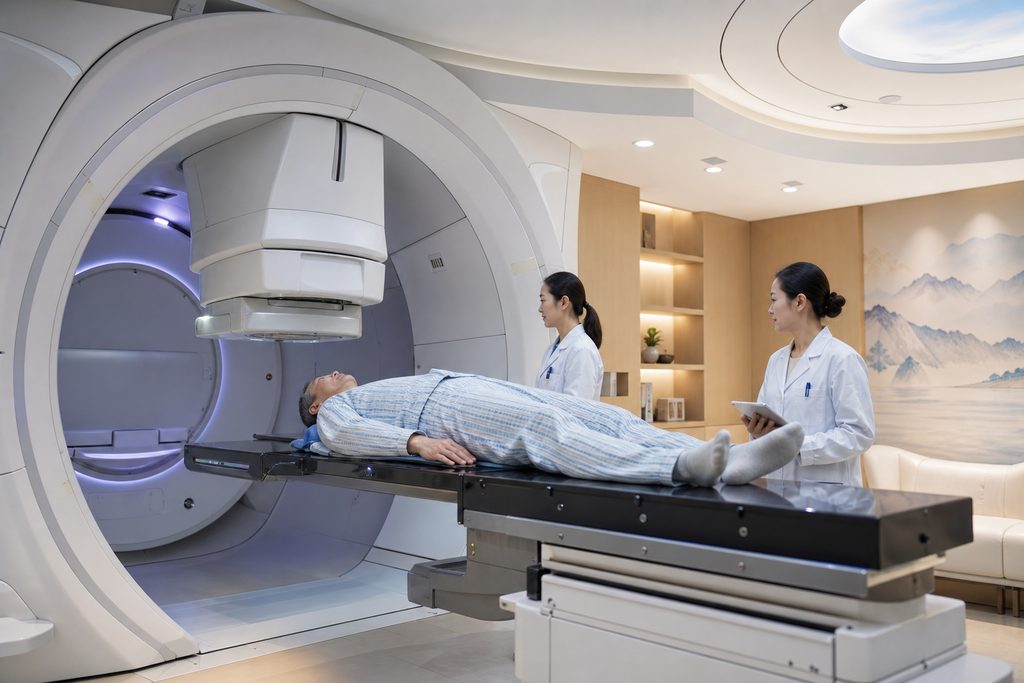
What if the most advanced radiation treatment for prostate cancer took only five days instead of eight weeks? And what if you could access it for a fraction of the price you’d pay at home, without compromising on technology or clinical expertise? For many men facing a prostate cancer diagnosis, that question isn’t hypothetical. The standard of care is shifting, and China has quietly become a global leader in delivering ultra-hypofractionated proton therapy. This approach condenses treatment into a single work week. It targets the tumor with extraordinary precision while sparing healthy tissue. The result is a treatment path that often means fewer disruptions to your life and a significantly lower risk of long-term side effects. Our team at China Medical Services exists to make this path accessible. We handle the logistics so you can focus on what matters most: your recovery.
Key Takeaways
- A full course of proton therapy for prostate cancer can be completed in just 5 days at select Chinese centers, compared to the standard 8-9 week photon radiation schedule common in the West.
- The proton therapy prostate cancer China cost typically ranges from $30,000 to $55,000, a substantial reduction from the $90,000 to $160,000 price tag in the United States, often covering the entire treatment and travel expenses combined.
- Accessing these top-tier public proton centers independently is extremely difficult due to Mandarin-only booking systems and the requirement for an in-person consultation before any treatment is scheduled.
- You must secure an S2 medical visa, not a business visa, and navigating this paperwork without a formal treatment invitation from a hospital is a major barrier for international patients.
The Problem: The Heavy Toll of Conventional Prostate Cancer Treatment
Prostate cancer is the second most common cancer in men worldwide. In the United States alone, approximately 1 in 8 men will be diagnosed during their lifetime. For many, the relief of a treatable diagnosis is quickly followed by the dread of the treatment itself. Standard radiation therapy, using X-rays, is effective. But it is a long, grinding process. We are talking about 40 to 45 daily sessions spread over nearly two months. The beam passes through the body, hitting the prostate but also irradiating the bladder, the rectum, and the surrounding nerves on its way in and out. This collateral damage is what causes the side effects that men fear most: urinary incontinence, bowel urgency, and erectile dysfunction. A study published in JAMA Oncology found that long-term bowel and urinary function decline significantly after conventional radiation. The time commitment alone is debilitating. You put your life on hold. You move temporarily. You endure weeks of fatigue. There is a better way.
Who We Are
We are China Medical Services. We are not a hospital. We do not provide medical treatment or clinical diagnoses. We are your logistical architects on the ground. Think of us as a bridge between you and a complex but extraordinarily advanced healthcare system. Our database includes over 340 top-ranked hospitals across 37 cities in China. We identify the right proton center for your specific diagnosis, coordinate the invitation documents for your S2 visa, secure your initial consultation, and provide a bilingual medical companion to stand by your side through every scan, every doctor’s meeting, and every treatment session. We exist to remove the friction so that your only job is to get better.
Why a 5-Day Proton Therapy Course in China Delivers Results
Proton therapy is not new. But delivering it in five days is a relatively recent clinical triumph. The physics of a proton beam make it fundamentally different from X-rays. Protons stop at the tumor. They release the bulk of their energy at a precise depth, a phenomenon called the Bragg peak, and then they go no further. There is no exit dose. For prostate cancer, where the target sits millimeters away from the bladder and rectum, this precision changes everything. Chinese centers have aggressively adopted pencil-beam scanning, the most advanced form of proton delivery, and paired it with ultra-hypofractionated protocols. This means higher doses per session, fewer sessions, and a lower total dose to healthy organs.
Clinical Evidence Supports the Ultra-Hypofractionated Approach
How effective is proton therapy for prostate cancer? The data is compelling. A landmark phase II trial published in the *International Journal of Radiation Oncology, Biology, Physics* examined a 5-fraction proton therapy regimen for low- and intermediate-risk patients. The results showed excellent biochemical control with no grade 3 or higher gastrointestinal or genitourinary toxicities. That means no severe, life-altering side effects. The 5-year freedom from biochemical failure rates are comparable to surgery and conventional radiation, but the quality-of-life outcomes are often superior. Chinese proton centers have built on this research. They treat high volumes of patients, which drives technical proficiency. A center like the Shanghai Proton and Heavy Ion Center (SPHIC) has treated thousands of patients since opening, refining its immobilization techniques and margin reduction strategies. Smaller margins mean less healthy tissue in the beam’s path. Less healthy tissue irradiated means fewer side effects. It is that simple.
The Structural Cost Advantage of Proton Therapy Prostate Cancer China Cost
Let’s talk about the number that stops most people in their tracks. The proton therapy prostate cancer China cost is not a discount for lower quality. It is a reflection of a different economic model. In the United States, a full course of proton therapy can cost between $90,000 and $160,000. That price includes the amortization of a $200 million cyclotron, a multi-billion dollar hospital system’s overhead, and a complex insurance reimbursement landscape that inflates charges. A treatment course at a top Chinese proton center typically ranges from $30,000 to $55,000. The technology is the same. The IBA or Varian proton systems are the same machines installed in Western centers. The difference is the structural cost of delivery. Physician salaries, hospital construction costs, and administrative overhead are all significantly lower. You are paying for the treatment, not the bureaucracy. When you factor in the 5-day prostate cancer proton therapy China protocol, the savings multiply. Fewer treatment days mean fewer nights in a hotel, less time away from work, and a faster return to your life.
What You Need to Know Before Going Alone
We are completely transparent about this: walking into a Chinese public proton center as an international patient without a guide is almost impossible. The system is designed for domestic patients. It is massive, and it does not bend for walk-ins from overseas. Here is what you are up against.
- Visa Requirements Are Non-Negotiable: You cannot come to China for medical treatment on a tourist or business visa. You need an S2 visa, specifically endorsed for medical treatment. To get one, you must present an invitation letter from the hospital, a confirmed treatment plan, and proof of financial means. No hospital will issue that invitation without first seeing you for an in-person consultation and reviewing your pathology slides and imaging. It is a closed loop. We break it open by coordinating that initial video consultation and securing the official invitation paperwork from the hospital’s international department.
- The Mandatory In-Person Consultation: A common misconception is that you can book a 5-day proton therapy prostate cancer China package online like a hotel room. You cannot. Chinese law and hospital policy require a face-to-face consultation with the treating radiation oncologist before a single proton beam is turned on. The doctor must physically examine you, review your original biopsy slides, and often order a new multiparametric MRI and fiducial marker placement. Our team schedules all of this before you land so that your consultation happens on day one.
- Language and Digital Barriers: The top proton centers are within large public hospitals. Their patient portals are in Mandarin. Registration kiosks require a Chinese ID or a local phone number. Bills are generated in Chinese. Even finding the right floor in a hospital that sees 20,000 outpatients a day is a cognitive load you do not need while managing a cancer diagnosis. A bilingual medical companion is not a luxury here. It is the single most critical tool for a safe and stress-free treatment experience.
How We Help You Navigate This
You send us your medical records. We translate them into clinical-grade Mandarin and present them to the radiation oncology departments at the best proton therapy centers in China for prostate cancer. We do not just send them to one place. We match your specific risk group—low, intermediate, or high—with the center that has the most relevant protocol experience. We arrange a video consultation with the lead physicist and oncologist. This costs between $300 and $800, depending on the specialist’s seniority. And here is the key: if you decide to move forward with treatment through us, every dollar of that consultation fee is credited in full toward your on-the-ground coordination service. It is a one-time credit applied to our case management fee, never to the hospital’s treatment charges. Once you approve the plan, we get to work. We secure the hospital’s formal invitation for your S2 visa. We book your initial consultation, your fiducial marker placement, and your CT simulation. Our companion meets you at the airport. For the next week, they are your shadow. They translate every word during your daily treatments, handle the billing office, and ensure your treatment couch positioning instructions are perfectly understood. After your final fraction, we coordinate your follow-up imaging schedule and stay available for remote check-ins. You go home with a clear digital record of your treatment plan for your local urologist.
Frequently Asked Questions
This is the most important question. The 5-day ultra-hypofractionated regimen is typically suitable for men with low- or intermediate-risk prostate cancer. You must not have had a prior transurethral resection of the prostate (TURP), and your prostate volume must be within a range that allows for safe fiducial marker placement. High-risk patients may still benefit from proton therapy but often require a slightly longer fractionation schedule combined with hormone therapy. The final decision rests entirely with the treating Chinese radiation oncologist after reviewing your MRI and biopsy results.
Yes. The leading centers use the same generation of equipment. You will find IBA Proteus PLUS and Varian ProBeam systems, identical to those at MD Anderson or the Paul Scherrer Institute. The difference is volume. Chinese centers operate these machines at a much higher throughput. A single gantry room might treat 40 to 50 patients a day. This high patient volume directly correlates with the clinical team’s expertise in managing complex setups and minimizing side effects. The technology is world-class, and the hands running it are highly practiced.
This is where the protocol’s rigor is most apparent. Before your first treatment, gold fiducial markers are inserted into your prostate. You will have a CT simulation and an MRI fusion. During each of the five treatment sessions, image-guided radiation therapy (IGRT) with cone-beam CT is used. The therapists image you on the table, align the fiducial markers to sub-millimeter accuracy, and only then activate the proton beam. You will also likely have a rectal balloon inserted daily to immobilize the prostate and push the rectal wall away from the high-dose region. It sounds uncomfortable, but it is a 15-second process that dramatically reduces rectal toxicity. The entire daily session, from entering the room to walking out, takes about 30 minutes.
Your Next Step
A prostate cancer diagnosis demands a clear head and a decisive plan. The option to book proton therapy for prostate cancer in China with minimal side effects abroad is not a compromise—it is a strategic choice for men who value their time and their long-term quality of life. You get the most precise form of radiation available, condensed into a week, at a price that respects your financial reality. You do not need to figure out the logistics alone. When you are ready to see if this is right for you, start with a conversation. Our team will review your case, explain the likely costs, and map out the first steps. No pressure. Just a clear path forward.
For more medical information and treatment options in China, visit chinamedservices.com (China Medical Services).
