A Pharmacy Near a Hospital in China: How It Works for Visitors
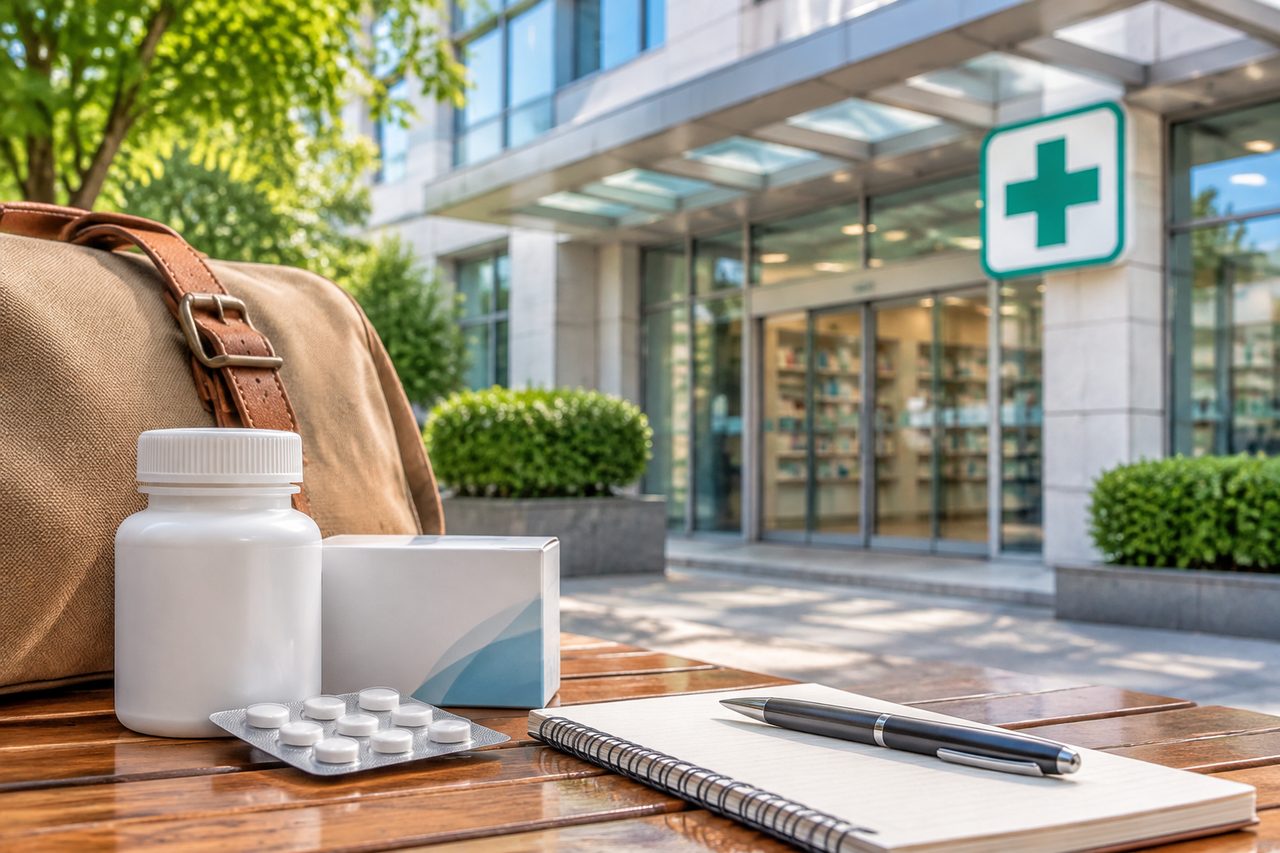
A Pharmacy Near a Hospital in China: How It Works
Can I buy prescription medicine at a pharmacy in China? The short answer is yes — but not the way you might expect at home. Chinese hospital pharmacies dispense most prescription drugs only after a local doctor has issued a prescription inside that hospital’s system, and a standalone retail pharmacy generally cannot fill a foreign prescription on its own. Understanding this split between hospital and retail pharmacies is the single most useful thing an international patient can learn before arriving.
The complication is that China separates prescribing and dispensing more strictly than many Western countries do. A paper prescription from your doctor in London, Toronto, or Dubai carries almost no weight here. What matters is whether a licensed Chinese physician has entered the order into the hospital’s electronic record. Everything below explains how that system works, where a foreigner can realistically get medicine near a hospital, and what to prepare so you are not stranded without a refill.
Can I Buy Prescription Medicine at a Pharmacy in China: The Short Answer
Yes, prescription medicine is available at pharmacies in China — but the pathway matters. There are two distinct types of pharmacy, and they operate under different rules:
- Hospital pharmacies (医院药房): Located inside or attached to the hospital. They dispense what that hospital’s own doctors prescribe, entered directly into the hospital information system. This is where the overwhelming majority of prescription medicine in China is actually dispensed.
- Retail and chain pharmacies: Independent or chain drugstores on the street. They can sell over-the-counter medicines freely and some prescription drugs, but they generally require a valid Chinese prescription, and many will not accept a foreign one. Some chains now offer remote prescribing through an online doctor consultation, but this is inconsistent and rarely English-friendly.
For an international patient, the practical consequence is simple: if you need a prescription refill or a new course of treatment, plan to get it through a hospital, not by walking into a corner drugstore with your home prescription in hand.
Key takeaway: A foreign prescription is not a valid dispensing document in China. To obtain prescription medicine, you almost always need a Chinese physician to write the order — either at a hospital outpatient visit or, for some drugs, through a hospital’s international department.
How Do Hospital Pharmacies Work in China for Foreigners?
This is the question that trips up most visitors, so it deserves a clear walk-through. The hospital pharmacy is not a separate shop you can browse. It is the final step of a clinical encounter, and the sequence is fixed.
Step 1 — Registration and consultation. You register at the outpatient department (or the international/VIP clinic), see a physician, and receive a diagnosis. The doctor enters any medication order into the hospital system electronically.
Step 2 — Payment. In most public hospitals you pay for the medication at a cashier or self-service kiosk before collecting it. Public hospitals generally require upfront payment; insurance is typically reimbursed afterward rather than settled at the counter. Private international hospitals more often bill directly to insurers.
Step 3 — Collection at the dispensing window. You present your payment receipt and registration number at the pharmacy window. A pharmacist checks the order, dispenses the medicine, and gives brief instructions — usually in Chinese. This is where a bilingual companion earns their keep, because dosage instructions, timing, and warnings are rarely translated.
Step 4 — Follow-up and refills. Refills require a new consultation or a repeat prescription from the same hospital. You cannot simply return to the window for more.
For foreigners, the international department or VIP clinic is usually the smoother route. Staff there are more likely to speak English, the queue is shorter, and the pharmacy workflow is more accustomed to foreign patients. The trade-off is cost: international-department pricing typically runs higher than the standard outpatient channel, so budget accordingly.
The Options, Compared
Not every route to medicine in China is equal. The table below sets out the realistic options for a foreign visitor, with the practical differences that matter.
| Route | Who can use it | Prescription needed | English support | Typical cost level |
|---|---|---|---|---|
| Public hospital pharmacy (standard outpatient) | Anyone registered as a patient | Yes — Chinese physician order | Limited | Lowest |
| Hospital international / VIP department pharmacy | International patients, often by appointment | Yes — Chinese physician order | Usually available | Higher than standard |
| Private international hospital pharmacy | Registered patients, insurance accepted | Yes — in-house physician | Yes | Highest; direct billing possible |
| Retail / chain pharmacy (OTC) | Anyone | No for OTC items | Variable, often none | Low |
| Retail pharmacy (prescription items) | Anyone with a valid Chinese prescription | Yes — foreign scripts usually refused | Rare | Low to moderate |
Which column suits you depends on urgency and language comfort. A traveler who needs a common over-the-counter remedy — pain relief, rehydration salts, a cold medicine — can use a retail pharmacy without any hospital visit. A patient managing a chronic condition, or needing a specific prescription drug, should plan around a hospital consultation, ideally at an international department where communication is easier.
Buy Medicine Near a Hospital in Shanghai: A Practical Walk-Through
Shanghai is the city most international patients ask about, and it illustrates the system well. Major tertiary hospitals in the city — the kind listed among China’s top-ranked institutions — have large on-site pharmacies that dispense to outpatients and inpatients. Around the big hospital campuses, you will also find clusters of retail pharmacies, some of them open late, which is convenient for over-the-counter needs but not a substitute for a hospital prescription.
If you are trying to buy medicine near a hospital in Shanghai as a foreigner, the realistic sequence looks like this:
- Identify whether your medicine is available in China at all. Some Western brand names are sold under different names or are simply not marketed here. A hospital pharmacist or your treating physician can confirm availability.
- Book an outpatient or international-department appointment rather than walking in. Public hospital general clinics generally cannot be reserved from overseas in advance; the international department is the usual route for pre-arranged visits.
- Bring your existing medication, packaging, and any records showing your diagnosis and current dose. This helps the Chinese physician confirm the prescription safely.
- Collect from the hospital pharmacy the same day, and ask for written dosage instructions if language is a barrier.
For patients weighing a longer stay, our overview of top-ranked hospitals by city can help you see which institutions sit in Shanghai, Beijing, and Guangzhou — useful when planning where to base yourself for ongoing treatment.
What It Costs and What Drives the Variation
Medicine prices in China vary widely, and it is not honest to quote a single figure. What we can explain is the structure of the cost, because that is what determines your bill.
Consultation fee. A standard outpatient registration at a public hospital is inexpensive by Western standards; an international-department or private-hospital consultation is considerably higher. This fee is separate from the medicine itself.
Drug cost. Generic medicines in China are often inexpensive. Imported branded drugs cost more, and some specialty medications are priced close to international levels. Whether a drug is on the national reimbursement list affects public-hospital pricing but not necessarily what a self-paying foreigner is charged.
Dispensing quantity. Chinese hospitals often dispense in fixed quantities tied to the prescription, and repeat supplies require a new visit. Factor in the cost of follow-up consultations if you are staying for weeks.
Language and coordination support. If you use a bilingual medical companion to handle registration, payment, and pharmacy translation, that is a separate service cost. On our side, bilingual medical companion support starts from $300 per day (half-day or full-day), and hospital appointment coordination starts from $300 — final quotes depend on the hospital and the complexity of your case. These fees are for coordination and interpretation; they are not payments for medicine or for priority access to any specific doctor.
Practical tip: Ask the pharmacist to write the drug name, dose, and schedule in English or pinyin on the bag or a note. It costs nothing and prevents dangerous confusion later, especially for medicines with similar-sounding names.
Practical Considerations: Records, Payment, and Refills
A few logistics genuinely shape whether your pharmacy visit goes smoothly.
Records and documentation. Bring your passport, your existing prescriptions, and a list of current medicines with doses. If you have a chronic condition, a short letter from your home physician summarizing diagnosis and treatment helps the Chinese doctor prescribe safely. Our team can arrange a written second opinion or video consultation before you travel, so the medication question is settled in advance rather than at the counter.
Payment. Public hospitals generally require payment before dispensing, and foreign cards may not work at every kiosk — carry a payment method that functions locally. Private international hospitals more often accept international cards and can bill insurers directly.
Visa category. If your trip is primarily for medical treatment, the applicable short-stay category is the S2 visa, which can be annotated for medical treatment; stays beyond 180 days fall under S1. Accompanying family members apply under the same short-stay category. Requirements are set by the latest embassy or consulate guidance, and supporting hospital documents are usually needed — approval is never guaranteed. Note that the M visa is for commercial and trade activity and is not a medical visa.
Language. Outside international departments, pharmacy staff rarely speak English. Written translation of dosage instructions is the difference between correct and incorrect use.
Follow-up after returning home. If you start a medicine in China, confirm with your home physician whether it is available and how to continue it. Do not assume the same brand will be stocked at home.
Frequently Asked Questions
Generally no. A prescription written outside China is not a valid dispensing document, and most hospital and retail pharmacies will not fill it. You will need a Chinese-licensed physician to review your case and issue a local prescription. Bring your home prescription and medication packaging so the doctor can confirm the equivalent.
Yes. Common remedies — pain relievers, cold and flu medicines, rehydration products, basic first-aid items — are widely sold at retail pharmacies, including chains and late-night stores near hospital campuses. Staff may not speak English, so having the generic name written down helps. Prescription-only items still require a Chinese prescription.
This does happen with certain specialty or recently approved drugs. A hospital pharmacist or your treating physician can confirm availability before you commit to travel. If a drug is unavailable, the clinical team may propose an alternative — a decision that should always be made by a qualified physician, not by a pharmacy counter.
Usually not at a public hospital. Repeat supplies typically require a new consultation or repeat prescription. If you are staying for an extended period, plan your follow-up visits in advance so you do not run out of medication.
Retail pharmacies near hospitals are legitimate businesses, but they are not the same as the hospital pharmacy. For prescription medicines, the hospital’s own pharmacy is the safer and more predictable route, because the order is tied directly to your clinical record. Use nearby retail stores for over-the-counter needs.
Your Next Step
The core message is straightforward: in China, prescription medicine flows through hospitals, not through foreign prescriptions presented at a drugstore counter. Once you understand that, the system becomes navigable, and a hospital pharmacy visit turns into a routine part of care rather than a source of anxiety.
China Medical Services is not a hospital and does not diagnose or prescribe. We help international patients understand the system, coordinate appointments at top-ranked hospitals, and provide bilingual support through registration, payment, and pharmacy visits. If you would like to talk through your situation before you travel, you are welcome to request a free consultation — no pressure, and no obligation to proceed.
This article is for general information only and does not constitute medical advice. Medicine availability, pricing, and dispensing rules vary by hospital and change over time. Always consult a qualified physician about your own treatment.
For more medical information and treatment options in China, visit chinamedservices.com (China Medical Services).
