Dental Implant Failure Rate in China: What Patients Should Know
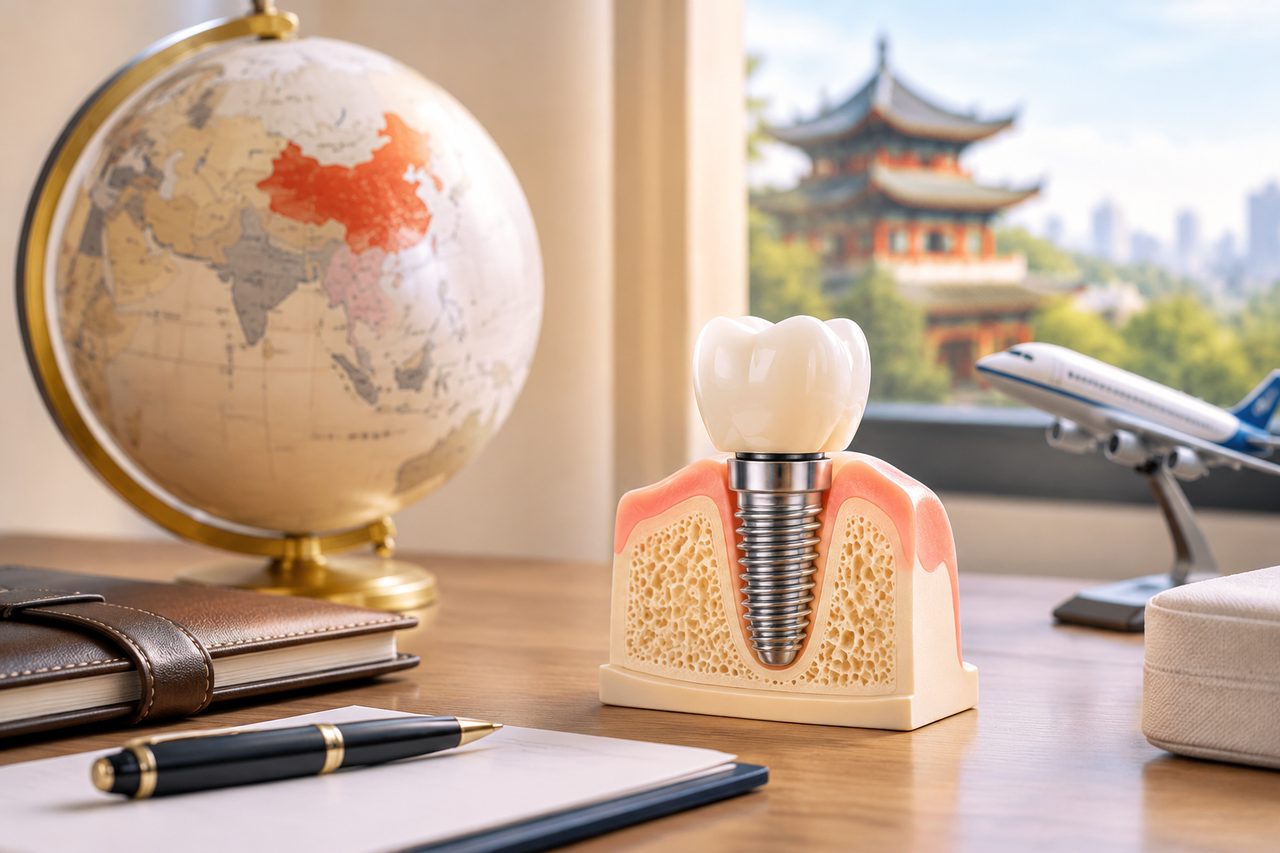
Dental Implant Failure Rate in China: What International Patients Should Understand
A dental implant is a titanium screw placed into the jawbone to replace a missing tooth root. When it “fails,” it means the implant did not integrate with bone, became loose, or had to be removed — not that the patient did anything wrong. If you are researching the dental implant failure rate in China before booking treatment abroad, the honest answer is that no single national figure exists. Published failure rates for dental implants worldwide generally fall in the low single digits over five to ten years, with wide variation by clinic, case selection, and follow-up. What matters more than a headline number is understanding what drives failure, how Chinese dental providers differ, and what to verify before you travel.
This guide explains the clinical realities behind implant failure, how to interpret the numbers you will encounter, and the practical steps international patients should take. It is educational information, not a diagnosis or a treatment recommendation. Anyone considering implant surgery should be assessed by a licensed dentist or oral surgeon in person.
How This Actually Works, Step by Step
Understanding the treatment sequence helps you see where failures happen and where they can be prevented.
1. Records and remote review. You send existing dental X-rays, a panoramic radiograph, or a CBCT scan if you have one, plus notes on missing teeth, gum health, and any systemic conditions such as diabetes. A Chinese dental team reviews the records and indicates whether implant treatment looks feasible, which generally requires an in-person exam and imaging.
2. In-person assessment. On arrival, the dentist examines bone volume, gum health, bite, and medical history. A CBCT scan is usually taken to plan implant position. This is the point where many “planned” implants are deferred — for example, if bone grafting is needed first.
3. Surgery and healing. The implant is placed under local anesthesia. Healing (osseointegration) typically takes several months before a crown is fitted. Failure most often appears during this window, which is why follow-up matters.
4. Restoration and maintenance. A crown or bridge is attached, and long-term success depends on hygiene, smoking status, and regular check-ups.
For international patients, the critical insight is that implant treatment is staged, not a single appointment. Rushing the timeline is one of the most common reasons plans unravel.
What the Dental Implant Failure Rate in China Actually Reflects
Patients often search for a single percentage. In reality, the dental implant failure rate in China — as anywhere — depends on the population studied. A university hospital publishing ten-year data on healthy, non-smoking patients will report a very different figure from a commercial clinic reporting early survival. Broad international reviews of implant survival generally place early failure in the low single-digit percentage range, with late failure accumulating slowly over years. We do not publish a China-specific national statistic because no authoritative source supports one, and quoting a made-up number would mislead you.
What we can say is that China’s top-ranked dental and stomatology hospitals — several of which appear in the Fudan specialty rankings for dentistry — treat very high volumes and follow standardized protocols. The specialty rankings by department are a useful starting point for identifying centers with recognized expertise. Volume alone does not guarantee outcomes, but it does mean the team has seen a wide range of cases, including complex ones.
A Realistic Timeline
The table below outlines typical stages. Durations vary by case complexity, bone healing, and whether grafting is required. Treat these as planning ranges, not promises.
| Stage | Typical Duration | What to Plan For |
|---|---|---|
| Records collection and translation | 1–2 weeks | Dental X-rays, medical history, medication list |
| Remote review and preliminary plan | 3–10 days | Written summary; not a final treatment plan |
| Visa (S2 for medical treatment) | 2–4 weeks, varies by consulate | Hospital invitation letter and supporting documents |
| Travel and in-person exam | 1–3 days after arrival | CBCT imaging, blood tests if required |
| Implant placement | 1 visit, often 1–2 hours | Local anesthesia; same-day discharge typical |
| Healing / osseointegration | 3–6 months | Follow-up checks; some patients return home between stages |
| Crown fitting | 1–2 visits | Impressions, fitting, bite adjustment |
| Long-term maintenance | Ongoing | Annual check-ups, hygiene, smoking cessation |
The waiting steps patients forget are document translation and appointment lead time at busy public hospitals. Top dental hospitals can have limited international slots, which is one reason planning well ahead matters.
What Can Go Wrong — and What Happens Then
Implant failure is not a single event. The honest failure modes fall into a few categories, each with different recourse.
- Early failure (before restoration). The implant loosens or does not integrate, often within weeks to a few months. The usual recourse is removal, allowing bone to heal, and later re-evaluation for a second attempt. This is a recognized risk, not necessarily a mistake.
- Peri-implantitis (late failure). Infection and bone loss around a functioning implant, often years later. Managed with hygiene treatment, and sometimes surgery. Smoking and uncontrolled diabetes raise this risk.
- Restoration problems. Crown fracture, screw loosening, or bite issues. Usually repairable, but they require follow-up access — a real challenge if you have returned home.
- Planning errors. Poor bone assessment or inadequate grafting can lead to failure that better imaging would have predicted. This is where choosing an experienced team matters most.
If something goes wrong after you return home, the practical recourse depends on your home dentist’s willingness to take over maintenance and on whether the treating clinic provides records and warranty terms in writing. Ask about both before treatment.
Is Implant Failure Common in China? Evaluating Providers and Costs
When patients ask “is implant failure common in China,” the fair answer is that failure rates are driven more by case selection and aftercare than by geography. A well-planned implant in a non-smoking patient with good bone and hygiene has a high survival probability in any well-equipped setting. The variables you can control are provider quality, honest case assessment, and follow-up discipline.
Cost is the other factor patients weigh. Implant surgery cost China varies widely by city, hospital type, implant brand, and whether grafting is needed. Public tertiary hospitals and private international clinics price differently, and premium implant systems cost more than value brands. We do not publish a fixed price list because quotes depend on your specific case; a written estimate after examination is the only reliable figure. For context on how Chinese tertiary hospitals are organized, see our guide to top-ranked hospitals by city.
When evaluating a provider, ask:
- Who performs the surgery, and what is their training and case volume?
- What imaging is used for planning — is CBCT standard?
- What implant systems are offered, and are they internationally traceable for servicing at home?
- What are the written terms if the implant fails within a defined period?
- Who handles follow-up if you leave the country?
Practical Considerations: Records, Visa, Payment, and Follow-Up
Records. Bring recent dental X-rays and any CBCT files on a USB drive or via secure transfer. A written medical history, medication list, and details of allergies are essential.
Visa. For medical treatment, the applicable short-stay category is the S2 visa, with supporting hospital documents; stays beyond 180 days may involve S1. Requirements vary by consulate, so confirm current rules before applying. The M visa is for commercial and trade activity and is not a medical visa.
Payment and insurance. Public hospitals generally require prepayment, with insurance reimbursement handled afterward. Private international clinics may offer direct billing with certain insurers. Confirm in writing what is included in any quote.
Language and coordination. Large Chinese hospitals can be busy and English signage is limited. Having a bilingual companion for registration, payment, and consultations reduces miscommunication — a genuine safety factor in dental care.
Follow-up at home. Arrange a home dentist willing to monitor the implant before you travel. Implant maintenance is lifelong, and continuity matters more than where the surgery was done.
Frequently Asked Questions
No authoritative national figure exists. International studies generally report early failure in the low single-digit percentage range, with variation by patient factors and clinic. Be skeptical of any precise China-wide number.
Failure risk is driven mainly by case selection, surgical technique, smoking, diabetes control, and hygiene — not by country. Well-planned cases in reputable centers have survival rates broadly in line with international norms.
Costs vary by city, hospital type, implant brand, and whether bone grafting is needed. Public and private providers price differently, so request a written estimate after in-person examination rather than relying on advertised figures.
Contact the treating clinic for records and warranty terms, and see a local dentist promptly. Early assessment improves the chance of a straightforward solution, though a second procedure may be needed.
Your Next Step
The core message is simple: implant failure is a real but manageable risk, and the quality of planning and follow-up matters more than any headline statistic. China Medical Services helps international patients navigate Chinese hospitals — we coordinate records review, appointments, and bilingual support, but we do not provide dental care or guarantee clinical outcomes. If you would like help understanding your options, you can request a free consultation and we will explain the next practical step.
This article is for general information only and does not constitute medical advice. Always consult a qualified dentist or oral surgeon about your individual situation.
For more medical information and treatment options in China, visit chinamedservices.com (China Medical Services).
