Guangxi Medical University First Hospital Nanning: ASEAN Gateway for Oncology and Liver Disease
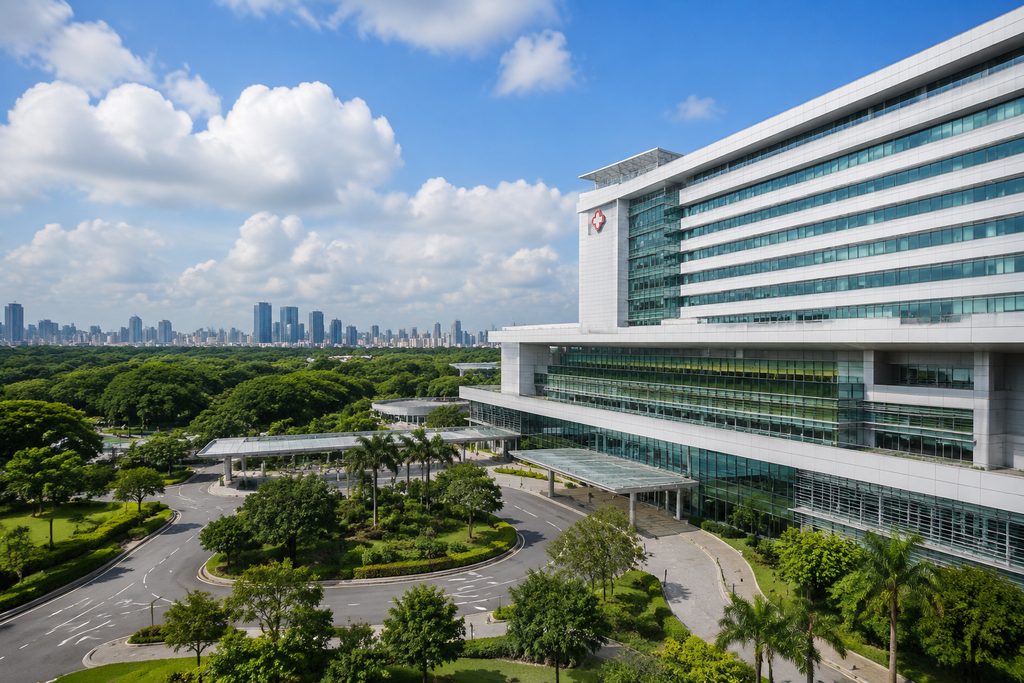
Key Takeaways
- Guangxi Medical University First Hospital performs over 200 liver transplants annually, placing it among China’s most experienced centers for end-stage liver disease and hepatocellular carcinoma.
- Liver cancer treatment costs at this Nanning facility typically range from $8,000 to $22,000 USD, roughly 1/8th to 1/5th of comparable care in the United States or Singapore.
- The hospital’s dedicated ASEAN International Medical Department handles visa documentation and cross-border logistics, but public outpatient clinics cannot be booked from overseas without a physical presence.
- Nanning’s geographic position—a three-hour drive from the Vietnam border and a short flight from Bangkok or Kuala Lumpur—makes this a logistically distinct alternative to Beijing or Shanghai for Southeast Asian patients.
The Problem: Liver Cancer Rates Are Rising Across Southeast Asia—And Treatment Options Are Thin
Liver cancer is now the second most common cause of cancer death in Southeast Asia. The WHO’s Globocan 2022 data puts the figure bluntly: hepatocellular carcinoma incidence in Vietnam, Thailand, and Indonesia has climbed 27% over the past decade. Chronic hepatitis B prevalence—affecting roughly 8% to 10% of the adult population in several ASEAN member states—drives much of this. Patients face a brutal bottleneck. Public oncology services in the region are overwhelmed. Private care in Bangkok or Singapore carries price tags that shut out middle-income families entirely. A liver resection at a private Singapore hospital can exceed $55,000 USD. A full liver transplant? That number jumps well past $150,000. For many, those figures are not aspirational. They are disqualifying.
That leaves a large cohort of patients searching for something else. Not cheaper care at any cost. Just competent, high-volume oncology delivered at a price that does not destroy a family’s financial future. Some look to India. Others to South Korea. An increasing number of patients from Vietnam, Cambodia, Laos, and Myanmar are looking north—to Nanning. The draw is a single institution: Guangxi Medical University First Hospital. It sits in a provincial capital that most Westerners cannot place on a map. But for liver disease and certain solid tumors, this hospital has built a reputation that travels by word of mouth across borders.
Who We Are
We are not a hospital. We do not provide medical treatment, clinical diagnoses, or surgical opinions. Our team at China Medical Services functions as logistical architects for international patients seeking care in China’s top-tier hospitals. We handle the structural friction—visa documentation, hospital matching, appointment coordination through official international departments, bilingual medical companion services, and post-discharge recovery planning. We work exclusively with hospitals ranked in the top 5% of China’s 35,000+ medical institutions, as evaluated by the Fudan University hospital rankings and JCI accreditation standards. Our database covers 340+ hospitals across 37 cities. Guangxi Medical University First Hospital is one of them. We know its strengths. We also know where it falls short. This article lays out both.
Why Guangxi Medical University First Hospital Draws ASEAN Oncology Patients
Surgical Volume That Rivals Major Centers
Volume matters in liver surgery. The relationship between a center’s annual caseload and patient outcomes is well-documented—lower complication rates, shorter operative times, better 30-day survival figures. Guangxi Medical University First Hospital’s hepatobiliary surgery department handles over 200 liver transplants and more than 1,200 liver resections each year. By any benchmark, that places it among the busiest liver surgery units in China. The hospital is consistently ranked among China’s top 10 for hepatobiliary surgery in the Fudan University specialty reputation rankings. For perspective, many Western academic medical centers perform 40 to 80 liver resections annually. The clinical team here sees more complex hepatocellular carcinoma cases in a month than some centers see in a year.
This is not accidental. Guangxi province has one of China’s highest hepatitis B carrier rates, which means the hospital’s catchment area delivers a steady stream of liver cancer patients. The surgical teams have built their expertise on that volume. They have seen the anatomical variants, the difficult resections, the cases where portal vein involvement makes a standard approach impossible. That depth of experience is hard to replicate in lower-volume settings.
The ASEAN International Medical Department: A Structural Advantage
Most Chinese public hospitals do not have a dedicated international patient pathway. Patients who show up without Mandarin fluency face a gauntlet: registration kiosks with Chinese-only interfaces, cashier windows that reject foreign credit cards, consultation rooms where no one speaks English. Guangxi Medical University First Hospital took a different path. In 2018, it established the ASEAN International Medical Department—a unit specifically designed to receive patients from Southeast Asia. The department coordinates interpreter services (primarily Vietnamese, Thai, and English), assists with medical record translation, and helps patients navigate the hospital’s sprawling campus. This is not a five-star concierge experience. It is a functional bridge. For a patient flying in from Hanoi or Phnom Penh, that bridge makes the difference between getting treated and giving up in frustration.
Cost Structure: What the Numbers Actually Look Like
The most common question we receive is some variation of “what is the Guangxi Medical University First Hospital liver cancer treatment cost?” The answer depends on the intervention, the stage at diagnosis, and whether the patient goes through the public outpatient channel or the hospital’s VIP/international department. Public channel pricing is lower but comes with language barriers and longer wait times. The international department adds a coordination premium—typically 1.5x to 2x the public rate—but provides English-speaking staff, expedited scheduling, and assistance with medical visa documentation.
Here is a practical cost comparison based on our case data and hospital-provided ranges:
| Procedure | Guangxi Medical University First Hospital (International Dept) | Singapore Private Hospital | Thailand Private Hospital | United States |
|---|---|---|---|---|
| Liver resection (partial hepatectomy) | $8,000 – $15,000 | $35,000 – $55,000 | $18,000 – $30,000 | $60,000 – $100,000 |
| Liver transplant (full procedure package) | $40,000 – $70,000 | $150,000 – $200,000 | $80,000 – $120,000 | $300,000 – $500,000 |
| TACE (transarterial chemoembolization, per session) | $2,500 – $4,000 | $8,000 – $12,000 | $5,000 – $8,000 | $15,000 – $25,000 |
| Radiofrequency ablation (single tumor) | $3,000 – $5,000 | $10,000 – $15,000 | $6,000 – $10,000 | $12,000 – $20,000 |
These are reference ranges. Final pricing varies by hospital and case complexity. A patient with portal vein tumor thrombus requires a more complex surgical plan than someone with a small, peripheral lesion. The numbers above assume an uncomplicated case. But even at the high end, the arithmetic is stark: a liver transplant in Nanning costs less than a liver resection in Singapore. That differential is what drives hundreds of ASEAN families to make the trip each year.
What You Need to Know Before Going Alone
The hospital’s clinical capabilities are real. But walking into this institution as an international patient without preparation is a recipe for wasted time and money. Here are the barriers that trip people up:
- Visa Documentation: Medical treatment in China requires an S2 visa with a specific annotation for medical purposes. The hospital’s international department can issue an invitation letter, but the patient must submit this to the Chinese embassy or visa center in their home country. Processing takes 5 to 10 business days. Showing up on a tourist visa and hoping to switch later is not a viable strategy—immigration authorities have tightened enforcement on this point. Family members accompanying the patient also need S2 visas, not tourist visas.
- Public Outpatient Booking Is Offline: The hospital’s standard outpatient clinics do not accept overseas reservations through any digital platform. WeChat mini-programs exist but require a Chinese phone number and a local ID-verified account. A patient who flies to Nanning without a pre-arranged appointment will spend days navigating registration queues, only to find that the specialist they need is fully booked for the next two weeks. The international department solves this, but it requires coordination before travel.
- Payment Systems: The hospital does not accept international credit cards at standard cashier counters. Alipay and WeChat Pay dominate, and linking a foreign card to these platforms is inconsistent. The international department can process wire transfers and some card payments, but patients going through the public channel need to carry sufficient cash (RMB) or arrange a local bank transfer. This catches many first-time visitors off guard.
- Medical Records Must Be Translated: The hepatobiliary surgeons will review prior imaging and pathology reports, but they need Mandarin translations. A patient who arrives with a stack of Vietnamese or English medical records and no translations will face delays. The international department can arrange translation, but this adds 2 to 3 days to the intake process.
How We Help You Navigate This
These barriers are not unique to Nanning. They exist at virtually every Chinese public hospital. The difference is that Guangxi Medical University First Hospital has built a dedicated channel for international patients, and our job is to make sure you enter that channel efficiently.
Before you travel, we collect and translate your medical records—imaging reports, pathology slides, surgical histories, current medication lists—and submit them to the international department for a preliminary review. The hepatobiliary team will confirm whether your case falls within their treatment scope. If it does, we coordinate an appointment date, generate the hospital invitation letter, and guide you through the S2 visa application. This pre-travel phase typically takes 10 to 14 days.
When you arrive in Nanning, a bilingual medical companion meets you at the hospital. This person handles registration, queues, payment logistics, and real-time interpretation during consultations. They do not provide medical advice. They make sure nothing gets lost in translation—literally. After the consultation, if surgery or interventional treatment is recommended, we coordinate admission, pre-operative testing, and scheduling through the international department. Post-discharge, we help arrange follow-up video consultations so you do not need to fly back to Nanning for routine check-ins. For complex cases requiring multidisciplinary input, we can also arrange a remote second opinion from the hospital’s tumor board before you commit to travel. The written second opinion costs $300 to $500 USD. If you later proceed with treatment coordination through us, that fee is credited in full toward the coordination service—a one-time credit, applied only to our coordination fee, never to hospital treatment charges.
Frequently Asked Questions
For hepatobiliary surgery and liver cancer, the hospital operates at a level comparable to China’s top-tier centers. Its annual liver resection volume and transplant numbers place it in the national top 10 for this specialty. What it lacks is breadth—if your case involves a rare extrahepatic malignancy or requires a highly subspecialized oncology service outside the liver, a comprehensive cancer center in Beijing or Shanghai may offer more multidisciplinary depth. For hepatocellular carcinoma, cholangiocarcinoma, and hepatitis B-related liver disease, this hospital is among the strongest choices in southern China.
The only reliable method is through the hospital’s ASEAN International Medical Department. You cannot book standard outpatient appointments from overseas through public channels. The international department requires a referral package: translated medical records, imaging, and a brief clinical summary. Once the department reviews the case and confirms treatability, they issue an appointment confirmation and a visa invitation letter. The entire process, from initial contact to confirmed appointment, typically takes two weeks. Our team handles this coordination end-to-end, including the document translation and submission.
This is a hard question that deserves a straight answer. No hospital can guarantee outcomes. What Guangxi Medical University First Hospital offers is volume-driven surgical expertise and a dedicated international patient unit that can manage complications if they occur. The hospital has a surgical ICU staffed 24/7, interventional radiology capabilities for post-operative bleeding control, and an oncology department for adjuvant therapy. If a patient needs prolonged hospitalization, the international department assists with visa extensions. That said, patients should carry medical evacuation insurance. In the rare event of a catastrophic complication requiring a level of care the hospital cannot provide, medical evacuation to Singapore or Bangkok is the fallback. We advise every patient to plan for this scenario, even if the probability is low.
Chinese hospitals do not sell transplant packages in the way some medical tourism facilitators in India or Turkey market them. Liver transplantation in China is regulated by strict organ allocation protocols, and foreign nationals must meet specific eligibility criteria. The hospital’s transplant team evaluates each case individually—MELD score, tumor burden, donor availability, and overall surgical fitness all factor in. What we can provide is a coordinated pathway: pre-transplant evaluation, waitlist management through the international department, and logistical support throughout the process. Costs range from $40,000 to $70,000 USD for the full procedure and hospitalization, but the timeline depends on organ availability, which no one can guarantee. Patients considering this route should understand that a transplant is not a pre-packaged product. It is a clinical process with inherent uncertainty.
Yes. The hospital’s international department facilitates remote written second opinions. You submit your medical records, imaging (DICOM format preferred), and a specific clinical question. A hepatobiliary surgeon or oncologist reviews the materials and issues a written assessment—treatment recommendations, surgical resectability opinion, or alternative therapy suggestions. Turnaround is typically 5 to 7 business days. The cost ranges from $300 to $500 USD. This is for reference only, not a prescription, and should be discussed with your primary treating physician. For patients who want a live video consultation with the specialist, we can arrange that as well, with fees starting at $500 USD. The written second opinion is often the smarter first step—it gives you a documented expert assessment without the scheduling complexity of a real-time call.
Your Next Step
Guangxi Medical University First Hospital in Nanning represents a specific, practical option for ASEAN patients facing liver cancer or complex hepatobiliary disease. Its surgical volumes are high. Its costs are a fraction of Singaporean or Thai private hospital rates. Its international department removes some—but not all—of the logistical friction that makes cross-border medical travel so daunting. The decision to pursue treatment here should rest on a clear-eyed assessment of your clinical needs, your financial constraints, and your willingness to navigate a system that is competent but not Western in its operational norms. If you want to understand whether this hospital is a fit for your specific case, we can help you get a straight answer before you book a flight.
For more medical information and treatment options in China, visit chinamedservices.com (China Medical Services).
