West China Hospital Rehab: China’s Best Post-Surgery Recovery Center
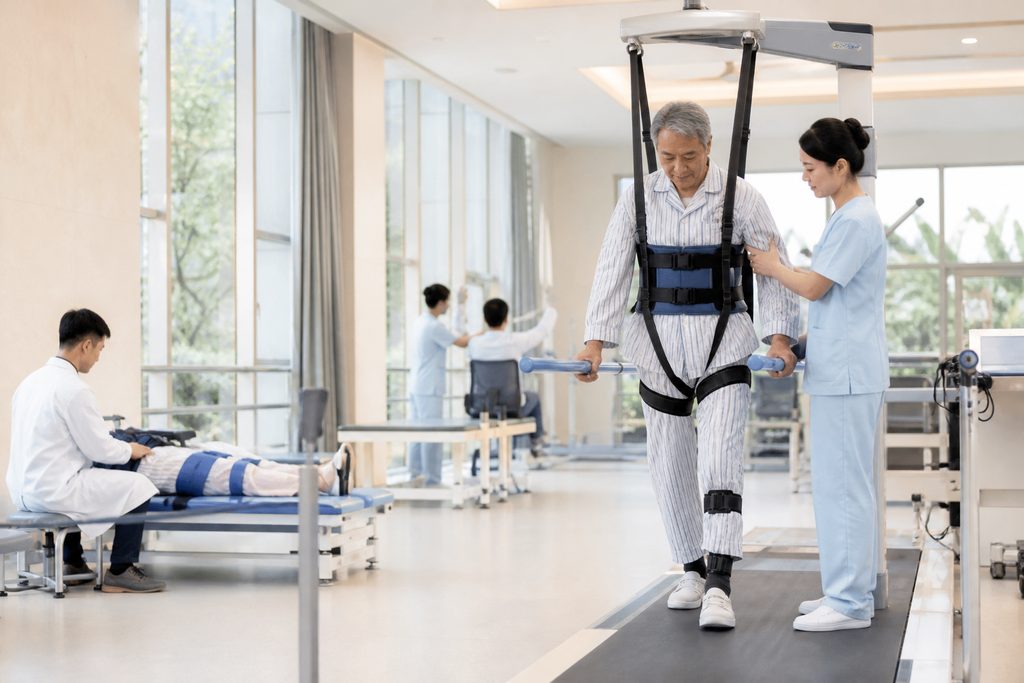
Rehabilitation medicine isn’t just about getting back on your feet. It is the difference between surviving a surgery and actually reclaiming your life. At West China Hospital in Chengdu, this distinction drives everything they do. The hospital’s Rehabilitation Medicine Center has been ranked first in China’s prestigious Fudan University specialist reputation rankings for consecutive years — a position that reflects decades of clinical volume, research output, and patient outcomes that rival any rehabilitation facility in the world. For international patients facing complex post-surgical recovery, understanding what makes this center different — from its evidence-based protocols to its West China Hospital rehabilitation cost structure — can reshape how you think about medical travel.
Key Takeaways
- West China Hospital’s Rehabilitation Medicine Center holds the #1 rank in China’s national Fudan specialist rankings, treating over 400,000 outpatient rehab cases annually across neurological, orthopedic, and cardiopulmonary specialties.
- The center operates one of Asia’s largest inpatient rehabilitation units with 200+ dedicated beds and a multidisciplinary team that includes physiatrists, physical therapists, occupational therapists, speech-language pathologists, and rehabilitation engineers under one roof.
- International patients face genuine logistical barriers — the public registration system requires in-person visits, Mandarin fluency is essential for navigating daily therapy sessions, and visa requirements demand specific medical documentation before travel.
- Total rehabilitation program costs at West China Hospital typically range from 30% to 50% of comparable programs in the United States or Western Europe, with transparent fee structures and no hidden charges for core therapy services.
The Problem: Post-Surgical Recovery Often Gets Overlooked
Here is a number that should stop you cold. Approximately 30% of patients who undergo major orthopedic surgery experience suboptimal functional recovery at 12 months post-operation, according to a 2022 systematic review published in the Journal of Orthopaedic Surgery and Research. They walk. They survive the procedure. But they never return to their baseline. Stairs become obstacles. Playing with grandchildren becomes a memory. The surgery was technically successful. The recovery was not.
This is not a surgical failure. It is a rehabilitation gap. In many Western healthcare systems, rehabilitation is the afterthought — a few weeks of outpatient physical therapy squeezed into 30-minute sessions, constrained by insurance caps and therapist shortages. The average Medicare beneficiary in the United States receives 12 to 15 outpatient therapy visits per episode, often spread across months with minimal coordination between the surgeon, the therapist, and the patient. No one is driving the bus. The patient drifts.
For neurological conditions — stroke, spinal cord injury, traumatic brain injury — the numbers are grimmer. Only about 10% of stroke survivors achieve full functional independence without intensive, coordinated rehabilitation. The window for neuroplasticity closes fast. Every week of fragmented care costs neurons that will not grow back. The question is not whether rehabilitation matters. The question is whether the system you are in can deliver enough of it, intensely enough, soon enough, to change the trajectory.
Who We Are
We are China Medical Services. We are not a hospital. We do not provide medical treatment, clinical diagnoses, or rehabilitation therapy. What we do is build the bridge between you and China’s top-tier medical expertise — handling the logistics that make international patients abandon the idea of seeking care abroad. Hospital matching, appointment coordination, bilingual medical companions who stay with you through every consultation and therapy session, visa documentation, accommodation planning. We have mapped the rehabilitation landscape across 340+ top-ranked Chinese hospitals in 37 cities. We know which centers have dedicated international patient pathways and which ones will drown you in bureaucracy. Our team exists so you can focus entirely on recovery while we handle everything else.
Why West China Hospital’s Rehabilitation Medicine Leads the Country
The Fudan University hospital rankings are China’s equivalent of the U.S. News & World Report hospital rankings — the definitive national benchmark. In the rehabilitation medicine specialist reputation category, West China Hospital has claimed the top position repeatedly. This is not a general hospital ranking. It is a peer assessment by China’s leading physiatrists and rehabilitation specialists who evaluate clinical excellence, research output, and patient outcomes across 45 specialties. When your peers consistently name you number one, something structural is happening.
Clinical Volume That Creates Pattern Recognition
West China Hospital’s Rehabilitation Medicine Center logs over 400,000 outpatient visits and more than 4,000 inpatient admissions annually. Those numbers matter. A therapist who sees five post-stroke patients a week develops competence. A therapist who sees fifty develops intuition. The center’s neurological rehabilitation team manages approximately 1,200 new stroke cases each year, alongside spinal cord injuries, traumatic brain injuries, and complex polyneuropathies. For orthopedic post-surgical recovery — total knee replacements, hip arthroplasties, spinal fusions — the annual caseload exceeds 2,000 patients. This is not volume for volume’s sake. It is volume that creates rapid pattern recognition. When complications arise, the team has likely seen that exact presentation dozens of times before.
Compare this to a typical community hospital rehabilitation unit in the United States or United Kingdom, where a therapist might manage 50 to 80 post-surgical orthopedic cases per year. The difference in clinical exposure compounds over a career. At West China, five years of practice delivers the equivalent caseload of two decades in a lower-volume setting. That density of experience translates directly into faster clinical decision-making and more refined treatment protocols.
Integrated Multidisciplinary Design — Not Fragmented Care
Walk into the Rehabilitation Medicine Center at West China Hospital and you will notice something that many Western rehabilitation facilities lack: co-location. The physiatrist who directs your medical management works on the same floor as the physical therapist retraining your gait, the occupational therapist redesigning your kitchen routines, the speech-language pathologist working on your swallowing function, and the rehabilitation engineer fabricating your custom orthotic. They meet. They talk. They adjust your plan in real time based on what each discipline observes.
This should be standard. It rarely is. In fragmented systems, your surgeon sends a referral to an outpatient PT clinic across town. Your occupational therapist works for a different organization. Your physiatrist sees you once every three weeks for medication adjustments. Information moves at the speed of fax machines and portal messages. At West China, the team huddles weekly on complex cases. The inpatient unit houses 200+ dedicated rehabilitation beds, allowing patients recovering from major surgeries or neurological events to receive three to five hours of combined therapy daily without leaving the facility. Intensity drives neuroplasticity. Fragmentation kills it.
Technology Infrastructure Built for Scale
The center operates one of China’s most comprehensive rehabilitation technology suites. Lokomat robotic gait training systems for spinal cord injury and stroke patients. Armeo upper-extremity robotic therapy for fine motor recovery. Virtual reality balance training platforms that provide real-time feedback for vestibular and proprioceptive retraining. Isometric and isokinetic dynamometry for precise strength assessment. These are not gimmicks. They are tools that allow therapists to deliver high-repetition, precisely calibrated interventions — thousands of movement repetitions per session — that are impossible to replicate manually.
For post-surgical orthopedic patients, the center uses 3D gait analysis laboratories that capture kinematic data at 200 frames per second. A patient recovering from an ACL reconstruction does not just “look better” to the therapist’s eye. The system quantifies joint angles, ground reaction forces, and muscle activation patterns, comparing them against normative databases and the patient’s own preoperative baseline. Adjustments are data-driven, not impressionistic. This is the kind of infrastructure that makes West China Hospital rehabilitation cost look remarkably reasonable when you understand what is included.
What Is the West China Hospital Rehabilitation Cost for International Patients?
Let us address the question directly. The West China Hospital rehabilitation cost for international patients depends on the program intensity, duration, and whether you require inpatient or outpatient services. Inpatient rehabilitation — which includes your hospital bed, nursing care, daily multidisciplinary therapy sessions, and medical management by a physiatrist — typically ranges from $800 to $1,500 per day depending on the complexity of your case and the specific therapies prescribed. A four-week intensive inpatient program following a complex orthopedic surgery or stroke generally falls between $22,000 and $42,000 total.
Outpatient rehabilitation programs are structured differently. A standard outpatient package including 12 to 15 therapy sessions spread across three to four weeks typically costs between $3,000 and $6,000. Extended programs for neurological rehabilitation — which may run eight to twelve weeks with sessions three to five times weekly — range from $8,000 to $18,000. These figures include the therapy itself, facility fees, and basic consumables. They do not include specialized orthotics or prosthetics, advanced imaging if required, or medications prescribed during your stay.
To put these numbers in context, comparable inpatient rehabilitation programs in the United States frequently exceed $1,500 to $2,500 per day for the facility fee alone — before physician charges, before therapy charges. A four-week stay in a major U.S. rehabilitation hospital can easily reach $60,000 to $90,000. The structural reasons for the cost difference are not about quality. They are about labor economics, hospital operational efficiency, and the absence of the multi-layered administrative overhead that characterizes the U.S. healthcare payment system. Chinese rehabilitation physicians and therapists are compensated differently. Hospital construction and equipment costs are amortized differently. The savings flow to the patient without cutting clinical corners.
Is West China Hospital Chengdu Number One for Recovery? Understanding the Rankings
The phrase “number one” gets thrown around loosely in medical marketing. Here is what it actually means in the Chinese context. The Fudan University hospital rankings — formally the “China Hospital Rankings” published annually by the Hospital Management Institute of Fudan University — evaluate rehabilitation medicine departments based on two weighted components: specialist reputation (accounting for 80% of the score) and research output (20%). The specialist reputation score derives from a survey of approximately 5,000 practicing specialists across China who are asked to nominate the top hospitals in their respective fields. This is peer judgment, not a marketing claim. When rehabilitation specialists across China consistently name West China Hospital as the top center in their field, it reflects genuine professional respect.
But rankings are not the whole story. The question “is West China Hospital Chengdu number one for recovery” deserves a nuanced answer. For complex neurological rehabilitation — stroke, spinal cord injury, traumatic brain injury — the center’s combination of volume, technology, and multidisciplinary integration makes a compelling case for its top-tier status. For post-surgical orthopedic recovery, the center’s protocols are excellent, but other Chinese hospitals like Peking University Third Hospital and Shanghai’s Huashan Hospital also field outstanding orthopedic rehabilitation programs. What distinguishes West China is breadth. Few centers in China — or anywhere — house this depth of expertise across neurological, orthopedic, cardiopulmonary, and pediatric rehabilitation under one organizational roof.
For international patients, this matters. You are not traveling for a single procedure. You are traveling for a recovery trajectory that may involve unexpected complications, comorbidities, or the need for cross-specialty consultation. A center that can manage a post-stroke patient who also needs cardiac rehabilitation and psychological support for post-stroke depression is delivering something that a narrowly focused orthopedic rehab center cannot match. That comprehensive capability is what the ranking reflects — and what patients experience on the ground.
How Good Is West China Hospital Rehabilitation Medicine for International Patients?
The clinical answer: excellent by any international standard. The practical answer: it depends on how you access it. West China Hospital operates a dedicated International Medical Center that serves as the entry point for overseas patients. This is not the public registration channel where thousands of domestic patients queue daily. The International Medical Center provides English-speaking coordination staff, expedited appointment scheduling, and private consultation rooms. The rehabilitation medicine department has designated therapists who work regularly with international patients and are comfortable communicating through interpreters when necessary. Clinical protocols follow international evidence-based guidelines — the same ones you would find at Mayo Clinic, Charité in Berlin, or Royal Melbourne Hospital.
But here is the honest truth. The International Medical Center pathway costs more than the public pathway. Consultation fees, therapy session charges, and inpatient room rates are typically 1.5 to 2 times higher through the international channel. This is not a markup for foreigners. It reflects the additional staffing, translation services, private facilities, and administrative support required to serve patients who do not speak Mandarin and who need help navigating a system designed primarily for domestic users. The question “how good is West China Hospital rehabilitation medicine” cannot be separated from the question of access pathway. The clinical quality is there. Whether you can access it efficiently depends on whether you have the right logistical support in place.
What You Need to Know Before Going Alone
We have seen international patients arrive at West China Hospital with nothing but a flight booking and a referral letter. It does not go well. Here are the barriers you will face if you attempt to navigate this independently.
- Visa Requirements: Medical treatment in China requires an S2 visa with a specific annotation indicating the purpose of travel is medical treatment. You will need an official invitation letter from the hospital — not an email from a department secretary, but a formal document on hospital letterhead with a stamp and a designated contact person. The hospital’s International Medical Center can issue this, but only after you have established a genuine clinical relationship and a treatment plan. You cannot simply request an invitation letter speculatively. Family members accompanying you also need S2 visas. The M visa — for commercial and trade activities — does not cover medical treatment. Using it for this purpose risks entry denial or complications during your stay.
- Registration and Payment Systems: West China Hospital’s public registration system operates through a mobile app and on-site kiosks — entirely in Mandarin. Even the International Medical Center requires upfront deposit payments before inpatient admission. International credit cards are accepted at the International Medical Center but not throughout the main hospital. WeChat Pay and Alipay dominate the Chinese payment ecosystem. Setting these up as a foreigner requires linking a Chinese bank account, which requires a residence permit, which requires being in China. It is a circular dependency that frustrates even well-prepared travelers. Expect to carry cash or arrange wire transfers for hospital deposits.
- Daily Communication During Therapy: Your physiatrist will likely speak some English. Your physical therapist might speak functional English. The occupational therapist, the speech-language pathologist, the nurse who manages your medications at 3 AM, the administrative staff who schedule your follow-up appointments — Mandarin will be their primary language. Rehabilitation therapy is intimate and instructional. You need to understand what the therapist is asking you to do, what you should feel, when to push harder and when to stop. A translation app on your phone is not sufficient for this. You need a human being who understands both languages and, ideally, has some familiarity with rehabilitation terminology.
How We Help You Navigate This
These barriers exist for structural reasons. Chinese public hospitals were built to serve a domestic population of 1.4 billion people. The international patient pathway is a relatively recent addition, and while hospitals like West China have invested significantly in their International Medical Centers, gaps remain. Our role is to fill those gaps — not by changing the hospital’s systems, but by providing the human and administrative infrastructure that makes those systems navigable for someone arriving from London, Dubai, Sydney, or Los Angeles.
Before you travel, we handle the hospital matching and appointment coordination. We confirm that your specific rehabilitation needs align with the center’s capabilities and that the appropriate specialists are available during your intended treatment window. We facilitate the invitation letter process for your S2 visa application. We provide detailed guidance on accommodation — Chengdu has excellent serviced apartments within walking distance of the hospital for outpatient rehab patients, and we can recommend options that other international patients have used successfully.
During your treatment, a bilingual medical companion stays with you. This person is not a clinician. They are a trained logistics coordinator who speaks both English and Mandarin, understands hospital workflows, and handles every non-clinical task that would otherwise consume your energy. Registration, payment, pharmacy runs, scheduling follow-up sessions, translating the physiatrist’s instructions, clarifying the therapist’s feedback during your gait training session. You focus on your rehabilitation exercises. We handle everything else. For patients who need additional support, we can coordinate remote video consultations with your home-country physician to ensure continuity of care and alignment on treatment goals.
After your program concludes, we help arrange your discharge documentation, medication prescriptions, and a written summary of your rehabilitation plan in English — something you can take back to your local physiotherapist or surgeon. Recovery does not end when you leave Chengdu. We make sure the bridge back to your home healthcare system is solid.
For patients exploring their options from abroad, we also facilitate remote video consultations with West China Hospital rehabilitation specialists. This allows you to discuss your case, understand the recommended program, and receive a preliminary treatment plan and cost estimate before committing to travel. Any consultation fees you pay are credited in full toward on-the-ground coordination services if you proceed with treatment within 90 days. It is a low-risk way to get specific answers about your situation.
The Best Post-Surgery Rehab Center China Offers: What Sets West China Apart
When patients search for the best post-surgery rehab center China has available, they are usually asking a practical question: where will I get the most intensive, coordinated, evidence-based recovery program for my specific condition? The answer depends on your diagnosis, but West China Hospital consistently appears at the top of the list for several structural reasons that go beyond rankings.
The center’s post-surgical orthopedic rehabilitation protocol is notably aggressive by international standards — in a good way. For total knee arthroplasty patients, mobilization begins within 24 hours of surgery. Continuous passive motion machines are deployed immediately. Weight-bearing as tolerated starts day one or two, not day five. The inpatient rehab team coordinates directly with the orthopedic surgery department, so the handoff from surgeon to physiatrist is seamless. There is no gap. No waiting for a referral to process. The rehabilitation physician evaluates you while you are still on the orthopedic ward, and the transition to the rehabilitation unit happens without a break in therapy intensity.
For spinal surgery patients — lumbar fusions, cervical discectomies, scoliosis corrections — the center has developed condition-specific clinical pathways that specify exactly when to initiate each phase of rehabilitation, what precautions apply, and what functional milestones should be achieved before discharge. These pathways are based on outcome data from thousands of prior patients. They are not generic post-surgical protocols. They are West China-specific, refined over years of iterative improvement based on what actually produces results in their patient population.
The cardiopulmonary rehabilitation program deserves special mention. China has one of the world’s highest cardiac surgery volumes — Fuwai Hospital in Beijing alone performs over 14,000 cardiac surgeries annually — and West China Hospital is a major referral center for complex cardiac cases in western China. Patients recovering from coronary artery bypass grafting, valve replacements, or heart transplantation enter a structured Phase I inpatient rehabilitation program that begins in the ICU and continues through discharge. Phase II outpatient programs run for 12 weeks with monitored exercise training, risk factor modification, and psychological support. This integrated cardiac rehab model is standard in top European centers. It is still underutilized in much of the world. West China has built it into their standard of care.
Finding a Top Rehabilitation Hospital in China for International Patients
If West China Hospital is not the right fit — perhaps your condition requires a different subspecialty focus, or Chengdu’s location does not work for your travel plans — China has other outstanding rehabilitation centers worth considering. Huashan Hospital in Shanghai runs a renowned rehabilitation medicine department with particular strength in hand surgery rehabilitation and sports medicine. Peking University Third Hospital in Beijing excels in orthopedic and sports injury rehabilitation. The China Rehabilitation Research Center in Beijing (also known as Beijing Bo’ai Hospital) is one of the largest dedicated rehabilitation hospitals in Asia, with a specific focus on spinal cord injury and neurological rehabilitation.
What makes a top rehabilitation hospital in China for international patients is not just clinical excellence. It is the presence of an international patient pathway that can actually receive you. Some excellent rehabilitation departments in China have minimal experience with foreign patients. Their International Medical Centers are small or nonexistent. Their therapists have never worked through an interpreter. The administrative friction will be high, and the clinical experience will suffer as a result. Our team maintains current knowledge of which centers are genuinely equipped to serve international patients — not just which ones have the best reputation scores. We have seen the difference between a hospital that says it accepts international patients and one that actually does so smoothly. These are not the same thing.
For patients considering multiple options, we recommend starting with a broad assessment of your clinical needs and then narrowing to centers that match those needs and have demonstrated international patient capability. Our specialist department rankings provide a starting point for understanding which hospitals lead in each rehabilitation subspecialty. From there, practical considerations — visa processing times, flight connectivity to different Chinese cities, accommodation availability, program duration — often determine the final choice.
How to Book a Rehab Program at West China Hospital Chengdu
The process to book rehab program West China Hospital Chengdu follows a specific sequence. Step one is establishing clinical appropriateness. The hospital will not accept you for rehabilitation without reviewing your medical records, surgical reports, imaging, and a referral letter from your treating physician. This is not bureaucratic obstruction. It is clinical diligence. The rehabilitation team needs to understand your baseline function, your surgical course, your comorbidities, and your rehabilitation goals before they can determine whether their program is appropriate for you.
Step two is the International Medical Center intake. Once your records are reviewed and the rehabilitation department confirms they can accept you, the International Medical Center generates the formal documentation — invitation letter for visa purposes, preliminary treatment plan, cost estimate. This process typically takes one to two weeks from the time complete medical records are received. Expedited processing is sometimes possible for urgent cases, but the hospital’s clinical review cannot be bypassed.
Step three is scheduling. Inpatient rehabilitation beds are in high demand. Outpatient therapy slots fill quickly. You cannot simply arrive and expect to start treatment the next day. The International Medical Center will propose available dates based on your clinical urgency and the department’s capacity. Flexibility on
Frequently Asked Questions
Yes. We work with JCI-accredited and major Grade 3A tertiary hospitals that follow international safety standards comparable to top hospitals in the US and Europe. Surgical teams perform high volumes of procedures — often more than their Western counterparts — which studies show leads to better outcomes.
Costs vary by procedure and hospital, but international patients typically save 40-80% compared to US prices — even when factoring in travel and accommodation. A consultation with our team will give you an exact, all-inclusive quote with no hidden fees.
Send us your existing medical reports. The relevant specialty reviews them and gives you a written opinion, including treatment direction and options, before you commit to any travel. From there you can add a video consultation with the doctor, or have us attend an appointment on your behalf.
For more medical information and treatment options in China, visit chinamedservices.com (China Medical Services).
