Gastroenterology Care at Nanfang Hospital: How We Coordinate Your Full Journey
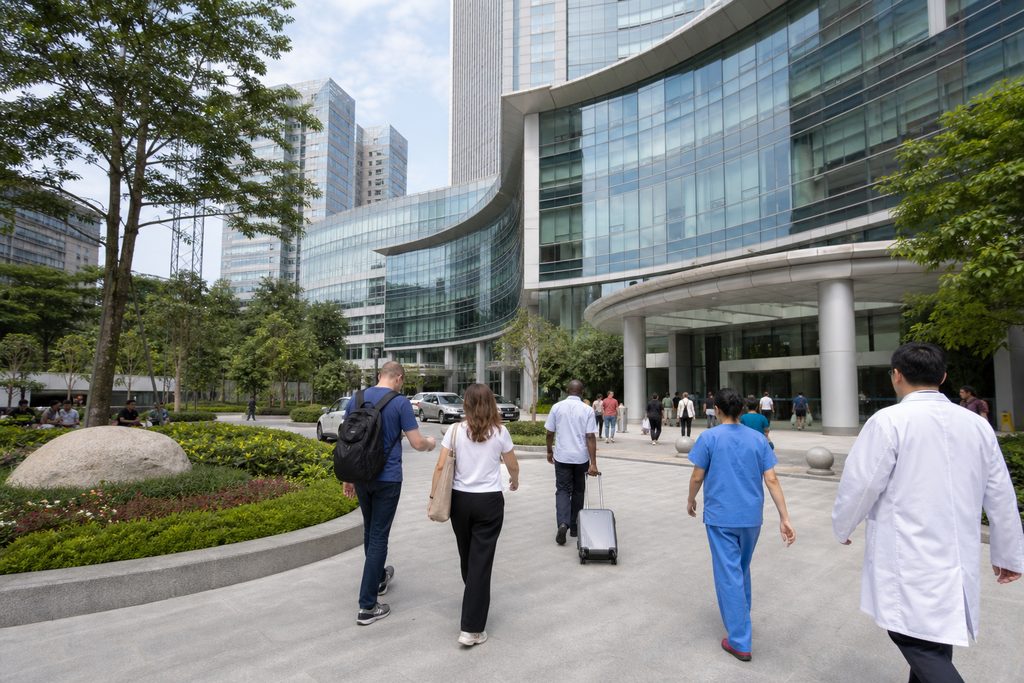
Digestive disorders affect an estimated 40% of people worldwide at some point in their lives, disrupting everything from daily comfort to long-term health. When standard local care stalls—repeated tests, long waits for a specialist, or a treatment plan that doesn’t seem to be working—looking abroad stops being a luxury. It becomes a practical next step. Nanfang Hospital, a major teaching center under Southern Medical University, handles a vast volume of complex GI cases annually. But navigating it from overseas is not a matter of simply booking a flight. Our team exists to handle the logistics that make that care accessible: records, appointments, language, and the physical path through the hospital. This article lays out exactly how that coordination works, what it costs, and what to expect if you are considering a gastroenterology treatment cost in Guangzhou.
How This Actually Works, Step by Step
The process starts before you ever book a plane ticket. It begins with paperwork. You send us your existing medical records—endoscopy reports, biopsy results, imaging files on a CD or cloud link, and a brief summary of your current symptoms and treatment history. Our team translates these documents into clinical Chinese, preserving the precise terminology that a specialist needs. This translation step is not a Google Translate job. A misinterpreted pathology term can derail an entire consultation.
We submit the translated file to the gastroenterology department’s international coordination office at Nanfang Hospital. A senior specialist reviews your case and provides a written second opinion. This document outlines whether your condition falls within their scope, what additional testing they might require, and a provisional treatment direction. The written second opinion typically costs between $300 and $500. You receive it in English, along with our team’s plain-language summary of what it means for your next steps.
If the opinion confirms that traveling to Guangzhou makes sense, we move to scheduling. This is where most overseas patients hit a wall. Chinese public hospitals do not allow remote booking of outpatient appointments for first-time visitors. The system requires an in-person presence to create a hospital medical card and queue for a registration number. We handle this through a proxy consultation service. A member of our team physically goes to the hospital with your documents, creates the card, and secures the appointment slot. For patients who want to minimize their time in China before a procedure, we can also coordinate a video consultation with the specialist first, so you arrive only when a clear plan is already in place.
What Does a Gastroenterology Treatment Cost in Guangzhou Really Look Like?
Numbers matter. Patients researching a gastroenterology treatment cost in Guangzhou are usually comparing it against quotes from private hospitals in Bangkok, Singapore, or their home country. The cost structure in a Chinese top-tier public hospital is different. It is not a package price. You pay for each component: the specialist consultation fee, the procedure itself, anesthesia, pathology, and the inpatient bed if you are admitted.
For a diagnostic upper endoscopy with sedation, the procedure fee at Nanfang Hospital’s standard outpatient department runs approximately $300 to $600. A colonoscopy with polypectomy typically falls in the $500 to $1,200 range, depending on the complexity and number of polyps removed. These figures are the hospital’s charges for the medical service. They do not include our coordination service fees, which cover the case management, translation, appointment securing, and the bilingual medical companion who stays with you on the day of the procedure.
For more complex interventions—an ERCP for a bile duct stone, or a laparoscopic cholecystectomy—the inpatient surgical cost is often in the $4,000 to $9,000 range. This is the total hospital bill for a standard stay without major complications. Compare this to the $20,000 to $40,000 you might face in a U.S. outpatient surgery center, and the economic logic becomes clear. But the real question most patients have is not just the price. It is whether the clinical quality justifies the journey.
Nanfang Hospital’s gastroenterology department is not a small unit. It is a high-volume center where specialists see a concentration of difficult cases that a community hospital might encounter once a year. That volume translates into procedural fluency. Our role is not to sell you on the hospital. It is to present your case to the right team and let their assessment speak for itself.
A Realistic Timeline
Medical travel is not instant. Here is what a typical timeline looks like when you are coordinating gastroenterology care at Nanfang Hospital through our service.
| Stage | What Happens | Typical Duration |
|---|---|---|
| Week 1 | You send records. We translate and format them for clinical submission. | 3–5 business days |
| Week 2–3 | Department review. Written second opinion drafted and returned. | 5–10 business days |
| Week 4 | Video consultation (optional). You speak directly with the specialist. | Scheduled within 1 week of opinion |
| Week 5–6 | Visa processing. We provide the hospital invitation letter. You apply for an S2 visa at your local Chinese embassy or consulate. | 1–3 weeks, varies by country |
| Week 7 | Proxy appointment secured. Our team physically registers you at Nanfang Hospital. | 1–2 days after visa confirmation |
| Week 8 | You arrive in Guangzhou. Bilingual companion meets you. Outpatient consultation and procedure scheduling happen within days. | Procedure often within 3–5 days of arrival |
The waiting steps are the ones that surprise people. Document translation is not a formality. It requires a medical translator who understands both gastroenterology terminology and the format that Chinese specialists expect. Visa processing time is outside our control, but we have learned to submit the hospital invitation letter in a format that consulates recognize. The proxy appointment step is the one that saves you the most time. Without it, you would arrive in Guangzhou, go to the hospital at 6 a.m., queue for a registration number, and possibly find that the specialist you need is fully booked for the next two weeks.
What Can Go Wrong—and What Happens Then
Let’s be direct about the failure modes. The specialist reviews your records and concludes that your case is not suitable for their department. This happens. Sometimes the pathology is outside their subspecialty focus. Sometimes the imaging is too old to base a decision on. When this occurs, we do not push for a consultation anyway. We return to you with the specific reason and, if possible, a recommendation for a more appropriate department or hospital. The written second opinion fee is non-refundable in this scenario—the specialist’s time was spent reviewing your file—but you are not committed to anything further.
Another friction point: you arrive in Guangzhou, and during the in-person consultation, the specialist orders a repeat endoscopy because your overseas images are inconclusive or too dated. This is not a scam. It is standard clinical practice. A surgeon making a treatment decision needs current, high-resolution imaging that meets their own department’s protocol. The cost and time for this repeat test fall on you. We prepare patients for this possibility in advance. Budget for it.
A third scenario: the procedure is done, but the recovery is slower than expected, and you need to extend your stay. Our team can assist with hotel extensions and rescheduling your airport transfer. We cannot change your visa duration, however. An S2 visa is typically issued for a specific period. If you need to stay longer for medical reasons, you must apply for an extension through the local Exit-Entry Administration bureau in Guangzhou. We can guide you to the office and help with the paperwork, but the approval decision rests with the authorities.
And the most serious failure mode: a complication during the procedure. Perforation during a polypectomy, post-ERCP pancreatitis, an adverse reaction to anesthesia. These are rare but real risks in any gastroenterology procedure anywhere in the world. Nanfang Hospital has the in-house critical care capability to manage these events. That is one reason we guide patients toward large teaching hospitals rather than small private clinics. Our companion stays with you through the immediate post-procedure period and acts as a communication bridge if something goes wrong. We do not provide medical care. We ensure you are not alone in a system where you do not speak the language.
Is Gastrointestinal Surgery Safe in China? How to Evaluate a Provider
Safety is not a yes-or-no question. It is a question of which hospital, which department, and which safeguards are in place. When a patient asks us “is gastrointestinal surgery safe in China,” we reframe the question: “How do you identify a safe surgical unit?”
Start with volume. A department that performs a high number of a specific procedure annually has lower complication rates. This is a well-documented relationship in surgical literature. Nanfang Hospital’s gastroenterology department is a regional referral center for complex biliary and pancreatic interventions. The specialists here do not see a few ERCPs a month. They see them weekly, including the difficult ones that community hospitals refer out. Volume does not guarantee a good outcome, but it is a stronger predictor than a hospital’s marketing materials.
Then look at the anesthesia setup. In some countries, a propofol sedation for endoscopy is administered by a nurse under the endoscopist’s supervision. At Nanfang Hospital, sedation for complex procedures is typically managed by a dedicated anesthesiologist. This is a different safety profile. Ask about it explicitly during your video consultation. Ask who manages the airway if something goes wrong. The answer tells you more about the unit’s safety culture than any accreditation certificate.
Also, check the pathology turnaround. A hospital that rushes a biopsy report is not doing you a favor. Proper histological processing takes time. At Nanfang Hospital, routine GI biopsy results are typically available within 5 to 7 working days. Immunohistochemistry stains, if needed, add more time. If you are traveling for a procedure and hoping to get results before flying home, plan your stay accordingly. Do not book a return flight three days after a colonoscopy with polypectomy and expect a full pathology report in hand.
Our team does not audit hospitals for you. We present you with the factual characteristics of a department—its case volume, its subspecialty focus, its anesthesia protocols—and let you make the judgment. For patients who want an even deeper look, our department rankings and specialty pages provide context on how different hospitals compare within China’s system.
Practical Considerations: Records, Visa, and Payment
Let’s get into the specifics that determine whether this works logistically.
Medical records. You need them in digital form. Scanned PDFs of endoscopy reports are the minimum. The original images—the actual DICOM files from a CT scan or the high-resolution photos captured during your last colonoscopy—are far more useful than a written summary. If your previous gastroenterologist only gave you a one-page report, ask for the raw images. They exist. The hospital’s PACS system stores them. Request a CD or a secure download link. We can work with both.
Visa. The correct category for medical treatment in China is the S2 visa, which covers short-term private affairs including medical visits. Your accompanying family member also applies for an S2. The hospital provides an official invitation letter that you submit with your application. Processing times vary by country. A U.S. passport holder might get it in four business days. An applicant from a country with a smaller Chinese consular presence might wait three weeks. Apply early. We cannot expedite a government process, but we can make sure your paperwork is correct the first time.
Payment. Chinese public hospitals operate on a prepayment model. You deposit funds at the cashier window before a procedure or admission. The hospital draws down from that deposit as charges accrue. Any remainder is refunded at discharge. International credit cards are not reliably accepted at the hospital’s standard cashier counters. You will need either a Chinese bank card, enough cash in RMB to cover the estimated costs, or a wire transfer set up in advance. Our companion handles the physical payment process with you on the day, but you must arrive with the funds accessible. This is not a bill-later system.
Language. Even in a hospital with an international department, the flow of a procedure day—the pre-op check-in, the recovery room instructions, the discharge paperwork—happens in Chinese. Our bilingual companion is present for exactly this reason. They translate the nurse’s instructions, confirm your identity at each handoff point, and make sure you understand the post-procedure diet and medication schedule before you leave. This is not a luxury service. It is a safety function.
For patients who want to understand the broader landscape before committing to one hospital, our Guangzhou city page outlines the major medical centers in the region, including how Nanfang Hospital fits into the city’s healthcare ecosystem.
Frequently Asked Questions
You cannot book it directly as an overseas patient. The hospital requires an in-person outpatient consultation first. Our proxy service handles this: we physically go to the hospital with your translated records, create your medical file, and secure the consultation appointment. After the specialist sees you in person, the procedure is scheduled—often within the same week. This is the closest thing to “booking from overseas” that the system allows.
The hospital’s charges for a procedure are one part. You also need to account for our case management and companion fees, which start from $300 per day for the bilingual companion and from $300 for the appointment coordination. Add to that your flight, hotel, visa fee, and a buffer for any repeat tests the specialist orders. A realistic all-in budget for a diagnostic endoscopy trip, including travel and our services, is $3,500 to $6,000. A surgical admission pushes that higher. We provide a detailed cost breakdown during the consultation phase, not a vague estimate.
Nanfang Hospital has a dedicated international medical services office that handles overseas patients. This is not the case at every top-tier Chinese hospital. The office provides a single point of contact for appointment scheduling, inpatient admission, and billing inquiries. Our team interfaces with this office directly, which means your case does not get lost in the general outpatient chaos. The hospital also has a concentration of English-speaking senior gastroenterologists, though not all staff speak English—hence the companion.
You should go where the clinical fit is best, not where the package is cheapest. Nanfang Hospital’s gastroenterology department is a high-volume center for complex biliary, pancreatic, and advanced endoscopic procedures. If your case is straightforward—a routine screening colonoscopy—then a medical tourism package elsewhere might serve you fine. If your case involves a complicated stricture, a prior failed ERCP, or a lesion in a difficult location, the depth of subspecialty experience in a major Chinese teaching hospital becomes more relevant. The question is not “which country is cheaper.” It is “which team has handled my specific problem most often.”
Your Next Step
Arranging gastroenterology care across borders is a sequence of practical steps, not a leap of faith. The hospital exists. The expertise is real. The gap is the coordination layer between your medical history and the specialist who needs to read it. That is the work we do. We are not physicians, and we do not offer medical advice. We are a case management team that translates, submits, schedules, and accompanies—so that when you walk into Nanfang Hospital, you are walking into a prepared appointment, not a foreign lobby with a registration number and no plan.
If you have records ready and want to know whether your case is a fit, the next step is a free initial consultation. We will review what you have, explain what the process would look like for your specific situation, and give you a clear cost picture before you commit to anything. You can start that conversation through our patient services page. No pressure. Just the facts, so you can decide with clarity.
For more medical information and treatment options in China, visit chinamedservices.com (China Medical Services).
