First Hospital Nanning International Patient Service: Your ASEAN Medical Hub
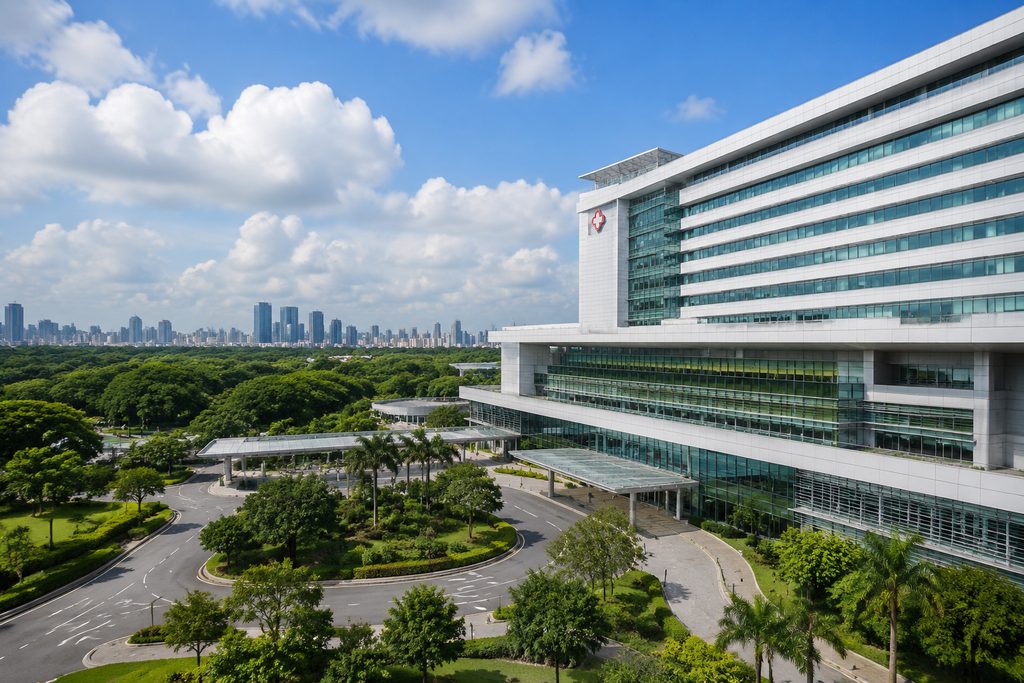
Have you ever stared at a diagnosis and wondered if the best possible care exists somewhere just a little beyond your borders? That question brings a growing number of patients from across Southeast Asia to one specific address in southern China. The First Affiliated Hospital of Guangxi Medical University in Nanning has quietly built a reputation as the region’s most accessible gateway to advanced medical care, and understanding the First Hospital Nanning international patient price list is often the first practical step in a journey that feels equal parts urgent and overwhelming.
What sets this institution apart is not just its clinical firepower. It is the geography. Nanning sits closer to Hanoi than it does to Beijing. For patients coming from Vietnam, Thailand, Cambodia, Laos, or Malaysia, this proximity transforms what could be an exhausting medical pilgrimage into something far more manageable. The hospital has leaned into this advantage with intention, developing dedicated international patient services designed specifically for the ASEAN community. We have helped dozens of patients navigate this exact pathway, and the patterns of what works—and what catches people off guard—are worth understanding before you book a flight.
Key Takeaways
- First Hospital Nanning performs over 70,000 inpatient surgeries annually, ranking it among China’s highest-volume medical centers and creating deep clinical expertise in complex procedures.
- The hospital’s International Medical Center was purpose-built to serve ASEAN patients, with dedicated coordinators, multilingual staff, and streamlined admission pathways that bypass the standard outpatient chaos.
- Direct access as an independent international patient is extremely difficult without Chinese language fluency and local documentation—this is not a barrier you can improvise your way through.
- Treatment costs typically run 60-80% below equivalent care in Singapore or Bangkok, but the published international patient price list requires context to interpret accurately for your specific case.
The Problem: Southeast Asia’s Medical Capacity Gap Is Sending Patients Across Borders
Southeast Asia’s healthcare infrastructure has improved dramatically over the past decade. But there remains a stubborn gap between what patients need and what regional hospitals can deliver. Approximately 40% of ASEAN patients requiring complex cardiac surgery, advanced oncology interventions, or organ transplantation still travel outside their home countries for treatment, according to data from the ASEAN Health Cluster. The reasons are structural: a shortage of subspecialist surgeons, limited access to robotic surgical platforms, and public hospital waitlists that stretch beyond what a stage II cancer diagnosis can safely accommodate.
Singapore and Bangkok have traditionally captured most of this medical travel demand. But their success has created its own problem. Prices have risen. A cardiac bypass at a private Bangkok hospital now runs $25,000 to $35,000. Singapore’s private sector charges more. For a family in Ho Chi Minh City or Phnom Penh selling property or borrowing against a business to fund treatment, those numbers are prohibitive. That is where Nanning enters the conversation—not as a budget alternative that compromises on quality, but as a high-volume academic medical center with a structural cost advantage that has nothing to do with cutting corners.
Who We Are
We are not a hospital. We do not provide medical treatment, make diagnoses, or offer clinical opinions. Our team functions as your logistical architects—we bridge the gap between you and China’s top-tier medical expertise. We handle the coordination that makes crossing a border for healthcare feel less like a leap of faith and more like a planned, predictable process. Our database covers 340+ top-ranked hospitals across 37 Chinese cities, and First Hospital Nanning is one of the institutions we know intimately. We have walked its corridors, worked with its international patient coordinators, and understand the precise sequence of steps required to move from an initial inquiry to a confirmed surgical date. That operational knowledge is what we bring to every patient engagement.
Why First Hospital Nanning Delivers Results for ASEAN Patients
Clinical Volume That Creates Unmatched Surgical Experience
First Affiliated Hospital of Guangxi Medical University is not a small boutique facility. It operates over 2,700 beds and handles more than 3 million outpatient visits annually. The numbers matter because surgical outcomes correlate with volume. A cardiac surgeon here performs more valve replacements in a single month than a typical regional hospital surgeon completes in a year. The hospital’s liver transplant program is one of the largest in southern China, and its oncology department runs 47 clinical trials at any given time. For patients with complex conditions—recurrent nasopharyngeal carcinoma, complicated structural heart disease, pediatric hematological malignancies—this depth of experience translates directly into better clinical decision-making when cases get difficult.
We have seen this play out repeatedly. A patient arrives with imaging that has stumped two previous hospitals. The Nanning team reviews it and identifies a surgical approach within hours. Not because they are magicians. Because they have seen that exact presentation 40 times before.
An International Medical Center Built Specifically for Cross-Border Patients
Most Chinese public hospitals are not designed for foreigners. The registration systems require Chinese ID numbers. The signage is exclusively in Mandarin. The outpatient halls are famously overwhelming, with thousands of patients moving through simultaneously. First Hospital Nanning addressed this by establishing a dedicated International Medical Center that operates as a hospital-within-a-hospital. It has its own registration desk, its own waiting areas, and coordinators who speak Vietnamese, Thai, and English. This is not a token translation service bolted onto a standard Chinese hospital experience. It is a separate patient flow designed from the ground up for people who do not speak the language and do not understand the system.
The center also handles the practical logistics that independent travelers find maddening: scheduling consultations across multiple departments on the same day, arranging inpatient admission without the standard multi-day wait, and generating itemized billing in English that international insurers can actually process. For anyone who has tried to navigate a Chinese hospital alone, the value of this infrastructure is difficult to overstate.
Cost Structures That Reflect Economics, Not Quality Compromises
The most common question we receive about the First Hospital Nanning international patient price list is whether lower prices signal lower standards. The answer requires understanding why Chinese academic hospitals cost less. It is not about inferior equipment or less qualified surgeons. First Hospital Nanning uses the same da Vinci surgical robots, the same linear accelerators for radiation oncology, and the same imaging platforms as any top-tier Western or Singaporean hospital. The cost difference comes from structural economics: physician salaries in China’s public system are a fraction of those in private Bangkok or Singapore hospitals, hospital construction costs are amortized differently, and the sheer patient volume spreads fixed costs across far more cases.
| Procedure | First Hospital Nanning (USD) | Bangkok Private Hospital (USD) | Singapore Private Hospital (USD) |
|---|---|---|---|
| Cardiac Bypass Surgery | $12,000–18,000 | $25,000–35,000 | $40,000–60,000 |
| Liver Transplant | $50,000–70,000 | $90,000–120,000 | $150,000–200,000 |
| Knee Replacement | $8,000–12,000 | $15,000–22,000 | $25,000–35,000 |
| Radiation Therapy (30 sessions) | $6,000–10,000 | $15,000–25,000 | $25,000–40,000 |
These are not promotional estimates. They reflect actual billing data from cases we have coordinated, with ranges that account for case complexity and implant choices. The international patient price list at First Hospital Nanning is published internally and updated annually, but interpreting it without guidance is tricky. Some line items bundle services that Western hospitals bill separately. Others exclude costs that patients assume are included. We walk every patient through their specific estimate before any commitment is made, because surprises in medical billing are the worst kind of surprise.
What You Need to Know Before Going Alone
We have seen capable, resourceful people attempt to arrange treatment at First Hospital Nanning independently. Some succeed. Most hit walls they did not anticipate. Here is what those walls look like.
- Visa Requirements Are Specific and Non-Negotiable: Medical treatment in China requires an S2 visa with a specific annotation indicating the purpose of travel is medical. The supporting documentation must include an official invitation letter from the hospital, a detailed treatment plan, and proof of financial capacity. The hospital’s international patient coordinator can issue the invitation letter, but reaching that coordinator without an introduction is the first challenge. Embassies in some ASEAN countries also require additional documentation that varies by nationality. Getting this wrong means a visa rejection and a delayed treatment timeline that some conditions cannot afford.
- Payment Systems Do Not Work the Way You Expect: Chinese public hospitals operate on a prepayment model. You deposit funds at admission, and the hospital draws down against that deposit as services are rendered. International credit cards are not accepted at the hospital’s standard payment counters. The International Medical Center can process international transfers and certain card payments, but the workflow is different from what patients expect. We have seen families arrive with a Visa card and no alternative, then spend an afternoon scrambling to arrange a wire transfer while their loved one waits in the admission area.
- The Language Barrier Extends Beyond Conversation: Even within the International Medical Center, medical records, consent forms, and discharge instructions exist primarily in Chinese. The coordinators translate verbally, but written documentation in English is not guaranteed. For patients who need to share records with their home-country physicians or submit claims to international insurers, this creates a documentation gap that requires advance planning to close.
How We Help You Navigate This
These barriers are not signs of institutional failure. They exist because First Hospital Nanning is fundamentally a Chinese public hospital that has added international patient services on top of its core mission of serving domestic patients. The International Medical Center bridges much of the gap, but it does not eliminate it entirely. Our role is to handle everything that falls through the cracks.
Before you travel, we collect and translate your medical records, submit them through the hospital’s formal international referral channel, and obtain a preliminary treatment assessment and cost estimate. We coordinate the invitation letter required for your S2 visa application and verify that your specific nationality’s documentation requirements are met. During treatment, our bilingual medical companions are physically present—handling registration, escorting you between departments, translating consultations in real time, and managing the prepayment and billing process so you focus on recovery instead of logistics. After discharge, we ensure you leave with properly translated medical records, a clear follow-up plan, and the documentation your insurer requires.
We also provide honest counsel about whether First Hospital Nanning is the right destination for your specific case. Sometimes it is. For certain subspecialties or rare conditions, a different hospital in our network—perhaps in Guangzhou or Shanghai—offers a meaningfully better clinical match. We tell you that upfront because our reputation depends on patients getting the right care, not just any care in China.
Is First Hospital Nanning JCI Accredited?
This question comes up in nearly every initial consultation, and the answer requires context. First Affiliated Hospital of Guangxi Medical University is not currently JCI-accredited. JCI accreditation is an international standard developed by the Joint Commission International, and it is common among private hospitals in China that cater primarily to expatriates and medical tourists—facilities like United Family Healthcare or Jiahui International Hospital. Public academic medical centers in China, including many of the country’s most prestigious institutions, operate under a different accreditation framework: the National Health Commission’s hospital grade system. First Hospital Nanning holds the highest domestic rating of Grade 3 Class A, which evaluates clinical outcomes, infection control, research output, and teaching capacity through a rigorous government-administered review process.
Does the absence of JCI accreditation matter? For some insurers, yes—certain international policies require treatment at JCI-accredited facilities for direct billing eligibility. We flag this early in the process so patients can confirm coverage before committing. But clinically, the hospital’s domestic rating and published outcome data place it solidly among China’s top-tier institutions. Its organ transplant program, cardiac surgery volumes, and oncology clinical trial portfolio compare favorably with JCI-accredited hospitals in the region. The accreditation difference reflects regulatory frameworks, not clinical quality.
Medical Tourism Packages Guangxi China: What Is Actually Included
The term “medical tourism package” gets used loosely, and patients sometimes arrive with expectations shaped by cosmetic surgery retreats in Thailand or wellness resorts in Bali. Medical treatment at First Hospital Nanning is not that. There is no concierge picking you up in a luxury van, no recovery villa with a pool, no bundled sightseeing itinerary. What exists instead is a coordinated care pathway that the hospital’s International Medical Center packages for cross-border patients: pre-arrival medical record review, a scheduled consultation sequence, admission coordination, the procedure itself, inpatient recovery, and discharge planning—all handled through a single point of contact who speaks your language.
Some third-party facilitators in Guangxi market “all-inclusive medical tourism packages” that bundle hotel accommodations, airport transfers, and even local tours with hospital care. We have reviewed several of these offerings. The quality varies enormously. Some are legitimate. Others inflate the hospital’s actual charges by 40-60% and pocket the difference. Our approach is different. We provide a transparent breakdown: the hospital’s charges at their published international patient rates, plus our coordination fees for the specific services you need. Accommodation, transport, and anything beyond clinical coordination are arranged separately at cost. You see exactly where your money goes.
How to Book Medical Treatment at Guangxi Medical University Hospital
The pathway to booking treatment at First Hospital Nanning is not a simple online form. The hospital does not accept self-scheduled international appointments through a public website. The process flows through the International Medical Center’s coordinator team, and reaching them requires a formal referral—either from a partner organization like ours or through a direct inquiry that includes translated medical records and a clear treatment request.
The sequence typically runs as follows: medical records are submitted for departmental review, typically taking 3-7 business days depending on case complexity and the specific department’s workload. If the department accepts the case, the coordinator issues a preliminary treatment plan with an estimated cost range and timeline. The patient uses this documentation to apply for the S2 visa. Once the visa is secured, specific dates are locked in for the initial consultation, and the patient travels to Nanning. The first consultation is always in-person—Chinese regulations do not permit surgical scheduling or inpatient admission based solely on remote consultations. This means every international patient must plan for an initial trip that may involve a consultation-only visit before a second trip for the actual procedure, unless the condition and department protocols allow for same-trip scheduling.
We manage this entire sequence on behalf of our patients. The medical record translation, the departmental submission, the back-and-forth with the coordinator, the visa documentation package, the scheduling logistics. Patients arrive in Nanning with a confirmed appointment and a bilingual companion waiting at the hospital entrance. The alternative—attempting to navigate this independently via email and phone calls in Mandarin—is something we have watched intelligent, determined people struggle with for weeks.
Frequently Asked Questions
The International Medical Center at First Hospital Nanning can be reached through the hospital’s main switchboard, but the coordinators prioritize inquiries that arrive through established referral channels with complete medical documentation. Cold emails or calls in English often receive delayed responses or get routed to general administrative staff who cannot provide clinical coordination. We maintain direct working relationships with the coordinator team and can facilitate an introduction within 1-2 business days for patients who engage our case management services.
This is the question that keeps patients awake at night, and we answer it directly. First Hospital Nanning is a tertiary academic medical center with full intensive care capabilities, 24-hour emergency surgical coverage, and the ability to manage virtually any complication that could arise from a planned procedure. The clinical safety net is robust. The practical challenge for international patients is communication during a crisis. If a complication occurs and you are alone with limited Mandarin, understanding what is happening and making informed decisions becomes extremely difficult. Our bilingual companions remain with patients throughout hospitalization specifically to ensure that if something deviates from the expected course, you are never left without a translator and advocate at your bedside.
Coverage depends entirely on your specific policy. Some international insurers have direct billing arrangements with the hospital’s International Medical Center. Others require you to pay upfront and submit claims for reimbursement. A subset of policies exclude treatment at non-JCI-accredited facilities, which would rule out First Hospital Nanning. We help patients verify coverage during the initial case review by contacting their insurer with the hospital’s provider documentation and proposed treatment codes. If coverage is denied, we can often recommend alternative hospitals in our network that meet the insurer’s requirements while still offering meaningful cost advantages over treatment in Singapore or Bangkok.
For complex tertiary care—organ transplantation, cardiac surgery, neurosurgery, advanced oncology—First Affiliated Hospital of Guangxi Medical University is the clear leader in Nanning and one of the strongest hospitals in all of southern China. Its International Medical Center and deliberate focus on serving ASEAN patients give it an operational advantage that other Nanning hospitals lack. For less complex procedures or for patients who prioritize a Western-style private hospital experience, the options in Nanning are more limited than in Beijing or Shanghai. In those cases, we sometimes recommend looking beyond Nanning to hospitals in our broader network that better match the patient’s priorities. The best hospital is always the one that best fits your specific clinical needs, budget, and comfort requirements—not simply the most famous name.
Your Next Step
Choosing to cross a border for medical care is never a small decision. It sits at the intersection of fear, hope, logistics, and money—four forces that do not naturally coexist peacefully. First Hospital Nanning has earned its reputation as the ASEAN region’s most practical gateway to advanced Chinese medical care. The clinical volumes are real, the International Medical Center is purpose-built for patients like you, and the cost advantage over Singapore or Bangkok is structural and sustainable. But the pathway from your diagnosis to a successful discharge in Nanning runs through a series of logistical gates that are genuinely difficult to open without local knowledge and language capability.
If you are considering treatment at First Hospital Nanning—or anywhere else in China—and want to understand what the process would actually look like for your specific case, we invite you to reach out for a free consultation. No commitment, no pressure. Just an honest conversation about your options, your timeline, and what it would take to make it work.
Disclaimer: This article is for informational purposes only and does not constitute medical advice. Treatment decisions should be made in consultation with qualified medical professionals. Prices cited are estimates based on historical data and vary by hospital, case complexity, and individual patient factors.
For more medical information and treatment options in China, visit chinamedservices.com (China Medical Services).
