West China Second Hospital Chengdu: Women’s Health & Pediatric Excellence
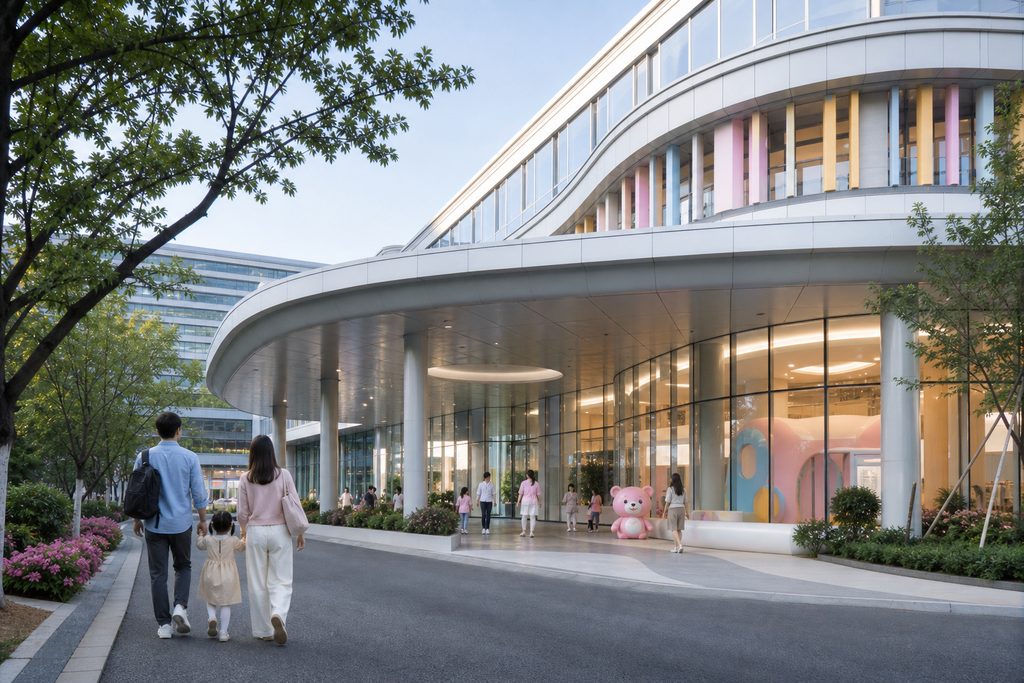
West China Second Hospital Chengdu: Southwest China Women’s Health and Pediatric Center
What if the biggest barrier to world-class women’s healthcare wasn’t medical expertise, but geography? A patient in London waits 18 weeks for endometriosis surgery. A family in Los Angeles pays $30,000 for a pediatric cardiac procedure. Meanwhile, in Chengdu, a hospital performs over 12,000 gynecological surgeries annually—at a fraction of the cost. The question worth asking: does quality care have to come with a punishing price tag or an endless wait? The women’s health treatment cost in Chengdu tells a different story altogether.
West China Second University Hospital sits at the center of that story. It is not just another large Chinese hospital. It is the definitive referral center for complex obstetrics, gynecologic oncology, and pediatric subspecialties across a region of over 200 million people. Our team at China Medical Services has coordinated care here for patients from 14 countries. We have seen the clinical data. We have navigated the corridors. We know what this institution can deliver—and what it demands from international patients who arrive unprepared.
Key Takeaways
- West China Second Hospital handles over 2 million outpatient visits annually, making it one of the highest-volume women’s and children’s hospitals globally—volume that translates directly to surgical precision.
- The hospital is consistently ranked among China’s top 10 for obstetrics and gynecology by the Fudan University Hospital Ranking, a distinction held by fewer than five institutions in western China.
- International patients face a genuine language barrier here—fewer than 5% of clinical staff speak functional English, making independent navigation nearly impossible without bilingual support.
- Prenatal care and delivery packages at the hospital’s international department start from approximately $8,000, roughly one-fifth the cost of comparable private care in Singapore or the United States.
The Problem: When Quality Women’s Care Is Out of Reach
Approximately 1 in 10 women of reproductive age worldwide has endometriosis, according to the World Health Organization. Many wait years for a definitive diagnosis. In Canada, the median wait time between referral and gynecological surgery reached 14.4 weeks in 2023, per the Fraser Institute. In the UK’s NHS, the figure can stretch past 18 weeks. For pediatric subspecialties, the numbers get worse. A child needing pediatric urology surgery in New Zealand might wait 6 months. In Ireland, 8 months.
Then there is the cost. A routine delivery without complications at a US hospital averages $18,865, according to the Peterson-KFF Health System Tracker. A cesarean section: $26,280. High-risk pregnancies involving maternal-fetal medicine specialists and NICU stays can exceed $100,000. Even insured families face deductibles that wipe out savings. Uninsured patients? The numbers are catastrophic.
These are not abstract statistics. They are the reason patients from Sydney, Vancouver, London, and Dubai contact us. They have a diagnosis. They know what surgery or treatment they need. They simply cannot access it at home—not without financial ruin or a wait that risks disease progression. For women facing gynecologic cancers, a 16-week delay is not an inconvenience. It is a threat.
Who We Are
We are not a hospital. We do not provide medical treatment, make clinical diagnoses, or offer second opinions ourselves. China Medical Services is a medical concierge organization—your logistical architects for accessing China’s top-tier hospitals. We bridge the gap between you and institutions like West China Second Hospital. We handle hospital matching, appointment coordination, bilingual medical escorts, visa guidance, and every practical detail that stands between an international patient and the care they need. Think of us as the team that makes the impossible logistics possible. Nothing more, nothing less.
Why West China Second Hospital Delivers Results
The hospital’s reputation rests on three pillars that matter to any patient evaluating a foreign medical institution: clinical volume, subspecialty depth, and demonstrable outcomes. Let us walk through each.
Clinical Volume That Builds Surgical Mastery
West China Second Hospital records over 2 million outpatient visits and more than 50,000 inpatient admissions annually. Its obstetrics service delivers over 10,000 babies each year. The gynecology department performs more than 12,000 surgeries. These are not estimates. They are the hospital’s published operational figures.
Why does this matter? The relationship between surgical volume and patient outcomes is well-documented. A 2017 study in The Lancet Oncology found that patients undergoing complex gynecologic cancer surgery at high-volume centers had significantly lower 30-day mortality rates. A surgeon performing 200 laparoscopic myomectomies annually simply operates with a level of fluidity and complication recognition that a surgeon performing 20 cannot match. At West China Second, the gynecologic oncology team manages approximately 3,000 new cancer cases per year. That caseload places it among the highest-volume centers in Asia.
For pediatric patients, the numbers are similarly telling. The hospital’s pediatric surgery department handles complex neonatal procedures, congenital heart defect repairs, and pediatric oncology cases at volumes that rival dedicated children’s hospitals in Boston or London. When a 6-month-old needs a hepatoportoenterostomy—the Kasai procedure for biliary atresia—you want a surgeon who has done it hundreds of times. Not dozens.
Subspecialty Depth Across Women’s and Children’s Medicine
This is where West China Second separates itself from general hospitals that also happen to have an OB/GYN department. The institution houses dedicated centers for:
- Maternal-fetal medicine: managing high-risk pregnancies, multiple gestations, and prenatal diagnostics with in-house fetal surgery capability.
- Gynecologic oncology: radical cytoreductive surgery for ovarian cancer, fertility-sparing cervical cancer procedures, and sentinel lymph node mapping.
- Reproductive endocrinology: one of China’s largest IVF programs, handling over 15,000 cycles annually with success rates comparable to top Western clinics.
- Pediatric cardiology and cardiac surgery: treating congenital heart defects from neonates through adolescents.
- Pediatric hematology-oncology: bone marrow transplantation and chemotherapy protocols aligned with international standards.
That breadth means a patient with a complex presentation—say, a pregnant woman with a cardiac condition—does not get shuttled between institutions. The maternal-fetal medicine team and the cardiology team consult under one roof. Records move seamlessly. Care is coordinated. For international patients, this consolidation of expertise eliminates a major source of friction.
Is West China Second Hospital Good for Delivery?
The short answer: yes, especially for high-risk deliveries. The longer answer requires context. The hospital’s obstetrics service is designed for complexity. It is the regional referral center for placenta accreta spectrum disorders, severe preeclampsia, and preterm labor management. Its NICU is a Level IV unit—the highest designation—capable of caring for infants born as early as 24 weeks gestation.
For low-risk, routine deliveries, the hospital offers both standard ward care and VIP/international department packages. The latter provide private rooms, dedicated nursing, and English-speaking coordination. A standard vaginal delivery in the international department typically runs from $8,000 to $12,000. A cesarean section, $12,000 to $18,000. These figures include prenatal visits from the second trimester, the delivery itself, and postpartum follow-up. Compared to US cash prices, the savings are substantial. Compared to private hospitals in Bangkok or Kuala Lumpur, the pricing is competitive—but the clinical backup for emergencies is in a different league entirely.
One caveat: the hospital is busy. The outpatient obstetrics clinic sees hundreds of patients daily. Without a coordinator, the experience can feel overwhelming. With one, it is structured and efficient. We will return to this point.
Understanding Medical Tourism Packages at West China Hospital
The phrase “medical tourism packages” carries baggage. It evokes images of discounted facelifts and dental veneers bundled with hotel stays. That is not what West China Second Hospital offers. The medical tourism packages West China Hospital provides through its international department are clinical care bundles—not vacation add-ons.
A typical gynecology surgery package includes: pre-operative consultation and diagnostics, the surgical procedure itself, hospital bed charges for the standard recovery period, basic medications, and post-operative follow-up within a defined window. Pricing varies sharply by procedure. A laparoscopic ovarian cystectomy might run $5,000 to $8,000. A radical hysterectomy with lymph node dissection for cervical cancer: $15,000 to $22,000. These are all-in figures—surgeon fees, anesthesia, operating theater, ward, and routine pathology.
What packages do not include: airfare, accommodation outside the hospital, visa fees, interpreter services, or treatment for complications that extend the hospital stay beyond the standard recovery period. Patients should budget for contingencies. A 10-day hospital stay that stretches to 18 days due to a wound infection will incur additional charges. This is not unique to China—it is standard practice globally—but it is worth stating plainly.
Obstetrics and Gynecology Price Abroad: China in Context
How does the obstetrics and gynecology price abroad China compare to other destinations? Let us look at concrete numbers.
| Procedure | China (West China Second, International Dept) | United States (Cash Price, Average) | Thailand (Private Hospital) | India (JCI-Accredited Hospital) |
|---|---|---|---|---|
| Normal Vaginal Delivery | $8,000 – $12,000 | $18,865 | $4,000 – $6,000 | $2,500 – $4,000 |
| Cesarean Section | $12,000 – $18,000 | $26,280 | $6,000 – $9,000 | $3,500 – $5,500 |
| Laparoscopic Hysterectomy | $10,000 – $16,000 | $35,000 – $45,000 | $8,000 – $12,000 | $5,000 – $8,000 |
| IVF Cycle (Single) | $4,000 – $6,000 | $15,000 – $20,000 | $5,000 – $8,000 | $3,000 – $5,000 |
China sits in the middle-upper tier of Asian medical destinations. It is more expensive than India, roughly on par with mid-range Thai hospitals, and dramatically cheaper than the United States. But price alone is the wrong metric. The question is value: what clinical capability does each dollar buy? On that measure, West China Second’s combination of high-risk obstetrics, Level IV NICU, and gynecologic oncology expertise gives it a value proposition that cheaper destinations cannot match. A patient with a complex condition who chooses based solely on price may save money on the procedure and spend far more managing complications in a facility unequipped to handle them.
How to Book Gynecology Surgery in Chengdu
The process of understanding how to book gynecology surgery in Chengdu starts with a reality check. You cannot simply email the hospital, pick a date, and show up. Chinese public hospitals—even their international departments—operate on a consultation-first model. Here is the actual workflow:
Step one: a specialist must review your medical records. This means translated, organized documentation—imaging reports, pathology slides, prior surgical notes. The hospital needs to confirm that your case falls within their scope and that surgery is indicated. Step two: a video consultation or in-person visit is scheduled. The surgeon evaluates you directly. Only after this consultation can a surgery date be proposed. Step three: pre-operative clearance. Blood work, imaging, anesthesia consultation—all completed in Chengdu, typically over 2 to 5 days. Step four: admission and surgery. Step five: post-operative monitoring and discharge planning.
The entire process, from initial record submission to walking out of the hospital post-surgery, typically spans 3 to 6 weeks. Complex oncology cases may require longer. This is not a weekend trip. Patients must plan for an extended stay, and they must account for the possibility that the surgeon, upon reviewing the case, recommends a different approach than anticipated. Flexibility is not optional—it is essential.
The Best Pediatric Hospital in Southwest China: What Parents Should Know
When a child needs surgery, the emotional calculus changes entirely. Parents do not optimize for cost. They optimize for the best possible hands. West China Second Hospital is widely regarded as the best pediatric hospital southwest China has to offer—a reputation grounded in its status as the regional referral center for complex pediatric cases.
The pediatric surgery department covers general pediatric surgery, neonatal surgery, pediatric urology, pediatric orthopedics, and pediatric neurosurgery. The pediatric cardiology program manages congenital heart disease from fetal echocardiography through surgical correction. What distinguishes the hospital is not any single capability but the integration: a child with a congenital diaphragmatic hernia, for instance, moves from prenatal diagnosis by the maternal-fetal medicine team to delivery in a facility with immediate neonatal surgical capability, to NICU management, to surgical repair, to long-term follow-up—all within the same institution.
For international families, the practical considerations are significant. Pediatric wards in Chinese hospitals operate differently than Western ones. Parents or guardians are expected to stay with the child and provide basic care—feeding, bathing, comforting. The hospital provides medical and nursing care, not hotel-style hospitality. Bringing a support person is strongly advisable. The international department can arrange private rooms that accommodate a parent staying overnight, but the cultural expectation of family involvement in bedside care is non-negotiable.
What You Need to Know Before Going Alone
We have seen patients attempt to navigate West China Second Hospital independently. Some succeed. Most encounter obstacles they did not anticipate. Here are the barriers that matter:
- Language: Clinical staff—nurses, residents, technicians—overwhelmingly speak Mandarin and Sichuanese dialect. English-speaking attending physicians exist, particularly in the international department, but they are the exception. Registration forms, consent documents, discharge instructions, and pharmacy labels are in Chinese. Google Translate does not reliably handle medical terminology. A mistranslated medication instruction is a genuine safety risk.
- Payment Systems: The hospital’s international department accepts wire transfers and major credit cards. The standard outpatient and inpatient departments operate on a prepaid card system linked to Chinese bank accounts and WeChat Pay. International credit cards are not accepted at standard registration counters. A patient attempting to pay a standard outpatient consultation fee with a Visa card will be turned away.
- Medical Records and Imaging: The hospital requires pathology slides to be submitted as physical glass slides, not digital scans, for second-opinion review. Imaging must often be provided on CD-ROM in DICOM format. Faxed or emailed PDFs are insufficient. Getting these materials from a home-country hospital to a Chengdu pathology lab requires logistical planning that most patients underestimate.
- Visa Requirements: Medical treatment in China requires an S2 visa with a notation specifying the purpose of medical treatment. The application demands an invitation letter from the hospital, proof of appointment, and documentation of financial means. Processing times vary by consulate. Our team handles this documentation end-to-end, but patients attempting it independently should budget 4 to 8 weeks for visa processing alone.
How We Help You Navigate This
These barriers exist for structural reasons. Chinese public hospitals serve a domestic patient population of hundreds of millions. Their systems are optimized for that population. International patients are not an afterthought, but they are not the default. Our job is to make the system work for you.
Before you travel, we handle record translation and submission, surgeon matching based on your specific diagnosis, and appointment scheduling that aligns with your travel window. We coordinate the hospital invitation letter required for your S2 visa application. We advise on accommodation—there are serviced apartments within walking distance of the hospital that cater to medical travelers, and we can arrange bookings.
During your treatment, a bilingual medical companion accompanies you to every appointment. This person handles registration, payment processing, queue management, and real-time interpretation between you and the clinical team. They ensure consent forms are explained properly. They verify that discharge instructions are understood. They are not a translator on a phone call—they are physically present, navigating the hospital alongside you. Our coordination fee for hospital appointment scheduling starts from $300, and bilingual medical companion services start from $200 per day.
After discharge, we remain available. Follow-up appointments, medication refills, and communication with your home-country physician—we coordinate these until your care is fully transitioned back to your local providers. For patients who opt for a remote video consultation before committing to travel, that consultation fee is credited in full toward on-the-ground coordination services if you proceed with treatment within 90 days.
We also connect patients with resources across China’s broader medical ecosystem. For those exploring options beyond Chengdu, our database covers 340+ top-ranked hospitals across 37 cities, including institutions specializing in every major subspecialty. For patients whose needs are better served by a private facility with Western-style hospitality, we can facilitate care at JCI-accredited international hospitals in Shanghai, Beijing, or Guangzhou. The right hospital depends on the specific diagnosis, not on a one-size-fits-all recommendation.
Frequently Asked Questions
Yes. The hospital’s international department accepts foreign patients for prenatal care and delivery. You will need to arrive in Chengdu by the start of the third trimester, complete prenatal visits at the hospital, and deliver there. The hospital does not accept patients who arrive in active labor without prior prenatal records on file. Plan for a minimum 8-week stay in Chengdu before your due date.
The hospital provides a discharge summary, operative notes, pathology reports, and imaging on CD-ROM—all in Chinese. We arrange certified English translation of these documents for your home-country physician. The surgeon who performed your procedure is available for one follow-up video consultation, typically included in the surgical package. Beyond that, ongoing care transfers to your local provider. This is standard practice for cross-border surgical care and is not unique to China.
West China Second Hospital is accredited by the Chinese Ministry of Health and undergoes regular quality audits. Its gynecology and obstetrics department is ranked among China’s top 10 by the Fudan University Hospital Ranking, the country’s most authoritative hospital evaluation system. Its clinicians publish in international peer-reviewed journals and present at global conferences. The hospital’s surgical volumes—particularly in gynecologic oncology and complex obstetrics—exceed those of most Western university hospitals. Quality assessment should be based on outcomes data and institutional reputation, not geography. That said, the patient experience differs culturally from Western hospitals. The care is excellent. The hospitality is not what you would find at a private hospital in Bangkok. Set expectations accordingly.
For a laparoscopic myomectomy or ovarian cystectomy, budget $8,000 to $14,000 including hospital stay, surgeon fees, anesthesia, and routine pathology. For a hysterectomy, $10,000 to $18,000. For complex gynecologic oncology procedures, $15,000 to $25,000. These figures assume an uncomplicated recovery and standard-length hospital stay. They do not include airfare, accommodation, visa fees, or our coordination services. Every case is quoted individually after the surgeon reviews your records. Prices vary by procedure complexity and hospital department.
In the international department’s private rooms, yes—one family member can stay overnight. A fold-out bed or cot is provided. In standard wards, rooms are shared and overnight stays by family are generally not permitted. For pediatric patients, one parent or guardian is expected to stay with the child at all times, regardless of room type. This is a cultural and operational norm in Chinese hospitals that differs from Western practice, where nursing staff provide more bedside care.
Your Next Step
West China Second Hospital represents a genuine option for women and children who need high-acuity care at a cost that does not require mortgaging a future. It is not the right choice for every patient. It demands logistical preparation, cultural flexibility, and a willingness to navigate a system that operates differently from Western hospitals. For those who make the journey, the clinical outcomes speak for themselves.
If you are considering gynecologic surgery, obstetrics care, or pediatric treatment in Chengdu, start with a conversation. Tell us about your diagnosis. We will tell you honestly whether West China Second—or another hospital in our network—is the right fit. There is no charge for that initial discussion, and no pressure to proceed. Visit our patient coordination page to begin. You have enough to worry about. Let us handle the logistics.
For more medical information and treatment options in China, visit chinamedservices.com (China Medical Services).
