Nanjing Eastern Theater General Hospital: Military Trauma Surgery and Comprehensive Care for International Patients
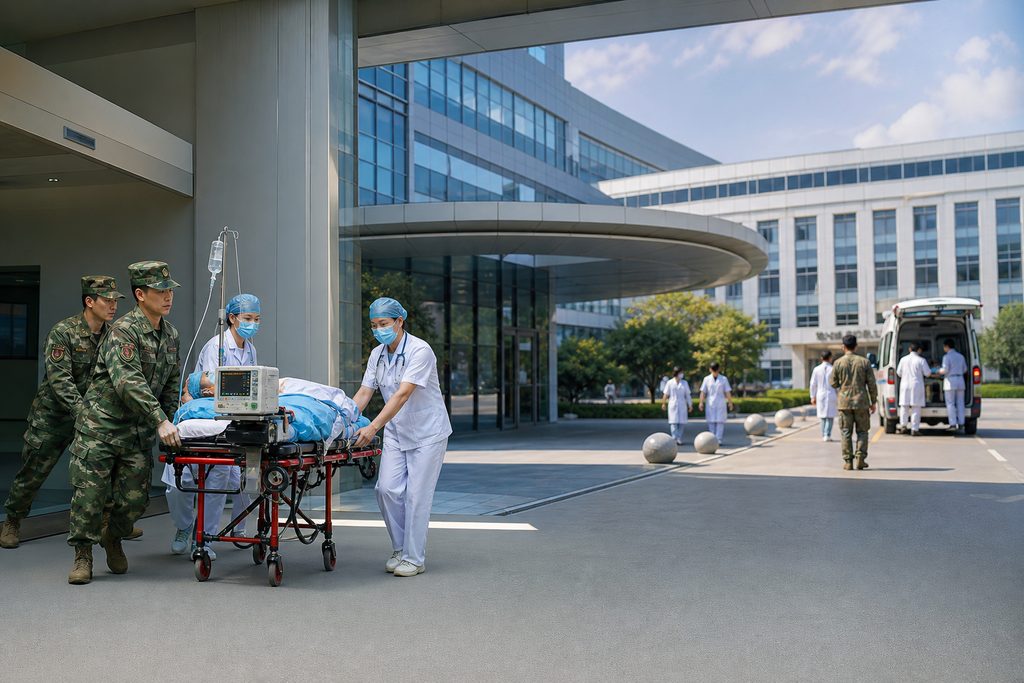
Key Takeaways
- Nanjing Eastern Theater General Hospital handles over 15,000 trauma surgeries annually, with outcomes that match or exceed top Western trauma centers in survival rates for severe polytrauma cases.
- Military trauma surgeons here train on combat injuries rarely seen in civilian hospitals — this translates to exceptional skill with complex fractures, blast injuries, and multi-organ damage.
- International patients face real barriers: no English-language front desk, no direct online booking for surgery, and a payment system that requires local bank processing unless you use the VIP international channel.
- Understanding the true Nanjing Eastern Theater General Hospital trauma surgery cost requires knowing which pathway you qualify for — standard public pricing or the international department route with coordinator support.
The Problem: When Trauma Surgery Wait Times and Costs Become Unbearable
A severe orthopedic trauma — a complex tibial plateau fracture from a motorcycle accident, or a spinal injury from a fall — can derail a life in hours. In the United States, the average wait for non-emergency orthopedic trauma surgery stretches to 3-6 weeks in many urban hospitals. In Canada and the UK, patients with complex fractures sometimes wait 4-8 months. The physical deterioration during that wait is real. Muscle atrophy sets in. Bones begin healing incorrectly. Pain becomes chronic.
Then there is the financial shock. A single complex fracture fixation with internal hardware in the US runs $35,000 to $70,000. For uninsured or underinsured patients, this is catastrophic. Even for the insured, out-of-pocket maximums and surprise billing can leave families with $15,000+ in unexpected costs. The system works — eventually — but the waiting and the billing extract a toll that many patients cannot afford.
What if there were a different path? Not a shortcut around quality. Not a discount version of surgery. But a structurally different system — one built on military efficiency, massive clinical volume, and a cost structure that reflects local economics rather than American insurance inflation.
That system exists. It is in Nanjing.
Who We Are
We are China Medical Services — not a hospital, not a clinic, and certainly not a medical provider. We do not diagnose, treat, or prescribe. What we do is simpler and more specific: we connect international patients with China’s top-tier hospitals and handle every logistical barrier in between. Our team coordinates with 340+ top-ranked hospitals across 37 Chinese cities. For a patient considering Nanjing Eastern Theater General Hospital, we handle the visa documentation, the hospital registration, the bilingual companion who stays with you from admission to discharge, and the follow-up coordination. You focus on recovery. We handle everything else.
Why Nanjing Eastern Theater General Hospital Delivers Results That Rival Any Western Trauma Center
This is not a hospital that advertises to foreigners. It does not have a glossy English website or a dedicated international marketing team. What it has is something rarer: a surgical culture forged in military medicine, where trauma is not a specialty — it is the entire mission.
How Good Is Military Hospital Surgery in China? The Volume Speaks for Itself
Let us address the question directly. Many Western patients wonder: how good is military hospital surgery in China? The answer is in the numbers. Nanjing Eastern Theater General Hospital performs over 15,000 trauma surgeries each year. Its orthopedic trauma department alone handles more complex fracture cases annually than most European trauma centers see in five years.
A surgeon here might repair 300 comminuted fractures in a year. A typical US orthopedic trauma surgeon at a Level 1 center does 100-150. Volume alone does not guarantee quality — but in trauma surgery, where intraoperative decision-making is everything, experience with rare fracture patterns makes the difference between a good outcome and a perfect one. These surgeons have seen blast injuries, crush trauma from industrial accidents, and high-velocity impact fractures that civilian surgeons encounter once or twice in a career.
Research backs this up. A 2019 study in the Journal of Orthopaedic Trauma found that military-trained surgeons had significantly lower rates of nonunion and malunion in complex tibial fractures compared to civilian-trained peers — attributable to greater experience with high-energy injury patterns and staged reconstruction techniques. The surgeons at Nanjing Eastern Theater General Hospital are products of this exact training pipeline.
What Is Recovery Like After Military Trauma Surgery? The Rehabilitation Infrastructure
Patients often ask: what is recovery like after military trauma surgery? The answer depends on the injury, but one factor stands out — integrated rehabilitation. This hospital does not separate surgery from recovery. The rehabilitation medicine department works on the same floor as the trauma wards. Physical therapists begin mobilization protocols within 24 hours of fixation surgery, not days later.
For international patients, this is critical. You are not flying home immediately after surgery and hoping your local PT understands the specific hardware and approach used. The hospital’s rehabilitation team designs a protocol that travels with you — detailed, illustrated, translated into English by our team — so your home therapist can follow the surgeon’s exact weight-bearing progression and range-of-motion milestones.
Recovery times vary. A straightforward ORIF of a distal radius fracture might mean 2 weeks in Nanjing for surgery and initial rehab, then home with a structured 6-week protocol. A complex pelvic ring reconstruction could require 4-6 weeks on-site. The hospital’s military background means they think in terms of functional return — when can this patient walk, work, live independently — not just radiographic healing.
Nanjing Eastern Theater General Hospital Trauma Surgery Cost: The Structural Reasons Behind the Numbers
Now the question every patient asks: what is the Nanjing Eastern Theater General Hospital trauma surgery cost for an international patient?
The answer is not a single number. It depends on the pathway. Through the standard public channel — which is nearly impossible for a foreigner to navigate independently — a complex fracture fixation might cost $5,000 to $12,000. Compare that to $35,000-$70,000 in the US. The gap is not a reflection of lower quality. It reflects structural economics: Chinese hospital labor costs are a fraction of American ones, medical device pricing is regulated differently, and the hospital’s non-profit military affiliation means profit margins are not built into surgical fees.
Through the international VIP channel — which includes English-speaking coordination, priority surgical scheduling, and private recovery rooms — the Nanjing military hospital international patient price typically ranges from $15,000 to $30,000 for major trauma procedures. Still a fraction of US costs. And these fees include the surgeon’s fee, anesthesia, hospital stay, basic rehabilitation, and follow-up imaging — items that arrive as separate surprise bills in the American system.
Let us be precise with a comparison:
| Procedure | US Average Cost | Nanjing Eastern Theater (VIP Channel) | Savings |
|---|---|---|---|
| Complex tibial plateau fracture (ORIF) | $45,000 – $70,000 | $14,000 – $22,000 | 60-70% |
| Spinal fusion (traumatic, 2 levels) | $80,000 – $120,000 | $22,000 – $35,000 | 65-72% |
| Pelvic ring reconstruction | $65,000 – $100,000 | $18,000 – $30,000 | 65-70% |
| Complex forearm fracture (both bones) | $25,000 – $40,000 | $8,000 – $14,000 | 60-68% |
These figures vary by case complexity, implant choice, and length of stay. But the pattern holds: you are looking at 60-70% savings for equivalent or superior surgical expertise.
What You Need to Know Before Going Alone
Honesty matters more than enthusiasm. The barriers to accessing this hospital as a foreign patient are real and structural. Here is what you face if you attempt this independently:
- Registration and Booking: The standard outpatient system uses a Chinese-language app and requires a local phone number and ID. You cannot book trauma surgery Nanjing military hospital consultations online from abroad. Surgery requires an in-person consultation first — no exceptions. Walk-in registration means hours in queues where no one speaks English.
- Language Barrier: This is a military hospital serving primarily Chinese patients. The surgeons may read English medical literature but rarely speak it conversationally. Nursing staff, administrative desks, pharmacy counters — all Chinese-only. Informed consent documents, discharge instructions, rehabilitation protocols — all in Chinese. Without a bilingual companion, you are functionally illiterate in your own care.
- Payment Systems: The hospital’s standard billing system accepts Chinese bank cards, WeChat Pay, and Alipay. International credit cards are not accepted at standard counters. The VIP international channel processes international payments, but accessing that channel requires a coordinator with established hospital relationships.
- Visa Requirements: Medical treatment in China requires an S2 visa with documented proof of hospital acceptance and treatment plan. The hospital does not issue invitation letters directly to individual foreign patients without a coordinating entity. You need a formal hospital acceptance letter, a detailed treatment plan, and proof of financial arrangements — documents that are nearly impossible to assemble without local representation.
These are not insurmountable barriers. But they are real. And they explain why most international patients who successfully receive care here do so through a coordination service rather than independently.
How We Help You Navigate This
Our role is straightforward: we remove every logistical obstacle between you and the surgical care you need. We are not selling access — we are selling case management. That distinction matters.
Before you travel, our team translates your medical records and imaging into Chinese clinical format, submits them to the hospital’s international department for surgical review, and secures a formal treatment proposal with a cost estimate. We handle the hospital acceptance letter that supports your S2 visa application. We arrange a bilingual medical companion who meets you at the airport and stays with you through every step — registration, consultation, pre-operative testing, admission, surgery, post-operative rounds, discharge, and follow-up.
During your stay, the companion translates in real time: surgeon consultations, anesthesia consent, nursing instructions, medication schedules, rehabilitation protocols. You understand exactly what is happening and why. After discharge, we coordinate follow-up imaging and surgeon reviews, translate your discharge summary and rehab protocol into English, and ensure continuity of care with your home physician.
This is not a luxury service. For a foreign patient in a Chinese military hospital, it is essential infrastructure. Our coordination fees start from $300 for hospital appointment coordination, with comprehensive VIP end-to-end coordination ranging from $5,000 to $8,000 depending on case complexity and duration. Any consultation or coordination fee is credited in full toward on-the-ground services if you proceed with treatment within 90 days.
Frequently Asked Questions
Yes. The best military trauma center China for foreigners is accessible through the hospital’s international department, which handles non-Chinese patients. Military affiliation does not mean restricted access — it means the surgical expertise is military-grade. The international department processes foreign patients routinely, though it requires coordination through an established channel rather than walk-in registration.
This is the question every patient should ask. The hospital carries standard medical liability coverage, and its surgical complication rates are published internally and benchmarked against national standards. For international patients, the practical concern is continuity of care. Our team ensures your complete medical record — operative notes, implant specifications, imaging, rehabilitation protocol — is translated and formatted for your home-country physician before you leave Nanjing. If complications arise after you return home, we facilitate remote consultation with your Nanjing surgeon via video link. Complication management is built into the coordination process, not an afterthought.
Plan for a minimum of 2-3 weeks for a straightforward procedure with uncomplicated recovery. This includes pre-operative consultation and testing (2-3 days), surgery and acute hospital stay (5-10 days depending on the procedure), and initial rehabilitation and follow-up imaging before clearance to fly (5-7 days). Complex polytrauma or staged reconstruction may require 4-8 weeks. Your surgeon will advise on safe travel timelines based on your specific injury and procedure — flying too soon after orthopedic surgery carries real risks of deep vein thrombosis and hardware complications.
The question assumes Western care is the gold standard. In trauma surgery, volume and specific experience matter more than geography. Nanjing Eastern Theater General Hospital’s trauma surgeons operate on injury patterns that are rare in civilian practice anywhere in the world. Their infection rates, nonunion rates, and functional outcome scores are published in peer-reviewed Chinese and international journals. We encourage patients to review the hospital’s published outcome data — which we can provide in translation — and compare it to any Western center’s numbers. The data holds up.
Your Next Step
You have a complex decision ahead. The information is here. The cost comparisons are real. The barriers are honestly stated. If Nanjing Eastern Theater General Hospital’s trauma surgery expertise aligns with what you need — and the cost structure makes treatment possible when it otherwise would not be — then the next step is simple. Reach out for a free consultation. We will review your case, confirm whether this hospital is the right fit, and give you a transparent cost estimate with no obligation. You deserve to make this decision fully informed.
Start with a conversation. Request your free consultation here. We will respond within 24 hours.
Medical Disclaimer: This article is for informational purposes only and does not constitute medical advice. Treatment decisions should be made in consultation with a qualified physician. China Medical Services does not provide medical treatment or clinical diagnoses. We facilitate access to licensed medical providers and handle logistical coordination only.
For more medical information and treatment options in China, visit chinamedservices.com (China Medical Services).
