CTC Analysis China: Real-Time Cancer Treatment Response Monitoring
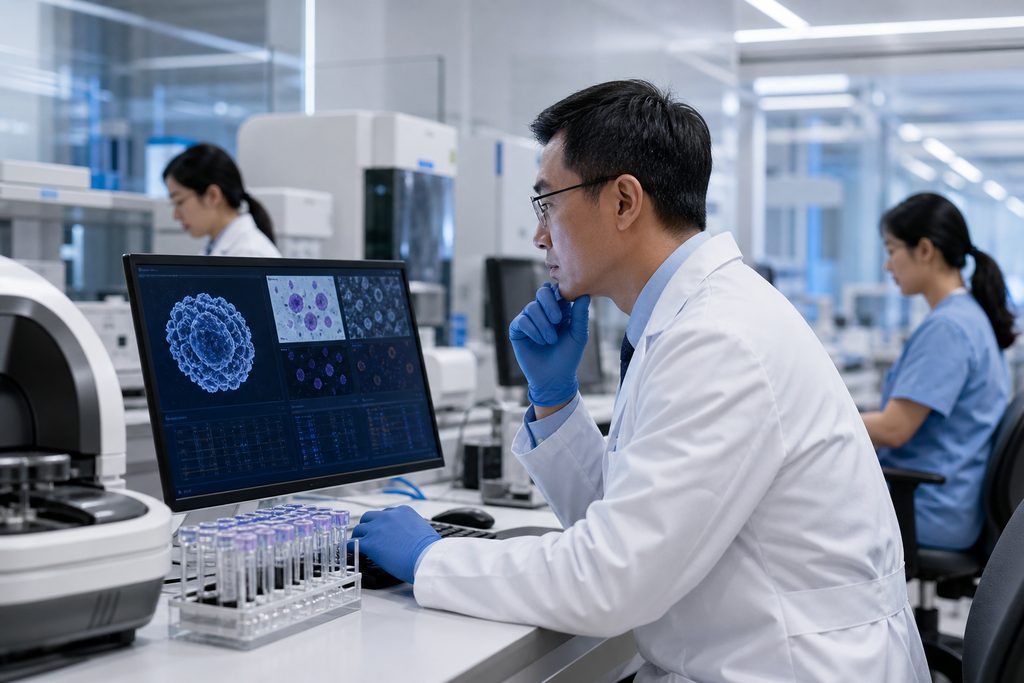
When 42-year-old Michael first heard the diagnosis—stage III colorectal cancer—he had no idea where to start looking for treatment. Six months into chemotherapy back home in Manchester, he faced a grinding uncertainty. CT scans showed his tumors were stable. But were they dying inside, or just waiting? His oncologist said they would know “in another three months.” Michael didn’t want to wait. He wanted a real-time window into whether the chemicals flooding his veins were actually working. That search led him to a technology many Western patients have never heard of: circulating tumor cell analysis, and specifically, accessing it through specialized labs in China.
The circulating tumor cell test cost China presents a stark contrast to Western pricing, often running 60% to 70% less than comparable analysis in the United States or Europe. But cost is only part of the story. The real value lies in the clinical insight. A CTC blood test can reveal, within weeks of starting a new chemotherapy regimen, whether tumor cells in the bloodstream are declining—or stubbornly persisting. For patients like Michael, that information is not academic. It is the difference between continuing a toxic, ineffective therapy and switching to something that might actually save his life.
Key Takeaways
- CTC analysis can detect treatment response in as little as 3-4 weeks after starting a new therapy, compared to 3-6 months for conventional imaging to show clear changes.
- Leading Chinese oncology centers process CTC tests for approximately $800 to $1,500, while equivalent US liquid biopsy panels frequently exceed $3,500 to $5,000.
- CTC testing alone cannot replace imaging or tissue biopsy—it is a complementary monitoring tool, not a standalone diagnostic, and results must be interpreted by a qualified oncologist.
- Navigating hospital registration, language barriers, and lab coordination in China without local support can delay results and introduce logistical errors that undermine the test’s clinical value.
The Problem: Waiting Months to Know If Chemo Is Failing
Standard chemotherapy monitoring relies heavily on CT, MRI, or PET-CT imaging performed every two to three months. That timeline creates a dangerous blind spot. A patient could endure eight to twelve weeks of toxic treatment—nausea, neuropathy, bone marrow suppression—only to discover the tumor never responded. Approximately 30% to 50% of metastatic colorectal cancer patients show primary resistance to first-line chemotherapy regimens, according to data published in Nature Reviews Clinical Oncology. They do not know they are in that group until the scan comes back.
This is not a hypothetical edge case. It is the standard of care in most countries. Oncologists make their best guess based on population-level trial data. But tumors are individual. They mutate. They resist. And patients pay the price in time they do not have.
Who We Are
We are not a hospital. We do not provide medical treatment or clinical diagnoses. Our team acts as your logistical architects—we bridge the gap between you and China’s top-tier medical expertise. We connect international patients with accredited oncology centers that perform circulating tumor cell analysis, handle appointment coordination, arrange bilingual medical companions, and guide you through visa and travel logistics. We do not interpret your test results or recommend treatment. We make sure you get to the right specialist, in the right lab, without wasting weeks on administrative dead ends.
How CTC Analysis Works—And Why China Invested Heavily in It
Circulating tumor cells are exactly what they sound like: intact cancer cells that have detached from a primary or metastatic tumor and entered the bloodstream. A simple blood draw—usually 7.5 to 10 milliliters—captures these cells. The lab then isolates and enumerates them using technologies like the FDA-cleared CellSearch system or newer microfluidic platforms developed in Chinese research hospitals.
The clinical logic is straightforward. If chemotherapy is working, the number of CTCs in the blood should drop. If it is not, the count stays flat or rises. A 2018 meta-analysis published in The Lancet Oncology pooled data from over 6,000 patients and found that CTC count changes during treatment were strongly associated with progression-free and overall survival across breast, prostate, and colorectal cancers. The evidence is not speculative. It is mature.
China’s investment in this technology accelerated over the past decade. Major cancer centers in Shanghai, Beijing, and Guangzhou built dedicated liquid biopsy laboratories. They needed to. With a population of 1.4 billion and an oncology system managing enormous patient volumes, waiting months for imaging-based response assessment created bottlenecks. CTC testing offered a faster triage mechanism. That infrastructure now benefits international patients who can access it at a fraction of Western costs.
How Accurate Is CTC Blood Test for Treatment Response?
Accuracy depends on the specific assay used and the cancer type. CellSearch-based CTC enumeration shows a sensitivity of approximately 70% to 80% in metastatic breast and prostate cancers, meaning it detects CTCs in most patients with active disease. Specificity—the ability to correctly identify patients without CTCs—exceeds 95% in trained labs. False positives are rare because the technology identifies intact cells with specific epithelial markers, not just free-floating DNA fragments.
But there are limitations. Some tumors, particularly sarcomas and certain lymphomas, shed very few CTCs into the bloodstream. A negative CTC result in those cancers does not rule out active disease. And CTC count alone does not tell you which specific mutations are driving resistance. For that, patients often pair CTC enumeration with ctDNA (circulating tumor DNA) sequencing, which many Chinese oncology centers now offer as a combined liquid biopsy panel.
Can Circulating Tumor Cell Test Show If Chemo Is Working?
Yes—and this is where the test delivers its highest clinical value. A patient starts a new chemotherapy or targeted therapy regimen. Three to four weeks later, a repeat CTC blood draw is performed. If the CTC count has dropped by 50% or more from baseline, the treatment is likely effective. If it rises, the tumor is probably resistant. This early signal can prompt an oncologist to switch regimens before the patient loses two more months to futile treatment.
One study from Fudan University Shanghai Cancer Center, published in Clinical Cancer Research, tracked CTC dynamics in 142 metastatic breast cancer patients undergoing first-line chemotherapy. Patients whose CTC counts dropped below 5 cells per 7.5 mL of blood after one cycle had a median progression-free survival of 17.2 months. Those whose CTCs remained elevated averaged just 6.8 months. The difference was stark, and it was visible within four weeks.
CTC Analysis for Cancer Monitoring Shanghai Price and Access
Shanghai has become a hub for liquid biopsy in Asia, driven by institutions like Fudan University Shanghai Cancer Center and Ruijin Hospital. The CTC analysis for cancer monitoring Shanghai price typically ranges from $800 to $1,200 per test, depending on whether the assay is CellSearch-based or uses a newer microfluidic platform. Some private international hospitals in Shanghai offering the same test to expatriates and medical travelers price it slightly higher, in the $1,200 to $1,500 range, but include English-language reporting and faster turnaround.
Outside Shanghai, comparable pricing holds in Beijing and Guangzhou. The circulating tumor cell test cost China advantage stems from several structural factors: lower laboratory labor costs, high patient volumes that amortize equipment investments, and a regulatory environment that approved domestic CTC platforms earlier than many Western markets. Patients should expect to pay out of pocket—these tests are rarely covered by international insurance plans when performed abroad, though reimbursement may be possible after returning home depending on the policy.
Best Hospitals for Liquid Biopsy China: Where the Technology Lives
Several Chinese oncology centers have built substantial liquid biopsy programs. The oncology departments at these institutions process thousands of CTC tests annually and contribute to international research consortia. Among the most recognized:
- Fudan University Shanghai Cancer Center: Operates one of China’s largest CTC research labs. Published extensively on CTC-guided treatment decisions in breast and lung cancers. Offers both CellSearch and proprietary microfluidic CTC platforms.
- Peking University Cancer Hospital (Beijing): Strong in gastrointestinal cancer CTC monitoring. Runs active clinical trials integrating CTC dynamics into treatment algorithms for gastric and colorectal cancers.
- Sun Yat-sen University Cancer Center (Guangzhou): Specializes in nasopharyngeal and liver cancer liquid biopsy, cancers with high prevalence in southern China and Southeast Asia, giving them deep clinical experience with CTC detection in these tumor types.
- West China Hospital (Chengdu): A high-volume center with growing liquid biopsy capacity, particularly for lung cancer patients from western China and Central Asia.
These are not boutique clinics. They are massive academic medical centers. Navigating them without Mandarin fluency and local registration systems is challenging—a reality we address directly with our patients. More on that below.
What You Need to Know Before Going Alone
Accessing CTC testing in China as an international patient is entirely possible. It is also logistically demanding. We tell every patient the same thing: the medical technology is world-class. The administrative friction is real. Here is what you will face if you attempt to arrange testing independently:
- Hospital Registration Systems: Chinese public hospitals use domestic ID-linked registration platforms. Foreign passport holders cannot self-register through standard channels. You need a hospital international department or VIP clinic to create a medical record for you—and those departments often require in-person visits with a local contact number.
- Language Barriers in Lab Reporting: CTC test results from Chinese public hospitals are typically issued in Mandarin. Translating them yourself risks clinical misinterpretation. Your home oncologist needs an accurate, medically precise English report to act on the data. Some hospitals provide this; many do not.
- Sample Handling and Timing: CTC blood samples are fragile. They must be processed within a narrow window—usually 24 to 72 hours depending on the collection tube preservative. If you fly to China, get the blood draw, and then wait days for lab processing due to a scheduling mix-up, the sample degrades and the test is worthless. Coordination matters.
How We Help You Navigate This
These barriers exist for structural reasons, not because anyone is trying to exclude foreign patients. Chinese hospitals serve enormous domestic patient populations. Their systems are optimized for that reality. Our role is to bridge the gap.
Before you travel, we identify the oncology center best matched to your cancer type, confirm that the specific CTC assay you need is available, and coordinate with the hospital’s international department to open a medical record under your passport. We arrange the appointment for the blood draw and ensure the lab is prepared to process your sample immediately—no multi-day delays. A bilingual medical companion meets you at the hospital, handles registration, payment, and translation, and stays with you through the entire visit. After the test, we ensure the report is issued in English or provide a medically reviewed translation for your home oncologist.
We also handle the practicalities: visa guidance for an S2 medical visa, airport transfers, accommodation near the hospital. Patients often underestimate how draining it is to navigate a foreign megacity while managing active cancer treatment. We take that weight off.
Book CTC Cancer Monitoring Test Abroad: What to Expect
Patients who book CTC cancer monitoring test abroad through our coordination typically follow a timeline like this:
Week one: Medical history review and hospital matching. We need your pathology reports, imaging summaries, and current treatment regimen. Week two: Appointment confirmation and visa processing. The S2 visa for medical treatment requires an invitation letter from the hospital, which we facilitate. Week three: Travel to China, blood draw, and sample processing. Results are usually available within 5 to 10 business days, depending on the assay. Week four: Result delivery and, if the patient chooses, a video consultation with the Chinese oncologist to discuss findings in context.
The entire process, from initial contact to receiving results, can be completed in under four weeks. That compares favorably to the 12-week wait for a follow-up CT scan—and the information is fundamentally different. Imaging shows anatomy. CTC analysis shows biology.
Frequently Asked Questions
No. A low or undetectable CTC count is encouraging—it suggests the treatment is suppressing tumor cell shedding. But CTC tests cannot detect microscopic disease in lymph nodes or dormant tumor cells in distant organs. Imaging and clinical follow-up remain essential. CTC analysis is a monitoring tool, not a cure-confirmation test.
Most international insurance plans do not directly cover out-of-pocket lab tests performed abroad. However, many patients successfully submit claims for reimbursement after returning home, especially if their oncologist writes a letter of medical necessity. We provide itemized receipts and English-language medical documentation to support reimbursement claims. Check your policy’s out-of-network and international care provisions before traveling.
We are not clinicians and cannot advise on treatment decisions. What we can say: many patients use CTC results as data to bring back to their home oncologist. The conversation shifts from “let us wait for the next scan” to “here is evidence the current regimen may not be effective—what are our alternatives?” Some patients also arrange a video consultation with the Chinese oncologist who ordered the test to discuss potential next steps before returning home.
This is exactly what our initial consultation addresses. We review your diagnosis, stage, and treatment history, then match you with a center that has specific expertise in your cancer type and offers the CTC platform most appropriate for your tumor’s biology. Not every hospital excels in every cancer. Our database covers 340+ top-ranked hospitals across 37 cities, and we guide you to the right one based on clinical fit, not convenience.
A single CTC test provides a baseline. Its real value emerges with serial testing—a pre-treatment draw, then a follow-up draw 3 to 4 weeks after starting or changing therapy. The trend matters more than any single number. Most patients who travel for CTC monitoring plan for at least two blood draws, often spaced across a single trip of 10 to 14 days if a new treatment was recently started at home.
Your Next Step
Circulating tumor cell analysis is not a replacement for standard oncology care. It is a supplement—one that can cut months off the agonizing wait to know whether treatment is working. China’s investment in liquid biopsy infrastructure, combined with significantly lower testing costs, makes it a practical option for patients who want more data, faster, without waiting for the next scan cycle.
If you are considering CTC testing and want to understand your options without pressure or obligation, start with a conversation. We will help you assess whether the technology fits your clinical situation and, if it does, handle the logistics so you can focus on what matters: getting better information to guide your treatment.
For more medical information and treatment options in China, visit chinamedservices.com (China Medical Services).
