Liver Cancer Surgery China 5 Year Survival: Shanghai Zhongshan Hospital 60% for Small HCC
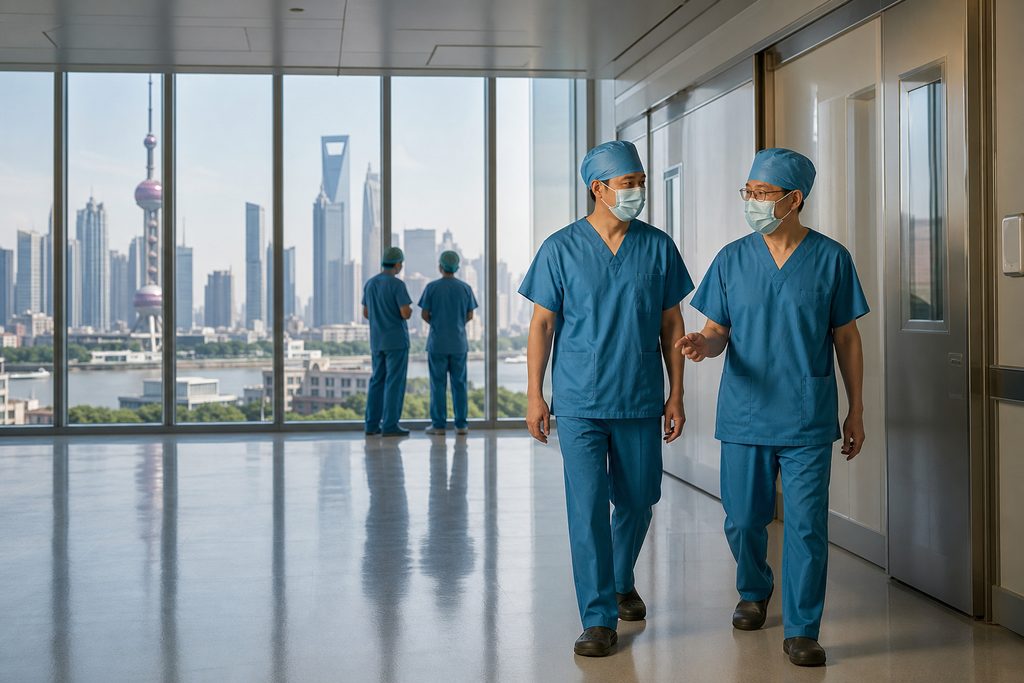
You have probably heard the warnings. Surgery abroad means compromised safety. Unfamiliar standards. A gamble you cannot afford to take with hepatocellular carcinoma. The data tells a different story. For a specific group of patients—those diagnosed with small HCC—one institution in Shanghai reports a five-year survival rate of roughly 60% after resection. That figure, drawn from clinical outcomes at Zhongshan Hospital affiliated with Fudan University, reshapes the entire conversation about where to seek liver cancer care. Our team has spent years helping international patients navigate precisely this path. We do not perform surgeries. We build the bridge between you and the surgical teams that do.
Key Takeaways
- Shanghai Zhongshan Hospital achieves approximately 60% five-year survival for small HCC resection, a figure competitive with leading Western cancer centers.
- The structural cost advantage is substantial: liver resection in China typically runs 70-80% below comparable US pricing, without sacrificing surgical volume or technological investment.
- Navigating a Chinese public hospital independently is genuinely difficult—language barriers, payment systems, and visa requirements create real friction that cannot be wished away.
- Any decision about traveling for surgery should rest on verified outcome data and logistical clarity, never on marketing promises or vague claims of “world-class care.”
The Problem: When a Diagnosis Meets a System That Moves Slowly
A hepatocellular carcinoma diagnosis lands like a physical blow. Then comes the second shock: the timeline. In several Western healthcare systems, the interval between diagnosis and curative resection can stretch into months. A 2022 study published in the Journal of Hepatocellular Carcinoma noted that delays exceeding 90 days from diagnosis to treatment were associated with tumor progression and reduced overall survival. For a malignancy where doubling time can be measured in weeks, waiting is not a neutral act. It is a clinical risk factor.
Cost is the other vise. In the United States, a liver resection for HCC carries a price tag that frequently exceeds $120,000, with some complex cases pushing well past $180,000 once hospital fees, anesthesia, and post-operative care are tallied. Even insured patients face deductibles and co-insurance that can erase years of savings. The math is brutal. And it forces a question that no one wants to ask but many need to: is there a path to the same clinical outcome that does not require financial ruin or a wait that the disease will not tolerate?
Who We Are
We are China Medical Services, a medical concierge organization that connects international patients with China’s top-tier hospitals. We are not a hospital. We do not provide medical treatment, clinical diagnoses, or surgical care. What we provide is logistical architecture—hospital matching based on verified outcome data, appointment coordination through official international channels, bilingual medical companions who handle every practical obstacle on the ground, and visa guidance that keeps your journey compliant. Think of us as the team that clears the path so you can focus entirely on your treatment and recovery. Nothing more, nothing less.
Why Shanghai Zhongshan Hospital Delivers These Results
The 60% five-year survival figure for small HCC resection did not emerge by accident. It is the product of specific structural factors that separate high-volume liver centers from general surgical departments. Understanding those factors matters more than the number itself.
Surgical Volume Creates Pattern Recognition
Zhongshan Hospital’s Department of Liver Surgery performs over 4,000 liver resections annually. That is not a typo. Four thousand. To contextualize: a busy hepatobiliary program at a major US academic center might perform 200 to 400 liver resections per year. The clinical implication is straightforward. Surgeons who see a dozen HCC cases a week develop pattern recognition that no textbook can replicate. They have encountered the anatomical variants, the unexpected bleeding patterns, the cases where the tumor sits millimeters from a major vessel. Volume does not guarantee better outcomes—but in complex oncologic surgery, it correlates with them more strongly than almost any other variable.
Technology Deployed at Scale
Zhongshan Hospital operates the Da Vinci robotic surgical system and integrates intraoperative ultrasound, ICG fluorescence imaging for real-time tumor visualization, and three-dimensional reconstruction for pre-surgical planning. These are not exotic technologies. They are available at leading centers worldwide. The difference is deployment frequency. When a surgical team uses intraoperative navigation tools multiple times daily rather than a few times weekly, proficiency compounds. The technology itself is table stakes. The operator experience built on top of it is the differentiator.
The Cost Structure Is Fundamentally Different
Let us address the elephant in the room directly. Lower cost does not mean lower quality. It means a different economic model. In China’s top public hospitals, surgeon compensation, facility fees, and pharmaceutical costs are structurally lower than in the United States—not because corners are cut, but because the entire healthcare financing architecture differs. A liver resection at Shanghai Zhongshan Hospital typically ranges from $15,000 to $25,000 USD, depending on tumor complexity and length of stay. That is approximately one-fifth to one-seventh of the US price for an equivalent procedure. The clinical protocols—sterility standards, anesthesia monitoring, post-operative ICU protocols—are comparable. The economic context is not. Patients are not buying a discount surgery. They are accessing a different cost base for the same technical intervention.
What the Research Actually Says About Liver Resection Price China 5 Year Survival
Outcome data for HCC resection in China has been published extensively in peer-reviewed literature. A 2018 study in Liver Cancer reported five-year overall survival of 61.2% for patients undergoing curative resection for small HCC (defined as solitary tumors ≤5 cm) at Zhongshan Hospital. A separate analysis published in the Annals of Surgical Oncology in 2020 examined over 3,000 hepatectomy cases from the same institution and found a 30-day mortality rate of 0.3%—a figure that compares favorably with international benchmarks. These are not marketing claims. They are published, citable data subject to peer review.
What about the question patients actually type into search engines: “is Shanghai Zhongshan Hospital good for liver cancer?” The institution ranks among China’s top three hospitals for hepatobiliary surgery in the Fudan University Hospital Ranking, which evaluates clinical capability, research output, and specialty reputation across 45 clinical disciplines. It is not a subjective endorsement. It is a systematic assessment conducted by China’s most authoritative hospital evaluation framework. For international patients, that ranking serves as a defensible proxy for clinical quality when direct personal experience is unavailable.
Small HCC Resection Abroad Survival Rates: How Zhongshan Compares
Patients searching for “small HCC resection abroad survival rates” are doing the right kind of homework. They are asking the outcome question before the logistics question. Here is how the Zhongshan data lines up against international benchmarks. The five-year survival for small HCC resection at major Western centers generally falls between 50% and 70%, depending on patient selection, underlying liver function, and the presence of cirrhosis. The 60% figure reported by Zhongshan sits squarely in the middle of that range. It is not an outlier. It is a peer.
The more instructive comparison is not survival alone. It is survival combined with accessibility. A patient with newly diagnosed small HCC who faces a four-month surgical wait at a Western center might experience tumor progression that pushes them outside curative criteria. That same patient, if able to secure a surgical slot at Zhongshan within weeks, remains in the window where resection offers a genuine chance at long-term control. The survival statistic is important. The time-to-treatment statistic may be equally so.
How Long Is Recovery After Liver Cancer Surgery in China
Recovery after liver resection follows a fairly predictable arc, and the protocols at Zhongshan Hospital align with international standards. Most patients spend one to two nights in a surgical ICU for close monitoring, then transition to a general ward for an additional five to seven days. The total inpatient stay typically runs seven to ten days, assuming no major complications such as bile leak or post-hepatectomy liver failure.
Once discharged, the recovery timeline stretches further. Most patients can resume light daily activities within four weeks. Return to full work capacity, particularly for physically demanding jobs, often takes eight to twelve weeks. Liver regeneration is remarkably efficient—the remnant liver can regain approximately 80% of its original volume within six to twelve months—but functional recovery and volumetric recovery are not the same thing. Fatigue is common. Wound healing takes time. Our bilingual medical companions remain available throughout the post-operative period in Shanghai to assist with follow-up appointments, medication instructions, and any communication needs that arise during the critical first weeks after discharge.
What You Need to Know Before Going Alone
We have spent years helping patients navigate this system. The clinical outcomes are real. So are the friction points. Anyone considering liver cancer surgery at Shanghai Zhongshan Hospital needs to understand these barriers clearly before booking a flight.
- Visa Requirements Are Specific and Non-Negotiable: Medical treatment in China requires an S2 visa, specifically endorsed for medical purposes. Your accompanying family members also need S2 visas. The M visa—issued for commercial and trade activities—is not valid for medical treatment, and attempting to use one will create problems at the hospital registration desk and potentially with immigration authorities. The application requires a formal invitation letter from the treating hospital, medical records demonstrating the necessity of treatment, and proof of sufficient funds. Getting these documents assembled and accepted is not trivial.
- Payment Happens Upfront, Not After Insurance Processing: Chinese public hospitals, including Zhongshan’s international medical center, operate on a prepayment model. You deposit funds before admission. The hospital draws from that deposit as services are rendered. Insurance reimbursement happens later, on your side, after you submit claims to your carrier. Direct billing arrangements with international insurers are rare in the public system. You need liquidity. If your insurance requires pre-authorization, that needs to be secured before you travel.
- Ordinary Outpatient Clinics Cannot Be Booked from Abroad: This is the single most misunderstood aspect of Chinese public hospital logistics. Standard outpatient appointments are same-day, queue-based affairs. You cannot call from London or Dubai and reserve a Thursday morning slot with a specific surgeon through the regular registration system. Surgical scheduling requires an in-person consultation first. The pathway that actually works for international patients runs through the hospital’s official international medical center or VIP department—channels that do permit advance coordination but operate at a higher price point than standard public rates.
How We Help You Navigate This
Those barriers exist for structural reasons. They are not signs of a broken system—they are features of a system designed for a domestic patient population of 1.4 billion people. Our role is to route international patients through the channels that actually function for them.
Before you travel, we handle hospital matching based on your specific diagnosis and imaging. We coordinate directly with Zhongshan’s international medical center to secure consultation appointments with liver surgery specialists. We translate and format your medical records, imaging studies, and pathology reports into the documentation Chinese surgical teams expect. We provide a clear, itemized cost estimate so you know the financial commitment before you board a plane. The liver cancer surgery cost Shanghai Zhongshan Hospital question is one we answer with real numbers, not ranges pulled from a brochure.
During your treatment, a bilingual medical companion accompanies you to every appointment. They handle registration queues, payment processing, prescription pickup, and real-time interpretation between you and your surgical team. They are not clinical staff—they do not offer medical opinions—but they ensure that nothing gets lost in translation when a surgeon explains the planned resection margin or a nurse reviews discharge instructions.
After discharge, we remain engaged through the immediate recovery period. Follow-up appointments, wound checks, medication adjustments—every interaction with the hospital runs through a language barrier unless someone bridges it. We bridge it until you are stable enough to travel home.
Frequently Asked Questions
This is one of the most common questions we receive, and the answer requires precision. You cannot purchase a fixed-price, pre-packaged surgery online like you would book a hotel room. Surgery requires an in-person consultation, a review of your imaging by the operating surgeon, and a pre-operative assessment of your liver function and overall fitness for anesthesia. What you can arrange in advance is the consultation pathway that leads to surgery. We coordinate that pathway—the appointment, the documentation, the interpretation—so that when you arrive, you move straight into the clinical evaluation process without losing days or weeks to logistical confusion. The phrase “book liver tumor surgery China package” describes the aspiration. The reality is a coordinated clinical intake process that leads efficiently to a surgical date.
The published outcome data place Zhongshan in the same tier as major hepatobiliary centers in North America and Europe. The 60% five-year survival for small HCC resection and the 0.3% 30-day mortality rate are competitive figures. The hospital’s annual liver resection volume—over 4,000 cases—exceeds that of nearly any single Western institution. Volume alone does not guarantee individual results, but it creates the conditions where surgical teams maintain technical proficiency at a level that lower-volume centers struggle to match. The question is not whether Zhongshan is “good.” The published evidence says yes. The question is whether it is the right fit for your specific tumor characteristics, liver function, and logistical circumstances.
Zhongshan Hospital is a tertiary academic medical center with full intensive care capability, interventional radiology on standby for post-operative bleeding management, and hepatology support for managing post-hepatectomy liver dysfunction. The institution handles complications internally because it has the breadth of subspecialty coverage to do so. No surgical team can guarantee a complication-free course. What a high-volume center can offer is rapid recognition and management when complications occur—the difference between a bile leak that is identified and drained within hours versus one that festers for days. Our team remains in contact with the international medical center throughout your stay. If a complication arises, we ensure you understand exactly what is happening and what the management plan entails.
You will need to deposit funds upon admission, typically via wire transfer or international credit card through the hospital’s international center. The deposit amount is estimated based on your planned procedure and expected length of stay. The hospital draws from this deposit as charges accrue. At discharge, any unused balance is refunded. Your private insurance may reimburse these costs, but you must confirm coverage and secure any required pre-authorization before traveling. We can provide the documentation your insurer needs—itemized cost estimates, hospital accreditation details, procedure codes—but we cannot guarantee that any specific insurer will approve the claim. That conversation happens between you and your carrier.
Your Next Step
The 60% five-year survival figure for small HCC resection at Shanghai Zhongshan Hospital is not a promise. It is a data point—one that says this institution belongs in the conversation when you are evaluating where to pursue curative liver cancer surgery. The cost differential is real. The logistical complexity is real. Both deserve honest assessment, not wishful thinking. If you want to understand whether this path fits your specific diagnosis and circumstances, our team can walk you through it. No pressure. No soft sell. Just the information you need to make a clear-eyed decision. Reach out through our consultation page when you are ready to talk.
For more medical information and treatment options in China, visit chinamedservices.com (China Medical Services).
