Medical Treatment in Guangzhou China: Guide to 10 Fudan Top Hospitals
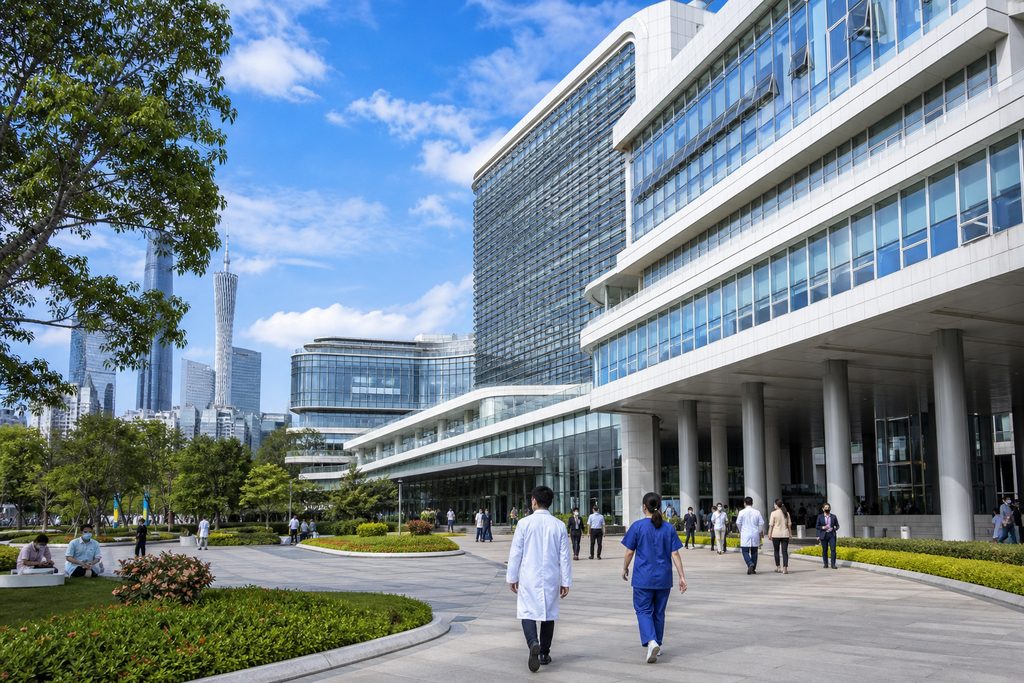
When 42-year-old Michael first heard the diagnosis, he had no idea where to start looking for treatment. His insurance had caps. The wait times back home stretched past four months. And the quote he received—over $180,000 for a complex liver resection—simply wasn’t feasible. He started searching late at night. That is how most families find themselves staring at a screen, typing “Medical Treatment in Guangzhou China: International Patient Guide to 10 Fudan Top Hospitals” into Google. They are not looking for a vacation. They are looking for a viable path forward.
Guangzhou sits at the heart of southern China’s medical ecosystem. It is home to 10 hospitals ranked on the prestigious Fudan University Hospital List, a classification that places them among the top 5% of China’s 35,000+ hospitals. For international patients, this concentration of expertise means something specific: access to high-volume surgical teams, cutting-edge oncology protocols, and a price structure that often lands at one-fifth to one-tenth of comparable care in the United States or Western Europe. But the gap between knowing these hospitals exist and actually receiving treatment inside one is vast. Language barriers, visa logistics, and a registration system that does not accommodate walk-in international patients create friction at every step. We bridge that gap. Our team has built the logistical architecture that connects patients from over 50 countries to these institutions. We are not a hospital. We do not provide medical treatment or clinical diagnoses. We are your logistical architects—we handle the coordination so you can focus on recovery.
Key Takeaways
- Guangzhou hosts 10 hospitals on the Fudan Top 100 list, with specific centers performing over 1,000 liver transplants annually—volume that directly correlates with better survival rates.
- The cost of a liver transplant in China runs $40,000 to $70,000 at a top-tier public hospital, compared to $300,000–$500,000 in the US, without sacrificing clinical quality.
- Public hospital registration in China cannot be done remotely by individual international patients; a local, in-person presence is mandatory for the first visit—this is non-negotiable.
- Safety and quality are verified by JCI accreditation and Fudan rankings, but navigating the system without a bilingual coordinator risks diagnostic errors and severe delays.
The Problem: When the Local System Cannot Move Fast Enough
A 2023 survey by the Kaiser Family Foundation found that approximately 1 in 4 US adults report delaying or forgoing necessary medical care due to cost. For complex oncology cases, the numbers get worse. The average wait time to see a specialist oncologist in Canada’s public system exceeded 10 weeks in 2023, according to the Fraser Institute. For a patient with an aggressive hepatocellular carcinoma, that window can be the difference between a curative resection and palliative care.
Michael’s situation is not rare. It is structural. The high-cost, low-volume model prevalent in Western healthcare systems creates bottlenecks that ration care by time and price. Patients with serious diagnoses start looking elsewhere. They look at Singapore, Thailand, South Korea. And increasingly, they look at mainland China. Specifically, they search for the best hospital for cancer treatment in Guangzhou China price benchmarks. They want to know if the math works. It does. But only if you enter the right hospital through the right channel.
Who We Are
We are a medical concierge organization with a database spanning 340+ top-ranked hospitals across 37 cities in China. Our team translates medical records, coordinates with hospital international departments, secures appointments through official VIP and special-need channels, and provides bilingual medical companions who stay with you from registration through discharge. We do not sell access. We provide case management. That means we handle the administrative labor that the Chinese public hospital system requires—queuing at 6:00 AM for a registration ticket, navigating WeChat-based payment portals that do not accept foreign cards, and ensuring your imaging and pathology reports are correctly interpreted across two languages. We make a complex system navigable.
Why Guangzhou’s Fudan-Ranked Hospitals Deliver Results
Clinical Volume Drives Better Outcomes
There is a well-documented relationship between surgical volume and patient survival. A 2017 study in The Lancet Oncology found that for complex cancer surgeries, patients treated at high-volume hospitals had a 7% lower 90-day mortality rate compared to those at low-volume centers. Guangzhou’s top hospitals operate at a scale that is hard to comprehend from a Western vantage point. The First Affiliated Hospital of Sun Yat-sen University performs over 1,200 liver transplants each year. By comparison, the busiest transplant center in the United States typically handles around 200 annually. This is not a marginal difference. When a surgical team sees a specific procedure multiple times per week, the tacit knowledge embedded in the nursing staff, the anesthesia protocols, and the post-operative monitoring becomes a standardized system. The best hospital for cancer treatment in Guangzhou China price advantage is not a discount for lower quality. It is a function of systematized volume.
Technology Adoption Without Legacy Friction
Many of Guangzhou’s Fudan-ranked hospitals adopted robotic surgical systems and advanced radiotherapy platforms within the last decade, bypassing the slower upgrade cycles common in older Western institutions. Sun Yat-sen University Cancer Center, for instance, operates multiple Da Vinci surgical systems and has integrated proton therapy into its standard treatment pathways for head and neck cancers. The center treats over 130,000 cancer patients annually. This is not a small, boutique facility. It is a high-throughput cancer treatment engine. And because the infrastructure was built recently, the digital imaging and electronic medical record systems are designed for interoperability. That matters when you need your scans and pathology slides reviewed by a multidisciplinary team across different departments within 48 hours.
Cost Advantage Without Quality Compromise
The question every international patient asks: what is the cost of liver transplant in China? The honest answer is $40,000 to $70,000 at a top-tier public hospital in Guangzhou, depending on the patient’s condition and the specific surgical approach. The same procedure in the United States ranges from $300,000 to over $500,000. A cardiac bypass that costs $120,000 in the US runs $15,000 to $25,000 at a Fudan-ranked hospital in Guangzhou. The structural reasons for this gap are straightforward: lower physician labor costs, higher patient throughput, and a hospital payment system that is not built on the inflated chargemaster pricing common in American healthcare. But lower cost does not mean lower quality. The First Affiliated Hospital of Sun Yat-sen University holds JCI accreditation. Its liver transplant one-year survival rate exceeds 90%, consistent with international benchmarks. The value proposition is real. It is also contingent on getting into the right hospital. A poorly chosen facility without Fudan ranking or JCI accreditation carries genuine risk.
What You Need to Know Before Going Alone
We tell every prospective patient the same thing: the clinical excellence in Guangzhou is real, but the administrative barriers are also real. Attempting to navigate this system independently as a non-Chinese speaker is not a minor inconvenience. It is a genuine obstacle to safe care.
- Registration Cannot Be Done Remotely: China’s public hospital system requires an in-person visit to obtain a registration ticket for outpatient consultations. You cannot book a surgery slot from overseas through the standard public channel. The hospital’s international VIP department can pre-schedule appointments, but these channels are not publicly listed on English-language websites. You need a local coordinator to open that door.
- Payment Systems Exclude Foreign Cards: Hospital payment portals in China operate on WeChat Pay and Alipay, which are linked to Chinese bank accounts. International credit cards are not accepted at most public hospital counters. You need a local payment intermediary or a hospital international department that handles cross-border billing—an option that only a subset of institutions offer.
- Medical Records Translation Is a Hard Requirement: Chinese physicians will not make clinical decisions based on untranslated foreign medical records. Every pathology report, imaging study, and physician’s note must be professionally translated into Simplified Chinese before your first consultation. Machine translation is not sufficient for clinical accuracy. Errors in translation lead to errors in treatment planning.
How We Help You Navigate This
These barriers exist for structural reasons. The system was designed for a domestic patient population of 1.4 billion people. It was not optimized for international arrivals. That is where our team enters the picture.
Before you travel, we handle the document translation, submit your case summary to the relevant department heads at your target hospital, and secure a confirmed appointment through the international patient channel. We advise on the correct visa category—S2 for medical treatment stays under 180 days, with S2 also covering accompanying family members. We arrange airport transfers and accommodation within walking distance of the hospital campus. On the day of your first consultation, a bilingual medical companion meets you at the hospital entrance. They handle registration, queue management, payment processing, and real-time interpretation during your physician consultation. They also ensure your follow-up imaging and lab work are scheduled correctly and that results are communicated back to you in English. After discharge, we coordinate follow-up telemedicine consultations and medication logistics. The goal is continuity. You should never feel alone in the system.
For patients evaluating multiple hospitals before committing, we also coordinate remote video consultations and written second opinions. A written second opinion from a top-tier specialist, based on your translated records, costs $300 to $500. A video consultation with a senior specialist runs $500 to $800. These fees are fully credited toward our on-the-ground coordination service if you proceed with treatment within 90 days. This is not a sales tactic. It is a practical mechanism to ensure patients can make an informed decision without paying twice for the coordination layer.
Is Guangzhou Medical Treatment Safe for Foreigners?
The short answer: yes, at the right hospitals. The longer answer requires nuance. China’s top-tier public hospitals follow internationally recognized clinical protocols. JCI-accredited institutions in Guangzhou undergo the same rigorous survey process as JCI hospitals in Singapore or the United States. Infection control, surgical safety checklists, and credentialing standards are audited. The physicians at Fudan-ranked hospitals are frequently trained in the US, Europe, or Japan and publish in international peer-reviewed journals.
But safety is also a function of communication. A 2018 study in BMJ Quality & Safety found that language-discordant patients experience higher rates of adverse events and longer hospital stays. If you cannot accurately describe your symptoms, your medication allergies, or your surgical history to the attending physician, the clinical quality of the hospital becomes irrelevant. This is why the bilingual companion is not a luxury service. It is a safety intervention. When you search for medical tourism companies Guangzhou China reviews, you will find that the consistent theme in positive outcomes is the presence of a competent, medically literate interpreter who stays with the patient throughout the care journey. Negative reviews almost always trace back to communication breakdowns.
What You Can Expect to Pay: A Transparent Cost Framework
We provide cost ranges, not fixed quotes. Final pricing depends on the specific hospital, the complexity of the case, and whether you enter through the public channel or the international VIP department. The international department typically costs 1.5 to 2 times the public rate, but it includes English-speaking staff, faster appointment scheduling, and a private inpatient room. For most international patients, the international department is the appropriate channel.
| Procedure | Guangzhou Public Hospital (USD) | Guangzhou International Dept (USD) | US Average (USD) |
|---|---|---|---|
| Liver Transplant | $40,000–$60,000 | $55,000–$70,000 | $300,000–$500,000 |
| Cardiac Bypass (CABG) | $15,000–$20,000 | $22,000–$28,000 | $120,000+ |
| Knee Replacement | $8,000–$12,000 | $12,000–$16,000 | $35,000–$50,000 |
| Cancer Resection (Complex) | $15,000–$25,000 | $22,000–$35,000 | $80,000–$150,000 |
Many patients ask about the Fudan hospital international patient package cost. The truth is that most public hospitals do not offer a pre-packaged “international patient package” in the way that some private hospitals in Thailand or India do. Instead, the international department provides an itemized cost estimate based on the proposed treatment plan. Our team obtains this estimate on your behalf before you travel, so there are no surprises. We also help you understand which components are negotiable and which are fixed.
How to Book Surgery at a Fudan Hospital in China
The process is not intuitive. Here is the actual sequence, stripped of marketing language:
First, you need a confirmed outpatient consultation with the relevant specialist. This requires your translated medical records to be reviewed in advance by the department. The international department coordinator at the hospital schedules this appointment—you cannot do it yourself through the public registration system. Second, the specialist must agree that surgery is indicated and that you are a suitable candidate. This decision happens during the in-person consultation. No reputable Chinese hospital will schedule a surgery without a face-to-face evaluation. Third, once the surgical indication is confirmed, the hospital provides a cost estimate and a proposed admission date. You pay a deposit to secure the bed. Surgery typically occurs within one to three weeks of the initial consultation, depending on the surgeon’s schedule and the urgency of the case.
Our coordination fee for hospital appointment scheduling starts at $300. If we cannot secure the appointment as specified, we refund the coordination fee in full. We do not promise a specific surgeon or an exact surgery date—no honest coordinator can make that guarantee. We promise that we will use our institutional relationships and case management expertise to get you in front of the right specialist as efficiently as possible.
Frequently Asked Questions
No. Chinese public hospitals require an in-person outpatient consultation before scheduling any surgical procedure. You can pre-book the consultation through the hospital’s international department, which we coordinate on your behalf. But the surgery itself will only be scheduled after the specialist evaluates you face-to-face. This is a universal rule across China’s public hospital system.
This is a difficult but necessary question. The hospitals we work with follow standard clinical protocols and have internal quality monitoring systems. If a complication arises, the hospital’s medical team manages it according to clinical guidelines—there is no difference in the standard of care compared to what you would receive as a domestic patient. If you are unsatisfied with non-clinical aspects of your experience, our team acts as your advocate with the hospital administration. We cannot guarantee specific clinical outcomes, and no ethical medical provider can. We can guarantee that you will have a competent interpreter and coordinator present to ensure your concerns are heard and addressed in real time.
Guangzhou is one of China’s most internationally oriented cities, with a centuries-long history as a trading port. The medical institutions we work with routinely treat patients from the Middle East, Southeast Asia, Europe, and North America. Political rhetoric does not translate into hostility toward individual patients seeking medical care. The hospitals are professional environments focused on clinical outcomes. Your nationality is not a barrier to receiving competent, respectful treatment. We have coordinated care for patients from over 50 countries without a single incident related to geopolitical tensions.
The Fudan University Hospital Ranking includes 45 specialty-specific reputation rankings. For oncology, Sun Yat-sen University Cancer Center consistently ranks among China’s top three. For liver surgery and transplantation, the First Affiliated Hospital of Sun Yat-sen University is in the top tier nationally. We match your diagnosis to the relevant specialty ranking and recommend hospitals based on documented clinical volume and outcomes in that specific department. You can explore our specialty department rankings to see which hospitals lead in your area of need. This is not a subjective recommendation. It is data-driven hospital matching.
You need an S2 visa with a notation specifying the purpose as medical treatment. Your accompanying family members also apply for S2 visas. The hospital’s international department provides an official invitation letter that supports the visa application. We guide you through the documentation requirements and coordinate with the hospital to ensure the invitation letter is issued promptly. The S2 visa typically allows a stay of up to 180 days. If your treatment and recovery require a longer stay, an S1 visa may be appropriate. We advise on the correct category based on your treatment timeline.
Your Next Step
Medical treatment in Guangzhou offers a genuine value proposition: high-volume surgical expertise, internationally accredited facilities, and costs that make complex procedures financially accessible. But the administrative pathway is narrow and unforgiving for those who attempt it alone. The right hospital, the right channel, and the right support on the ground transform the experience from overwhelming to manageable.
If you are considering treatment in Guangzhou, start with a free consultation. We review your medical records, recommend the appropriate hospital and specialist, and provide a transparent cost estimate before you commit to anything. There is no pressure. There is just practical information and a clear path forward. China Medical Services has built this bridge for patients like you. Request your free consultation today and let us show you what is possible.
For more medical information and treatment options in China, visit chinamedservices.com (China Medical Services).
