Medical Treatment in Wuhan China: Accessing Tongji and Union Hospital
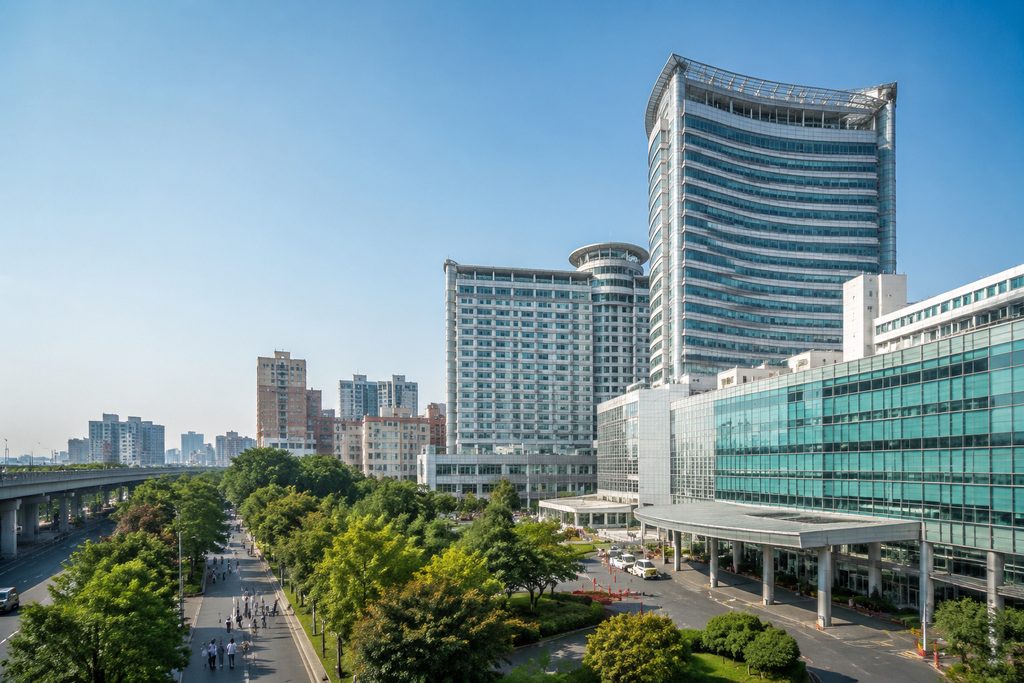
Key Takeaways
- Wuhan’s Tongji and Union hospitals perform over 200,000 surgeries annually combined, rivaling any single medical district in the United States in sheer clinical volume.
- A cardiac bypass graft at a Wuhan top-tier hospital costs roughly $12,000-20,000, compared to over $120,000 in the U.S. — structural economics, not quality cuts, drive the difference.
- Public hospital outpatient clinics cannot be pre-booked from overseas. Walk-in registration is the norm. Surgery scheduling requires an in-person consultation first — skipping this step is not possible through standard channels.
- International patients must budget for visa logistics, language barriers, and payment deposits. No English signage or interpretation is available in standard public wings.
The Problem: When Wait Times and Costs Collapse Your Options
A patient in the United Kingdom needing a hip replacement waits a median 15.6 weeks for treatment through the NHS, according to the British Medical Association’s 2024 analysis. In Canada, the Fraser Institute reports a median wait of 27.7 weeks between specialist consultation and orthopedic surgery. For a 68-year-old with deteriorating mobility, that span means lost independence. It means muscle atrophy that complicates recovery. It means pain that medication cannot fully touch.
Then there is the financial wall. The same procedure, done privately in the United States, bills out at $40,000 to $65,000 for an uninsured patient. Even with insurance, deductibles and out-of-network charges routinely push patient responsibility into five figures. A growing number of patients — from North America, Europe, Southeast Asia, and the Middle East — are asking a blunt question: what if the best option is not in my home country at all?
That question leads some to Wuhan. Not as a fallback. As a deliberate choice.
Who We Are
Our team is not a hospital. We do not provide medical treatment, clinical diagnoses, or surgical opinions. We are the logistical layer between you and China’s most advanced medical institutions — including Tongji Hospital and Union Hospital in Wuhan. We handle hospital matching, appointment coordination through official international departments, bilingual medical companion services, visa guidance, and on-ground support. Think of us as your operational architects. We exist because navigating a 5,000-bed hospital with zero Chinese language ability is not a minor inconvenience — it is a genuine barrier to safe care.
Why Wuhan’s Medical Infrastructure Delivers Results
Clinical Volume That Drives Surgical Precision
Tongji Hospital, affiliated with Huazhong University of Science and Technology, operates over 5,000 beds and handles more than 6 million outpatient visits annually. Union Hospital, its counterpart under the same university system, matches that scale. The numbers are hard to internalize until you see them in motion — a single orthopedic department at Tongji may complete more joint replacements in a month than a mid-sized American hospital does in a year.
Volume matters for one reason: pattern recognition. A surgeon who performs 300 knee replacements annually sees complications, anatomical variations, and intraoperative decisions that a surgeon performing 50 per year encounters far less frequently. Multiple peer-reviewed studies, including a 2023 analysis in JAMA Surgery, have demonstrated a clear inverse relationship between surgeon volume and patient mortality for complex procedures. This is not a theoretical advantage. It is a structural one.
Union Hospital’s oncology surgery division handles a caseload that few Western centers match. For esophageal cancer — a disease with high prevalence in parts of China — Union’s thoracic surgeons operate on several hundred cases per year. That concentrated experience translates into refined surgical technique and lower complication rates. When patients ask us “is Union hospital good for cancer surgery,” the answer sits in those volume figures. It is not about marketing claims. It is about repetition at scale.
Technology Deployment Without Bureaucratic Lag
Chinese hospitals adopt new surgical technologies at a pace that surprises many Western observers. Tongji Hospital was an early adopter of robotic-assisted surgery platforms. Its urology and general surgery departments now perform hundreds of Da Vinci procedures annually. The hospital’s imaging infrastructure includes multiple 3.0T MRI units and dual-source CT scanners — equipment that reduces scan times and improves diagnostic accuracy for cardiac and oncological cases.
Union Hospital has invested heavily in hybrid operating rooms that combine surgical capability with intraoperative imaging. This setup allows surgeons to perform complex vascular procedures and immediately verify results without moving the patient. In a Western hospital, hybrid OR access is often bottlenecked by scheduling conflicts and capital constraints. At Union, the system is designed for throughput. That means shorter waits for patients who need these specialized suites.
The practical upshot: a foreign patient arriving for a complex liver resection or cardiac valve repair accesses technology that is functionally equivalent to what they would find at a Mayo Clinic or Charité Berlin facility. The difference lies in how quickly that technology becomes available.
Cost Structure: Why Lower Prices Do Not Mean Lower Standards
Let us address the elephant in the room directly. Medical treatment in Wuhan costs a fraction of what it costs in the United States or Western Europe. A knee replacement at Tongji Hospital’s international wing typically runs $10,000 to $18,000. The same procedure in the U.S. averages $35,000 to $55,000. Cardiac bypass surgery: $12,000 to $20,000 in Wuhan versus $120,000-plus in America. Liver transplant evaluation and surgery: $60,000 to $100,000 in Wuhan compared to $800,000-plus at a U.S. transplant center.
These gaps are not explained by corner-cutting. They are explained by structural economics. Chinese hospital systems operate on vastly lower labor costs — a senior surgeon’s salary is a fraction of what an American counterpart earns. Malpractice insurance premiums are orders of magnitude lower. Administrative overhead, billing complexity, and insurance-driven documentation requirements consume far fewer resources. The hospital is not spending 25% of its revenue on prior authorization fights and claims processing.
Also, Chinese public hospitals do not carry the same capital cost burdens. They are state-supported institutions, not debt-financed private entities. That means the cost of a PET-CT scan or an ICU bed is not inflated by bond repayment schedules. The savings flow directly to the patient.
Quality control mechanisms exist independently of price. Tongji and Union hospitals are both accredited by international bodies and ranked among China’s top-tier institutions by the Fudan University hospital ranking system. Their pathology labs, infection control protocols, and surgical outcome tracking meet standards that are audited and published. The top-ranked hospitals in China represent roughly the top 5% of the country’s 35,000-plus medical facilities. Tongji and Union sit firmly inside that bracket.
What You Need to Know Before Going Alone
Honesty matters here. Walking into Tongji Hospital as a non-Chinese speaker without preparation is not a viable plan. The barriers are real and they are structural.
- Visa Requirements: Medical treatment in China requires an S2 visa, specifically annotated for medical purposes. This is not a tourist visa. The application demands an invitation letter from the treating hospital, proof of financial means, and a detailed treatment plan. Obtaining that invitation letter independently — without a contact inside the hospital’s international department — is extremely difficult. Consulates scrutinize these applications carefully. Family members accompanying the patient also need S2 visas. The M visa is for commercial business only and will be rejected for medical travel.
- Registration and Scheduling Reality: Tongji and Union are public hospitals first. Their standard outpatient clinics operate on a same-day registration system. You arrive in the morning, queue for a registration number, and wait to see a doctor. Surgery cannot be scheduled until after that face-to-face consultation. There is no online portal for overseas patients to book a surgery slot months in advance — unless you access the hospital through its international medical center or VIP channel. That channel exists. It is not a secret. But it requires coordination with the hospital’s official international patient office, not a third-party scalper.
- Payment and Deposits: Chinese public hospitals require upfront deposits before major procedures. A surgery deposit of $5,000 to $15,000 is typical, depending on the procedure. International credit cards are not accepted at standard cashier counters. Payment runs through UnionPay, WeChat, Alipay, or domestic bank transfer. International patients need a payment intermediary or must wire funds to the hospital’s designated account in advance. Insurance direct billing is generally not available at public hospitals — patients pay first and seek reimbursement from their insurer afterward.
- Language and Navigation: Tongji Hospital’s main campus is a small city. Signage is predominantly in Chinese. Pharmacy pickup, lab result collection, imaging appointments — each step involves interacting with staff who do not speak English. A bilingual companion is not a luxury. It is the difference between a 30-minute process and a four-hour ordeal.
How We Help You Navigate This
These barriers are not insurmountable. They are operational problems with operational solutions. Our team exists to solve them.
Before you travel, we establish contact with the hospital’s international patient center on your behalf. We submit your medical records — translated into Chinese by our medical translators — and coordinate a preliminary review. If the hospital confirms that your case falls within their treatment scope, we secure the official invitation letter required for your S2 visa application. We also provide a detailed cost estimate based on the hospital’s published international patient pricing schedule. The Tongji hospital international patient price structure is transparent once you access the right channel, but finding that channel without local knowledge is the hard part.
During your treatment, a bilingual medical companion accompanies you to every appointment. This person handles registration, queues for lab results, translates doctor consultations in real time, and ensures you understand every medication instruction and follow-up requirement. They do not provide medical advice. They provide the communication infrastructure that lets you receive medical advice accurately.
After discharge, we coordinate follow-up appointments, medication refills, and any necessary rehabilitation arrangements. If your recovery requires an extended stay in Wuhan, we connect you with suitable accommodation near the hospital. The goal is continuity — no gaps between hospital discharge and the next step in your recovery.
For patients considering the broader question of Wuhan China medical tourism packages, we offer coordinated care bundles that include hospital scheduling, companion services, airport transfers, and accommodation booking. These are not pre-packaged tours. They are custom-built logistics plans built around your specific treatment timeline and clinical needs.
Understanding the Real Costs: Tongji and Union Hospital Pricing
When patients research Union hospital Wuhan medical tourism cost, they often find fragmented information. Let us provide clarity. The following table reflects approximate price ranges for international patients accessing care through the hospitals’ official international departments. These are not quotes. They are planning benchmarks. Final pricing depends on case complexity, implant selection, length of stay, and the specific specialist assigned.
| Procedure | Tongji Hospital (International Dept.) | Union Hospital (International Dept.) | U.S. Average (Uninsured) |
|---|---|---|---|
| Knee Replacement (Single) | $12,000 – $18,000 | $11,000 – $17,000 | $35,000 – $55,000 |
| Cardiac Bypass (CABG) | $14,000 – $20,000 | $13,000 – $19,000 | $120,000+ |
| Liver Resection (Partial) | $15,000 – $25,000 | $14,000 – $24,000 | $50,000 – $90,000 |
| Spinal Fusion (Lumbar) | $18,000 – $28,000 | $17,000 – $26,000 | $80,000 – $150,000 |
| Robotic Prostatectomy | $16,000 – $24,000 | $15,000 – $23,000 | $40,000 – $70,000 |
| PET-CT Scan | $800 – $1,200 | $750 – $1,100 | $3,000 – $6,000 |
These prices include hospital fees, surgeon fees, anesthesia, standard implants, and ward accommodation. They do not include international patient coordination fees, visa costs, airfare, or post-discharge rehabilitation. The Tongji hospital international patient price list also reflects a premium over standard domestic rates — typically 1.5 to 2 times the local price — because international patients receive English-speaking coordinator support, private or semi-private rooms, and expedited scheduling through the VIP channel.
Booking Surgery: The Step-by-Step Reality
Patients searching for how to get treatment at Tongji hospital as a foreigner or book surgery at Tongji hospital Wuhan need to understand the sequence. This is not a hotel reservation. It is a clinical intake process with mandatory steps.
Step one: medical records review. The hospital’s international department needs your complete file — imaging, pathology reports, treatment history, current medications. These must be translated into Chinese by a qualified medical translator. Google Translate will not suffice. Errors in medication names or dosage histories can cause real harm.
Step two: preliminary assessment. A specialist reviews your file and determines whether your case is appropriate for treatment at their facility. Some conditions may be declined — advanced cancers with poor prognosis, cases where prior surgical complications create unacceptable risk, or conditions for which the hospital lacks specific subspecialty expertise. This is not rejection of you as a patient. It is clinical triage.
Step three: invitation letter and visa. Once the hospital accepts your case, they issue an official invitation letter. You submit this with your S2 visa application at your nearest Chinese consulate. Processing time varies by country — budget three to six weeks.
Step four: in-person consultation. You arrive in Wuhan. You meet the specialist face-to-face. Additional tests may be ordered. Only after this consultation is a surgery date confirmed. No reputable Chinese hospital will schedule a surgery date before examining you in person. Any service claiming otherwise is not operating through official channels.
Step five: deposit payment and admission. You pay the required deposit, complete pre-operative testing, and are admitted on the scheduled date.
This process typically spans 6 to 10 weeks from initial contact to surgery day. Patients who try to compress this timeline often fail at the visa stage or arrive to find no surgery slot available.
Frequently Asked Questions
Union Hospital’s oncology surgery department is ranked among China’s top programs by the Fudan University specialist rankings. Its surgeons perform high volumes of complex resections for esophageal, gastric, liver, and colorectal cancers. The hospital’s pathology, imaging, and ICU capabilities meet international standards. The question to ask is not about quality in the abstract — it is about whether Union has specific expertise in your specific cancer type. For many GI and thoracic malignancies, the answer is yes. For rare sarcomas or pediatric cancers, a different Chinese center might be more appropriate. We help match your diagnosis to the right institution, not just the most famous one.
Medical malpractice law in China operates differently than in Western jurisdictions. Foreign patients do have legal rights, but pursuing a claim from outside China is extremely difficult. This is the hard truth. Our practical recommendation: choose your hospital and surgeon carefully on the front end. Verify their credentials, their volume, and their outcome data. The best protection is thorough due diligence before you consent to treatment. Also, ensure you have medical evacuation insurance that covers repatriation in the event of severe complications. We do not sell insurance, but we strongly advise patients to carry it.
Most international patients pay out of pocket and then seek reimbursement from their insurer. Union Hospital’s international department accepts wire transfers and, in some cases, international credit cards through their VIP payment channel. You will receive an official invoice and medical records suitable for insurance submission. We advise contacting your insurer before travel to confirm their out-of-network international coverage policy. Some insurers require pre-authorization even for overseas care. Get that in writing.
Wuhan is a major metropolitan city of over 11 million people with a growing international community. The areas around Tongji and Union hospitals are urban, well-lit, and heavily trafficked. Violent crime against foreigners is rare. The practical challenges are language and daily logistics. Restaurant menus, street signs, pharmacy labels — almost everything is in Chinese. Our companion service handles medical translation, but patients should budget for a translator or guide for daily life outside the hospital, or stay in international-friendly accommodations where English-speaking staff are available.
Yes. Through the hospital’s international department, we can arrange a video consultation with a relevant specialist. The cost ranges from $100 to $300 for a standard consultation and $500 to $800 for a top-specialist session. This consultation serves two purposes: it gives you a preliminary clinical opinion on whether your case is treatable at Tongji, and it establishes the doctor-patient relationship required before the hospital will issue an invitation letter. Any consultation fee paid is credited in full toward our on-the-ground coordination service if you proceed with treatment within 90 days.
Your Next Step
Medical treatment in Wuhan represents a genuine option for patients facing long waits, prohibitive costs, or limited surgical options in their home countries. Tongji Hospital and Union Hospital offer clinical capabilities that match leading Western centers — at a price point that makes treatment accessible to people who would otherwise be priced out entirely. The barriers are real but solvable. The key is preparation, not improvisation.
If you want to understand whether your specific case is suitable for treatment at Tongji or Union, our team can facilitate a preliminary records review and provide honest guidance on likely costs, timelines, and expected outcomes. Visit our patient coordination page to start a conversation. There is no charge for the initial discussion. You tell us your situation. We tell you what is possible. Then you decide.
For more medical information and treatment options in China, visit chinamedservices.com (China Medical Services).
