Xijing Hospital Xi’an: Northwest China’s Top-Tier Medical Giant Explained
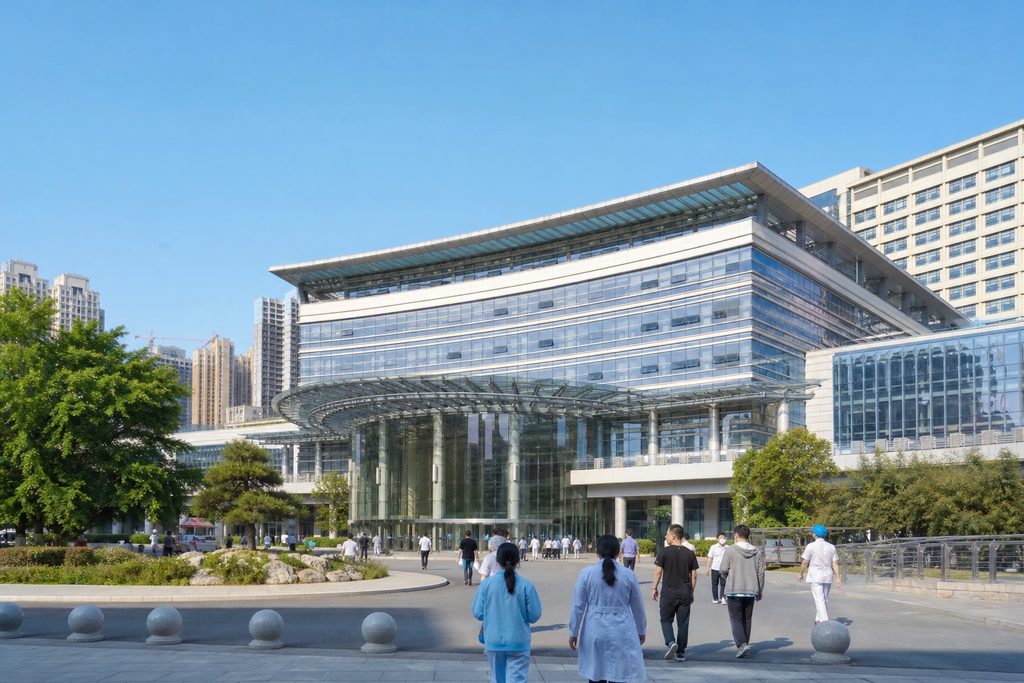
When 42-year-old Michael first heard the diagnosis, he had no idea where to start looking for treatment. Mitral valve regurgitation. His cardiologist in Manchester recommended surgery within six months. Then came the second blow: the UK’s NHS waitlist stretched past eleven months for non-emergency cardiac procedures. Going private in the UK meant £35,000. That was the moment Michael began searching for alternatives. He typed “best hospital in China for cardiology” into Google. Xijing Hospital in Xi’an appeared in the results. But he had no clue what came next. No idea about visas. No idea if they even treated foreigners. No idea what it would cost.
This is where the real questions start. Not just about rankings. About access, pricing, and whether a foreign patient can actually walk through those doors and receive world-class care.
Key Takeaways
- Xijing Hospital ranks in China’s highest national tier (A++++), placing it among the top 5% of the country’s 35,000+ hospitals according to the Fudan University rankings.
- Cardiac surgery at Xijing costs approximately $12,000–$20,000 USD, a fraction of the $120,000+ typically charged in the United States.
- Foreign patients cannot independently book surgery online. Access requires coordination through the hospital’s international department, and navigating this alone without Mandarin fluency is exceptionally difficult.
- Understand that Xijing is a massive public hospital. Daily outpatient volume exceeds 10,000 patients. Without a bilingual guide, the experience can be overwhelming and disorienting.
The Problem: When Your Home Country’s Healthcare System Says “Wait”
Healthcare rationing is not a theoretical concept for millions of patients across Canada, the UK, and parts of Europe. It is a daily reality. In 2023, the median wait time for medically necessary treatment in Canada reached 27.7 weeks, the longest ever recorded by the Fraser Institute. The UK’s NHS reported over 7.6 million people on waiting lists for elective care. For cardiac surgery specifically, the Royal College of Surgeons found that some patients in England were waiting over a year for procedures classified as urgent.
These are not just numbers. They represent people living with deteriorating valves, blocked arteries, and failing joints. People whose conditions worsen while they wait. The alternative—paying out of pocket in a Western private system—can bankrupt a family. A single coronary artery bypass graft in the US routinely exceeds $120,000. That figure does not include anesthesia, post-operative care, or the hospital stay itself.
The math becomes brutal. Wait too long and risk permanent damage. Pay the local private rate and risk financial ruin. For Michael, and for thousands like him each year, the only rational choice is to look beyond their borders. That search often leads to China. And in northwest China, one hospital name dominates the conversation.
Who We Are
We are China Medical Services. We are not a hospital. We do not provide medical treatment, clinical diagnoses, or surgical procedures. We are your logistical architects. Our team bridges the gap between you and China’s top-tier medical expertise. We handle hospital matching, appointment coordination, bilingual medical companions, visa guidance, and every operational detail that stands between a foreign patient and successful treatment. We exist because China’s best hospitals are genuinely world-class—and genuinely difficult to navigate without local knowledge and language fluency.
Xijing Hospital: Why This Institution Commands Attention
Xijing Hospital is not simply “a good hospital.” It is the flagship teaching hospital of the Fourth Military Medical University. It sits in the A++++ tier of the Fudan University National Hospital Rankings, the highest possible classification. Only about 20 hospitals in all of China achieve this grade. Among China’s 35,000+ hospitals, Xijing occupies a position in the top fraction of one percent.
But rankings are just labels. What matters is what happens inside the building.
Clinical Volume That Western Surgeons Rarely See
The hospital performs over 5,000 cardiac surgeries annually. To put that in perspective, the average US cardiac surgery center handles roughly 200 to 400 cases per year. A surgeon at Xijing may complete more valve repairs in one month than a competent Western surgeon performs in an entire year. Volume is not a vanity metric. Study after study—including research published in the New England Journal of Medicine—demonstrates a clear inverse relationship between procedural volume and patient mortality. Surgeons who do more of a specific procedure simply get better results. Fewer complications. Shorter operative times. Smoother recoveries.
This volume effect extends across departments. The orthopedics team handles complex joint revisions that smaller centers refer elsewhere. The neurosurgery department manages cerebrovascular cases at a scale that generates genuine subspecialty expertise. For a foreign patient asking “is Xijing hospital good for foreign patients,” the clinical answer is unambiguous: the surgical teams here have seen and treated cases that most Western surgeons encounter only in textbooks.
Technology Deployed at Scale
Xijing invested heavily in robotic surgical systems, including the da Vinci Xi platform, and has developed proprietary techniques in minimally invasive cardiac surgery. The hospital’s hybrid operating suites allow interventional cardiologists and cardiac surgeons to work simultaneously on complex cases—a workflow that remains rare outside of a handful of elite US centers. The imaging infrastructure is similarly advanced. PET-MRI, dual-source CT, and intraoperative neuro-monitoring are standard tools, not exotic add-ons.
What distinguishes Xijing is not the presence of this technology. Many hospitals buy expensive machines. The difference is how routinely the technology is integrated into daily surgical workflows. When a team performs thousands of procedures annually on the same equipment, the learning curve flattens. Efficiency becomes embedded. That translates into shorter anesthesia times, fewer intraoperative surprises, and faster post-operative recovery.
The Cost Equation: Structural, Not Sacrificial
Let’s address the elephant in the room directly. When patients search for “how much does heart surgery cost at Xijing hospital,” they are bracing for a number that might be unaffordable. The reality is the opposite. A mitral valve repair at Xijing typically ranges from $12,000 to $20,000 USD, depending on complexity and whether the procedure is minimally invasive or open-chest. A coronary artery bypass graft falls in a similar range.
These figures are not low because corners are cut. They are low for structural reasons. China’s labor costs for hospital staff are substantially lower than in the US or Western Europe. Hospital systems operate at enormous scale, spreading fixed costs across far more patients. Pharmaceutical and implant costs are lower due to domestic manufacturing and government price controls. The outcome is a pricing structure that delivers genuine affordability without compromising clinical quality.
| Procedure | Xijing Hospital (USD) | United States (USD) | United Kingdom Private (USD) |
|---|---|---|---|
| Mitral Valve Repair | $15,000–$20,000 | $80,000–$150,000 | $45,000–$65,000 |
| CABG (Heart Bypass) | $12,000–$18,000 | $70,000–$200,000 | $35,000–$55,000 |
| Total Hip Replacement | $8,000–$15,000 | $40,000–$70,000 | $18,000–$28,000 |
| Spinal Fusion (Single Level) | $10,000–$18,000 | $80,000–$150,000 | $30,000–$50,000 |
These are reference ranges. Final pricing varies by hospital and case complexity. But the pattern is consistent. Patients routinely save 70% to 85% compared to US cash-pay rates, and 40% to 60% compared to UK private rates. For a patient facing a life-altering surgery, that differential can mean the difference between treatment and financial catastrophe.
What You Need to Know Before Going Alone
Xijing Hospital delivers extraordinary clinical value. It also presents genuine barriers for international patients. Ignoring these barriers does not make them disappear. Acknowledging them honestly is how we help patients prepare properly.
- Language and Navigation: Xijing is a Chinese public hospital. Signage, medical records, consent forms, and discharge instructions are in Mandarin. The hospital’s daily outpatient volume exceeds 10,000 patients. The corridors are crowded. The registration system uses Chinese-language kiosks. Without a bilingual companion who understands hospital workflows, a foreign patient will be lost—literally and procedurally.
- Payment Systems: Chinese public hospitals operate on a pre-payment model. You pay a deposit before admission. The hospital draws down from that deposit as services are rendered. International credit cards are not reliably accepted at hospital cashier counters. WeChat Pay and Alipay dominate, and linking a foreign bank card to these platforms is not always straightforward. Patients need a clear plan for how funds will be transferred and deposited before they arrive.
- Appointment Reality: You cannot email Xijing Hospital’s general outpatient department and book a surgery slot. The standard outpatient system is designed for walk-in registration on the day of consultation. Surgery scheduling happens only after an in-person specialist consultation. The pathway for international patients runs through the hospital’s international department, not the general registration desk. This is where most independent attempts fail. Patients contact the wrong office, receive no response, and conclude the hospital does not accept foreigners. The hospital does accept international patients—through the correct channel.
How We Help You Navigate This
These barriers exist for structural reasons, not because the hospital is unwelcoming. Xijing treats international patients regularly. The issue is that the hospital’s primary mission is serving China’s domestic population at scale. The international patient pathway is a specialized side channel, not the main highway. Our job is to guide you onto that channel and keep you moving through it.
Before you travel, we handle the diagnostic documentation. We collect your medical records, imaging files, and physician reports. We translate them into clinical-grade Chinese—not machine translation, but terminology that Chinese surgeons can act on. We submit these materials to the international department at Xijing and coordinate a response. If a video consultation is needed first, we arrange it with the relevant specialist. The cost for a top-specialist video consultation through our coordination starts from $500 to $800. If that consultation leads to an in-person treatment plan within 90 days, the full amount is credited toward your on-the-ground coordination service.
Once you arrive in Xi’an, a bilingual medical companion meets you at the hospital entrance. This person handles registration, queues at the cashier, escorts you to the correct department, and translates every conversation with your surgeon. They do not make clinical decisions—that is between you and your doctor. They make sure nothing is lost in translation and no step is missed in the hospital’s workflow. Our companion service starts from $200 per day.
After discharge, we remain involved. We coordinate follow-up appointments, translate discharge instructions into English, and ensure you have a clear recovery plan before you board your flight home. For patients who need extended recovery in Xi’an before traveling, we can recommend accommodations near the hospital and arrange transport.
For patients who want to explore the full range of top-tier hospital options in China, we also provide access to our database of 340+ top-ranked hospitals across 37 cities. Xijing is extraordinary. It may also not be the right fit for every case. Part of our consultation process is an honest conversation about which institution best matches your specific diagnosis, budget, and personal circumstances.
Frequently Asked Questions
Yes, the hospital has an international department that handles foreign patient inquiries. The challenge is not making contact—it is receiving a timely response and navigating the language barrier. The department fields a high volume of domestic and international requests. Responses can be slow, and communication is typically in Mandarin. Many patients search for “contact Xijing hospital international department” online and find phone numbers that go unanswered or email addresses that generate no reply for weeks. We maintain direct liaison relationships that streamline this process.
No. Xijing does not publish a standardized international patient price list online. Costs are determined case by case based on the specific procedure, implant selection, room category, and length of stay. The price ranges we provide are based on actual patient cases we have coordinated. They are accurate benchmarks, not binding quotes. A final cost estimate comes only after the hospital reviews your medical records and the treating surgeon outlines the surgical plan.
This is the question every patient should ask. The clinical reality is that Xijing’s surgical teams manage complications at a rate comparable to or better than international benchmarks, precisely because their case volumes are so high. The hospital has full intensive care capabilities, 24-hour in-house surgical coverage, and the resources of a major teaching hospital. From a logistics perspective, we remain in Xi’an throughout your hospitalization. If complications arise, our team facilitates communication between you, your family back home, and the medical team. We do not provide medical care—we ensure you are never alone in a system you do not understand.
Xijing is classified as a Grade A, Level 3 hospital—the highest tier in China’s hospital grading system. It also holds the A++++ designation in the Fudan rankings, placing it among the most elite institutions in the country. For international patients considering China as a medical tourism destination, the phrase “top tier 3 hospital China medical tourism” accurately describes Xijing’s position. The hospital’s strengths in cardiology, cardiac surgery, neurosurgery, and orthopedics make it particularly relevant for patients seeking complex surgical interventions at a fraction of Western costs.
For cardiac care specifically, Fuwai Hospital in Beijing is the global volume leader, performing over 14,000 cardiac surgeries annually. Zhongshan Hospital in Shanghai and West China Hospital in Chengdu are also elite cardiac centers. Xijing ranks among this group. The distinction is regional: Xijing is the dominant cardiac surgery center for northwest China. For a patient asking “best hospital in China for cardiology,” the honest answer is that several institutions compete at the very top. The right choice depends on your specific condition, your budget, and your logistical preferences. Our consultation process helps you weigh these factors without bias toward any single institution. You can explore our full directory of specialty departments at our departments page.
Your Next Step
Michael eventually had his mitral valve repaired at Xijing Hospital. The surgery was successful. He was discharged after seven days. His total cost, including the procedure, hospital stay, medications, and our coordination services, came to just under $22,000. He returned to Manchester and resumed his normal life. His case is not unusual. It is representative of what becomes possible when a patient combines world-class Chinese surgical expertise with professional logistical support.
The decision to travel across the world for surgery is never simple. The clinical capabilities at Xijing are real. So are the navigation challenges. We exist to solve the second part of that equation. If you are considering treatment at Xijing Hospital or any of China’s top-tier medical institutions, request a free consultation with our team. We will discuss your diagnosis, explain your options, and help you determine whether this path makes sense for you. No pressure. No obligation. Just an honest conversation about what is possible.
For more medical information and treatment options in China, visit chinamedservices.com (China Medical Services).
