SYSU First Hospital Endocrinology: Diabetes & Thyroid Care for International Patients
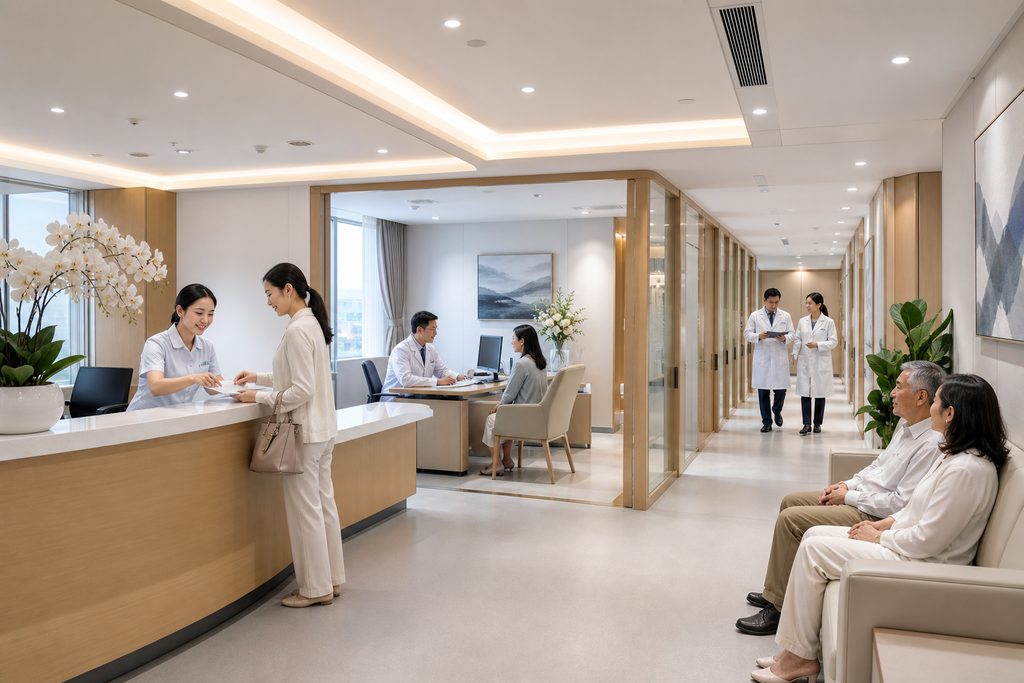
You have probably heard that navigating a Chinese public hospital as a foreigner is impossible without speaking the language. That is partly true. But it also misses a larger point: some of the world’s highest-volume endocrinology departments sit inside these hospitals, treating conditions Western centers might consider complex or rare as everyday cases. The Department of Endocrinology at the First Affiliated Hospital of Sun Yat-sen University in Guangzhou is one of them. For a patient with difficult-to-control diabetes, a suspicious thyroid nodule, or a rare adrenal disorder, understanding what this center actually offers—and what it costs—can open up options that do not exist at home.
Key Takeaways
- SYSU First Hospital’s endocrinology department is ranked among China’s top 10 for endocrine disease by the Fudan University hospital rankings, handling a patient volume that dwarfs most Western centers.
- Out-of-pocket costs for diabetes comprehensive evaluation or thyroid cancer surgery in Guangzhou typically run 60–80% lower than US cash-pay rates, with no compromise on clinical protocols.
- International patients cannot simply walk in and book a specialist. The hospital requires in-person registration for standard outpatient visits, and English-language support is minimal on the public floor.
- Before making any decision, know that the best clinical outcome depends less on the hospital’s reputation and more on whether you can actually communicate your history, secure the right specialist, and navigate follow-up care.
The Problem: Endocrinology Wait Times and Costs Are Breaking the System
In the United States, the average wait time to see an endocrinologist for a new patient visit now stretches to 37 days in major metropolitan areas, and over 60 days in rural regions, according to a 2022 survey by Merritt Hawkins. In Canada, the wait for a non-urgent endocrinology consultation can exceed four months. The UK’s NHS reports that nearly 20% of patients referred for suspected thyroid cancer wait longer than the two-week target for a first appointment. These are not minor inconveniences. For a patient with a thyroid nodule that might be malignant, a two-month delay is clinically significant.
Then there is the cost. A total thyroidectomy with lymph node dissection in the US typically runs between $25,000 and $45,000 for uninsured patients. Even with insurance, high-deductible plans leave patients facing $8,000–12,000 out of pocket. Diabetes management tells a similar story. Continuous glucose monitor sensors cost roughly $300–400 per month without coverage. Insulin prices, despite recent caps, still strain household budgets. None of this is news to anyone living with an endocrine condition.
What is less known is that a handful of endocrine centers outside the West manage patient volumes that generate clinical experience difficult to replicate in lower-volume settings. The endocrinology department at SYSU First Hospital handles over 300,000 outpatient visits annually across its diabetes, thyroid, adrenal, and metabolic bone disease subspecialties. That is not a typo. Three hundred thousand. A typical US academic endocrinology division might see 20,000–30,000 outpatient visits per year. Volume alone does not guarantee better outcomes. But in procedures like thyroid ultrasound-guided biopsy or complex diabetes management, repetition builds a kind of pattern recognition that low-volume practice simply cannot match.
Who We Are
We are China Medical Services. We are not a hospital. We do not provide medical treatment, clinical diagnoses, or prescriptions. What we do is act as your logistical architects—we bridge the gap between you and China’s top-tier medical expertise. Our team handles hospital matching, appointment coordination through official international department channels, bilingual medical companion services, visa guidance, and every practical detail that stands between a foreign patient and the care they need. We work with over 340 top-ranked hospitals across 37 cities, including SYSU First Hospital in Guangzhou. We do not promise miracles. We promise that if you decide to pursue treatment in China, you will not have to figure out the system alone.
Why SYSU First Hospital’s Endocrinology Center Delivers Results
Clinical Volume That Creates Uncommon Expertise
The Department of Endocrinology at the First Affiliated Hospital of Sun Yat-sen University is not a general internal medicine wing with a few endocrine beds. It is a dedicated, multi-subspecialty center that has been a national key clinical specialty since 2011. The department runs seven distinct clinical units: diabetes and metabolic diseases, thyroid disorders, adrenal diseases, pituitary diseases, metabolic bone diseases, obesity and lipid metabolism, and a dedicated endocrine laboratory. The thyroid subunit alone performs over 2,000 ultrasound-guided fine-needle aspiration biopsies annually. To put that in context, the American Thyroid Association notes that a clinician should perform at least 100 thyroid biopsies per year to maintain competency. The physicians here perform twenty times that threshold. Every year.
For diabetes patients, the center operates one of China’s largest continuous glucose monitoring programs, with data from over 10,000 patient-years of CGM use informing their treatment protocols. They were early adopters of hybrid closed-loop insulin pump therapy and run active clinical research programs in islet cell transplantation for type 1 diabetes. This is not a center that reads about the latest diabetes technology in journals. They use it daily on a scale few Western hospitals can match.
Thyroid Cancer Treatment: Integrated, Not Fragmented
How does SYSU First Hospital treat thyroid cancer? The short answer is: through a tightly coordinated multidisciplinary pathway that most Western patients would recognize as ideal but rarely experience. When a patient arrives with a suspicious thyroid nodule, the workflow is not a series of disconnected referrals stretched over weeks. Ultrasound, biopsy, and cytopathology often happen within the same visit. If the biopsy confirms papillary thyroid carcinoma—the most common type—the case is reviewed by a tumor board that includes endocrinologists, endocrine surgeons, nuclear medicine specialists, and pathologists. Surgery is typically scheduled within one to two weeks of the decision to operate.
The endocrine surgery team performs approximately 800 thyroidectomies per year. They use intraoperative nerve monitoring as standard practice, not as an optional add-on. For patients requiring radioactive iodine ablation after surgery, the nuclear medicine department is on the same campus. No transferring records. No finding a separate facility. The entire treatment arc—from first ultrasound to post-ablation follow-up—happens under one organizational roof. This is not unique to China, but it is rare to find it executed at this scale and speed.
The Cost Question: What Does “Best Endocrinology Hospital Guangzhou Cost” Actually Mean?
Let us address the search query directly. The best endocrinology hospital Guangzhou cost is not a single number. It depends entirely on what you need. But we can give real ranges based on the hospital’s international department pricing and what our patients have actually paid. A comprehensive diabetes evaluation—including full metabolic panel, HbA1c, C-peptide, diabetes autoantibody panel, 72-hour continuous glucose monitoring, and a specialist consultation—runs between $800 and $1,500. In the US, the same workup without insurance typically costs $3,000–5,000. A total thyroidectomy with lymph node dissection at SYSU First Hospital, including surgeon fees, anesthesia, operating room, and a three-to-four-day hospital stay, ranges from $6,000 to $9,000 through the international department. The US cash-pay equivalent: $25,000–45,000.
| Procedure | SYSU First Hospital (USD) | US Average Cash-Pay (USD) |
|---|---|---|
| Comprehensive Diabetes Evaluation | $800 – $1,500 | $3,000 – $5,000 |
| Thyroid Ultrasound + Biopsy | $300 – $500 | $1,500 – $3,000 |
| Total Thyroidectomy (incl. 3-4 day stay) | $6,000 – $9,000 | $25,000 – $45,000 |
| Radioactive Iodine Ablation | $2,000 – $3,500 | $8,000 – $15,000 |
These numbers are not marketing. They reflect the structural reality that Chinese hospital costs are driven by lower labor expenses, higher patient throughput, and a system where the hospital’s international department prices transparently for foreign patients. You are not subsidizing a bloated billing department or navigating insurance negotiations. You pay the hospital directly. The cost advantage is real, and it does not come from cutting clinical corners. It comes from a different economic model entirely.
One more thing about pricing. When you see a diabetes care package China medical tourism providers advertise, read the fine print. Some packages bundle unnecessary tests or lock you into specific providers with opaque referral fees. The SYSU First Hospital diabetes treatment price you pay through the hospital’s official international department is itemized. You see exactly what each test, consultation, and procedure costs. No mystery fees.
What You Need to Know Before Going Alone
We have described a center with impressive volume, integrated care pathways, and genuinely lower costs. Now the honest part. Walking into SYSU First Hospital as a foreign patient without preparation is a recipe for frustration. Here is what you face:
- Registration Requires Physical Presence: The standard public outpatient system at SYSU First Hospital does not accept advance online bookings from overseas patients. You show up, you queue, you hope the specialist you need has an available slot that day. The hospital’s daily outpatient volume exceeds 10,000 visits. The registration hall is crowded, loud, and entirely in Chinese. You cannot phone ahead and reserve a slot on the public floor.
- Language Barrier Is Absolute on the Public Side: Very few physicians in the public outpatient department speak functional medical English. Nursing staff almost never do. Your medical history, symptom description, and medication list must be communicated in Chinese, or you will not get an accurate assessment. This is not a criticism of the hospital. It is a Chinese public hospital serving a Chinese-speaking population. English is not part of the workflow.
- Payment Is Upfront, Insurance Is Reimbursement: The hospital requires prepayment for services. They do not directly bill international insurance. You pay, you get a detailed receipt and medical report in Chinese, and you submit to your insurer for reimbursement. If your insurance requires pre-authorization, you must handle that before arrival.
How We Help You Navigate This
These barriers exist for structural reasons, not because the hospital wants to exclude foreign patients. The international department at SYSU First Hospital exists precisely to bridge this gap. But the international department does not market itself overseas. It does not have a call center in English. It relies on coordinators like us to bring patients through the correct channel.
Here is what our involvement actually looks like. Before you travel, we collect your medical records, have them professionally translated into Chinese by medical translators, and submit them to the international department for specialist review. The department confirms which specialist is appropriate for your case and provides available consultation dates. We book the appointment. We coordinate the hospital invitation letter for your S2 visa application. When you arrive in Guangzhou, a bilingual medical companion meets you at the hospital, handles registration, guides you to the correct department, sits in on your consultation to ensure accurate communication, and manages payment, prescription pickup, and follow-up scheduling. If you need surgery, we coordinate the admission process and stay with you through pre-op and post-op until you are stable and discharged.
This is not concierge medicine in the luxury-hotel sense. It is practical, ground-level logistical support. The kind that determines whether you actually get treated or spend three days lost in a hospital complex that covers over 400,000 square meters. Our bilingual medical companion service starts from $200 per day. Hospital appointment coordination starts from $300. These are the fees for our coordination work. The hospital’s treatment charges are separate and paid directly to the hospital.
For patients who want to understand their condition and treatment options before committing to travel, we arrange video consultations with SYSU First Hospital endocrinology specialists through the international department. A written second opinion from a top specialist costs $300–500. A video consultation ranges from $500–800. And here is something worth knowing: any consultation fee you pay is credited in full toward our on-the-ground coordination service if you decide to come for treatment within 90 days. That means you are not paying twice. You are paying once, and the consultation investment carries forward.
Is SYSU First Hospital Endocrinology Department Good for Foreigners?
The question is SYSU First Hospital endocrinology department good for foreigners asks the wrong thing. The department is clinically excellent. That is not the issue. The real question is whether a foreigner can access that clinical excellence without a bridge. The answer is: not easily. Through the international department channel, with a coordinator handling language, registration, and logistics, the experience is entirely different. You get the same specialists, the same diagnostic equipment, the same treatment protocols that serve hundreds of thousands of Chinese patients annually. You also get an English-speaking companion, streamlined scheduling, and the ability to actually understand what your doctor is saying.
Is it the same as walking into a Western private clinic with leather chairs and a curated art collection? No. The physical environment is functional, not luxurious. The pace is faster. The consultation may feel shorter because the physician is efficient, not because they are dismissive. Cultural expectations differ. But the clinical work is rigorous, evidence-based, and informed by a depth of experience that comes from seeing more endocrine pathology in a month than many Western endocrinologists see in a year.
How to Book an Appointment at SYSU First Hospital Endocrinology as an International Patient
If you search book appointment SYSU First Hospital endocrinology international patient, you will not find an online booking portal in English. The hospital’s public-facing website is in Chinese. The international department accepts appointments through coordinators and partner organizations, not through direct online booking by individual overseas patients. The process works like this: you contact us with your medical history and what you are seeking—a diabetes management consultation, a thyroid nodule workup, a surgical opinion. We translate and submit your case to the international department. They review and confirm which specialist is appropriate and when they are available. We book the slot and handle everything downstream.
You cannot email the hospital directly and expect a response in English. You can try. Some patients do. A few get lucky. Most do not. The system is not designed for direct international patient intake. That is not a flaw. It is just how Chinese public hospitals are structured. They focus on serving their domestic patient population at massive scale. The international department is a separate channel with separate pricing and separate scheduling. Accessing it requires knowing the right entry point. That is what we provide.
Frequently Asked Questions
Not through the public outpatient system. The public side requires in-person registration and does not accept international online bookings. The international department accepts overseas patients but works through coordinators rather than direct patient self-booking. We handle the entire appointment process through this official channel.
For a comprehensive initial evaluation including labs, CGM placement, and specialist consultation, expect $800–1,500. Ongoing management costs depend on your treatment plan. Insulin pump initiation with education runs $2,000–3,500 including device setup. These are hospital international department prices paid directly to the hospital. Our coordination fees are separate and quoted before you commit to anything.
Plan for approximately 10–14 days total. This includes your initial consultation and pre-operative testing (1–2 days), the surgery and hospital stay (3–4 days), and a post-operative follow-up to check calcium levels, voice function, and wound healing before you are cleared to fly. Your surgeon will give you specific guidance based on your case.
SYSU First Hospital is a tertiary academic medical center with full intensive care capability, 24-hour emergency surgical backup, and all major subspecialties on-site. Complication rates for thyroid surgery, for example, are in line with international benchmarks—permanent hypoparathyroidism under 2%, permanent recurrent laryngeal nerve injury under 1%. No surgery is risk-free, and we never suggest otherwise. What we can say is that you are in a high-volume center with the resources to manage complications if they occur. Our team stays with you throughout your hospitalization and can coordinate with your home-country physician for post-discharge continuity.
That depends entirely on your policy. Some international health insurance plans cover treatment at JCI-accredited or internationally recognized hospitals. SYSU First Hospital holds Chinese national accreditation but not JCI. You pay the hospital upfront and submit for reimbursement. We provide itemized receipts and translated medical records to support your claim. Check with your insurer before traveling. We cannot guarantee coverage, and we recommend getting pre-authorization in writing if your policy requires it.
Your Next Step
SYSU First Hospital’s endocrinology department offers something genuinely hard to find: high-volume clinical expertise, integrated care pathways for diabetes and thyroid disease, and costs that make treatment accessible without insurance battles. The trade-off is that accessing it requires navigating a system not built for foreigners. That is a solvable problem. If you are considering endocrinology care in Guangzhou, start with a conversation. Tell us about your diagnosis, what you have tried, and what you are hoping to achieve. We will tell you honestly whether SYSU First Hospital is a good fit and what the path looks like. No pressure. No sales script. Just practical guidance from a team that does this every day.
Learn more about how we help international patients access China’s top-ranked hospitals, or explore our patient coordination services to understand the full support we provide from first contact through recovery.
For more medical information and treatment options in China, visit chinamedservices.com (China Medical Services).
