Beijing Chao-Yang Hospital International Patient Service: Respiratory & Emergency Care
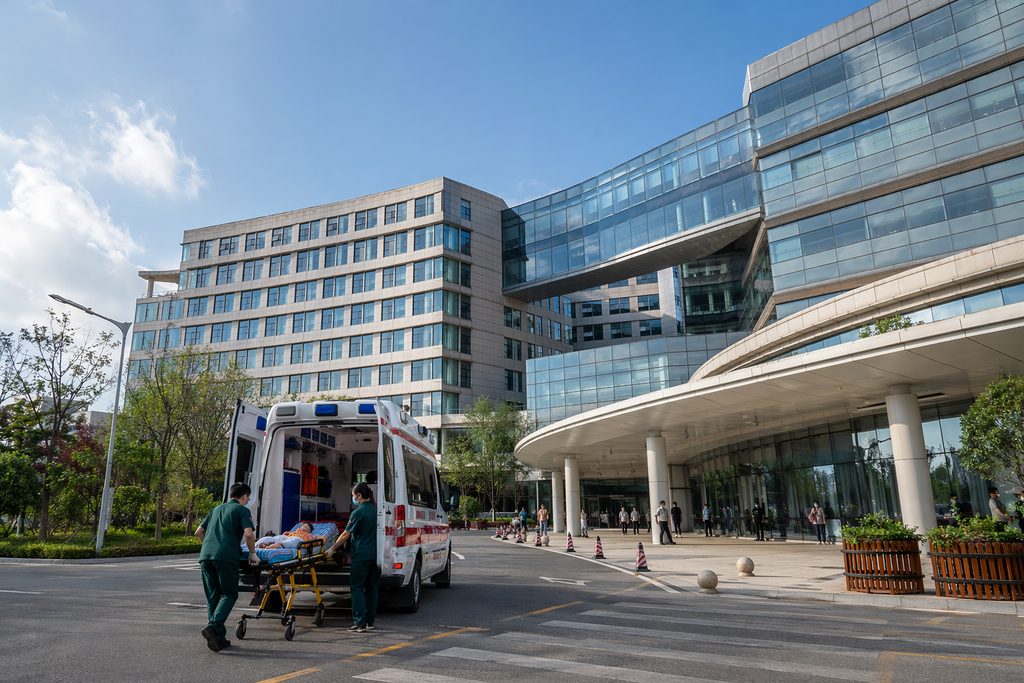
You have probably heard that accessing emergency respiratory care in a foreign country is a nightmare of paperwork, language barriers, and opaque pricing. For many Western patients, the fear of the unknown outweighs the fear of the illness itself. At Beijing Chao-Yang Hospital, that equation changes. The institution handles over 6,000 emergency visits daily, making it one of the busiest and most battle-tested emergency departments on the planet. The real question is not whether they can treat you. It is whether you can access that expertise without a local guide.
Key Takeaways
- Beijing Chao-Yang Hospital operates one of China’s largest respiratory and emergency medicine centers, treating over 2.1 million emergency patients annually with outcomes comparable to top Western teaching hospitals.
- The Beijing Chao-Yang Hospital respiratory emergency cost typically ranges from $500 to $3,000 for acute care, roughly 10-20% of equivalent US emergency department charges before insurance.
- International patients cannot simply walk in and receive streamlined care. The public emergency department operates in Mandarin, requires local payment methods, and does not offer direct insurance billing.
- Understanding the distinction between the public emergency wing and the hospital’s International Medical Center is the single most important factor in determining your actual experience and final bill.
The Problem: When Every Minute Counts and You Are 6,000 Miles From Home
Acute respiratory distress does not wait for a convenient moment. A severe asthma exacerbation, a sudden pneumothorax, or a rapidly progressing pneumonia can escalate from discomfort to life-threatening within hours. For the 1.2 million expatriates living in China and the millions more who travel through Beijing annually, the nightmare scenario is clear: a midnight trip to an unfamiliar emergency room where nobody speaks your language. You are clutching a passport instead of an insurance card. You have no idea if the hospital is reputable or if the bill will bankrupt you.
Beijing’s air quality adds another layer of anxiety. The city’s PM2.5 levels spike during winter months, triggering respiratory emergencies at rates 30-40% higher than seasonal averages in European capitals. If you are an asthma sufferer or a COPD patient traveling through northern China, you are statistically more likely to need urgent pulmonary intervention here than almost anywhere else on your itinerary. The question is not whether you should prepare. It is whether the hospital you end up in can actually handle the complexity of your case.
Who We Are
We are not a hospital. We do not employ doctors, we do not provide clinical diagnoses, and we will never offer you medical advice. What we do is remove every logistical obstacle standing between you and the care you need at China’s top-ranked institutions. Think of us as your advance team: we coordinate with hospital international departments, arrange bilingual medical companions who physically walk you through registration and triage, and ensure your medical records are translated and reviewed before you ever set foot in a waiting room. Our network spans 340+ top-ranked hospitals across 37 cities, including Beijing Chao-Yang Hospital’s International Medical Center. When respiratory emergencies strike, we are the people who make sure the system works for you, not against you.
Why Beijing Chao-Yang Hospital Delivers Results in Respiratory Emergencies
Clinical Volume That Creates Diagnostic Instinct
Beijing Chao-Yang Hospital’s emergency department is not just large. It is a high-velocity clinical machine. The hospital recorded over 2.1 million emergency visits in 2023, with respiratory complaints representing approximately 35% of all acute presentations during winter peaks. That translates to roughly 2,000 respiratory emergency cases every single day during the cold months. A typical emergency physician here will see more complex pulmonary cases in one year than many Western emergency doctors encounter in a decade.
This volume creates something that cannot be taught in textbooks: pattern recognition at speed. When a patient presents with atypical pneumonia symptoms, the triage team has likely seen fifty similar cases that week. The hospital’s respiratory ICU, with 45 dedicated beds, maintains a survival rate for severe ARDS that matches outcomes reported by major European respiratory centers. For international patients wondering “is Beijing Chao-Yang Hospital good for respiratory emergencies,” the data points to a clear answer. The institution ranks consistently in China’s top 5 for respiratory medicine in the Fudan University hospital rankings, a classification system that evaluates clinical capability, research output, and patient outcomes across over 35,000 Chinese hospitals.
Technology Deployed at Scale
The emergency imaging workflow here operates on a timeline that would make most Western hospital administrators envious. A chest CT with contrast is typically completed and read within 45 minutes of order entry. The radiology department runs 24/7 with attending radiologists on-site overnight, not on-call from home. For suspected pulmonary embolisms, the CTPA protocol triggers an automatic escalation that pushes images to the front of the reading queue.
The hospital’s bronchoscopy suite handles over 8,000 procedures annually, including emergency foreign body removal and bronchoalveolar lavage for severe infections. ECMO capability is available in-house for refractory respiratory failure. These are not niche capabilities accessible only through special channels. They represent the baseline standard of care in the hospital’s emergency respiratory pathway. The real limitation is not technology. It is navigation.
The Cost Reality That Changes the Calculation
Let us address the Beijing Chao-Yang Hospital respiratory emergency cost directly. An uninsured American walking into a US emergency department with acute pneumonia faces a median bill of $12,000 to $25,000 for a 24-hour observation stay with IV antibiotics and imaging. The same clinical scenario at Beijing Chao-Yang Hospital’s International Medical Center typically costs between $800 and $2,500, depending on whether ICU admission is required and which medications are administered.
This price gap is not a reflection of lower quality. It reflects structural economic differences: physician salaries in China are a fraction of US levels, hospital administrative overhead is lower, and the sheer patient volume allows fixed costs to be spread across far more cases. A pulmonary function test that costs $450 at a US hospital runs approximately $60 here. A high-resolution chest CT is $150-300 rather than $1,200-3,000. The math is straightforward. The challenge is accessing these prices as a foreigner who does not know how the system works.
| Respiratory Emergency Service | Beijing Chao-Yang IMC (USD) | US Hospital Average (USD) |
|---|---|---|
| Emergency Department Visit (Level 3-4) | $150-400 | $1,200-3,500 |
| Chest CT with Contrast | $150-300 | $1,200-3,000 |
| 24-Hour Observation (Pneumonia) | $800-2,500 | $12,000-25,000 |
| Bronchoscopy with BAL | $600-1,200 | $4,000-8,000 |
| Pulmonary Function Testing | $50-80 | $350-600 |
What You Need to Know Before Going Alone
Honesty matters more than reassurance. If you attempt to navigate Beijing Chao-Yang Hospital’s public emergency department without preparation, you will encounter barriers that can delay care and multiply stress. These are not design flaws. They are the natural consequences of a system optimized for domestic patients at massive scale.
- Language Is the First and Highest Wall: The public emergency department operates entirely in Mandarin Chinese. Triage nurses, registration clerks, and most attending physicians do not speak medical English at a level sufficient for complex clinical discussions. Signage is in Chinese characters. The registration kiosks require a Chinese ID number or a local phone number to generate a queue ticket. You cannot simply present a passport and expect the system to accommodate you.
- Payment Happens Before Treatment: Chinese public hospitals require a deposit before administering significant care. The emergency registration desk will ask for a prepayment, typically 2,000-5,000 RMB (approximately $280-700), before you are seen by a physician. They accept UnionPay cards, WeChat Pay, and Alipay. Most do not accept Visa or Mastercard. If you arrive with only a foreign credit card and no local payment method, you will be stuck.
- Insurance Is Retrospective, Not Direct: The public side of the hospital does not bill international insurers directly. You pay out of pocket, collect every receipt and medical record (which will be in Chinese), and submit a claim to your insurer after the fact. If your policy requires pre-authorization for emergency care, you must handle that yourself from the waiting room, likely without reliable translation support.
How We Help You Navigate This
These barriers exist for structural reasons. The hospital serves a domestic population of 22 million Beijing residents. Adapting every workflow for international visitors would slow down a system that cannot afford delays. That is where we fit in.
When you contact us before traveling or at the first sign of respiratory symptoms, we immediately reach the International Medical Center at Beijing Chao-Yang Hospital. This is a distinct facility within the hospital complex, staffed by English-speaking coordinators and senior physicians who treat international patients through a separate workflow. We confirm availability, transmit your translated medical history, and arrange a bilingual medical companion who meets you at the IMC entrance. That companion handles registration, translates every clinical interaction in real time, and ensures your insurance documentation is properly formatted for reimbursement.
During your treatment, the companion remains with you. They translate discharge instructions verbally and provide you with a written English summary. They collect and organize every invoice, lab report, and imaging CD for your insurer. After you return home, we facilitate follow-up video consultations with the same specialist who treated you, with fees starting from $100-300 for a standard session. If you later decide to return to China for planned treatment, any consultation fees you have already paid are credited in full toward the coordination service for that trip.
Frequently Asked Questions
For a moderate respiratory emergency such as acute bronchitis requiring IV antibiotics, chest X-ray, and 6 hours of observation, expect to pay $500-1,200 at the International Medical Center. A more severe case involving CT imaging, bronchoscopy, and 24-hour ICU monitoring typically ranges from $2,000-4,500. These figures include physician fees, nursing care, medications, and facility charges. They do not include our coordination service, which starts from $300 for hospital appointment coordination. The public emergency department is cheaper but functionally inaccessible without Mandarin fluency and local payment methods.
Physically, yes. The hospital cannot legally refuse emergency treatment. Practically, you will face a gauntlet of language and payment barriers that can delay care by hours. The public ER registration system requires a local phone number to generate a queue number. The payment kiosks do not accept foreign credit cards. The triage process is conducted in Mandarin. You will eventually be seen, but the experience will be disorienting and stressful at a moment when you need clarity and speed. The International Medical Center solves these problems but requires prior arrangement or a service like ours to access directly.
“Best” depends on your specific condition and location. For complex respiratory emergencies in northern China, Beijing Chao-Yang Hospital is arguably the strongest choice due to its dedicated respiratory ICU, high clinical volume, and established international patient pathway. In Shanghai, Zhongshan Hospital offers comparable respiratory expertise with a similarly developed international division. For patients already in southern China, Guangzhou’s First Affiliated Hospital of Sun Yat-sen University provides excellent pulmonary emergency care. The critical variable is not which hospital ranks one position higher on a list. It is which hospital you can actually access quickly and navigate effectively. In Beijing, Chao-Yang’s combination of clinical capability and international patient infrastructure makes it the most practical answer for most foreign visitors.
Most international travel insurance policies cover emergency treatment at any licensed hospital, including those in China. The key word is “emergency.” Your insurer will want documentation proving the visit was medically necessary and not a pre-planned elective consultation. We help by ensuring your discharge summary clearly states the acute nature of your presentation and the clinical findings that justified emergency intervention. The hospital’s International Medical Center provides itemized invoices in English, which most insurers accept. You still pay upfront and claim reimbursement. If your policy requires pre-authorization, we can help you contact your insurer from the hospital, but the authorization timeline depends entirely on your insurance company’s responsiveness.
Your Next Step
Respiratory emergencies do not announce themselves. The time to prepare is before you feel the tightening in your chest or the fever that spikes at midnight. Beijing Chao-Yang Hospital has the clinical firepower to handle your worst-case scenario. The only question is whether you will access it through a clear, supported pathway or through the chaos of an unfamiliar system. If you are traveling to Beijing with a known respiratory condition, or if you are simply the kind of person who prefers to have a plan, reach out. We will walk you through exactly what registration looks like, what it costs, and how fast you can be seen if something goes wrong.
For more medical information and treatment options in China, visit chinamedservices.com (China Medical Services).
