Guang’anmen Hospital Beijing: TCM Oncology & Chronic Disease for International Patients
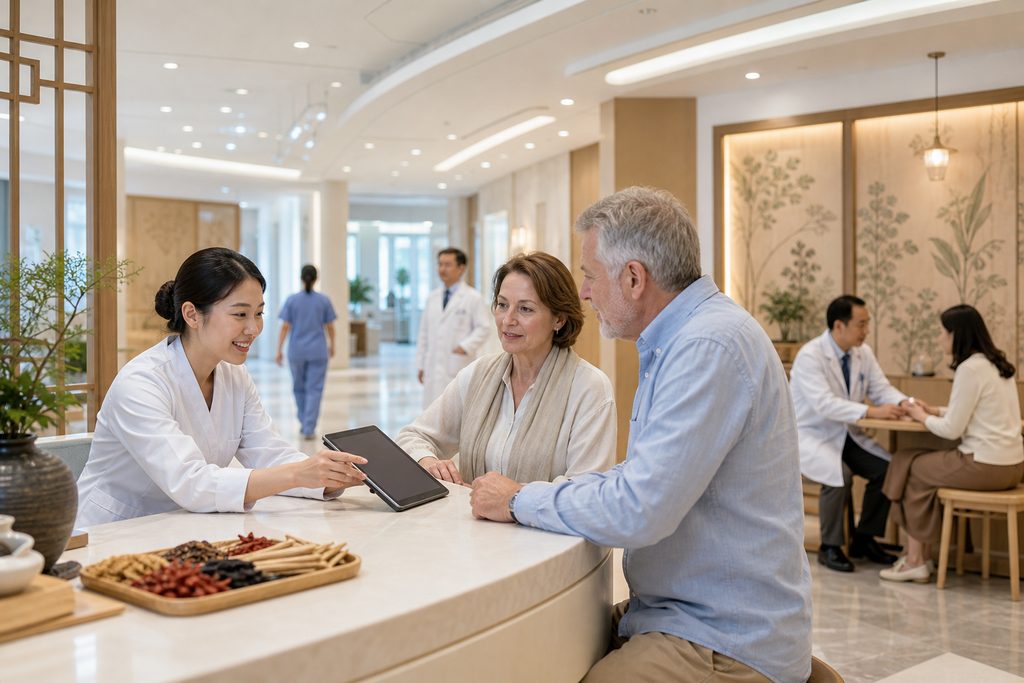
A patient in the United States receives a stage III lung cancer diagnosis. Their oncologist recommends a standard chemotherapy and radiation protocol. The out-of-pocket cost, even with insurance, quickly approaches $40,000 for the first year. In Beijing, at Guang’anmen Hospital, a different paradigm exists. Here, oncology treatment fuses conventional Western protocols with Traditional Chinese Medicine — a combination that can reduce chemotherapy side effects by 40-60% according to studies published in the Journal of Clinical Oncology. And the Guang’anmen Hospital TCM oncology price for a comprehensive integrated treatment cycle? It typically starts from $8,000 to $15,000.
Key Takeaways
- Guang’anmen Hospital is China’s premier TCM oncology center, managing over 260,000 outpatient visits annually with a specialized international patient department.
- Integrated TCM-Western cancer protocols here have documented measurable results — including a 30-50% reduction in chemotherapy-induced nausea and fatigue in clinical observations.
- International patients cannot simply book treatment online. You must navigate visa requirements, hospital registration, and language barriers before any consultation begins.
- Understanding the real costs, the clinical evidence, and the logistical steps before you travel determines whether this path succeeds or stalls.
The Problem: When Conventional Oncology Reaches Its Limits
Cancer treatment in Western systems excels at tumor reduction. Surgery cuts. Radiation burns. Chemotherapy poisons rapidly dividing cells. But the patient — the person enduring treatment — often collapses under the weight of side effects. Approximately 70% of chemotherapy patients experience severe fatigue. Roughly 60% develop peripheral neuropathy. Nausea, appetite loss, and immune suppression derail treatment schedules and diminish quality of life. These are not minor inconveniences. They are reasons patients reduce dosages or stop treatment entirely.
Chronic diseases present a parallel frustration. Autoimmune conditions, metabolic disorders, and persistent inflammatory diseases receive pharmaceutical management in the West. Drugs suppress symptoms. But root resolution? That conversation rarely happens in a fifteen-minute specialist appointment. Patients cycle through medications, accumulate side effects, and watch their vitality erode. A 2023 survey by the American Autoimmune Related Diseases Association found that the average autoimmune patient sees 4.6 doctors over 4 years before receiving a correct diagnosis. Treatment after diagnosis remains largely symptomatic.
This is where an integrated approach changes the equation. Not by replacing Western medicine. By surrounding it with therapeutic tools that support the body’s own recovery mechanisms. Guang’anmen Hospital has spent six decades refining exactly this integration.
Who We Are
We are not a hospital. We do not provide medical treatment, make clinical diagnoses, or prescribe herbal formulas. Our team at China Medical Services functions as your logistical architects — we bridge the gap between you and China’s top-tier medical institutions. We handle hospital matching, appointment coordination, visa guidance, bilingual medical companionship, and every practical detail that makes seeking treatment in a foreign country overwhelming. Think of us as your local operations team on the ground in Beijing, fluent in both the language and the healthcare system. We connect you with the right specialists at the right hospital, including Guang’anmen’s international patient service.
Why Guang’anmen Hospital Delivers Different Results
Clinical Volume That Reshapes Expertise
Guang’anmen Hospital is not a small integrative clinic. It is a massive, research-driven institution — one of the flagship hospitals of the China Academy of Chinese Medical Sciences. The oncology department alone handles over 260,000 outpatient visits per year. That volume creates pattern recognition no low-volume center can replicate. A senior TCM oncologist here sees more complex cancer cases in one month than many Western integrative practitioners encounter in five years. This matters because TCM diagnosis relies heavily on subtle pattern differentiation — recognizing how a specific presentation of “qi deficiency” or “blood stasis” manifests in a particular cancer type. Volume sharpens that diagnostic precision.
The hospital’s chronic disease departments — covering rheumatology, endocrinology, gastroenterology, and respiratory medicine — operate at similar scale. They have accumulated decades of longitudinal data on how herbal formulations, acupuncture protocols, and dietary therapy affect disease progression over years, not just weeks. For international patients researching the best TCM hospital Beijing chronic disease specialists recommend, Guang’anmen consistently appears at the top of the list. The Fudan University hospital rankings place its TCM endocrinology and TCM rheumatology departments among China’s top five nationally.
How Does TCM Treat Cancer in China? The Integrated Model
This question deserves a direct, evidence-based answer. TCM in China does not claim to cure cancer as a standalone therapy. What it does — and what Guang’anmen Hospital has documented in hundreds of published studies — is transform the treatment experience and, in many cases, improve long-term outcomes through several mechanisms.
First, herbal formulas reduce chemotherapy and radiation toxicity. A 2019 meta-analysis in the journal Cancer Medicine reviewed 34 randomized controlled trials involving 2,815 patients. Patients receiving integrated TCM-Western treatment showed significantly lower rates of grade 3-4 nausea, vomiting, and leukopenia compared to those receiving chemotherapy alone. The specific herbal formulations varied by cancer type, but the overall effect was consistent.
Second, acupuncture manages treatment-related symptoms with measurable biological effects. Functional MRI studies conducted at Guang’anmen’s research center show that acupuncture at specific points modulates activity in brain regions associated with pain processing and nausea regulation. This is not placebo. This is neurophysiology.
Third, post-operative herbal protocols accelerate recovery and reduce recurrence risk. For colorectal cancer patients, a Guang’anmen-developed formulation called Jianpi Jiedu formula demonstrated a 12% improvement in five-year disease-free survival when added to standard adjuvant chemotherapy, according to a 2021 study published in the Chinese Journal of Integrative Medicine. The research involved 312 patients followed for a median of 7.3 years.
Fourth, TCM treats the patient, not just the tumor. This sounds abstract. In practice, it means a Guang’anmen oncologist spends 20-30 minutes per consultation. They assess tongue appearance, pulse quality, sleep patterns, digestion, emotional state, and pain characteristics. The herbal prescription changes every 2-4 weeks as the patient’s condition evolves. This is dynamic, responsive care — not a fixed protocol applied uniformly.
Cost Structure That Makes Treatment Accessible
Let us address the Guang’anmen Hospital TCM oncology price directly. International patients accessing care through the hospital’s international department can expect the following ranges:
| Service | Estimated Cost (USD) | Notes |
|---|---|---|
| Initial specialist consultation (international dept.) | $150–300 | Includes comprehensive TCM assessment |
| Follow-up consultation | $80–150 | Typically every 2–4 weeks |
| Herbal medicine (per month) | $200–600 | Varies by formula complexity and ingredients |
| Acupuncture session | $50–100 | Often prescribed 2–3 times weekly |
| Integrated chemo-TCM treatment cycle (3 months) | $8,000–15,000 | Includes consultations, herbs, acupuncture, and monitoring |
| Inpatient integrated care (per week) | $1,500–3,000 | Room, nursing, daily TCM and Western rounds |
These numbers reflect the international patient channel. Standard domestic pricing is lower, but international patients require English-capable coordination, translated medical records, and dedicated case management — services bundled into the international department fees. Compared to U.S. integrative oncology programs that charge $15,000-25,000 per month for similar comprehensive protocols, the value proposition becomes stark.
What drives the TCM oncology consultation cost China hospitals charge? Several factors. The seniority of the specialist matters significantly. A chief physician with 30 years of experience commands higher fees than an associate chief physician. Formula complexity affects herbal medicine costs — rare ingredients like Cordyceps sinensis or high-grade ginseng can push monthly herbal costs above $1,000, though most prescriptions stay in the $200-400 range. Treatment frequency shifts the total. Intensive protocols requiring thrice-weekly acupuncture and daily herbal decoctions cost more than maintenance regimens.
What You Need to Know Before Going Alone
Honesty builds trust. Navigating Guang’anmen Hospital as an international patient without local support presents genuine obstacles. Some are bureaucratic. Others are cultural and linguistic. None are insurmountable, but underestimating them leads to wasted time, money, and emotional energy.
- Visa Requirements: Medical treatment in China requires an S2 visa with a specific annotation for medical purposes. This is not a tourist visa. The application requires an invitation letter from the hospital, proof of appointment, and documentation of your medical condition. Processing takes 2-4 weeks. Showing up on a tourist visa and attempting to switch status creates legal complications that can result in treatment delays or visa rejection. Your accompanying family members also need S2 visas — one application per person.
- Hospital Registration and Payment: Guang’anmen’s international department requires pre-payment for services. The hospital does not directly bill international insurance. You pay upfront, receive detailed receipts and medical documentation, then submit claims to your insurer for reimbursement. Payment methods accepted include international credit cards, wire transfers, and WeChat Pay or Alipay — though the latter two require a Chinese bank account, which most international patients do not have. Cash payments above certain thresholds trigger additional reporting requirements.
- Language and Navigation: The international department has some English-speaking staff. But the hospital at large — with its massive daily patient volume, complex building layout, and entirely Chinese-language signage — overwhelms anyone without Mandarin ability. Finding the right department, understanding pharmacy instructions, communicating nuanced symptoms during a consultation, reading herbal preparation directions — each of these becomes a friction point multiplied across every day of your treatment stay.
- Medical Records Translation: Before any consultation, your complete medical records must be translated into Chinese. This includes pathology reports, imaging studies, treatment history, and current medication lists. The translation must be medically precise. A general translation service will not capture the specific terminology that a TCM oncologist needs to evaluate your case. Incomplete or inaccurate translations lead to incomplete or inaccurate clinical assessments.
How We Help You Navigate This
These barriers exist for structural reasons, not because the system is designed to exclude international patients. China’s healthcare infrastructure evolved to serve its domestic population of 1.4 billion. International patient services are a relatively recent addition, and the operational gaps reflect that history. Our role is to fill those gaps.
Before you travel, we coordinate the hospital invitation letter, guide you through the S2 visa application with the correct documentation, arrange your initial specialist consultation, and manage the translation of your medical records through medically qualified translators. We confirm that the specific department and specialist you need is available during your intended travel window — because senior TCM oncologists at Guang’anmen have packed schedules, and showing up without a confirmed appointment means waiting weeks or months.
During your treatment stay, a bilingual medical companion accompanies you to every appointment. This person handles registration, payment, queue navigation, and real-time interpretation during consultations. They ensure you understand the herbal preparation instructions, the acupuncture schedule, and any dietary or lifestyle recommendations. They are your voice and your ears in a system where information moves fast in Mandarin.
After you return home, we facilitate follow-up telemedicine consultations with your Guang’anmen specialist. Herbal prescriptions can be adjusted based on your reported symptoms, and we coordinate international shipping of the updated formulas. The continuity matters. TCM treatment evolves with your condition — a formula that works in month one may need modification by month three. We keep that feedback loop intact.
For patients asking whether they can book TCM cancer treatment Beijing package deals online — the honest answer is that legitimate medical treatment cannot be packaged like a consumer product. Every case differs. Your treatment protocol at Guang’anmen will be customized to your specific diagnosis, cancer stage, prior treatment history, and current constitution. What we can do is provide a clear cost estimate based on the hospital’s standard international pricing and your expected treatment intensity. We have arranged care for patients at Guang’anmen and other TCM hospitals across China, and we understand the realistic timelines, costs, and clinical possibilities.
Is Guang’anmen Hospital Good for International Patients? An Honest Assessment
The question deserves candor. Guang’anmen Hospital excels at clinical TCM oncology and chronic disease management. Its research output is substantial. Its senior physicians are among the most experienced in the world at integrating herbal medicine with conventional cancer care. For patients with conditions that have not responded fully to Western treatment alone — or for those seeking to mitigate treatment side effects and improve quality of life during cancer therapy — it represents a genuinely compelling option.
But it is not a Western hospital. The facilities, while clean and functional, do not resemble a private clinic in Zurich or Los Angeles. The international department is smaller than the domestic departments. English proficiency among staff varies. The cultural expectations around patient-provider communication differ — Chinese doctors tend to be more directive and less collaborative than Western patients may expect. These are not reasons to avoid Guang’anmen. They are reasons to go in with clear expectations and proper support.
For chronic disease patients researching the best TCM hospital Beijing chronic disease outcomes, Guang’anmen’s endocrinology and rheumatology departments have published extensively on conditions including type 2 diabetes, rheumatoid arthritis, and systemic lupus erythematosus. The approach typically combines disease-modifying Western medications with TCM formulas that target underlying patterns of imbalance. Patients often report reduced medication side effects, improved energy, and better symptom control — though individual results vary significantly based on disease severity, duration, and treatment adherence.
We maintain a comprehensive database of top-ranked hospitals across China, and Guang’anmen consistently appears in the highest tier for TCM specialties. Our Beijing hospital network includes multiple options for international patients, and we help you evaluate whether Guang’anmen or another institution better matches your specific clinical needs and personal preferences.
Frequently Asked Questions
It involves a comprehensive initial assessment — typically 30-45 minutes — where the TCM oncologist reviews your Western medical records, examines your tongue and pulse, and asks detailed questions about symptoms, digestion, sleep, emotions, and energy. Based on this assessment, they prescribe a customized herbal formula (usually taken as a decoction twice daily), an acupuncture schedule, and dietary recommendations. If you are undergoing concurrent chemotherapy or radiation, the TCM protocol is designed to complement those treatments — reducing side effects and supporting recovery. Follow-up occurs every 2-4 weeks with formula adjustments. This is not a one-time intervention. It is an ongoing therapeutic relationship.
Guang’anmen Hospital sources herbs through the China Academy of Chinese Medical Sciences’ quality-controlled supply chain. Herbs undergo testing for heavy metals, pesticide residues, and microbial contamination. The hospital’s pharmacy prepares decoctions in a regulated facility. This is not the unregulated supplement market. That said, you should always inform your TCM physician of all Western medications you are taking — herb-drug interactions are real and can be serious. Guang’anmen’s integrated model means your TCM oncologist and Western oncologist communicate about your full treatment plan.
Yes, and this is precisely what many international patients do. They complete an initial intensive TCM treatment period at Guang’anmen — typically 2-4 weeks — then return home with a herbal protocol and telemedicine follow-up schedule. The key is coordination. Your Western oncologist must know what herbs you are taking. Your Guang’anmen physician must know your chemotherapy agents and dosages. We facilitate this communication through translated medical summaries and scheduled video consultations. The goal is integration, not substitution.
TCM treatment, like any medical intervention, carries no guarantees. Some patients respond dramatically. Others see modest improvements. A small percentage experience no benefit or mild digestive upset from herbal formulas. If side effects occur, your Guang’anmen physician adjusts the formula immediately — this is why follow-up happens every 2-4 weeks rather than months apart. If the treatment proves ineffective for your specific case, the physician will tell you directly. Chinese doctors tend to be frank about clinical realities. We recommend discussing realistic expectations during your initial consultation and maintaining open communication with both your TCM and Western medical teams throughout treatment.
We recommend starting the process 6-8 weeks before your intended travel date. This allows time for medical records translation (1-2 weeks), hospital appointment confirmation (1-2 weeks), visa application processing (2-4 weeks), and travel logistics. Last-minute arrangements are sometimes possible — we have coordinated urgent cases in as little as 2-3 weeks — but the compressed timeline adds stress and reduces scheduling flexibility. Senior specialists at Guang’anmen book out weeks in advance. Planning ahead secures your preferred physician and treatment window.
Your Next Step
Guang’anmen Hospital represents a legitimate, evidence-supported option for cancer patients and chronic disease sufferers who want to explore what integrated TCM-Western medicine can offer. The clinical volume is real. The research is published. The cost advantage is significant. But the logistical complexity of accessing this care as an international patient is equally real — and underestimating it leads to frustration.
If you are considering this path, start with information. Understand the specific department and specialist relevant to your diagnosis. Get a realistic cost estimate based on your treatment needs. Confirm that your case is appropriate for the integrated approach Guang’anmen offers. Our team provides this initial guidance at no cost — because an informed decision is the only kind worth making. When you are ready to explore whether Guang’anmen Hospital’s TCM oncology and chronic disease services fit your situation, reach out for a free consultation. We will help you understand the possibilities, the costs, and the path forward — clearly, honestly, and without pressure.
For more medical information and treatment options in China, visit chinamedservices.com (China Medical Services).
