Zhejiang Provincial TCM Hospital Hangzhou: TCM Oncology & Respiratory Care
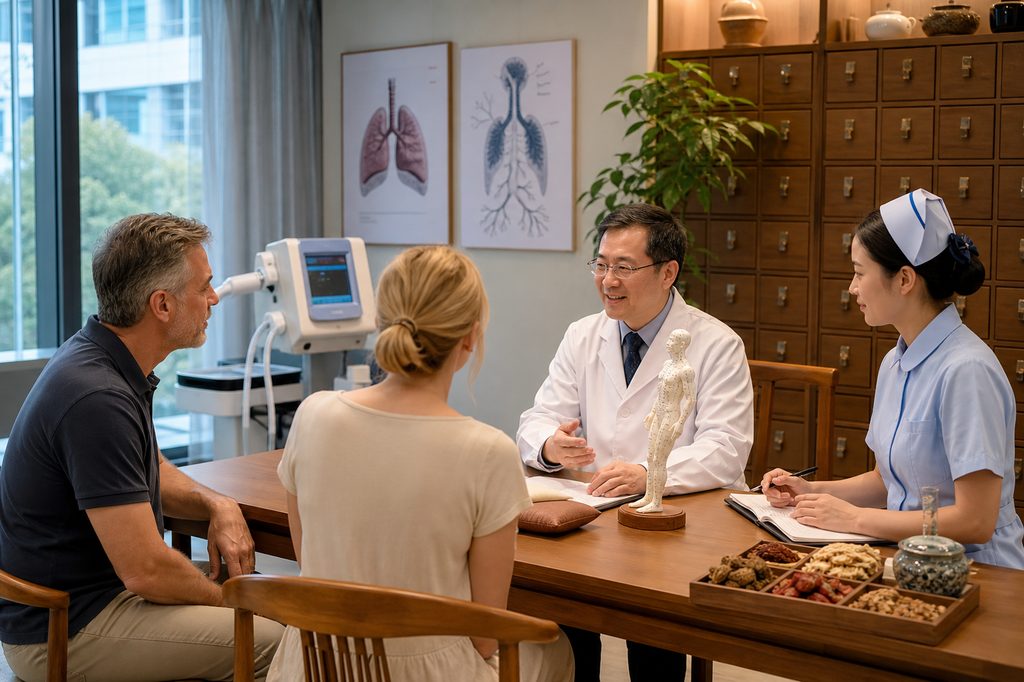
A 2023 analysis published in the *Journal of the National Cancer Institute* found that nearly 40% of cancer patients in the United States use some form of complementary medicine during their treatment journey. Many are searching for something beyond the standard protocol. Something that addresses the crushing fatigue, the nausea that medication barely touches, and the deep need to rebuild the body’s own terrain. This search often leads patients to investigate integrative models practiced at scale—and nowhere is that model more mature than in China’s university-affiliated TCM hospitals. Understanding the real TCM cancer treatment cost in China is often the starting point for that journey.
At the center of this conversation stands Zhejiang Provincial TCM Hospital in Hangzhou. It is not a small wellness retreat. It is a massive, research-driven institution where oncology and respiratory medicine are not afterthoughts. They are the flagship departments. For international patients considering cross-border care, this hospital represents a specific proposition: access to a high-volume TCM oncology center that operates inside a rigorous, modern hospital system. Our team at China Medical Services works to make that proposition accessible, transparent, and logistically sound.
Key Takeaways
- Zhejiang Provincial TCM Hospital integrates chemotherapy, radiotherapy, and immunotherapy with evidence-based herbal formulas—patients often receive TCM preparations during their infusion sessions, not as an alternative after Western treatment fails.
- The hospital’s oncology department manages over 200,000 outpatient visits annually, giving its physicians a depth of clinical exposure to TCM-cancer interactions that is difficult to replicate in smaller centers.
- Navigating this hospital as a foreign patient without Mandarin fluency and local system knowledge is genuinely difficult—appointments, payment portals, and pharmacy queues operate entirely in Chinese, and the hospital’s international department has limited bandwidth for direct overseas inquiries.
- The financial case is compelling: a two-week integrative oncology inpatient stay typically ranges from $4,000 to $8,000, a fraction of comparable integrative programs in Germany or Switzerland that can exceed $25,000.
The Problem: Cancer Treatment That Ignores the Whole Patient
About 1 in 3 people will face a cancer diagnosis in their lifetime. The standard arsenal—surgery, radiation, chemotherapy, immunotherapy—saves lives. Nobody disputes that. But surviving is not the same as living well. A 2022 meta-analysis in CA: A Cancer Journal for Clinicians reported that up to 60% of patients undergoing chemotherapy experience clinically significant fatigue that persists for months or years after treatment ends. Pain, appetite loss, anxiety, and immune suppression travel alongside the disease and its treatment.
Western oncology has made remarkable progress in attacking the tumor. Where it often struggles is in supporting the host—the person carrying the disease. That gap is precisely where an integrative TCM oncology department becomes relevant. Not as a replacement. As a parallel track that runs alongside conventional protocols. The question many patients eventually ask is not whether TCM works in some abstract sense. It is a more practical question: can a large, credible hospital deliver it safely while I continue my conventional treatment? And what does that cost?
Who We Are
We are not a hospital. We do not provide medical treatment, prescribe herbs, or offer clinical diagnoses. China Medical Services is a medical concierge organization—your logistical bridge to China’s top-tier hospitals. Our database covers 340+ top-ranked institutions across 37 cities, representing the top 5% of China’s 35,000+ hospitals as ranked by the Fudan University Hospital Ranking and JCI accreditation. We handle hospital matching, appointment coordination through official international and VIP channels, bilingual medical companionship, visa guidance, and travel logistics. We exist because the gap between a world-class Chinese hospital and a patient who does not speak Mandarin or understand the system is vast. We close that gap.
Why Zhejiang Provincial TCM Hospital Delivers Results
This is not a small clinic with a single practitioner mixing herbs in a back room. Zhejiang Provincial TCM Hospital is one of the earliest TCM hospitals established in China, directly affiliated with Zhejiang Chinese Medical University. It operates three campuses in Hangzhou, with the main Yuhang campus housing the oncology and respiratory centers that draw patients from across China and increasingly from abroad. The hospital holds the highest Grade 3A designation in China’s hospital classification system and its oncology department is recognized as a National Key Specialty. That means government-level endorsement of its clinical standards and research output.
Clinical Volume That Builds Pattern Recognition
The oncology department alone handles more than 200,000 outpatient visits each year. Its inpatient wards are perpetually full, with a bed capacity exceeding 300 dedicated oncology beds across the hospital system. What does that volume mean for a patient? It means the attending physicians see thousands of cases annually where TCM herbal formulas are administered alongside chemotherapy. They observe drug-herb interactions at a scale that generates real clinical intelligence. A physician here may manage more cases of TCM-integrated lung cancer care in a single year than a Western integrative oncologist sees in a decade. This volume does not guarantee outcomes. But it does mean the team has deep, pattern-level knowledge of which TCM preparations tend to exacerbate or alleviate specific chemotherapy side effects.
The respiratory department runs on similar scale. Hangzhou’s humid, subtropical climate, combined with urban air quality challenges, produces a high prevalence of chronic respiratory disease. The department treats COPD, asthma, interstitial lung disease, and post-infectious pulmonary fibrosis at high volume. For patients asking can TCM help with COPD recovery abroad, the answer is not a simple yes or no. It is that this specific hospital has a dedicated respiratory rehabilitation program that combines acupuncture, herbal fumigation, and pulmonary function training—and they have published outcome data on it. A 2021 study from this department, published in a Chinese peer-reviewed journal, tracked 120 COPD patients through a 12-week integrated TCM rehabilitation program and found statistically significant improvements in the six-minute walk test and St. George’s Respiratory Questionnaire scores compared to standard care alone.
An Integrative Model, Not an Alternative One
This is the distinction that matters most. The oncology department at Zhejiang Provincial TCM Hospital does not ask patients to choose between chemotherapy and Chinese medicine. The default model is co-administration. A patient receiving a Taxol infusion may simultaneously receive an herbal formula designed to reduce peripheral neuropathy. A lung cancer patient undergoing radiation may receive acupuncture to manage radiation esophagitis. The TCM interventions are deployed as adjuncts—supporting therapies that target treatment side effects and quality of life while the conventional protocol attacks the disease.
This model attracts patients who are not willing to abandon evidence-based oncology but are desperate for better symptom management. It also attracts patients with advanced disease for whom conventional options have been exhausted. For these patients, the question shifts from cure to quality of remaining life. The hospital’s inpatient TCM oncology service focuses heavily on pain management, appetite stimulation, ascites reduction, and energy restoration—areas where palliative care and TCM overlap substantially.
TCM Cancer Treatment Cost in China: The Numbers
Let us address the financial question directly. The TCM cancer treatment cost in China is structurally lower than integrative oncology programs in Western countries. This is not because the care is inferior. It is because China’s hospital system operates on a different economic model—lower labor costs, higher patient volumes, and a pharmaceutical pricing environment that keeps herbal preparations affordable.
| Service | Estimated Cost (USD) | Comparable Western Program |
|---|---|---|
| Two-week integrative oncology inpatient stay (including daily TCM preparations, acupuncture, and standard nursing care) | $4,000 – $8,000 | $20,000 – $35,000 (Germany/Switzerland) |
| Outpatient TCM oncology consultation with senior specialist | $50 – $150 | $300 – $600 (US integrative oncologist, self-pay) |
| One-month supply of customized herbal formula | $200 – $600 | $400 – $1,200 (compounding pharmacy, US) |
| Comprehensive COPD TCM rehabilitation package (2 weeks, including acupuncture, herbal fumigation, and pulmonary training) | $3,000 – $5,500 | Comparable programs rare; pulmonary rehab alone $2,000–$4,000/week in US |
These figures are ranges. Final costs depend on the specific diagnosis, the seniority of the attending physician, the complexity of the herbal formula, and whether the patient accesses care through the standard public channel or the hospital’s international/VIP department. The VIP channel costs approximately 1.5 to 2 times the standard rate but provides English-speaking coordination, priority scheduling, and private inpatient rooms—features that are not guaranteed in the standard public wards.
What You Need to Know Before Going Alone
The hospital is excellent. Getting into it as a foreign patient without local support is genuinely difficult. We tell every patient this upfront because surprises in healthcare are cruel. Here is what you face if you attempt to navigate independently:
- Public outpatient registration cannot be done from overseas. The standard outpatient system requires same-day, in-person queueing with a Chinese ID or passport, and the registration terminals operate entirely in Mandarin. Specialist appointments with senior oncology or respiratory physicians fill within minutes of opening each morning. Attempting this from abroad is not practical.
- Payment runs through Chinese digital ecosystems. The hospital’s standard payment channels are Alipay and WeChat Pay, both of which require a Chinese bank account to fully activate for medical transactions. International credit cards are not accepted at the standard registration or pharmacy counters. The VIP/international department can process wire transfers, but accessing that department requires someone inside the system to facilitate the introduction.
- Medical records must be professionally translated. The oncology team requires a complete case history—pathology reports, imaging, treatment summaries, current medication lists—translated into Chinese. Google Translate will not suffice for a document on which treatment decisions are made. Errors in translation can lead to formulary conflicts or miscommunication about drug contraindications.
- There is no guarantee of English-speaking staff on the wards. While senior physicians often read English medical literature, spoken English among nursing staff and junior doctors is inconsistent. Informed consent discussions, daily ward rounds, and discharge instructions will occur in Mandarin unless a bilingual companion is present.
These are not reasons to avoid the hospital. They are reasons to approach it with the right support structure in place. The medical care is world-class. The administrative layer between you and that care is thick.
How We Help You Navigate This
Our role begins the moment a patient contacts us. We start with a detailed medical history review. Not a clinical review—we are not doctors. A logistical review. We assess what specialists you need to see, what documents must be translated, and whether the hospital’s capabilities align with your clinical goals. If there is a mismatch, we say so. We have referred patients to other hospitals in our network when the fit was not right. Our credibility depends on honest matching, not on filling beds.
Once we confirm that Zhejiang Provincial TCM Hospital is appropriate, we coordinate through the hospital’s official international department. We submit translated records, schedule specialist consultations, and secure inpatient bed reservations where the clinical plan requires admission. We handle the S2 visa invitation letter—the specific visa category for medical treatment in China—and guide accompanying family members through the same process. S2 is the correct visa for treatment stays under 180 days. For longer stays, S1 applies. This is a detail that consular officers scrutinize, and getting it wrong causes delays.
On the ground, a bilingual medical companion accompanies the patient to every appointment. This person handles registration, payment processing, queue management, and real-time translation during consultations. They are present during ward rounds if the patient is admitted, ensuring that treatment plan changes are understood and that the patient’s questions reach the attending physician accurately. After discharge, we coordinate follow-up telehealth consultations and manage herbal medicine shipping logistics where legally permissible.
The structural barriers we described earlier—the Mandarin-only terminals, the digital payment systems, the registration queues—do not disappear. But they become our problem to solve, not the patient’s.
Frequently Asked Questions
This question requires a precise answer. TCM is not a cancer cure, and any provider claiming otherwise should be avoided. What the evidence supports—and what Zhejiang Provincial TCM Hospital practices—is TCM as an adjunctive therapy. Multiple systematic reviews, including a 2023 Cochrane review on Chinese herbal medicine for chemotherapy-induced nausea, have found clinically meaningful benefits for symptom management. The hospital’s own published research focuses on quality-of-life endpoints: reduced fatigue scores, improved appetite, better pain control, and lower rates of treatment interruption due to side effects. Effectiveness here means tolerating conventional treatment better and maintaining functional status longer. It does not mean replacing oncology with herbs.
Independent Zhejiang Provincial TCM Hospital international patient reviews are limited in number—this is not a hospital that treats thousands of Western patients annually. The feedback we have gathered from our own patients and from medical tourism forums points to a consistent pattern: high satisfaction with the expertise of senior physicians and the sophistication of the herbal formulations, and significant frustration with the administrative experience when attempted without a coordinator. Patients consistently report that the integrative approach felt coherent—TCM and Western treatments were not siloed—and that the cost was substantially lower than comparable programs in Europe. The primary complaints center on language barriers, food options for international inpatients, and the complexity of post-discharge medication logistics. We address all three in our coordination process.
You cannot book a public-ward treatment package directly as an overseas patient. The hospital does not operate an e-commerce platform for international patients. What you can do—and what we facilitate—is arrange a pre-scheduled consultation through the international department, with a treatment plan and cost estimate provided after the specialist has reviewed your case. This effectively functions as a book TCM respiratory treatment Hangzhou package process, but it is a medical coordination pathway, not an online purchase. A deposit is required to secure the inpatient bed and physician time. The final treatment package is customized to your pulmonary function tests and clinical history, not selected from a menu. Typical respiratory packages run two to three weeks and include daily acupuncture, herbal fumigation therapy, customized oral herbal formulas, and supervised pulmonary rehabilitation exercises.
Zhejiang Provincial TCM Hospital has a full emergency department. But it operates in Mandarin. If a patient on our service experiences a medical emergency, our companion coordinates immediate transport to the appropriate facility—which may be the TCM hospital’s emergency department or, depending on the nature of the emergency, a nearby Western-style emergency room at a general hospital. We maintain relationships with multiple hospitals in Hangzhou precisely for this reason. The companion stays with the patient through triage and treatment, ensuring communication is accurate and that the emergency physicians have access to the patient’s full medication list and treatment history. This is not a theoretical concern. Patients on chemotherapy are immunocompromised. Fevers become emergencies quickly. We plan for this.
Your Next Step
Zhejiang Provincial TCM Hospital represents a specific, valuable option: high-volume integrative oncology and respiratory care at a fraction of Western costs, delivered inside a rigorous academic medical system. It is not for every patient. It is most appropriate for those who are currently undergoing or recovering from conventional cancer treatment and seeking better symptom control, or for those with chronic respiratory disease who have not found adequate relief through standard pulmonary rehabilitation. The medical expertise is real. The logistical barriers are also real. Our job is to handle the second so you can focus on the first. If you want to understand whether this hospital fits your specific situation, we are here to talk it through—no pressure, no hard sell, just an honest assessment of what is possible.
For more medical information and treatment options in China, visit chinamedservices.com (China Medical Services).
