PET-CT vs MRI: What a PET-CT Shows That an MRI Cannot
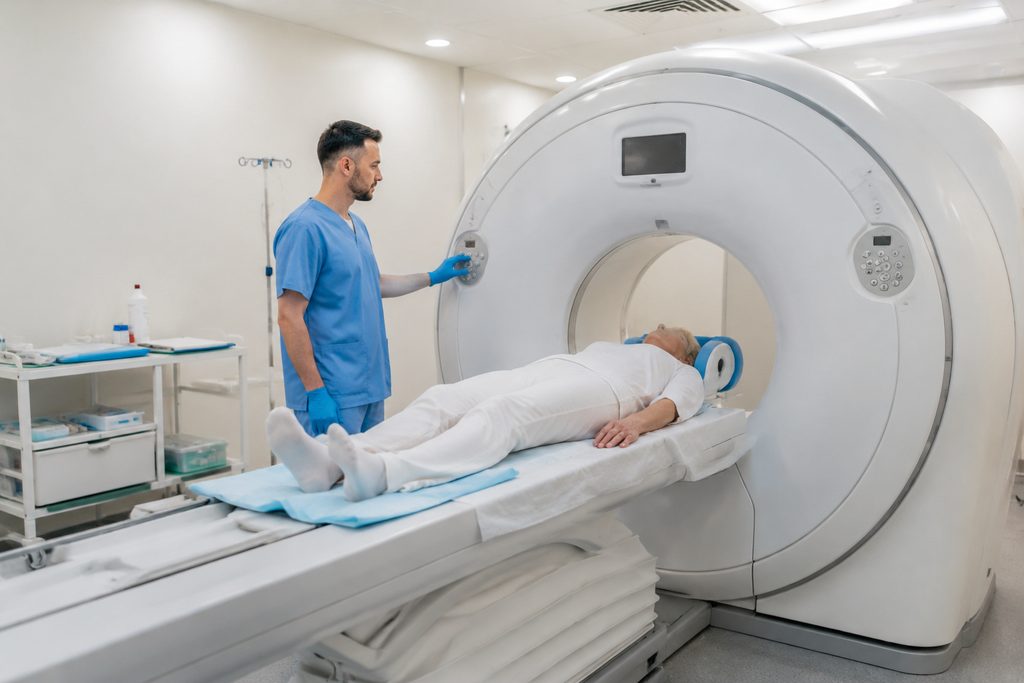
PET-CT vs MRI: What a PET-CT Scan Shows That an MRI Cannot
Patients in the United States often wait 2 to 4 weeks for an MRI appointment, then another week for results. Meanwhile, a pet ct scan vs mri cancer detection workup at a major Chinese hospital can be scheduled within 48 to 72 hours, with results delivered the same day. The imaging gap between health systems is not about machine quality — it is about throughput, cost structure, and clinical workflow.
This article explains the biological and technical differences between PET-CT and MRI. We cover what each modality detects, when one is clearly superior, and how international patients access high-quality PET-CT imaging in China. No marketing fluff. Just the facts you need to make an informed decision about your diagnostic pathway.
Key Takeaways
- PET-CT detects metabolic activity at the cellular level; MRI maps anatomical structure with unmatched soft-tissue contrast.
- For cancer staging, recurrence detection, and treatment response assessment, PET-CT often reveals what MRI misses — active tumor cells that have not yet formed a visible mass.
- A whole-body PET-CT scan in China typically costs $350–$900, compared to $2,500–$5,000 in the United States.
- MRI remains superior for brain, spinal cord, joint, and prostate imaging where fine anatomical detail matters more than metabolic activity.
- International patients can book PET-CT scans at top Chinese hospitals, but S2 visa requirements and language barriers make preparation essential.
The Problem: Two Imaging Tools, One Confusing Decision
Approximately 1 in 5 cancer patients in the United States receives an imaging result that changes their treatment plan. That is not a failure of radiologists — it is a limitation of choosing the wrong tool for the clinical question. MRI and PET-CT are not competitors. They answer different questions. But patients rarely understand that distinction until a scan misses something important.
Here is the core difference in one sentence: MRI shows where structures are and what they look like. PET-CT shows how active cells are and whether they are consuming glucose like cancer cells do. A tumor that is too small to distort anatomy may be invisible on MRI but light up brightly on PET-CT. Conversely, a benign cyst may look alarming on MRI but show zero metabolic activity on PET-CT.
The wrong choice leads to delayed diagnosis, unnecessary biopsies, or false reassurance. And in many Western health systems, the default is often MRI first — not because it is always better, but because PET-CT is expensive, tightly scheduled, and reserved for confirmed cancer cases.
What a PET-CT Scan Shows That an MRI Cannot
Cancer cells consume glucose at 10 to 50 times the rate of normal cells. PET-CT exploits this. The patient receives an injection of fluorodeoxyglucose (FDG) — a radioactive glucose analog. Active cells absorb it. The PET scanner then detects the emitted radiation and maps it onto a CT image for anatomical reference.
MRI cannot do this. It measures proton density and water content in tissues. Cancer cells may or may not change the water content of surrounding tissue. Early metastases often do not. That is why a PET-CT can reveal what a pet ct scan show that an mri cannot: microscopic tumor deposits in lymph nodes, bone marrow, or distant organs that have not yet formed a detectable mass.
Whole-Body Cancer Staging in a Single Session
A PET-CT scan covers the entire body from skull base to mid-thigh — or full body including brain when ordered. An MRI covers one region at a time. Staging a cancer with MRI alone requires multiple scans: brain MRI, spine MRI, abdominal MRI, pelvic MRI. That means multiple appointments, multiple contrast injections, and cumulative cost.
PET-CT compresses that into one 20–30 minute scan. For lymphoma, melanoma, lung cancer, esophageal cancer, and head and neck cancers, whole-body PET-CT is the staging standard. It finds distant metastases that regional MRI studies simply never image.
Distinguishing Scar Tissue from Recurrent Tumor
After surgery or radiation, tissue heals by forming scar. On MRI, scar tissue and recurrent tumor often look identical — both appear as abnormal signal changes. On PET-CT, scar tissue shows low or no metabolic activity. Recurrent tumor lights up.
This distinction is critical. A patient treated for rectal cancer who develops a new pelvic mass needs to know: is this recurrence or post-radiation fibrosis? MRI cannot reliably answer that. PET-CT can. The same applies to treated lymphoma, head and neck cancers, and gliomas after radiation.
Treatment Response Assessment — Earlier Than Anatomy Changes
Chemotherapy and targeted therapy kill cancer cells before tumors shrink. A tumor may remain the same size on MRI for weeks after successful treatment begins — the dead cells are still there, but the mass has not yet been reabsorbed. PET-CT detects the metabolic shutdown within days.
This is why oncologists increasingly use interim PET-CT scans after 2 cycles of chemotherapy for lymphoma. A negative interim PET-CT predicts cure. A positive one triggers treatment intensification. MRI cannot provide that information at that early stage.
Where MRI Beats PET-CT — And Why That Matters
PET-CT is not universally superior. For some clinical questions, MRI is clearly the better tool. Understanding this will save you time, money, and unnecessary radiation exposure.
Brain and Spinal Cord Imaging
The brain consumes glucose constantly. Normal brain tissue lights up on PET-CT, making it difficult to distinguish tumor from normal cortex. MRI, especially with contrast, provides far superior anatomical detail for brain tumors, multiple sclerosis, stroke, and spinal cord compression. For primary brain tumor diagnosis and surgical planning, MRI is non-negotiable.
Prostate Cancer — The PSMA Exception
Standard FDG PET-CT is notoriously poor for prostate cancer because prostate cancer cells often do not consume glucose aggressively. MRI — particularly multiparametric MRI — is the gold standard for local prostate cancer detection and staging. Newer PSMA PET-CT scans (using a different tracer) are excellent for recurrent prostate cancer, but FDG PET-CT is not the right tool.
Musculoskeletal and Joint Imaging
Ligament tears, meniscal injuries, rotator cuff pathology, and early cartilage damage are invisible on PET-CT. MRI is the definitive modality here. No metabolic signal is involved — these are purely structural problems.
PET-CT Scan Price Comparison: China vs USA
Cost drives many imaging decisions. Here is what patients actually pay.
| Scan Type | China (Top Public Hospital) | China (Private International Hospital) | United States (Average) |
|---|---|---|---|
| Whole-body PET-CT | $350 – $700 | $700 – $1,200 | $2,500 – $5,000 |
| Brain MRI (with contrast) | $150 – $300 | $300 – $600 | $1,200 – $2,500 |
| Whole-spine MRI | $250 – $500 | $500 – $900 | $2,000 – $4,000 |
| PET-CT + diagnostic CT (combined) | $500 – $900 | $900 – $1,500 | $3,500 – $6,500 |
These are reference ranges. Final pricing varies by hospital, tracer type, and case complexity. The structural reasons for the gap: lower labor costs, higher scan volume per machine, and a health system built around throughput rather than insurance billing overhead. Chinese PET-CT scanners run 12–16 hours per day, 7 days a week. Many US facilities run 8–10 hours, 5 days a week.
How Much Does a PET-CT Scan Cost in China — And How to Book One
The how much does a pet ct scan cost in China question has a straightforward answer: $350 to $1,200 depending on hospital tier and whether you use the public or private international pathway. But cost is only one part of the equation. Access is the other.
Public Hospital Pathway
Top public hospitals in China — including those on the Fudan University hospital rankings — operate PET-CT centers that serve both domestic and international patients. The machines are modern: Siemens Biograph, GE Discovery, United Imaging uMI series. Scan quality is excellent. But the workflow is designed for volume.
Walk-in international patients face real barriers: Chinese-language registration systems, same-day queueing, and limited English support at the imaging center. This is where preparation matters — having your medical records translated, your clinical question clearly documented, and a local coordinator who can navigate the system.
Private International Hospital Pathway
Facilities like United Family Healthcare, Jiahui Health, and ParkwayHealth offer PET-CT with English-speaking staff, direct insurance billing, and Western-style patient flow. The cost is higher — roughly double the public hospital price — but still 50–70% below US rates. For patients who value convenience and language support, this is often the right choice.
Booking a PET-CT Scan in Shanghai as an International Patient
Shanghai has the highest concentration of PET-CT capacity in China. To book pet ct scan Shanghai international patient services, the typical process works like this:
First, you submit your existing imaging and clinical history. A Chinese radiologist or nuclear medicine physician reviews it to confirm that PET-CT is the appropriate next step. Second, the hospital schedules your scan — usually within 2 to 5 business days. Third, you arrive, complete the scan, and receive results the same day or the following morning.
Preparation matters: you must fast for 6 hours before the scan, avoid strenuous exercise for 24 hours prior, and inform the team of any diabetes medications. Blood glucose above 200 mg/dL (11.1 mmol/L) may require rescheduling because high glucose competes with the FDG tracer.
Best Hospitals in China for PET-CT Scan
Which hospitals should you consider? The best hospitals in China for pet ct scan fall into two categories: high-volume public academic centers and JCI-accredited private international hospitals.
High-Volume Public Academic Centers
Fudan University Shanghai Cancer Center, Peking Union Medical College Hospital, and Sun Yat-sen University Cancer Center operate the highest-volume PET-CT programs in China. Each performs 8,000 to 15,000 PET-CT scans annually. Radiologists at these centers read more oncology PET-CT cases in a month than many Western radiologists read in a year. That volume translates into diagnostic accuracy — particularly for challenging cases like post-treatment recurrence assessment.
Our hospital database covers 340+ top-ranked hospitals across 37 Chinese cities, including all major PET-CT centers. For oncology-specific rankings, the department-level Top 10 lists show which hospitals lead in nuclear medicine and cancer imaging.
JCI-Accredited Private Hospitals
For international patients who want English-language service, direct insurance billing, and a more familiar care environment, private international hospitals in Shanghai and Beijing offer PET-CT with the same scanner technology and shorter coordination timelines. These facilities are also better equipped to handle patients who need combined imaging — PET-CT plus diagnostic MRI or CT — in a single visit.
Practical Considerations: PET-CT in China for International Patients
If you are seriously considering a PET-CT scan in China, here is what you need to handle before you book a flight.
Visa Requirements
Medical treatment in China falls under the S2 visa category — a short-stay visa for private affairs, including medical treatment. You will need a supporting letter from the Chinese hospital confirming your appointment. This is not an M visa; M visas are for commercial and trade activities only. The hospital’s international department typically issues the invitation letter after you confirm your scan appointment. Processing time at the Chinese embassy or consulate is usually 5 to 10 business days.
Medical Records and Preparation
Bring all prior imaging on CD or USB — not just the written reports. Chinese radiologists routinely re-read outside scans. Also bring your pathology reports, surgical notes, and a concise clinical summary in English. If your records are in another language, professional translation is strongly recommended. A poor translation can lead to a misdirected scan protocol.
Payment and Insurance
Public hospitals in China require prepayment. Most accept international credit cards at their international patient departments, but transaction limits may apply. Private international hospitals often bill insurance directly. Check with your insurer before traveling — many US and European insurers reimburse PET-CT scans performed in China, but pre-authorization is usually required.
Radiation Exposure — The Honest Tradeoff
A whole-body PET-CT delivers approximately 8 to 14 mSv of radiation — equivalent to 3 to 5 years of natural background exposure. This is not trivial. The scan is justified when the clinical question is cancer staging, recurrence detection, or treatment response assessment. It is not a screening tool for healthy people. If your doctor has not clearly explained why PET-CT is necessary, ask before proceeding.
Frequently Asked Questions
Can a PET-CT scan miss cancer that an MRI would find?
Yes, in specific situations. Small, slow-growing tumors with low metabolic activity — some prostate cancers, low-grade lymphomas, certain neuroendocrine tumors — may not light up on FDG PET-CT. MRI can detect these when they distort anatomy. This is why oncologists often order both modalities for complex cases.
How long does a PET-CT scan take in China, and when do I get results?
The scan itself takes 20 to 30 minutes. The full appointment — including tracer injection and the 60-minute uptake period — takes 2 to 3 hours. Results are typically available the same day or the next morning. Most Chinese hospitals provide a written report in Chinese with English translation available through the international department.
Is a PET-CT scan in China safe and reliable compared to the US or Europe?
Yes. Top Chinese hospitals use the same scanner models — Siemens, GE, United Imaging — as major Western centers. Radiologists at high-volume cancer centers read thousands of PET-CT scans annually. The technology is equivalent; the workflow is faster; the cost is lower. The main difference is the patient experience: public hospitals are crowded and fast-paced, while private international hospitals offer a more familiar Western-style environment.
Do I need a doctor’s referral to book a PET-CT scan in China?
Yes. Chinese hospitals require a clinical indication for PET-CT. You cannot simply walk in and request one. The referral can come from your home physician or from a Chinese specialist who reviews your case remotely. If you do not have a clear clinical question, the hospital will not proceed — which is the correct medical practice.
What happens if the PET-CT finds something unexpected?
The radiologist reports all findings, including incidental ones. If the scan reveals a new lesion, the hospital’s oncology team can usually arrange a same-week consultation to discuss next steps. You are never obligated to continue treatment at the same hospital. You receive the full report and images, and you can take them back to your home physician.
Your Next Step
PET-CT and MRI answer different questions. For cancer staging, recurrence detection, and treatment response assessment, PET-CT often provides the decisive information that MRI cannot. If you are considering a PET-CT scan in China, start by confirming that it is the right modality for your clinical question.
China Medical Services helps international patients navigate this process — from hospital selection and appointment coordination to bilingual support during the scan. We are not a hospital and do not provide diagnoses. We connect you with the right imaging center, help prepare your records, and make sure the process runs smoothly. When you are ready to explore your options, request a free consultation and our team will review your case with you.
For more medical information and treatment options in China, visit chinamedservices.com (China Medical Services).
