Guangzhou Women and Children’s Medical Center: South China’s Largest Pediatric and Obstetric Hospital
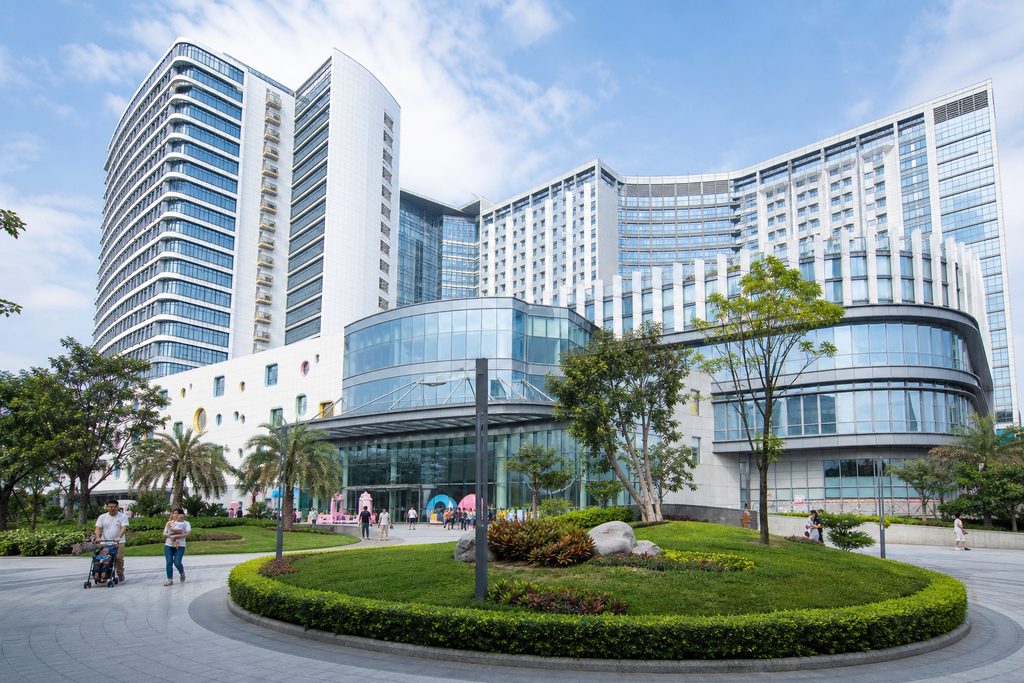
Key Takeaways
- Guangzhou Women and Children’s Medical Center (GWCMC) handles over 22,000 deliveries annually across four campuses, making it one of the highest-volume maternity centers on the planet.
- The hospital’s International Healthcare Center provides dedicated English-speaking coordination, though navigating the public registration system without support remains extremely difficult for non-Mandarin speakers.
- Guangzhou Women and Children’s Medical Center cost for childbirth ranges from approximately $3,000 for a standard vaginal delivery to $8,000–15,000 for a cesarean section with VIP international ward care — a fraction of US prices.
- GWCMC is not JCI accredited, which matters for some insurance reimbursement plans. We explain what this actually means for your care and your wallet below.
The Problem: When Pediatric or Obstetric Care at Home Feels Like a Gamble
Pregnancy and pediatric illness share a brutal common denominator. They do not wait. A fetus with a suspected congenital heart defect needs a fetal echocardiogram now — not in six weeks. A child with recurrent seizures needs a pediatric neurologist who has seen thousands of cases, not dozens. In healthcare systems strained by specialist shortages, the calendar becomes the enemy. In parts of Canada, the wait to see a pediatric subspecialist stretches past four months. In the UK, nearly 30% of maternity units closed their doors to expectant mothers at some point in 2023 due to staffing gaps, forcing families to scramble across town while in active labor.
That particular anxiety — the feeling that the system might not catch you — is what drives families to look beyond their borders. Not for luxury. For certainty. For a hospital where the obstetrician on call has managed placenta accreta more times than most Western OBs will see in a career. For a NICU that admits over 7,000 critically ill newborns each year and posts survival rates for extremely preterm infants that rival any center in North America or Europe. That hospital exists. It sits in the heart of Guangzhou’s Zhujiang New Town, and its name carries weight across Asia for a reason.
Who We Are
We are not a hospital. We do not provide medical treatment, make clinical diagnoses, or offer second opinions. Our team functions as your logistical architects — we bridge the gap between you and China’s top-tier medical institutions. We translate medical records, coordinate with hospital international departments, arrange bilingual medical companions, and handle the visa guidance and local logistics that make seeking care abroad feasible. When you contact us, you are not booking a surgery. You are getting a clear-eyed assessment of whether a specific Chinese hospital can meet your clinical needs, what it will cost, and how to get there without losing your mind in the process.
Why Guangzhou Women and Children’s Medical Center Commands Attention
GWCMC is not just another large hospital. It is the largest women’s and children’s hospital in South China and among the top three nationally by patient volume. The numbers tell a story of clinical density that few Western centers can match. The hospital operates four campuses — Zhujiang New Town (the main international-facing site), Children’s Hospital Campus, Women and Children’s Health Campus, and Zengcheng Campus — with a combined bed capacity exceeding 1,800. In a single year, the center records roughly 4.5 million outpatient visits and 130,000 inpatient admissions. Those are not abstract statistics. They mean the pediatric cardiology team sees more rare congenital heart defects in a month than a regional US children’s hospital might encounter in a year.
Clinical Volume Drives Outcomes
Volume is not everything. But in high-stakes fields like neonatology, pediatric cardiac surgery, and high-risk obstetrics, it correlates strongly with outcomes. GWCMC’s neonatal intensive care unit is one of the largest in Asia, with over 350 NICU beds across its campuses. The obstetrics department manages more than 22,000 births per year. For context, a busy US maternity hospital might deliver 5,000 to 8,000 babies annually. This throughput means the hospital’s perinatologists have deep experience managing conditions that are statistically rare in lower-volume centers — conditions like vasa previa, amniotic band sequence, and twin-to-twin transfusion syndrome.
The pediatric surgery department performs over 20,000 operations annually, including complex neonatal surgeries on infants weighing under 1,500 grams. In 2023, the hospital’s fetal medicine center completed more than 1,200 fetal interventions, including laser ablation for twin-twin transfusion syndrome and intrauterine blood transfusions. These are procedures that require not just surgical skill but a multidisciplinary infrastructure — pediatric cardiologists, neonatologists, genetic counselors, and maternal-fetal medicine specialists all coordinating care before the baby takes its first breath.
Specialized Centers That Draw International Families
Several clinical programs at GWCMC have earned reputations that cross borders. The hospital’s pediatric hematology-oncology center is one of China’s largest, treating over 500 new childhood cancer cases annually with protocols that align with St. Jude Children’s Research Hospital and other international standards. The pediatric cardiology and cardiac surgery program is a national referral center for complex congenital heart defects, performing over 1,200 pediatric cardiac surgeries each year.
For obstetric patients, the hospital’s fetal medicine unit is a particular draw. It houses some of China’s most advanced prenatal diagnostic capabilities, including high-resolution fetal MRI, chorionic villus sampling, and comprehensive genetic testing panels. For a family that has received a concerning prenatal ultrasound at home, the ability to get a definitive diagnosis and a coordinated care plan within days — rather than weeks — can be the deciding factor.
Is Guangzhou Women and Children’s Medical Center JCI Accredited?
No. GWCMC does not hold Joint Commission International accreditation. This is a factual statement, not a judgment. JCI accreditation is a voluntary, expensive process that many excellent Chinese hospitals have not pursued — particularly large public institutions that serve predominantly domestic patients. The hospital is a Grade 3A (三级甲等) institution, which is the highest classification in China’s domestic hospital ranking system and requires meeting rigorous standards for clinical quality, teaching, and research. It is also consistently ranked among China’s top 10 pediatric hospitals in the Fudan University hospital rankings.
What does this mean for you practically? If your international health insurance requires treatment at a JCI-accredited facility for reimbursement, you will need to check with your insurer directly. Some insurers maintain their own approved lists that include non-JCI hospitals with demonstrated quality metrics. Others are inflexible. We advise patients to confirm this before committing to any travel. The Guangzhou Women and Children’s Medical Center cost advantage may be moot if your insurer will not cover the care.
Guangzhou Women and Children’s Medical Center Cost: What International Patients Actually Pay
Let us address the question that sits at the center of every international patient’s decision. How much does childbirth cost at Guangzhou Women and Children’s Medical Center? The answer depends heavily on which service channel you use and what level of accommodation you choose. The hospital operates a tiered system. The public wing serves the general population at Chinese domestic rates. The International Healthcare Center and VIP wards serve patients willing to pay for enhanced services, English-speaking coordination, and private rooms.
For a standard vaginal delivery through the international department, expect to pay approximately $3,000 to $5,000. That includes a private room, nursing care, and basic newborn services. A cesarean section runs higher, typically $6,000 to $10,000, depending on complexity and length of stay. For high-risk pregnancies requiring extended NICU stays, costs escalate. A preterm infant requiring two weeks of Level III NICU care might add $1,500 to $2,500 per day, though this varies significantly by intervention intensity.
| Service | GWCMC International Dept (USD) | US Average (USD) |
|---|---|---|
| Vaginal delivery (uncomplicated) | $3,000 – $5,000 | $10,000 – $15,000 |
| Cesarean section | $6,000 – $10,000 | $15,000 – $25,000 |
| NICU per day (Level III) | $1,500 – $2,500 | $3,000 – $5,000 |
| Pediatric cardiac surgery | $15,000 – $30,000 | $80,000 – $200,000 |
| Fetal MRI + comprehensive consultation | $500 – $800 | $2,000 – $4,000 |
These figures are estimates based on cases we have coordinated. They vary by hospital and case complexity. The structural reason for the cost gap is straightforward. Chinese public hospitals operate on thin margins, physician salaries are a fraction of Western equivalents, and administrative overhead is lower. The clinical protocols, however, are comparable. GWCMC’s obstetric guidelines align with FIGO (International Federation of Gynecology and Obstetrics) standards. Its neonatologists follow protocols adapted from the American Academy of Pediatrics and European consensus statements.
For pediatric care, the Guangzhou Women and Children’s Medical Center cost structure follows a similar pattern. A pediatric cardiac surgery that might bill at $120,000 in the United States can be performed here for $20,000 to $30,000. A comprehensive pediatric oncology workup, including imaging, biopsy, and molecular profiling, runs $2,000 to $4,000 — roughly one-fifth of US prices. These are not discount rates. They reflect a fundamentally different economic model for healthcare delivery.
What You Need to Know Before You Go
We believe in telling you the hard parts upfront. Seeking care at GWCMC as a foreigner is entirely possible. It is not easy without support. Here is what you will face.
- Registration barriers: The public outpatient system runs on a same-day registration model. You show up, queue for a number, and hope the specialist you need is available. The hospital’s app and self-service kiosks are in Mandarin. Without a bilingual companion who understands the hospital’s internal workflows, you can lose an entire day just trying to see a doctor. The International Healthcare Center bypasses some of this chaos — but you must book through their dedicated channel, not the public queue.
- Payment systems: GWCMC requires upfront payment for services. They accept cash, Chinese debit cards, and major credit cards at the international department, but international wire transfers are not a standard payment method. You will need a plan for moving funds. Some international insurance policies provide direct billing arrangements, but this is the exception, not the rule. Most families pay out of pocket and seek reimbursement later.
- Medical records and translation: The hospital’s electronic medical record system operates in Chinese. Your prenatal records, your child’s growth charts, your specialist referral letters — all of it needs professional medical translation before a GWCMC physician can review it meaningfully. Google Translate will not suffice for a fetal echocardiogram report.
- Visa requirements: Medical treatment in China requires an S2 visa with a notation specifying the medical purpose. The hospital must provide an invitation letter confirming your treatment arrangement. This is not a document you can generate yourself. The International Healthcare Center can issue these letters once you have a confirmed appointment and treatment plan. Family members traveling with you need their own S2 visas as accompanying relatives.
The International Patient Department at Guangzhou Women and Children’s Medical Center
The International Healthcare Center at GWCMC’s Zhujiang New Town campus is the entry point for foreign patients. This department employs English-speaking coordinators who handle appointment scheduling, admission paperwork, and billing. They serve as the interface between international families and the hospital’s clinical departments. The center occupies a dedicated floor with private consultation rooms, a waiting area, and direct access to laboratory and imaging services.
What the international patient department Guangzhou Women and Children’s Medical Center offers is genuine. What it does not offer is end-to-end logistical support outside the hospital walls. They will not arrange your visa. They will not pick you up from the airport. They will not help you find an apartment near the hospital for a two-month NICU stay. They will not translate your medical records before you arrive. Their remit is clinical coordination within the hospital. For everything else, you need external support — which is precisely where our team comes in.
To book delivery at Guangzhou Women and Children’s Medical Center through the international department, you typically need to establish care by the early third trimester. The hospital accepts international obstetric patients up to approximately 34 weeks gestation, though earlier is better. You will need a complete set of prenatal records, a referral from your home obstetrician, and a confirmed payment method. The international department can schedule a package that includes delivery, postpartum care, and newborn screening. For complex pregnancies, a preliminary video consultation with a maternal-fetal medicine specialist can clarify whether GWCMC is the right destination for your specific situation.
How We Help You Navigate This
These barriers exist for structural reasons, not malice. GWCMC serves an enormous domestic patient population, and its systems evolved to serve Mandarin-speaking Chinese citizens. The international department is a bridge, but it is not a full-service medical concierge. That is where we fit.
Before you travel, we handle medical record translation by certified medical translators who understand obstetric and pediatric terminology. We coordinate with the international patient department to secure appointment confirmations and the invitation letter required for your S2 visa. We provide clear guidance on the visa application process, including which documents to submit and how to present your medical purpose to the consular officer. We help you understand Guangzhou Women and Children’s Medical Center cost estimates specific to your clinical scenario, so there are no surprises.
During your stay, our bilingual medical companions accompany you to every appointment. They handle registration, queue for labs, collect results, and translate conversations between you and your physicians in real time. They know the hospital’s layout, its workflows, and its unwritten rules — like which pharmacy window fills prescriptions fastest, or which ultrasound room handles fetal scans on Tuesday mornings. This is not luxury. It is logistics. And in a 1,800-bed hospital where signs are in Mandarin and the corridors stretch for city blocks, logistics matter.
After discharge, we coordinate follow-up care, help you obtain translated medical summaries for your home physician, and arrange any necessary post-operative rehabilitation or pediatric follow-up. If your newborn requires ongoing specialist care, we can facilitate continued consultations with GWCMC physicians via video link — with our interpreters on the line to ensure nothing is lost.
We also connect families to the broader ecosystem of Chinese medical resources. If your child’s condition requires a pediatric cardiac surgeon, we can help you understand how GWCMC compares to the national cardiac center at Fuwai Hospital, which performs over 14,000 cardiac surgeries annually. If you are considering private hospital alternatives with JCI accreditation and English-speaking staff throughout, our private international hospitals guide provides a clear comparison. The best hospital for one family is not necessarily the best for another. Our job is to help you make an informed choice, not to steer you toward any particular institution.
Frequently Asked Questions
Yes, but not through the public registration system. The International Healthcare Center accepts advance bookings for obstetric patients. You will need to provide complete prenatal records, establish care by approximately 30–34 weeks gestation, and confirm payment arrangements. The hospital issues an invitation letter that supports your S2 visa application. We coordinate this entire process — from initial contact with the international department to confirmed admission dates.
GWCMC is a national referral center for high-risk obstetrics. Its maternal-fetal medicine team manages complications including placenta previa, preeclampsia, multiple gestations, and fetal anomalies. The hospital’s NICU is one of Asia’s largest and best-equipped. Survival rates for extremely preterm infants (under 28 weeks) are comparable to outcomes at major North American and European centers. No hospital can guarantee outcomes, and we encourage all families to discuss their specific risk profile with a maternal-fetal medicine specialist before making any decision.
This is a real constraint for some families. Contact your insurer before committing to travel. Ask specifically whether they maintain an approved provider list that includes non-JCI hospitals with demonstrated quality metrics. Some insurers approve GWCMC on a case-by-case basis given its Fudan ranking and clinical volume. If your insurer is inflexible, Guangzhou also has JCI-accredited private hospitals that offer obstetric and pediatric care, though at higher price points than GWCMC. We can help you compare options.
Physicians in the International Healthcare Center generally speak functional medical English. Consultations, however, involve nuanced discussions — test results, treatment options, risk assessments — where precision matters. Our bilingual medical companions sit in on every consultation to ensure accurate translation. They also translate written materials, discharge instructions, and medication labels. Relying solely on the hospital’s English-speaking staff without independent translation support introduces risk, particularly in complex cases.
Your Next Step
Guangzhou Women and Children’s Medical Center represents a legitimate option for families seeking high-volume, high-expertise pediatric and obstetric care at a fraction of Western prices. It is not a simple option. The language barrier, the registration system, the visa process, and the upfront payment requirements create friction that can overwhelm a family already dealing with medical stress. But for those who navigate it successfully, the clinical outcomes and cost savings are real.
If you are considering GWCMC for your pregnancy, your child’s surgery, or a complex pediatric diagnosis, we can help you understand whether it is the right fit. Our consultation is free. It starts with your medical situation, not with a sales pitch. Get a free consultation and we will walk you through the specifics — which department to contact, what records to prepare, what costs to expect, and whether a different hospital might serve you better. No pressure. Just clarity.
For more medical information and treatment options in China, visit chinamedservices.com (China Medical Services).
