CAR-NK Therapy China: Universal Cell Treatment Without Cytokine Storm Risk
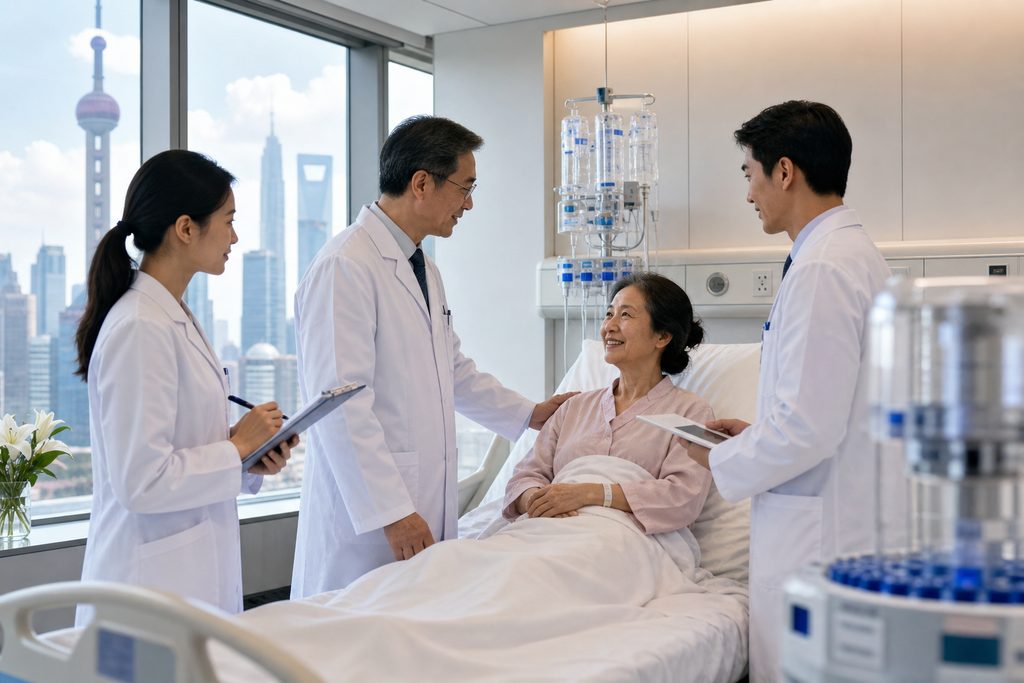
Have you ever wondered what comes after CAR-T? The answer is already here. It is called CAR-NK therapy. And China is pushing it forward faster than almost anywhere else on earth. The appeal is straightforward: a cell therapy that does not require weeks of personalized manufacturing, works across patients without matching, and sidesteps the terrifying immune overreaction known as cytokine release syndrome. For patients staring down relapsed leukemia or refractory lymphoma, this is not just an incremental upgrade. It is a fundamentally different bet.
Key Takeaways
- CAR-NK therapy uses natural killer cells that can be sourced from healthy universal donors, eliminating the 2-4 week manufacturing wait that plagues autologous CAR-T treatments.
- Early clinical data from multiple Chinese academic centers shows a near-zero rate of severe cytokine release syndrome (CRS) and neurotoxicity — the two adverse events that make CAR-T a high-risk procedure.
- China’s regulatory framework under the NMPA allows certain cell therapies to be administered as advanced investigational treatments in hospital settings, but this creates a complex landscape of approved trials versus paid clinical applications that international patients must navigate carefully.
- Any decision to pursue CAR-NK therapy abroad should begin with a thorough independent review of your current medical records and a direct conversation with the treating hospital’s international patient center — never through an intermediary that promises guaranteed outcomes.
The Problem: When Your Immune System Becomes the Bottleneck
Autologous CAR-T therapy was a breakthrough. It also has brutal limitations. A patient’s own T cells must be harvested, shipped to a centralized manufacturing facility, genetically engineered to express a chimeric antigen receptor, expanded over two to three weeks, and then reinfused. For someone with aggressive disease, that window is an eternity. Roughly 10-15% of patients with relapsed or refractory B-cell acute lymphoblastic leukemia deteriorate before their manufactured CAR-T product ever reaches them. The manufacturing failure rate hovers between 5-10% even at top-tier centers.
Then there is the toxicity question. Cytokine release syndrome occurs in 70-90% of CAR-T recipients, with severe grade 3-4 CRS affecting 20-40% depending on the product and disease burden. Neurotoxicity adds another layer of risk. These are not minor side effects. They require ICU-level management, tocilizumab on standby, and a clinical team with deep experience recognizing the early signs of a cytokine storm. Many hospitals simply do not have that capability.
Cost compounds everything. In the United States, the list price for a single CAR-T infusion ranges from $373,000 to $475,000, not including the hospitalization and supportive care that frequently push the total bill past $800,000. Even with insurance coverage, the financial toxicity for families is real and lasting.
The core insight behind CAR-NK therapy is almost embarrassingly simple. Why fight the immune system when you can work with a cell type that evolved to kill without causing a storm?
Who We Are
We are not a hospital. We do not provide medical treatment, make clinical recommendations, or promise access to any specific therapy. Our organization operates as a medical concierge and logistical coordination team — we connect international patients with China’s top-tier hospitals, handle the practical barriers that make cross-border treatment seem impossible, and ensure that when you arrive for a consultation, your records are translated, your appointments are confirmed, and a bilingual medical companion is by your side. Think of us as the bridge. You and your treating physician make the medical decisions. We make sure the system does not swallow you whole.
What Is CAR-NK Cell Therapy for Cancer
Natural killer cells are the immune system’s first responders. Unlike T cells, which require antigen presentation and clonal expansion before they act, NK cells recognize stressed or transformed cells through a balance of activating and inhibitory signals. They kill without prior sensitization. When you engineer them to express a CAR — a synthetic receptor that binds a specific tumor antigen like CD19 or BCMA — you get a cell that combines innate killing speed with targeted precision.
This dual mechanism matters enormously. CAR-T cells kill exclusively through the CAR-antigen interaction. If the tumor downregulates that antigen, the therapy fails. CAR-NK cells retain their native activating receptors. They can recognize and eliminate cancer cells through multiple pathways simultaneously. Antigen escape becomes much harder.
The universal donor advantage changes the economics and logistics of treatment entirely. A single healthy donor’s NK cells can be expanded and banked to treat dozens of patients. No personalized manufacturing. No vein-to-vein delay. No risk of graft-versus-host disease, because NK cells do not attack the recipient’s healthy tissues in the way allogeneic T cells can. This is what researchers mean when they call it an off-the-shelf therapy.
How Does CAR-NK Compare to CAR-T Safety
The cytokine profile tells the story. CAR-T cells predominantly release IL-6, IL-10, and interferon-gamma in massive quantities — the molecular signature of a cytokine storm. CAR-NK cells secrete a different set of cytokines, primarily interferon-gamma and granulocyte-macrophage colony-stimulating factor, at far lower levels. Clinical data from the MD Anderson Cancer Center’s phase 1/2 trial of cord blood-derived CAR-NK cells targeting CD19 showed a response rate of 73% with zero cases of severe CRS or neurotoxicity. Not a single ICU transfer for cytokine management.
Chinese research groups have replicated and extended these findings. A 2023 study published in Nature Medicine by investigators at Zhejiang University reported on 37 patients treated with an off-the-shelf anti-CD19 CAR-NK product. The overall response rate was 68.4%. Grade 3 or higher CRS occurred in zero patients. Neurotoxicity occurred in zero patients. The most common adverse events were transient neutropenia and low-grade fever that resolved within 48 hours.
This safety profile is not a fluke. It is built into the biology. NK cells have a short lifespan in circulation — typically one to two weeks — which means the CAR-NK effect is self-limiting. There is no risk of long-term B-cell aplasia, a known complication of CD19-directed CAR-T that leaves patients immunoglobulin-dependent for years. For elderly patients or those with comorbidities who would never qualify for CAR-T due to toxicity risk, CAR-NK opens a door that was previously bolted shut.
Universal Donor Cell Therapy No Cytokine Storm China
China has carved out a distinct position in the global CAR-NK landscape. The country’s regulatory environment, combined with a vast patient population and a hospital system that can rapidly enroll clinical trials, has created conditions where next-generation cell therapies move from bench to bedside with unusual speed.
Several structural factors are at play. China’s National Medical Products Administration (NMPA) implemented a dual-track regulatory framework for cell and gene therapies in 2019. Products can proceed either as registered pharmaceutical drugs under the Drug Administration Law or as advanced medical technologies administered within specific hospital settings under institutional review board oversight. This second pathway — sometimes called the hospital-based pathway — has enabled dozens of academic medical centers to offer CAR-NK therapies to patients while formal drug registration trials proceed in parallel.
The practical result is that a patient with relapsed B-cell malignancy who has exhausted standard options may find CAR-NK treatment available at multiple major Chinese hospitals today, not in three years when a commercial product completes phase 3 registration. That speed comes with trade-offs. Hospital-based treatments vary in manufacturing standards, quality control, and published outcome data. Choosing where to go is not a trivial decision.
Best CAR-NK Hospitals in Shanghai
Shanghai has emerged as a hub for CAR-NK clinical research and treatment delivery. The concentration of academic medical centers, immunology research institutes, and GMP-grade cell manufacturing facilities within a single metropolitan area is difficult to replicate elsewhere.
Ruijin Hospital, affiliated with Shanghai Jiao Tong University School of Medicine, runs one of China’s most active hematology programs and has published extensively on CAR-T and CAR-NK clinical outcomes. Their hematology department is consistently ranked among China’s top 10 in the Fudan University hospital rankings for the specialty. The Shanghai Institute of Hematology, housed within Ruijin, has been a driving force behind several domestic cell therapy innovations.
Shanghai General Hospital and Changhai Hospital have also built substantial cell therapy programs. Several of these institutions collaborate with commercial biotech firms that supply clinical-grade NK cell products manufactured in Shanghai’s Zhangjiang Hi-Tech Park. What this means for an international patient is that multiple options exist within a single city, which simplifies the logistics of seeking second opinions and comparing treatment protocols before committing to a specific center.
Our team maintains direct working relationships with the international patient departments at these hospitals. We can help you understand which centers are currently enrolling patients, what documentation they require, and what the realistic timeline looks like from initial inquiry to infusion day. Visit our Shanghai medical hub page for a broader overview of the city’s healthcare infrastructure.
CAR-NK Therapy Cost China
The financial calculus behind CAR-NK treatment in China is fundamentally different from what patients encounter with commercial CAR-T products in Western markets. There is no single list price. Costs vary substantially depending on whether the treatment is delivered through a registered clinical trial, a hospital-based advanced technology program, or a commercial arrangement with a biotech manufacturer.
For patients paying out-of-pocket through a hospital international department, the cost for a full CAR-NK treatment course — including donor cell sourcing, CAR engineering, expansion, quality control testing, infusion, and a standard observation period — typically falls in the range of $40,000 to $80,000 USD. That figure can be lower if the patient qualifies for a clinical trial with sponsored product costs. It can be higher if extended hospitalization or complex supportive care is required.
Context matters here. The comparable CAR-T products approved by the FDA carry list prices between $373,000 and $475,000, and real-world total costs of care frequently exceed $600,000. Even China’s domestically approved CAR-T products, such as Yescarta (axicabtagene ciloleucel) and Carteyva (relmacabtagene autoleucel), are priced at approximately $170,000 to $200,000 USD within the Chinese market. CAR-NK, because it is an off-the-shelf product derived from universal donors rather than a personalized autologous therapy, is inherently less expensive to manufacture. Those savings are partially passed through to patients.
| Treatment Type | Approximate Cost (USD) | Manufacturing Time | Donor Source |
|---|---|---|---|
| CAR-T (US commercial) | $373,000 – $475,000 | 2-4 weeks | Autologous |
| CAR-T (China commercial) | $170,000 – $200,000 | 2-4 weeks | Autologous |
| CAR-NK (China hospital program) | $40,000 – $80,000 | Off-the-shelf | Universal donor |
These are reference ranges. Final costs depend on the specific hospital, the complexity of the patient’s condition, the number of infusion cycles required, and whether complications arise during treatment. We always recommend requesting a detailed cost breakdown from the hospital’s international patient center before making any financial commitment.
Book CAR-NK Treatment China Package
The pathway to receiving CAR-NK therapy in China does not resemble booking a hotel room or purchasing a medical tourism package from a glossy brochure. Any organization that promises a fixed-price, all-inclusive treatment package with guaranteed outcomes is not being honest about how serious cell therapy works.
What actually happens is this. First, your complete medical records — including pathology reports, flow cytometry results, cytogenetic studies, prior treatment histories, and recent imaging — must be translated into Chinese and submitted to the target hospital’s hematology department for review. The attending physician decides whether CAR-NK is appropriate for your specific disease profile. Not every patient is a candidate. Prior lines of therapy, current disease burden, organ function, and performance status all factor into that determination.
If the physician accepts your case, the hospital’s international patient center will issue an invitation letter for your S2 visa application. Travel arrangements, accommodation, and on-the-ground logistics can then be coordinated. Our role is to manage this entire sequence — document translation, hospital communication, appointment scheduling, visa support, and in-person bilingual accompaniment throughout your hospital visits. We do not influence the medical decision. We make sure the process does not stall at any administrative step.
For a detailed look at how we support patients through each phase of treatment abroad, our patient coordination service page explains the full scope of what we handle and what we do not.
What You Need to Know Before Going Alone
Pursuing cell therapy in a foreign country is not a simple transaction. The barriers are real, and they are not always obvious from outside the system.
- Visa Requirements: Medical treatment in China requires an S2 visa with a specific annotation for medical purposes. The hospital must issue an official invitation letter confirming that you have been accepted as a patient. Without that document, the visa application will be rejected. Processing times vary by consulate, and you cannot legally enter on a tourist visa and then convert to medical treatment status. The S2 visa is typically issued for 180 days or less. If your treatment and recovery require a longer stay, an S1 visa may be necessary.
- Language and Navigation: China’s top public hospitals handle over 10,000 outpatient visits per day. Signage, registration kiosks, pharmacy counters, and billing windows operate almost exclusively in Chinese. A single missed queue number can cost you an entire day. Without a bilingual companion who understands the hospital’s internal workflow, the experience can be overwhelming to the point of being non-functional.
- Payment Systems: Public hospitals in China operate on a prepaid deposit system. You load funds onto a hospital account at admission, and services are deducted as they are provided. International credit cards are not universally accepted at hospital payment counters. WeChat Pay and Alipay dominate, and foreign visitors often find their cards declined or hit with transaction limits. You need a plan for moving funds before you arrive.
- Medical Records and Follow-Up: Your treatment summary and discharge records will be in Chinese. If you need your home oncologist to continue your care after returning, those documents must be professionally translated. Follow-up imaging and lab work will need to be communicated back to your Chinese physician. This ongoing coordination does not end when you board your flight home.
How We Help You Navigate This
These barriers exist for structural reasons, not because the system is designed to exclude foreigners. Chinese hospitals are built to serve a domestic population of 1.4 billion people. The international patient pathway is a specialized layer on top of that system, and it requires someone who understands both sides.
Before you travel, we handle hospital selection and case submission. We translate your medical records into the format that Chinese hematologists expect to see. We coordinate with the international patient center to confirm that a physician has reviewed your file and agreed to see you. We provide a detailed cost estimate and a timeline, and we advise on visa documentation.
During your treatment, a bilingual medical companion accompanies you to every appointment. This person handles registration, payment, queue management, and real-time interpretation between you and your medical team. You focus on your health. We handle the friction.
After you return home, we coordinate the translation of your discharge summary and treatment records. If your Chinese physician recommends follow-up imaging or lab work at specific intervals, we facilitate the communication loop so your home oncologist has the full picture. The goal is continuity, not a one-off procedure with no follow-through.
Frequently Asked Questions
No CAR-NK product has received full marketing authorization from the FDA or European Medicines Agency as of early 2026. Multiple products are in phase 1/2 clinical trials globally. In China, CAR-NK therapies are available through hospital-based advanced technology programs and registered clinical trials under NMPA oversight. This means treatment access exists, but the regulatory status differs from what patients may expect in their home countries. You should discuss this distinction with your current oncologist before pursuing treatment abroad.
The strongest clinical evidence supports CAR-NK therapy for relapsed or refractory B-cell hematologic malignancies — specifically acute lymphoblastic leukemia, chronic lymphocytic leukemia, and certain non-Hodgkin lymphomas. Trials targeting CD19, CD20, and BCMA are the most mature. Solid tumor applications remain largely in early-phase investigation, with some Chinese centers exploring CAR-NK constructs against targets like HER2, mesothelin, and glypican-3. The data is not yet robust enough to draw firm conclusions for solid tumors. A realistic conversation with the treating hospital about what published outcomes exist for your specific diagnosis is essential.
This is the hardest question, and it deserves a direct answer. CAR-NK therapy, like any cancer treatment, can fail. Response rates in published studies range from 50-75% depending on disease type, prior treatments, and disease burden at the time of infusion. If the therapy is ineffective, the treating hospital will typically offer supportive care and discuss remaining standard-of-care or investigational options. If complications arise, Chinese tertiary hospitals have ICU capabilities and hematology-oncology expertise to manage adverse events. The key is to understand, before you travel, what the hospital’s policy is regarding extended hospitalization, transfer to intensive care, and communication with your family and home physicians. Ask these questions directly. A reputable hospital will answer them.
Combination strategies — such as bridging chemotherapy before CAR-NK infusion or consolidating with targeted therapy afterward — are being actively studied, but there is no standardized protocol. The decision to combine treatments depends entirely on your specific disease status, prior therapies, and the judgment of the treating physician. You must provide a complete treatment history so the medical team can assess potential drug interactions and cumulative toxicities. Never withhold information about supplements, traditional medicines, or treatments received outside your primary oncology team.
Your Next Step
CAR-NK therapy represents a genuine shift in how we think about cell-based cancer treatment. It is faster, safer in terms of cytokine release risk, and built on a universal donor model that sidesteps the manufacturing delays and costs of personalized CAR-T. China has invested heavily in this technology, and the clinical infrastructure to deliver it exists now — not in some distant regulatory future. But accessing it requires navigating a system that was not designed with international patients in mind. If you are considering this path, start with your medical records and a clear-headed conversation about what the published data actually shows for your diagnosis. We are here to handle the logistics when you are ready to take that step.
Learn more about how we support patients through every phase of cross-border treatment on our patient coordination page.
For more medical information and treatment options in China, visit chinamedservices.com (China Medical Services).
