Zhongshan Hospital Shanghai: Cardiac & Liver Surgery Access for International Patients
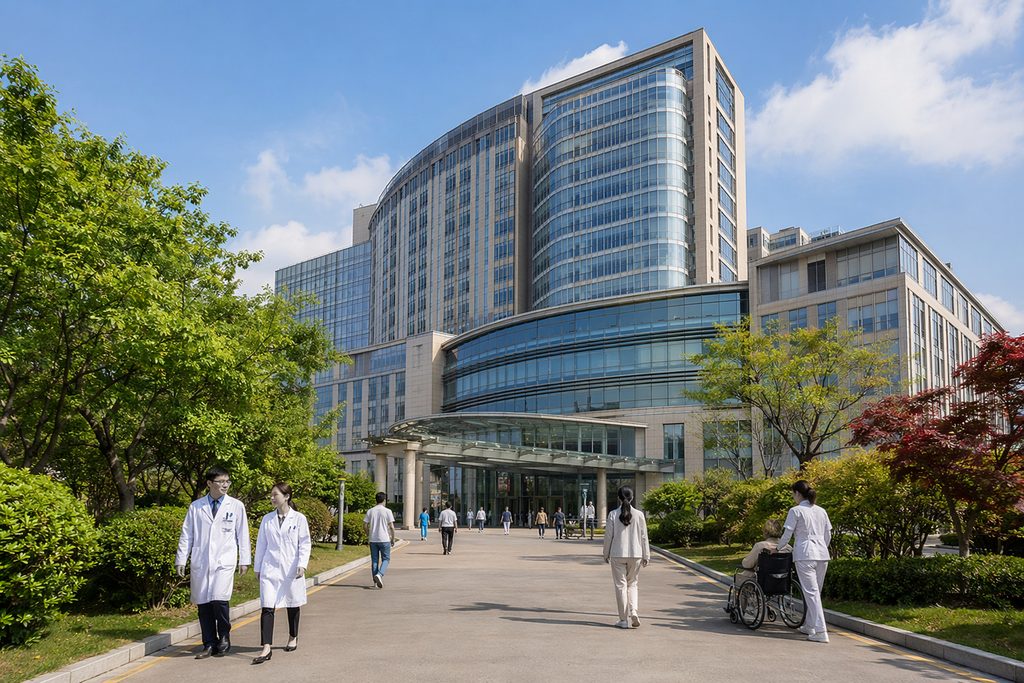
You have probably heard that traveling to China for major surgery means gambling with quality. The data tells a different story. Zhongshan Hospital, affiliated with Fudan University, performs over 5,000 cardiac surgeries and more than 200 adult liver transplants annually. Those are not just numbers. That is volume that creates a proficiency curve most Western centers cannot match. For patients facing long waits or prohibitive costs at home, this single institution represents a legitimate, high-volume alternative. But accessing it as a foreigner requires navigating a system that was not built for you. That is where the real challenge lies—and where the right logistical support changes everything.
Key Takeaways
- Zhongshan Hospital’s cardiac surgery program handles complex cases at a fraction of Western costs, with a coronary artery bypass graft (CABG) typically ranging from $12,000 to $20,000.
- The hospital’s liver transplant program is one of China’s largest, with survival rates that benchmark favorably against international registries.
- Foreign patients cannot simply book surgery online—access requires an in-person consultation, a medical visa (S2), and navigation of a Mandarin-dominant system.
- Your biggest risk is not clinical quality; it is logistical breakdown—miscommunication about your medical history, visa delays, or arriving without a clear pathway to the right specialist.
The Problem: When Waiting Is Not an Option
For a patient with triple-vessel coronary artery disease, waiting six months for a bypass is not just inconvenient. It is dangerous. In Canada, the median wait time for CABG can stretch to 64 days from specialist decision to treatment, according to the Canadian Institute for Health Information. In the UK’s NHS, the 18-week referral-to-treatment target is missed for a significant portion of cardiothoracic patients. And in the United States, the cost of a straightforward CABG without complications routinely exceeds $120,000. If you are uninsured or underinsured, that number is not a bill—it is a wall.
Liver disease presents an even more urgent clock. Decompensated cirrhosis or hepatocellular carcinoma does not wait for bureaucratic approvals. A patient in need of a transplant faces two brutal realities in most Western systems: a severe organ shortage and a rigorous, slow candidacy evaluation process. The Eurotransplant region consistently reports more than 10,000 patients on waiting lists, with median wait times for a liver stretching beyond a year for many blood types. Some patients deteriorate past the point of transplant eligibility while waiting. That is the cruel math of organ scarcity.
Zhongshan Hospital’s volume changes that calculus. But volume alone is not a solution. You need to know what you are walking into.
Who We Are
We are not a hospital. We do not provide medical treatment, clinical diagnoses, or emergency care. Our team at China Medical Services functions as your logistical architects—we bridge the gap between you and the expertise housed within China’s 340+ top-ranked hospitals across 37 cities. We translate medical records, coordinate with hospital international departments, arrange bilingual medical companions, and guide you through the visa process. Think of us as the people who make sure you see the right specialist, with the right documents, on the right day, without getting lost in a system where English is rarely spoken at the registration counter.
Why Zhongshan Hospital Delivers Results for Cardiac and Liver Patients
Clinical Volume That Creates a Proficiency Curve
There is a well-documented relationship between surgical volume and outcomes. A 2017 study in The Lancet analyzing over 900,000 surgical patients across 27 countries found that higher hospital procedure volume was associated with lower mortality for complex procedures. Zhongshan’s Department of Cardiac Surgery handles over 5,000 cases each year. To put that in perspective, many reputable US cardiac centers perform between 300 and 800 CABG procedures annually. A surgeon who does a procedure 200 times a year simply encounters and manages complications differently than one who does it 30 times a year. That is not a critique of Western surgeons. It is a recognition of how volume shapes clinical instinct.
The same principle applies to the liver transplant program. Zhongshan’s Liver Surgery Department, led by specialists who routinely manage complex resections and transplants, has accumulated experience with cases that might be considered borderline or high-risk elsewhere. When you perform over 200 adult liver transplants a year, you develop protocols for the outlier cases—the patients with portal vein thrombosis, the re-transplants, the recipients with challenging anatomy. That depth of experience is hard to replicate at a center doing 40 or 50 transplants annually.
Technology and Efficiency at Scale
Zhongshan Hospital invested heavily in hybrid operating suites and minimally invasive cardiac surgery capabilities. Transcatheter aortic valve replacement (TAVR) and minimally invasive CABG are routine here, not experimental. The hospital’s catheterization labs run at a throughput that reflects China’s broader healthcare efficiency—rapid turnaround, high utilization, and a focus on moving patients through the system without unnecessary delays.
For liver patients, the integration between the hepatology, interventional radiology, and surgical teams matters. A patient with hepatocellular carcinoma might need transarterial chemoembolization (TACE) before transplant, followed by precise timing of the surgery. Zhongshan’s multidisciplinary tumor boards meet frequently, and the coordination between departments is tighter than in systems where specialists operate in separate silos. That internal efficiency is not glamorous, but it directly affects your treatment timeline and, potentially, your outcome.
Cost Advantage Without Quality Compromise
Let us address the elephant in the room directly. The Zhongshan Hospital Shanghai cardiac surgery cost is lower than Western prices—and that makes some patients nervous. Does lower cost mean lower quality? Not in this case. The cost differential is structural, not qualitative. A CABG at Zhongshan ranges from $12,000 to $20,000. A liver transplant, depending on complexity and post-operative course, typically falls between $60,000 and $90,000. Compare that to $120,000+ for a bypass or $300,000+ for a liver transplant in the US. The gap is not explained by cutting corners.
China’s lower labor costs, higher patient volumes that amortize equipment investments faster, and a hospital payment system that does not involve the massive administrative overhead of US insurance billing all contribute. The surgeons at Zhongshan trained at top Chinese medical schools, many completed fellowships abroad, and the hospital’s infection control and surgical safety protocols align with international standards. The Zhongshan Hospital Shanghai cardiac surgery cost reflects economic efficiency, not a discount on safety.
What You Need to Know Before Going Alone
We are direct about this because patients deserve honesty. The clinical capabilities at Zhongshan are real. The barriers to accessing them independently are also real. If you book a flight to Shanghai and show up at the outpatient building expecting to schedule surgery, you will have a very difficult day.
- Medical Visa Requirements: You need an S2 visa, specifically annotated for medical treatment purposes. This requires an invitation letter from the hospital—something Zhongshan’s international department can provide, but only after they have reviewed your case and confirmed they can treat you. You cannot apply for this visa without hospital documentation. And you cannot get hospital documentation without first establishing a clinical relationship. It is a chicken-and-egg problem that stalls many independent attempts.
- Mandarin-Dominant Environment: The international patient center at Zhongshan has English-speaking coordinators, but the moment you step into a consultation with a senior surgeon, the discussion will likely occur in Mandarin. Your medical history, your questions about risks, your nuanced description of symptoms—all of this needs precise translation. Google Translate will not suffice when you are discussing the difference between a bioprosthetic and mechanical valve, or the implications of a MELD score for transplant prioritization.
- Payment Systems: Zhongshan’s international department operates on a pre-payment model. You pay a deposit, often via wire transfer or through a Chinese bank account, before admission. International credit cards are not universally accepted at every payment counter. The hospital’s billing codes and itemized receipts will be in Chinese, which complicates insurance reimbursement unless you have someone who can translate and reformat them for your insurer.
How We Help You Navigate This
For a liver resection, plan on at least 3 to 4 weeks: one week for pre-operative evaluation, the surgery itself, and 2 to 3 weeks of in-hospital recovery. For a liver transplant, the timeline extends significantly—expect 6 to 8 weeks minimum, with longer stays if complications arise. You will need to remain in Shanghai for follow-up monitoring even after discharge, so budget for extended accommodation near the hospital.
Zhongshan Hospital has a surgical ICU staffed by intensivists trained in post-cardiac and post-transplant care. Complications are managed within the same institution, not transferred elsewhere. Your bilingual companion remains in contact with the medical team and keeps your family informed. That said, you must understand that medical error and adverse outcomes occur in every hospital in the world. We do not guarantee results. We guarantee that we have connected you with a high-volume, audited program with a track record that supports its reputation.
Some international insurance plans cover treatment at JCI-accredited or internationally recognized hospitals. Zhongshan is not JCI-accredited, but its reputation and outcomes data can support a case for coverage. We provide itemized receipts and translated medical records to submit to your insurer. Reimbursement is never guaranteed—check with your provider before committing. Many patients pay out-of-pocket and then seek reimbursement, which is a financial risk you must weigh carefully.
Your Next Step
Zhongshan Hospital’s cardiac and liver surgery programs offer real clinical capability at a cost structure that makes treatment accessible to patients who would otherwise face impossible choices. The barriers are logistical, not medical. A system that was not designed for international patients can be navigated—with the right preparation, the right documents, and the right people beside you in the hospital corridors.
If you are considering this path, start with a conversation. Our team reviews your medical records, assesses your case, and provides a clear, honest recommendation—whether that means proceeding with Zhongshan, considering another of China’s 340+ top-ranked hospitals, or advising you that treatment closer to home is the better option. There is no cost for that initial guidance, and no pressure to commit. You deserve clarity before you make any decision this significant.
Frequently Asked Questions
Yes. The hospitals we partner with, like BenQ Medical Center, are JCI-accredited and follow the same international safety standards as top hospitals in the US and Europe. Surgical teams perform high volumes of procedures — often more than their Western counterparts — which studies show leads to better outcomes.
Costs vary by procedure and hospital, but international patients typically save 40-80% compared to US prices — even when factoring in travel and accommodation. A consultation with our team will give you an exact, all-inclusive quote with no hidden fees.
Contact Fenglin International. We handle everything from hospital selection and appointment scheduling to visa assistance and post-operative recovery planning. Your medical records are reviewed by the specialist before you even book a flight.
For more medical information and treatment options in China, visit chinamedservices.com (China Medical Services).
