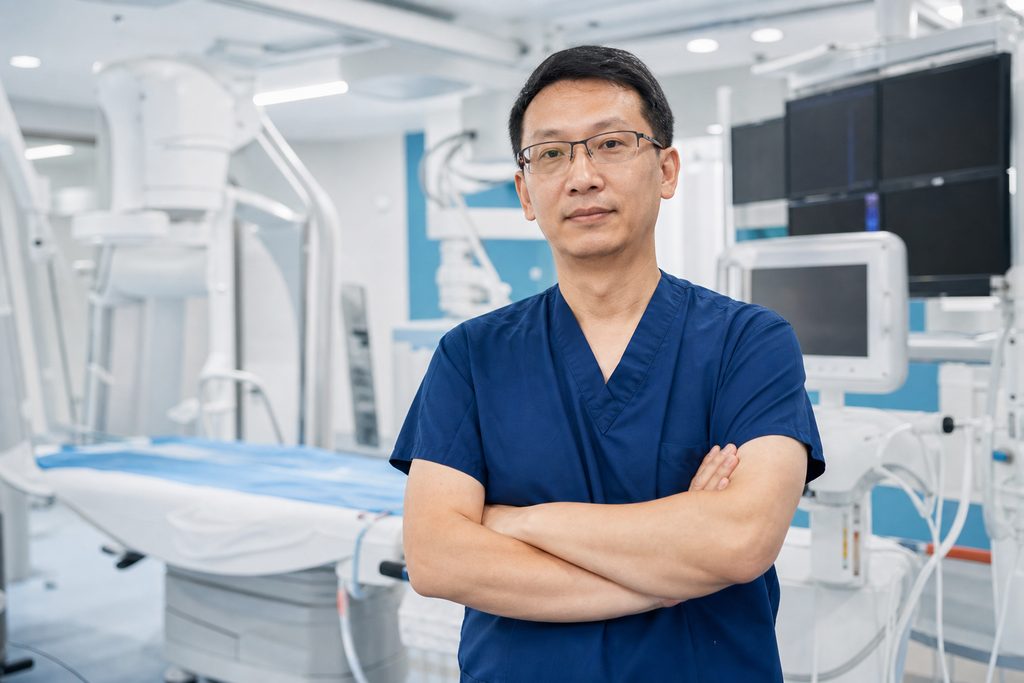
Dr Chen Yihan Cardiologist China: PLA 301 Hospital Cardiac Electrophysiology and Ablation Expert
You have probably heard that traveling abroad for heart surgery means settling for second-rate care. The assumption is almost reflexive — lower cost must signal lower quality.
That assumption is wrong.
Atrial fibrillation alone affects an estimated 37 million people globally. The numbers are climbing. In the United States, a catheter ablation procedure to correct the rhythm disturbance can run anywhere from $20,000 to $50,000 or more, depending on the hospital and your insurance deductibles. The wait to see a top electrophysiologist in Canada or the UK can stretch into months — months spent in uncertainty, fatigue, and genuine fear.
Meanwhile, a parallel universe of cardiac care exists in Beijing. It operates at enormous scale, with clinical outcomes that match or exceed international benchmarks. And the cardiac ablation cost China PLA 301 hospital structure makes the financial equation dramatically different.
Key Takeaways
- PLA General Hospital (301 Hospital) in Beijing houses one of Asia’s highest-volume cardiac electrophysiology labs, with ablation success rates comparable to major Western centers.
- The total out-of-pocket cost for a complex atrial fibrillation ablation at PLA 301 typically ranges from $8,000 to $15,000 USD — roughly one-third to one-fifth of the US price.
- International patients cannot simply walk in and book Dr. Chen Yihan directly; the public system requires navigating a structured VIP or international department pathway with proper coordination.
- You should understand the visa requirements (S2), the mandatory in-person consultation, and the role of a bilingual medical companion before committing to travel.
The Problem: When Your Heart’s Electrical System Misfires
Atrial fibrillation is not just an irregular heartbeat. It is a progressive condition. The chaotic electrical signals in the pulmonary veins cause the atria to quiver instead of contract. Blood pools. Clots form. Stroke risk rises by a factor of five. Over time, the heart muscle weakens. Fatigue becomes a constant companion. Simple tasks — climbing stairs, carrying groceries — leave you winded.
Medication helps some patients. Antiarrhythmic drugs can maintain sinus rhythm for a while. But for millions, the drugs stop working. Or the side effects become intolerable. That is when the conversation turns to catheter ablation: threading thin, flexible wires through the femoral vein up into the heart, mapping the rogue electrical signals, and using radiofrequency energy or cryotherapy to isolate the problem areas.
It is a delicate procedure. The difference between a successful ablation and a repeat procedure often comes down to one factor: the volume of cases the electrophysiologist handles each year. A 2017 study in the Journal of the American College of Cardiology found that operators performing more than 50 atrial fibrillation ablations annually had significantly lower complication rates than low-volume operators. This is where the math gets interesting for anyone researching Dr Chen Yihan electrophysiologist reviews and outcomes.
Who We Are
We are China Medical Services. We are not a hospital. We do not provide medical treatment, diagnoses, or clinical advice of any kind. Our team functions as your logistical architects — we bridge the gap between you and China’s top-tier medical expertise. We handle hospital matching, appointment coordination through official international department channels, bilingual medical companion support, visa guidance, and local logistics. Think of us as the people who make sure you walk into the right building, see the right specialist, and understand every word spoken during your consultation. We have built relationships across 340+ top-ranked hospitals in 37 cities. We know which departments excel at which procedures. We know how to navigate a system that was not designed for international patients — and we make it work for you.
Why PLA 301 Hospital Draws International Arrhythmia Patients
Clinical Volume That Reshapes Surgical Hands
PLA General Hospital — commonly called 301 Hospital — is not a boutique clinic. It is one of the largest military-affiliated teaching hospitals in the world. The cardiology department performs thousands of interventional procedures annually. The electrophysiology lab runs multiple procedure rooms simultaneously, six days a week. A specialist operating in that environment may complete more ablation procedures in a single month than a typical Western electrophysiologist performs in a year.
That volume matters. Catheter ablation involves building a three-dimensional electroanatomic map of the left atrium. The operator must interpret subtle signals, avoid the esophagus and the phrenic nerve, and create durable lesion sets that permanently isolate the pulmonary veins. These are not skills you develop doing twenty cases a year. They are skills forged in repetition. When patients search for the best arrhythmia specialist China international patient options, they are often unknowingly searching for this volume advantage.
Technology That Matches Any Western EP Lab
There was a time when Chinese hospitals lagged behind on medical technology. That era ended over a decade ago. The electrophysiology lab at 301 Hospital uses the same CARTO and EnSite 3D mapping systems you would find at the Cleveland Clinic or St. Bartholomew’s in London. They deploy contact-force sensing catheters. They use intracardiac echocardiography for real-time visualization during transseptal puncture. The capital equipment is current-generation — often newer than what a mid-sized Western hospital can afford to refresh on a regular replacement cycle.
Walk into the EP lab at 301 and you will see familiar technology. The difference is not the machines. The difference is how many patients move through the room each day, and the depth of experience that accumulates as a result.
The Structural Cost Advantage
Let us address the obvious question directly: how much does atrial fibrillation ablation cost in Beijing compared to what you would pay at home? The gap is substantial — and it exists for structural reasons that have nothing to do with quality.
A catheter ablation at a major US hospital carries a list price that often exceeds $40,000. Even negotiated insurance rates typically land between $20,000 and $30,000. In Beijing, through the international VIP department at PLA 301, the all-inclusive procedure cost — including the mapping system, the ablation catheter, the anesthesia, and a private recovery room — generally falls between $8,000 and $15,000 USD. The exact figure depends on whether you need radiofrequency or cryoballoon ablation, the complexity of your atrial fibrillation (paroxysmal versus persistent), and the length of your hospital stay.
Why the difference? Chinese hospital systems operate on radically different cost structures. Physician salaries, while rising, do not approach US levels. Hospital construction costs per square meter are lower. The supply chain for catheters and mapping patches — often manufactured in China or nearby Asian markets — avoids layers of international distributor markups. The volume of procedures allows fixed costs to be amortized across far more patients. None of these factors touches clinical quality. They are purely economic.
| Procedure | Estimated Cost — PLA 301 (USD) | Estimated Cost — USA (USD) |
|---|---|---|
| Paroxysmal AF Ablation (RF) | $8,000 – $12,000 | $20,000 – $35,000 |
| Persistent AF Ablation (RF + additional lines) | $12,000 – $15,000 | $30,000 – $50,000+ |
| Cryoballoon Ablation | $10,000 – $14,000 | $25,000 – $40,000 |
| Diagnostic EP Study Only | $3,000 – $5,000 | $8,000 – $15,000 |
Ranges are estimates for international patients paying out-of-pocket through hospital international departments. Actual costs vary by case complexity, implant choice, and length of stay. These are hospital procedure fees only — travel, accommodation, and coordination services are separate.
What You Need to Know Before Going Alone
We tell every patient the same thing upfront: China’s top public hospitals are outstanding at clinical medicine. They are not designed for international walk-ins. The friction points are real. Understanding them before you book a flight will save you days of frustration.
- Visa Requirements Are Specific: Medical treatment in China requires an S2 visa with a notation specifying the purpose of medical care. This is not a tourist visa. You will need an invitation letter from the hospital — something the international department can provide after your consultation is confirmed. Accompanying family members also need S2 visas. The M visa is for commercial business and will not work for medical treatment. Getting the paperwork right the first time avoids a rejected application and a delayed trip.
- You Cannot Book a Specialist Online From Overseas: This is the hardest reality for international patients to accept. The public outpatient system at PLA 301 does not offer remote appointment booking for new international patients. You cannot email the hospital, request a date with a specific specialist, and receive a confirmation. The system requires an in-person consultation first. The specialist will then schedule any necessary procedure. The pathway that works is going through the hospital’s official international medical department or VIP channel — which is precisely the route our team facilitates.
- Language Barriers Are Absolute in the Public Zones: PLA 301 treats tens of thousands of patients daily. The registration kiosks, the signage, the payment counters — everything operates in Mandarin. The nursing staff on the general wards may speak limited English. Even finding the correct building on the enormous campus can be disorienting. Without a bilingual medical companion, a simple outpatient visit can consume an entire day of confusion.
- Payment Is Upfront, Not Billed Later: Chinese public hospitals require deposit payments before admission and settlement before discharge. They do not directly bill international insurance companies. You pay out-of-pocket and seek reimbursement from your insurer afterward — assuming your policy covers treatment abroad. Some private international hospitals in China handle direct billing, but PLA 301’s public and VIP wings generally do not.
How We Help You Navigate This
These barriers are not insurmountable. They are structural features of a system optimized for domestic patients at massive scale. Our entire service exists to create a smooth corridor through that complexity.
Before you travel, we collect your medical records — ECGs, Holter monitor reports, echocardiograms, any prior ablation records — and have them professionally translated into clinical Chinese. We submit your case through the official international department channel at PLA 301 for review. The cardiology team assesses whether your case is appropriate for treatment and which specialist’s expertise aligns best. This is how patients seeking to book appointment Dr Chen Yihan cardiologist PLA hospital actually get onto the schedule — not by sending an email, but by having a properly presented case routed through the right administrative pathway.
Once the hospital confirms acceptance, we handle the invitation letter for your S2 visa application. We advise on accommodation near the hospital campus in Haidian District. On the day of your consultation, a bilingual medical companion meets you at the hospital entrance. They handle registration, guide you to the correct department, sit with you during the consultation to translate every question and answer, and ensure you leave with a clear understanding of the recommended treatment plan.
If the specialist recommends ablation, we coordinate the admission process, the pre-procedure testing, and the scheduling. During your hospital stay, your companion remains available for translation during rounds and discharge instructions. After discharge, we help arrange follow-up consultations — either in person or via remote video consultation — so your local cardiologist back home has a complete record of what was done and what ongoing monitoring is needed.
Many patients researching is catheter ablation safe in China are really asking a deeper question: will I be safe in a system I do not understand? The clinical safety record at a hospital like PLA 301 is strong — complication rates for catheter ablation are in line with international registries, in the range of 2-4% for major adverse events. The real risk for an international patient is not the procedure itself. It is the communication breakdowns, the missed instructions, the administrative dead ends. That is the risk our service eliminates.
Frequently Asked Questions
No. Like virtually all senior specialists at Chinese public hospitals, Dr. Chen does not accept direct patient bookings from overseas. His outpatient clinic operates within the hospital’s scheduling system. International patients access his expertise through the hospital’s International Medical Department or VIP clinic pathway. Our team facilitates that connection by presenting your case through the official channel, ensuring it reaches the appropriate specialist for review.
This is a question worth asking bluntly. Catheter ablation carries a small but real risk of late complications — pulmonary vein stenosis, atrioesophageal fistula, or arrhythmia recurrence. Before you travel, we recommend establishing a clear follow-up plan with your local cardiologist. The treating team at PLA 301 will provide a detailed discharge summary and procedure report in English. For any questions that arise after your return, we can coordinate a remote video consultation with the specialist who performed your procedure. The consultation fee ranges from $100 to $300, and if you later need to return to China for additional treatment, that fee is credited in full toward the coordination service.
Plan for a minimum of two weeks. The first visit includes your initial consultation and pre-procedure testing — blood work, a transesophageal echocardiogram to rule out left atrial appendage thrombus, and possibly a CT scan of the pulmonary veins. The ablation itself typically requires a two to three-night hospital stay. Most electrophysiologists want to see you for a follow-up visit about one week after discharge before clearing you to fly. Some patients stay longer if they are combining treatment with recovery and sightseeing. Your specific timeline depends on your clinical situation and the specialist’s protocol.
That depends entirely on your policy. Some international health insurance plans — particularly those designed for expatriates or global citizens — include coverage for treatment in China. Others exclude it or require pre-authorization. PLA 301’s international department will provide you with detailed invoices and medical records suitable for insurance reimbursement, but they will not bill your insurer directly. You pay upfront and claim afterward. We strongly recommend contacting your insurer before committing to travel. Ask specifically about coverage for elective procedures abroad and whether pre-authorization is required.
Your Next Step
The decision to travel abroad for a cardiac procedure is never simple. It sits at the intersection of clinical need, financial reality, and personal comfort with the unknown. What we have seen repeatedly is that patients who do their homework — who understand the volume advantage, the cost structure, and the logistical pathway — make the trip with confidence and return home with the outcome they were seeking.
If you are considering catheter ablation at PLA 301 Hospital and want to understand whether your case is suitable, start with a conversation. Our team reviews your medical records, explains the process in detail, and gives you an honest assessment of what is possible. There is no cost for the initial consultation with us, and no pressure to commit. Reach out for a free consultation and let us help you map the path forward.
Medical Disclaimer: This article is for informational purposes only and does not constitute medical advice. Treatment decisions should be made in consultation with a qualified physician after a thorough clinical evaluation. Outcomes vary by individual patient factors. China Medical Services does not provide medical treatment or guarantee specific clinical results.
For more medical information and treatment options in China, visit chinamedservices.com (China Medical Services).
