Nanjing Brain Hospital: International Guide for Neurosurgery
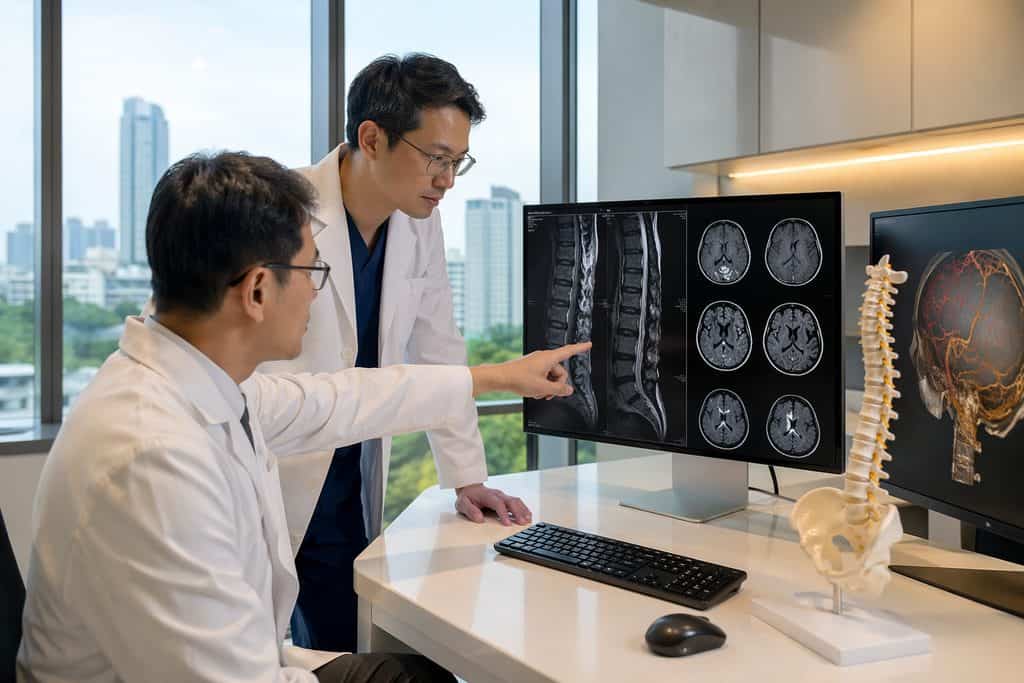
Nanjing Brain Hospital: International Guide for Foreign Patients
Roughly one in six people worldwide will develop a neurological condition at some point in their lives, according to World Health Organization estimates. For a subset of those patients — the ones facing a brain tumor, a complex epilepsy case, or a cerebrovascular problem — the search for the right surgeon becomes urgent. This guide explains how Nanjing Brain Hospital international patients navigate one of China’s most specialized neuroscience centers, what it costs, and how to decide whether it’s the right destination for you.
Nanjing Brain Hospital is a public tertiary hospital affiliated with Nanjing Medical University. It is one of the few hospitals in China dedicated almost entirely to neurology, neurosurgery, and psychiatric care. That narrow focus matters. Most large Chinese hospitals treat brain conditions alongside everything else; this one does almost nothing else.
Nanjing Brain Hospital international patients: The Short Answer
Yes, foreign patients can be treated here. But there is no online booking system that lets you reserve a surgeon’s slot from overseas. You arrive, you register in person, and surgery is scheduled only after a face-to-face consultation. That is the standard rule across Chinese public hospitals, and Nanjing Brain Hospital is no exception.
The workaround is the hospital’s international or VIP channel, which handles foreign patients with English-speaking coordinators and faster scheduling. Expect to pay roughly 1.5 to 2 times the standard fee for that convenience. For a brain tumor resection, total costs typically fall between $15,000 and $40,000 depending on complexity — a fraction of U.S. pricing, where the same procedure often exceeds $150,000.
The single most important fact: you cannot lock in a surgery date from abroad at a standard public channel. Planning must account for an in-person consultation first.
Who This Is Right For — and Who It Isn’t
Nanjing Brain Hospital suits a specific kind of patient. It is not the right answer for everyone, and pretending otherwise wastes your time and money.
Good candidates typically include:
- Patients with a confirmed or suspected brain tumor seeking a second surgical opinion
- People with drug-resistant epilepsy evaluating surgical options
- Those with cerebrovascular conditions such as aneurysms or arteriovenous malformations
- Patients facing a quoted price at home that exceeds their insurance coverage or savings
- Families willing to travel and stay in China for two to four weeks
Who should probably not pursue this:
- Anyone needing emergency neurosurgery right now — you need the nearest trauma center, not a flight
- Patients whose condition is well managed medically and does not require surgery
- Those who cannot tolerate a long-haul flight or a multi-week stay
- People expecting a Western-style concierge experience at a public hospital price
The last point deserves emphasis. Chinese public hospitals are enormous. Outpatient volumes at major centers can exceed 10,000 visits per day. Without Chinese language ability or a bilingual companion, the logistics alone can overwhelm a foreign patient.
The Options, Compared
Before committing to any destination, it helps to see the landscape side by side. The table below compares typical scenarios for a complex neurosurgical case.
| Option | Typical Cost (USD) | Wait Time | Language Support | Insurance Billing |
|---|---|---|---|---|
| U.S. academic hospital | $150,000–$300,000 | 2–8 weeks | Native English | Direct, in-network |
| Western Europe (private) | $60,000–$120,000 | 3–10 weeks | Varies by country | Often reimbursement-only |
| Nanjing Brain Hospital (standard) | $15,000–$40,000 | Days to 2 weeks after consult | Limited; interpreter needed | Pay upfront, claim later |
| Nanjing Brain Hospital (international channel) | $25,000–$60,000 | Faster, coordinated | English coordinator | Pay upfront, claim later |
| Private international hospital in China | $50,000–$100,000+ | 1–3 weeks | Full English service | Direct billing common |
Which column fits you? If cost is the deciding factor and you can handle some logistical friction, the Nanjing standard channel offers the strongest value. If you want English service without managing logistics yourself, the international channel or a private hospital makes more sense — at a higher price.
Is brain surgery in China safe for foreigners?
This is the question that keeps people up at night, and it deserves a straight answer rather than a sales pitch.
China’s top-tier hospitals perform high volumes of complex neurosurgery. Volume correlates with outcomes in surgery generally — surgeons who do a procedure frequently tend to be better at it. Nanjing Brain Hospital sits within China’s top tier for neurology and neurosurgery, and its specialists appear in the Fudan University specialty reputation rankings, which assess clinical reputation across 45 specialties.
What that means practically: the surgical expertise is real. The friction is in the system around it. Communication, consent forms, discharge instructions, and follow-up planning all assume Chinese fluency by default. A foreign patient without support is navigating a system not designed with them in mind.
Safety is not only about the operating room. It includes understanding your diagnosis, your consent, your medication schedule, and your follow-up plan. Language gaps in any of these areas create real risk.
Also worth stating plainly: no hospital anywhere guarantees outcomes. Anyone promising you a specific result is not being honest with you.
How to book neurosurgery at Nanjing Brain Hospital
Here is the sequence as it actually works, stripped of marketing language.
Step one — gather your records. You need imaging (MRI, CT), pathology reports if a biopsy exists, and a summary of your history. These must be translated into Chinese for the hospital to review properly. This is where a written second opinion becomes useful: you send records, the specialty team reviews them, and you get written analysis before you ever book a flight.
Step two — remote evaluation. A video consultation lets you speak with the specialty team, explain your goals, and hear their recommendations. Costs for this range from $100 to $300 for a standard international department, or $500 to $800 for a top specialist. Multidisciplinary team reviews, where several specialists confer, run $1,500 to $2,000.
Step three — arrival and in-person consultation. Once you’re in Nanjing, you register at the hospital and see the specialist face to face. Only now can surgery be scheduled. Coordination fees for securing a top-specialist appointment run $800 to $1,200.
Step four — pre-operative workup and surgery. Blood tests, cardiac clearance, anesthesia review. Then the procedure itself.
Step five — recovery and discharge. Hospital stays for craniotomy typically run one to two weeks, followed by a period of local recovery before you’re cleared to fly.
One useful detail: consultation fees paid to our service are credited in full toward on-the-ground coordination if you proceed within 90 days. That credit applies to the coordination fee only, never to hospital treatment charges.
What it costs, and what drives the variance
Brain tumor surgery cost in China varies widely, and anyone quoting you a single number before seeing your imaging is guessing.
For a craniotomy to resect a tumor, expect $15,000 to $40,000 at the standard channel. Add 50 to 100 percent for the international channel. Several factors move that figure:
- Tumor location and size — deep or eloquent-area tumors require more operating time and sometimes intraoperative monitoring
- Technology used — neuronavigation, intraoperative MRI, and awake craniotomy all add cost
- Length of ICU stay — a smooth recovery might mean two days; complications can mean two weeks
- Histology — a meningioma resection is simpler than a glioblastoma debulking
What’s typically included: surgeon fees, anesthesia, operating room time, standard implants, hospital bed, and basic medications. What’s often extra: advanced imaging beyond the initial set, ICU beyond a standard allotment, rehabilitation therapy, and take-home medications.
For comparison, the same procedure in the United States frequently exceeds $150,000 before insurance adjustments. That gap — often a factor of five to ten — is the main reason international patients consider China at all.
Practical considerations for international patients
Visa. Medical travel to China uses the S2 visa, which covers short-stay private affairs including medical treatment. Stays beyond 180 days require the S1. Accompanying family members apply for S2 as well. The M visa is a commercial and trade category and has nothing to do with medical treatment — if a service tells you otherwise, that’s a red flag. Requirements shift, so confirm current rules with the nearest Chinese embassy or consulate and bring supporting hospital documents.
Payment. Chinese public hospitals require upfront payment. International insurance is usually reimbursed after the fact, not billed directly. Private international hospitals in China often do offer direct billing, which is one reason they cost more.
Language. This is the biggest practical hurdle. Bilingual medical companion services run from $300 per day and cover registration, queuing, payment, wayfinding, and interpretation. They do not guarantee access to a specific named surgeon.
Follow-up. Plan your post-surgical imaging and oncology follow-up before you leave China. Coordinating scans from abroad is possible but slow.
If you want to compare other cities and hospital tiers before deciding, our directory of top-ranked Chinese hospitals by city is a reasonable starting point, and the specialty rankings for neurosurgery and oncology show how Nanjing’s programs compare nationally.
Frequently Asked Questions
No. Standard public channels require an in-person consultation before surgery is scheduled. The international or VIP channel can coordinate faster, but it still involves an in-person evaluation. Anyone claiming they can reserve a specific surgeon and date for you from overseas is overpromising.
The surgical expertise at top-tier Chinese hospitals is genuine, and high case volumes support good outcomes. The risk for foreign patients lies more in communication and system navigation than in the operating room. Bringing a bilingual companion or working with a coordination service materially reduces that risk. No one can guarantee a clinical result.
Expect $15,000 to $40,000 at Nanjing Brain Hospital’s standard channel, and $25,000 to $60,000 through the international channel. In the U.S., the same procedure often exceeds $150,000. Final pricing depends on tumor type, location, technology used, and length of stay.
You don’t need one, but a package can simplify logistics. A legitimate package covers hospital appointment coordination, interpretation, airport transfer, and accommodation guidance. It should not promise a guaranteed surgeon, a guaranteed date, or a clinical outcome. Be cautious with any offer that does.
The S2 visa covers short-stay medical treatment, and family members accompanying you apply under the same category. For stays beyond 180 days, the S1 applies. The M visa is for commercial and trade activities only and is not a medical visa. Always verify current requirements with the Chinese embassy or consulate in your country.
Your Next Step
Nanjing Brain Hospital offers genuine neurosurgical expertise at a fraction of Western costs, but the system around it was built for Chinese-speaking patients. That gap — not the surgery itself — is what most foreign patients underestimate. We are China Medical Services, a coordination service, not a hospital. We do not diagnose, and we do not promise outcomes. What we do is help you send records for a written second opinion, arrange a video consultation with the specialty team, and coordinate logistics if you decide to travel. If you’d like to understand your options before making any commitment, start with a free consultation.
This article is for general information only and does not constitute medical advice. Treatment decisions should always be made with a qualified physician who has reviewed your individual case.
For more medical information and treatment options in China, visit chinamedservices.com (China Medical Services).
