Moyamoya Specialists in Shanghai: How to Reach Them
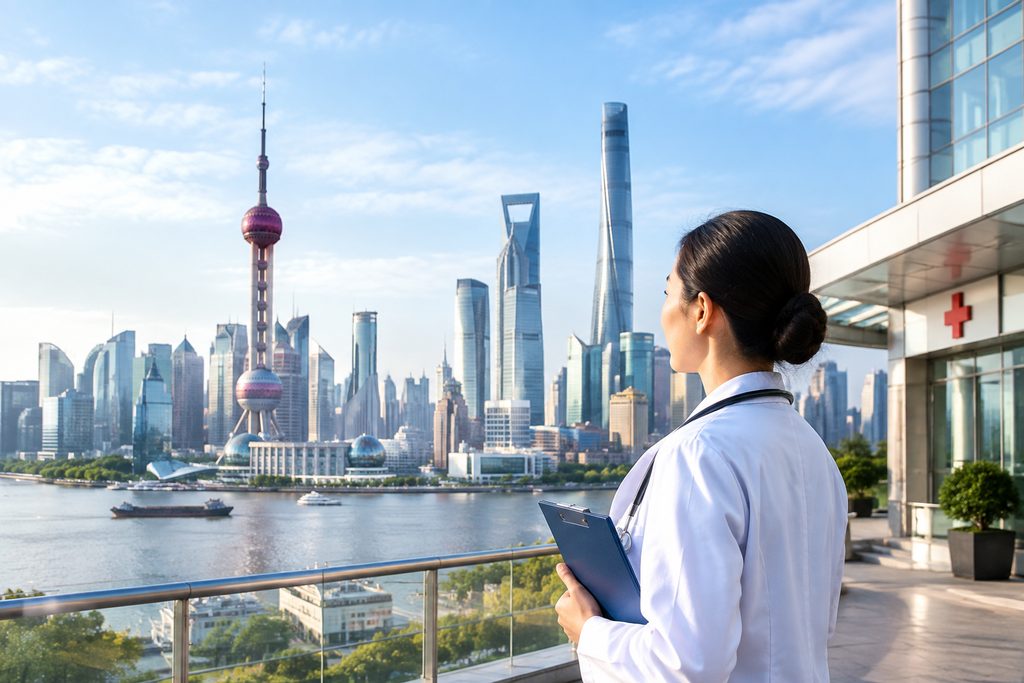
A child in Toronto waits months for a neurosurgery review. In Shanghai, a high-volume cerebrovascular center may evaluate the same imaging within days and schedule a revascularization procedure within weeks. That gap is not a marketing claim — it reflects how China’s largest hospitals concentrate specialized surgical volume. For families searching for moyamoya specialists in Shanghai, the real question is not whether expertise exists. It is how to reach it from abroad, and what the moyamoya disease treatment cost in Shanghai actually looks like.
This guide walks through the practical path: who the specialists are, how remote evaluation works, what surgery costs, and where the process can stall. Our team at China Medical Services coordinates this journey for international patients every month, and we have seen what works and what does not.
How This Actually Works, Step by Step
Reaching a Shanghai moyamoya team from another country follows a sequence. It is not one email and a surgery date.
Step one is gathering records. You need recent MRI and MRA or CTA imaging, a cerebral angiogram if one exists, prior surgical notes, current medications, and a clear history of symptoms — transient ischemic attacks, strokes, headaches, cognitive changes. Send these as DICOM files plus a radiology report in English.
Step two is a written second opinion. The relevant Chinese specialty reviews your imaging and history and returns a written analysis: whether the diagnosis fits, what stage the disease appears to be, and whether revascularization is indicated. This typically costs $300–500 and takes several business days.
Step three is a video consultation. You speak with the specialty team, ask questions, and hear their recommendations directly. Video consultation runs $100–300 with a standard international department, or $500–800 with a top specialist. A multidisciplinary team review, involving neurosurgery and neurology together, sits at $1,500–2,000.
Step four is coordination. If surgery is feasible and you agree, we help with hospital registration, medical card creation, and arrival logistics. Admission itself always remains subject to the hospital’s own rules.
Who Are the Best Moyamoya Specialists in Shanghai?
Revascularization surgery in Shanghai typically runs $15,000–30,000 for international patients, depending on hospital and complexity. Equivalent surgery in the US commonly exceeds $100,000. Prices vary by hospital and case, and final figures come from the treating hospital, not from us.
Not in the sense of picking a date online. Public hospitals require an in-person consultation before scheduling surgery. Coordination services can arrange the appointment and admission logistics through official channels, but admission and scheduling always remain subject to hospital rules.
High-volume Shanghai centers produce outcomes broadly comparable to major Western hospitals. The larger challenge for foreign patients is logistics — language, queues, paperwork — which is why bilingual accompaniment exists. Safety depends on the center and your case, not nationality.
The S2 visa, with a medical treatment notation, is the applicable short-stay category. Accompanying family members apply under S2 as well. Requirements are set by the relevant Chinese embassy or consulate and can change, so confirm current documentation before applying.
Your Next Step
Reaching a Shanghai moyamoya team is a process, not a phone call — records first, remote review second, travel last. Done in that order, it protects both your safety and your budget.
China Medical Services connects international patients with 340+ top-ranked hospitals across 37 cities. We are not doctors and we do not provide medical advice. We handle the coordination: record translation, appointment scheduling through official hospital channels, bilingual accompaniment, and visa guidance. If you would like to understand your options, you can request a free consultation and we will walk through your case with no obligation.
This article is for general information only and does not constitute medical advice. Treatment decisions should always be made with a qualified physician who has reviewed your individual case.
Frequently Asked Questions
Yes. The hospitals used for international patients are JCI-accredited and follow the same international safety standards as top hospitals in the US and Europe. Surgical teams perform high volumes of procedures — often more than their Western counterparts — which studies show leads to better outcomes.
Costs vary by procedure and hospital, but international patients typically save 40-80% compared to US prices — even when factoring in travel and accommodation. A consultation with our team will give you an exact, all-inclusive quote with no hidden fees.
Send us your existing medical reports to get started. We handle everything from hospital selection and appointment scheduling to visa assistance and post-operative recovery planning. Your medical records are reviewed by the specialist before you even book a flight.
For more medical information and treatment options in China, visit chinamedservices.com (China Medical Services).
