Shengjing Hospital Pediatrics for International Patients: What to Know Before You Go
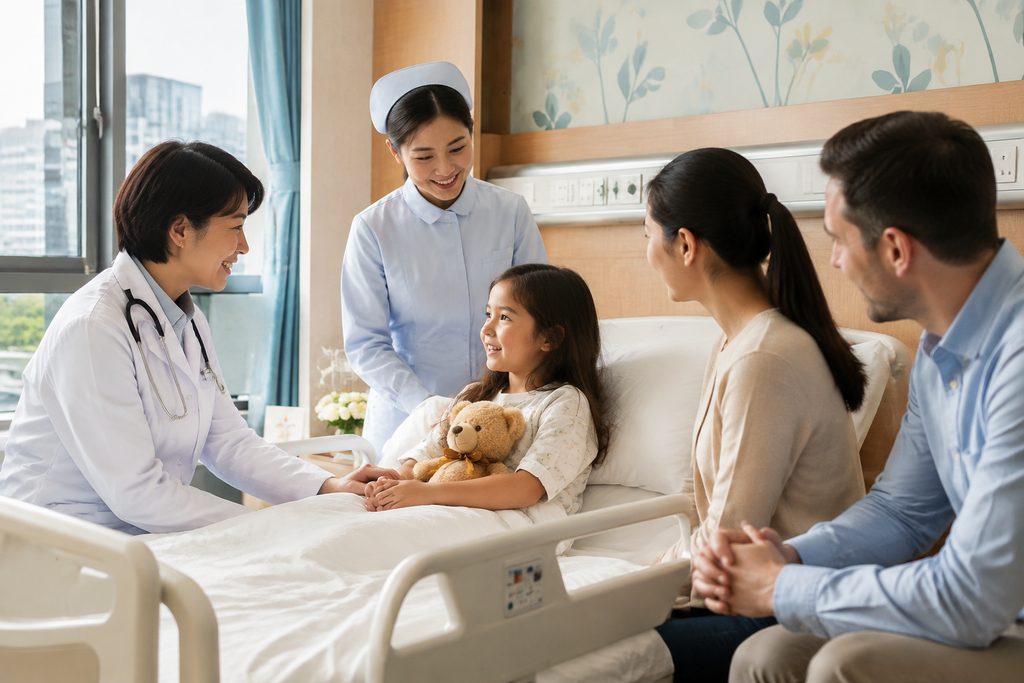
Shengjing Hospital Pediatrics for International Patients: A Practical Guide for Families
You’ve probably heard that taking a sick child abroad for medical care means accepting lower standards. The reality at Shengjing Hospital of China Medical University is more complicated than that—and often better than the rumors suggest. For families considering Shengjing Hospital pediatrics international patients services, the hospital represents one of China’s largest pediatric clinical centers, handling over 3 million outpatient visits annually across its Shenyang campuses. That scale creates a level of subspecialty exposure that most Western children’s hospitals simply cannot match.
But scale alone doesn’t answer the question parents actually ask: is this the right place for my child? The honest answer depends on what your child needs, how you navigate the system, and what you understand before you book a flight. This guide walks through the evidence, the costs, the logistics, and the real trade-offs—without the marketing gloss.
Key Takeaways
- Shengjing Hospital operates one of China’s largest pediatric departments, with subspecialty coverage across neonatal intensive care, pediatric surgery, hematology-oncology, and cardiology.
- Outpatient visits for international patients typically cost $30–$80, while complex pediatric surgeries range from $8,000–$25,000—roughly one-fifth to one-tenth of US prices.
- Public hospital scheduling rules apply: you cannot book a specific specialist from overseas without going through the hospital’s international department or a coordination service.
- Language support is limited on the general wards; families should plan for interpretation or bilingual companion services before arrival.
The Problem: When Your Child’s Diagnosis Outpaces Your Local Options
A rare congenital heart defect. A pediatric brain tumor. A complex orthopedic deformity that requires multiple staged surgeries. These are not hypothetical scenarios. Congenital anomalies affect approximately 1 in 33 infants globally, according to the World Health Organization. Pediatric cancer strikes roughly 400,000 children and adolescents each year worldwide. And for many families, the diagnosis arrives with a second blow: the local healthcare system cannot provide timely, affordable treatment.
In the United States, a complex pediatric cardiac procedure can cost $150,000 to $500,000. In the United Kingdom, NHS wait times for pediatric subspecialty consultations now routinely exceed 18 weeks for non-urgent cases, with surgical waits stretching past a year in some specialties. Families in Canada face similar bottlenecks: the Fraser Institute reported a median wait of 27.4 weeks between specialist referral and treatment in 2023. When your child is sick, 27 weeks feels like a lifetime.
That’s the calculation driving more families to look beyond their borders. And China—specifically, high-volume academic medical centers like Shengjing Hospital—has emerged as a serious option.
Why Shengjing Hospital Delivers Results for Pediatric Care
Shengjing Hospital of China Medical University is not a boutique international clinic. It’s a massive public academic medical center with three campuses in Shenyang, Liaoning Province: Nanhu, Huaxiang, and Shenbei. The hospital operates over 6,000 beds and employs more than 8,000 staff. Its pediatrics department is one of the largest in northern China, with dedicated wards for neonatal intensive care, pediatric surgery, pediatric hematology-oncology, pediatric cardiology, and pediatric neurology.
But what does that mean for a foreign family? Three things stand out.
Clinical Volume Creates Subspecialty Depth
Pediatric medicine rewards experience. A surgeon who performs 300 complex procedures a year sees complications, variations, and edge cases that a surgeon performing 30 a year will never encounter. Shengjing’s pediatric surgery team handles thousands of cases annually, from routine appendectomies to complex neonatal repairs for conditions like esophageal atresia and congenital diaphragmatic hernia. The hospital’s neonatal intensive care unit (NICU) is among the busiest in China, admitting over 5,000 premature and critically ill newborns each year.
That volume translates into subspecialty teams that exist as dedicated units—not part-time rotations. Parents evaluating whether Shengjing Hospital is good for pediatric care should look at this structural difference: at many Western community hospitals, a pediatric cardiologist might see patients two days a week. At Shengjing, the pediatric cardiology team is a full-time department with its own catheterization lab, echocardiography suite, and surgical program.
Academic Rigor and National Recognition
Shengjing Hospital is the primary teaching hospital for China Medical University, one of China’s oldest medical schools, founded in 1931. The hospital’s pediatrics program is consistently ranked among China’s top pediatric departments in the Fudan University hospital rankings—the country’s most authoritative hospital evaluation system. While the Fudan comprehensive rankings place hospitals in tiered categories rather than specific ordinal positions, Shengjing’s pediatrics department has appeared in the top-tier group for pediatric specialty reputation in recent years.
For international families, this matters in a practical way: the hospital participates in national clinical research networks, follows evidence-based treatment protocols, and maintains academic exchange programs with institutions in Japan, South Korea, and Europe. The standard of care is not a mystery—it is documented, peer-reviewed, and benchmarked against national guidelines.
Cost Structure That Changes the Equation
Here’s the number that gets parents’ attention. A complex pediatric surgery at Shengjing Hospital—say, a congenital heart defect repair or a scoliosis correction—typically costs $8,000 to $25,000, including hospital stay, surgeon fees, and standard post-operative care. The same procedure in the United States runs $80,000 to $250,000. Even after adding flights, accommodation, and coordination services, the total cost is often 70–85% lower.
Why the gap? Chinese public hospitals operate with lower labor costs, higher patient throughput, and government-subsidized infrastructure. The surgical team’s skill is not discounted—the overhead is. Shengjing’s pediatric specialists train for 10–15 years before independent practice, following a pathway similar in length to Western medical education. The hospital maintains ISO 15189 accreditation for its clinical laboratories and follows Joint Commission International (JCI)-aligned safety protocols in its international patient wards.
How to Book an Appointment at Shengjing Hospital Pediatrics: The Real Process
Let’s be direct: how to book an appointment at Shengjing Hospital pediatrics is not as simple as calling a number and picking a time slot. Chinese public hospitals operate on a same-day registration system for general outpatient clinics. You cannot reserve a specific specialist’s clinic slot from overseas through the hospital’s general registration desk. The system is designed for local patients who show up, queue, and see whoever is on duty that day.
For international patients, there are three realistic pathways:
Pathway 1: The hospital’s international department. Shengjing Hospital maintains an international medical services office that can coordinate appointments for foreign patients. You (or a representative) contact the office, provide medical records, and request a consultation with a specific department. The office schedules the appointment and assigns an English-speaking coordinator for the visit. Expect to pay international department rates, which are typically 1.5–2 times standard outpatient fees—so a specialist consultation that costs a local patient $15 might cost an international patient $30–$50.
Pathway 2: A coordination service. Organizations like China Medical Services handle the logistics: translating medical records into Chinese, contacting the hospital’s international office on your behalf, arranging the appointment, and providing a bilingual companion for the actual visit. This costs from $300 for appointment coordination, with bilingual companion services from $300 per day.
Pathway 3: Walk-in registration. Technically possible, but not recommended for international families. You would need to navigate a Chinese-language registration system, arrive early to queue, and hope the specialist you need is on duty that day. Without Chinese language ability, this path is impractical for most foreign patients.
What about surgery? Here’s the critical rule: Chinese public hospitals require an in-person outpatient consultation before scheduling any surgical procedure. No hospital—including Shengjing—will book a pediatric surgery based on emailed records alone. The process is: remote review of records (optional) → in-person consultation → surgical scheduling → admission. For families planning surgery, expect to spend 3–7 days in Shenyang for the consultation phase, then return (or stay) for the surgery itself.
Shengjing Hospital Pediatric Specialist Cost: What You’ll Actually Pay
Let’s put numbers on the table. These figures reflect typical international patient rates at Shengjing Hospital as of 2025, and they vary by department, case complexity, and whether you access care through the standard international department or a VIP/executive health channel.
| Service | Estimated Cost (USD) | Notes |
|---|---|---|
| Outpatient specialist consultation | $30–$80 | International department rate; standard rate is lower |
| Comprehensive pediatric checkup | $150–$400 | Includes labs, imaging, and specialist review |
| Pediatric MRI or CT scan | $100–$300 | Per region; contrast additional |
| Minor pediatric surgery (e.g., hernia repair) | $2,000–$5,000 | Includes 1–3 day hospital stay |
| Complex pediatric surgery (e.g., cardiac, neurosurgery) | $8,000–$25,000 | Includes ICU stay, surgeon and anesthesia fees |
| NICU admission (per day) | $300–$800 | Level III NICU with subspecialty coverage |
Compare these figures to US benchmarks. A pediatric inguinal hernia repair in the US costs $8,000–$15,000. The same procedure at Shengjing runs $2,000–$5,000. A pediatric brain tumor resection in the US: $100,000–$250,000. At Shengjing: $12,000–$25,000. The gap is not marginal—it’s transformative for families facing medical bankruptcy at home.
But here’s the caveat that honest advisors always include: pediatric surgery abroad China price figures do not include travel, accommodation, interpretation, or post-operative rehabilitation. A two-week stay in Shenyang for a family of three—flights, hotel, meals, local transport—adds $3,000–$6,000. Coordination services add another $1,000–$5,000 depending on complexity. The total is still dramatically lower than US care, but it’s not free.
Is Shengjing Hospital Good for Pediatric Care? An Honest Assessment
Families searching for the best children’s hospital in China for foreigners often frame the question as a simple ranking. It’s not. The answer depends on what your child needs.
Shengjing Hospital excels in several areas. Its neonatal intensive care program is among the strongest in northern China, with survival rates for extremely premature infants (born before 28 weeks) that approach international benchmarks. Its pediatric hematology-oncology department treats hundreds of new leukemia and solid tumor cases annually, with access to chemotherapy protocols aligned with international cooperative group standards. Its pediatric surgical teams—particularly in neonatal surgery, pediatric urology, and pediatric orthopedics—perform procedures at volumes that few Western centers match.
But there are trade-offs. The hospital is not JCI-accredited, which matters for some insurance companies and for families accustomed to Western-style hospital environments. Ward conditions in the general pediatric units are functional, not luxurious—shared rooms are common, and private rooms are limited. English proficiency among nursing staff is uneven; the international department provides interpreters, but the general wards do not guarantee English-speaking nurses on every shift.
And Shenyang itself is not Beijing or Shanghai. It’s a major industrial city of 8 million people with a continental climate—cold winters, warm summers. International flights connect through Beijing, Seoul, or Tokyo, adding a transfer leg to the journey. For families seeking a more cosmopolitan experience, hospitals in Beijing or Shanghai might be more comfortable. But for families prioritizing clinical volume, subspecialty depth, and cost—Shengjing delivers.
Practical Considerations: Documentation, Visas, and Payment for Pediatric Care in Shenyang
Bringing a child to China for medical treatment requires paperwork. Here’s what you need to handle before you travel.
Medical records. Chinese hospitals require translated copies of all relevant medical documentation: diagnostic reports, imaging studies (bring the actual DICOM files on CD or USB), pathology slides if applicable, and a treating physician’s summary. Translation into Chinese is mandatory for the hospital’s medical record. Plan for 3–5 business days for professional medical translation.
Visa. Foreign nationals traveling to China for medical treatment apply for an S2 visa, which covers short-term private affairs including medical care. The application requires an invitation letter or medical treatment confirmation from the receiving hospital. Shengjing’s international department can issue this document once you’ve confirmed your appointment. Accompanying family members apply for S2 visas as well. For treatment exceeding 180 days, an S1 visa applies. Processing time varies by embassy, but plan for 2–4 weeks. China Medical Services provides visa guidance as part of its patient coordination service, but the visa decision rests solely with the Chinese embassy or consulate.
Payment. Chinese public hospitals operate on a prepayment model. You deposit funds at admission, the hospital deducts charges as they accrue, and you settle the balance (or receive a refund) at discharge. International patients can pay by credit card at the international department, but wire transfer or cash is sometimes required for large deposits. Most international insurance plans that cover treatment in China operate on a reimbursement basis—you pay the hospital, then file a claim. A few insurers have direct billing arrangements with Chinese international departments, but this is the exception, not the rule.
Language. This is the single biggest practical barrier. The hospital’s international department provides English-speaking coordinators for scheduled appointments. But on the wards, during rounds, and in the ICU waiting room, Chinese is the default language. Families who arrive without any Chinese language support often describe the experience as disorienting—not because the care is poor, but because they cannot understand what is happening. A bilingual medical companion who can translate during rounds, explain medication instructions, and advocate with nursing staff changes the entire experience. This is a service families should budget for, not an optional extra.
Follow-up after returning home. Chinese hospitals provide discharge summaries and treatment records in Chinese; English translations are available through the international department for an additional fee. Your home physician will need these records—and possibly a translated summary—to manage ongoing care. For complex cases, a written second opinion from the treating specialist (documented in English) can bridge the gap between the Chinese treatment team and your local pediatrician.
Frequently Asked Questions
Not through the general outpatient system. Chinese public hospitals assign specialists based on the day’s clinic schedule, not patient preference. However, the international department can request a consultation with a specific specialist or subspecialty team for international patients, subject to the specialist’s availability. Coordination services can facilitate this request, but no one can guarantee a specific doctor on a specific date—any service claiming otherwise is not being honest about how Chinese public hospitals work.
Shengjing Hospital operates 24-hour pediatric emergency departments at its Nanhu and Huaxiang campuses. Emergency registration is available to international patients without prior appointment. Bring your passport, your child’s medical records, and payment for the initial deposit. Emergency care quality is generally good, but language support in the emergency department is limited—if you have a bilingual companion service, call them immediately.
It depends entirely on your policy. Some international health insurance plans (such as those from Cigna Global, Allianz, or Bupa) provide coverage for treatment in China, but most operate on a reimbursement basis rather than direct billing. You pay the hospital upfront, then submit claims. Check your policy’s geographic coverage and pre-authorization requirements before booking travel. The hospital’s international department can provide itemized invoices for insurance claims.
Shengjing is among the top pediatric centers in northern China by clinical volume and subspecialty coverage. But families seeking the best children’s hospital in China for foreigners should also consider Beijing Children’s Hospital, Shanghai Children’s Medical Center, and the pediatric departments at Peking Union Medical College Hospital. Each has strengths: Beijing Children’s Hospital for rare and complex cases, Shanghai Children’s Medical Center for international patient infrastructure, and Shengjing for high-volume surgical programs and neonatal care. The right choice depends on the specific diagnosis, not a generic ranking.
What happens if we arrive and the specialist recommends against surgery?
For more medical information and treatment options in China, visit chinamedservices.com (China Medical Services).
