Recovery in China After Surgery: How Long to Stay Before Flying Home
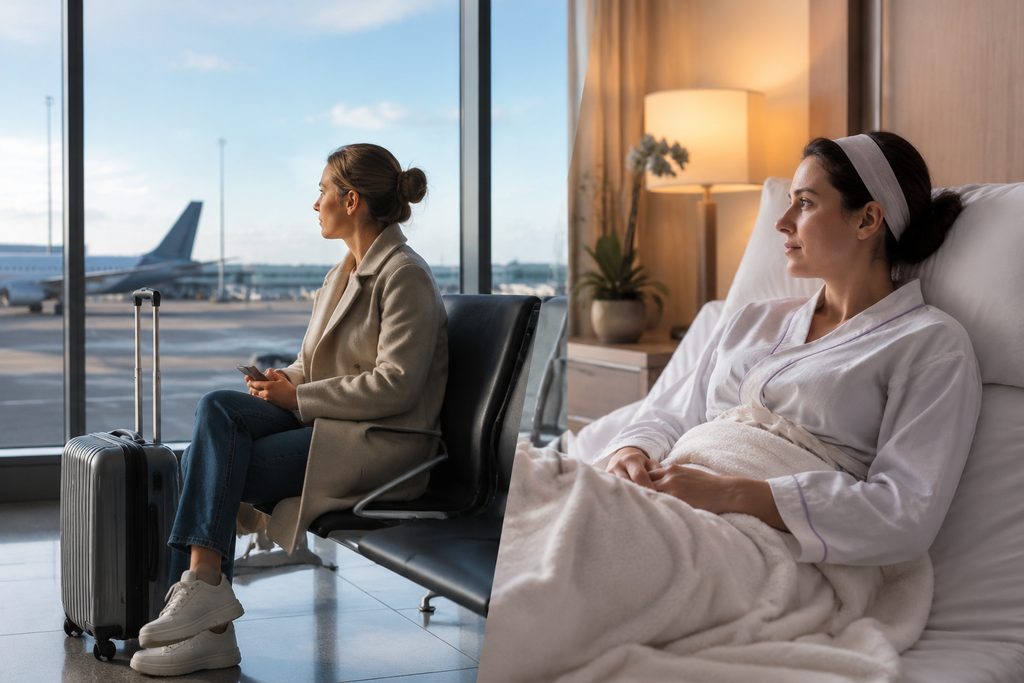
You have probably seen the number tossed around on forums: two weeks. Fly in, have the procedure, rest at a hotel, and board a plane home fourteen days later. The surgeon checks the wound, nods, and you are cleared.
That timeline works for a dental implant. It is dangerously optimistic for a hip replacement, a spinal fusion, or a cardiac ablation. The real answer to how long to stay in China after surgery before flying is not a single number. It is a decision that sits at the intersection of your specific procedure, your body’s response to it, and the cold, hard rules airlines enforce at the gate. Get it wrong and you risk a deep vein thrombosis at cruising altitude, a wound dehiscence nobody can manage mid-flight, or being denied boarding entirely by a gate agent who spots fresh surgical dressings.
Our team has coordinated post-operative stays for patients from dozens of countries. We have seen the quiet anxiety of someone counting down days in a serviced apartment near the hospital, eager to get home but unsure if they are pushing too fast. This article lays out the framework surgeons actually use, the airline rules that override even a doctor’s note, and the practical logistics of recovering in a Chinese city you do not call home.
How This Actually Works, Step by Step
The decision starts not with a calendar but with a risk assessment. Your surgical team evaluates three things before they will sign off on a long-haul flight.
First, they look at the physiological stress of the cabin environment. At cruising altitude, cabin pressure sits around 1,800 to 2,400 meters above sea level. Your blood oxygen saturation drops. Gas in body cavities expands by up to 30%. If you have had abdominal surgery, that expanding gas presses against fresh internal sutures. If you have had eye surgery with a gas bubble injection, the expansion can spike intraocular pressure dangerously.
Second, they calculate your thrombotic risk. Surgery triggers a hypercoagulable state. Your body ramps up clotting factors to heal the wound. Sitting immobile in a narrow seat for ten to fourteen hours while that process is still active is a recipe for deep vein thrombosis. The risk does not drop to baseline for weeks after major orthopedic or cancer surgery.
Third, they assess whether you can physically manage the journey. Can you walk the length of a departure terminal? Can you lift your carry-on? Can you sit upright without severe pain for the duration of the flight? These are not trivial questions when you are ten days out from a spinal fusion.
The clearance process usually goes like this. You attend a follow-up appointment at the hospital. The surgeon examines the wound, checks for signs of infection, and reviews any recent imaging. If everything looks right, they provide a fit-to-fly letter. That letter states the procedure date, confirms you are stable, and specifies any in-flight precautions—compression stockings, anticoagulant injections, supplemental oxygen. Airlines may require this letter if you are flying within a certain window after surgery. Without it, the gate agent can refuse boarding.
What Determines How Long to Stay in China After Surgery Before Flying
Procedure type is the dominant variable. A laparoscopic cholecystectomy is not a total knee arthroplasty. The table below reflects the minimum safe windows that major international airlines and surgical societies generally accept for uncomplicated cases. These are not our recommendations. They are the consensus ranges published by the Aerospace Medical Association and reinforced by airline medical clearance policies.
| Surgery Type | Minimum Safe Window (Uncomplicated) | Typical In-Country Stay Range |
|---|---|---|
| Minor laparoscopic (gallbladder, appendix) | 4–7 days | 7–10 days |
| Open abdominal surgery (hysterectomy, colectomy) | 10–14 days | 14–21 days |
| Total hip or knee replacement | 10–14 days (short-haul); 4–6 weeks (long-haul) | 14–42 days |
| Spinal fusion or discectomy | 7–14 days | 14–21 days |
| Cardiac surgery (CABG, valve repair) | 10–21 days | 14–28 days |
| Neurosurgery (craniotomy) | 7–21 days, depending on air in skull | 14–28 days |
| Retinal surgery with gas bubble | 2–8 weeks (absolute contraindication while bubble present) | 14–56 days |
| Cosmetic surgery (abdominoplasty, facelift) | 7–14 days | 10–21 days |
These windows assume no complications. A wound infection, a seroma, a delayed union on imaging—any of these resets the clock. You do not board a plane with an open wound or an unresolved infection. The surgeon will want to see the issue trending in the right direction before they sign off.
Age and comorbidities stretch the timeline. A 68-year-old with controlled hypertension and type 2 diabetes will heal slower than a 35-year-old with no underlying conditions. The surgeon factors that in. So does the airline medical department if they review your case.
The flight duration matters. A two-hour hop from Shanghai to Seoul is not the same as a fourteen-hour marathon from Beijing to New York. The longer the flight, the more conservative the clearance window. Some airlines apply different rules for flights over eight hours.
A Realistic Timeline
Here is what the full arc actually looks like for a patient traveling to China for surgery. This is not the optimistic version. It includes the waiting steps people forget.
| Stage | Duration | What Happens |
|---|---|---|
| Pre-arrival preparation | 2–4 weeks before travel | Medical records translated, remote consultation completed, surgical plan confirmed, S2 visa application submitted with hospital invitation letter |
| Arrival and pre-op evaluation | Days 1–3 in China | In-person consultation, pre-operative testing (blood work, ECG, imaging), surgical consent signed |
| Surgery and acute hospital stay | Days 3–10 (varies widely) | Procedure performed, inpatient recovery, wound care, initial mobilization with physical therapy |
| Early post-discharge recovery | Days 7–21 | Discharged to serviced apartment or hotel, daily wound checks, follow-up appointments, medication management, continued physiotherapy if applicable |
| Fit-to-fly assessment | Typically day 10–28 | Surgeon examines wound, reviews labs or imaging, issues fit-to-fly letter specifying any in-flight precautions |
| Departure window | Day 10–42, depending on procedure | Patient flies home with documentation, compression garments, and a follow-up plan for their home physician |
The gap between hospital discharge and fit-to-fly clearance is where most questions arise. You are medically stable enough to leave the hospital. You are not yet stable enough to sit in a pressurized cabin for half a day. That gap might be three days. It might be three weeks. A responsible surgical team will not rush it.
What Can Go Wrong — and What Happens Then
A wound infection is the most common derailment. You notice increased redness, warmth, or discharge from the incision site four or five days after discharge. You call the surgical team. They bring you back in for an examination. If it is superficial, they may prescribe oral antibiotics and ask you to return daily for dressing changes. That adds a week. If it is deep and requires drainage or intravenous antibiotics, you are looking at a re-admission and potentially two to three additional weeks in the country.
A seroma—a pocket of clear fluid under the wound—is less alarming but still delays clearance. The surgeon may aspirate it in the clinic, apply a pressure dressing, and ask you to wait a few more days to ensure it does not reaccumulate.
Deep vein thrombosis can develop silently in the calf during the early post-op period. You might feel nothing until you stand up and notice swelling. If a DVT is confirmed on ultrasound, you are not flying. Full stop. The treatment is immediate anticoagulation, and you will need to be stabilized on medication and cleared by a vascular specialist before any airline will let you board. That can add two to four weeks.
The worst-case scenario is a pulmonary embolism. A clot breaks free from the leg and lodges in the lung. This is a medical emergency that requires immediate hospitalization. It is rare, but it is the reason the medical tourism China post surgery recovery time guidelines are conservative for major joint replacements and cancer surgeries. Nobody wants to manage a PE at 35,000 feet.
For each of these complications, the recourse is the same. You stay. You receive treatment at the same hospital that performed your surgery. The surgical team knows your case. They have your full records. You are not starting from scratch in an unfamiliar system. That continuity is one reason patients choose to recover near the hospital rather than rushing home.
Is It Safe to Fly After Surgery in China? Evaluating the Real Risks
The question is not whether flying after surgery carries risk. It does. The question is whether that risk has dropped to an acceptable level by the time you want to board.
The Aerospace Medical Association guidelines, which most major airlines reference, stratify risk by procedure and time elapsed. For uncomplicated laparoscopic surgery, the risk of a serious in-flight event after day five is low enough that most airlines will accept the passenger without medical clearance. For total hip replacement, the risk of DVT remains elevated for up to three months, though the steepest part of the curve is in the first two to four weeks.
A 2019 study in the *Journal of Travel Medicine* reviewed in-flight medical emergencies and found that post-operative complications accounted for a small but non-trivial percentage of diversions. The common thread in the serious cases was premature travel. The patient felt fine, the wound looked okay, but the cabin environment triggered a cascade nobody anticipated.
So yes, it is safe to fly after surgery in China—if you wait long enough. The safety comes from the waiting, not from any special precaution you take on the plane. Compression stockings help. Low-molecular-weight heparin injections help. But the single most protective factor is time. Give your body enough of it.
One factor that makes recovery in China logistically smoother than many patients expect is the availability of extended-stay accommodations near major hospitals. In cities like Shanghai, Beijing, and Guangzhou, serviced apartments with kitchen facilities, wheelchair accessibility, and proximity to the hospital are common. Some of the best hospitals China for surgery with recovery stay packages work with affiliated rehabilitation centers or partner hotels that offer discounted rates for post-operative patients. These are not luxury retreats. They are practical, clean, and located within a short taxi ride of the hospital for follow-up visits.
The cost of extending your stay is often lower than patients anticipate. A comfortable serviced apartment near a top-tier hospital in Shanghai might run $80 to $150 per night. Compare that to the cost of managing a wound dehiscence in an emergency room back home because you flew too early, and the math becomes clear.
Practical Considerations: Documentation, Visas, and Follow-Up Care
Your S2 visa must cover the full duration of your intended stay, including the recovery buffer. If your surgical team estimates a two-week recovery but you want the safety margin of a third week, apply for a visa that covers all three. Extending a visa from inside China is possible in some cases but adds administrative friction you do not need while recovering.
The fit-to-fly letter is non-negotiable for travel within four weeks of major surgery. It should be in English, on hospital letterhead, and dated within 24 to 48 hours of your departure. Some airlines also require a MEDIF form completed by the treating physician. Check your airline’s medical clearance policy before booking your return flight. Do not assume a doctor’s note will suffice.
Your medical records should travel with you. Request a discharge summary in English, operative notes, pathology reports if applicable, and a CD or USB with your imaging. Your home physician will need all of this to continue your care. Make sure you have a direct contact at the hospital—an international patient coordinator or the surgeon’s assistant—whom you can email if questions arise after you return home.
Medication is another factor. If you are discharged on anticoagulants, pain medication, or antibiotics, you need enough supply to cover the flight and the first few weeks at home. Chinese hospitals can dispense discharge medications, but confirm the quantity before you leave. Carry all medications in their original packaging with a copy of the prescription. A bag full of unlabeled pills at customs is a problem you do not want.
Insurance and payment. Most international patients pay for surgery and the hospital stay upfront and seek reimbursement from their insurer later. The hospital will provide detailed invoices and receipts. Keep every piece of paper. If your recovery extends beyond the planned duration, you will need to pay for the additional accommodation, follow-up visits, and any complication-related treatment out of pocket. Budget for that contingency. A 20% buffer on your estimated total cost is a reasonable rule of thumb.
Frequently Asked Questions
Can I fly home 5 days after laparoscopic surgery in China?
For an uncomplicated laparoscopic procedure like a cholecystectomy, most airlines and surgical guidelines accept a 4- to 7-day minimum window. Five days is on the early side but generally acceptable if your surgeon confirms no complications, your pain is well-controlled without narcotics, and you can walk unaided. The longer flight to Europe or North America adds risk compared to a short regional hop, so discuss the flight duration specifically with your surgeon.
What happens if I develop a complication and cannot fly on my planned date?
You stay. Your surgical team manages the complication at the same hospital. You will need to extend your accommodation and potentially your visa. If you used a coordination service, they can assist with the logistics. The additional medical costs for managing a wound infection or seroma in China are typically a fraction of what they would be in the US or Europe, which provides some financial buffer.
Do Chinese hospitals offer dedicated recovery facilities for international patients?
Some do, but it is not universal. The best hospitals China for surgery with recovery stay packages often have relationships with nearby rehabilitation centers or serviced apartment buildings that cater to medical travelers. These are not hospital-run facilities in most cases. They are independent accommodations that understand the needs of post-operative guests—wheelchair access, proximity to the hospital, and flexibility on checkout dates. Private international hospitals like United Family and Jiahui are more likely to have integrated recovery coordination than large public hospitals.
What about surgery recovery retreats in China? Are those a real option?
There are a small number of surgery recovery retreats China cost-conscious patients sometimes inquire about. These are typically located in scenic areas like Hangzhou or on the outskirts of major cities, offering a quieter environment for convalescence. The reality is that most international patients recovering from significant surgery prefer to stay within 30 minutes of their hospital. A retreat two hours away in the mountains sounds restorative, but if your wound starts draining on a Saturday night, you want to be close to your surgeon. For minor procedures or the final week of a longer recovery, a retreat can make sense. For the early post-discharge period, proximity to the hospital is the priority.
Does the airline actually check if I had recent surgery?
Yes. Gate agents are trained to look for visible signs—dressings, slings, crutches, difficulty walking. If you board a long-haul flight with a fresh surgical wound and no fit-to-fly letter, the agent can and will deny boarding. The airline’s concern is not your comfort. It is the liability of a medical emergency requiring diversion. Do not try to hide recent surgery. Get the letter.
Your Next Step
The window between hospital discharge and a safe flight home is not dead time. It is the period when your surgical investment either consolidates or unravels. Rushing it to save a few hundred dollars on accommodation is a false economy.
Our team at China Medical Services helps international patients plan realistic recovery timelines based on their specific procedure, surgeon’s protocols, and airline requirements. We do not provide medical advice or make clinical decisions. We handle the logistics—accommodation near your hospital, follow-up appointment scheduling, documentation for your fit-to-fly clearance, and coordination with your surgical team—so you can focus on healing. If you are considering surgery in China and want to understand what a safe recovery timeline looks like for your case, reach out for a consultation. No pressure, no hard sell. Just a practical conversation about what to expect.
For more medical information and treatment options in China, visit chinamedservices.com (China Medical Services).
