Bariatric Surgery China Emirati: Female Arabic Companion & Safe Recovery
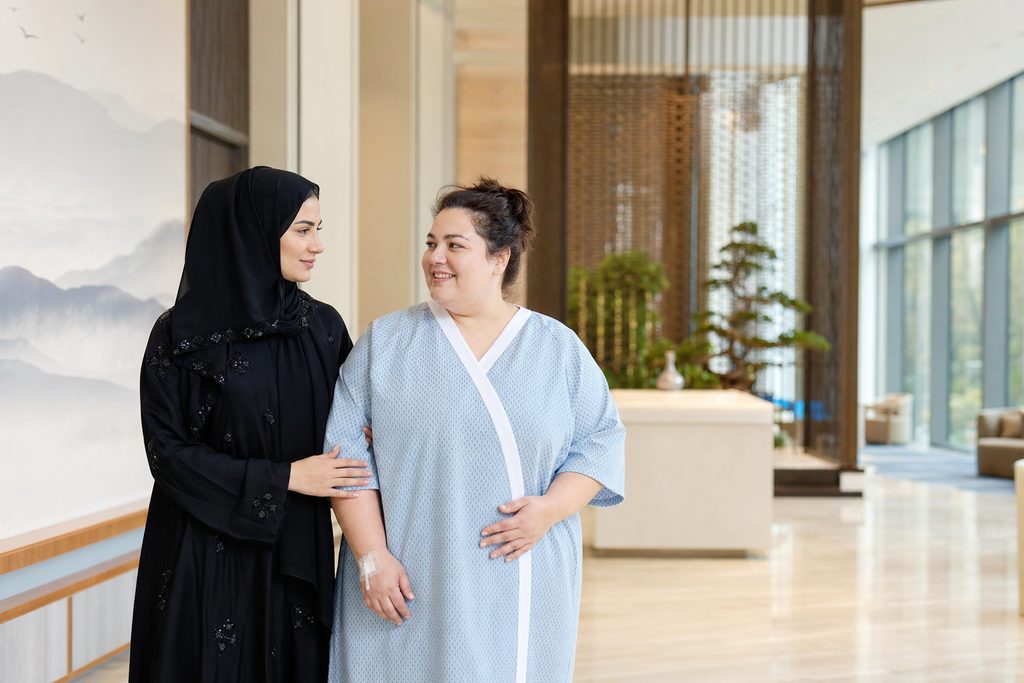
According to the World Obesity Federation’s 2023 Atlas, over half the global population will be overweight or obese by 2035. The Gulf region carries a disproportionate share of that burden. In the UAE, the prevalence of obesity among women stands at approximately 38%, according to a 2022 study published in the *International Journal of Environmental Research and Public Health*. We see it in the inquiries that reach our team. Women from Abu Dhabi, Dubai, and Sharjah are searching for solutions that feel safe, private, and culturally aligned. Not just a surgery. An entire journey where they are understood.
The core question they bring us is direct: what is the real weight loss surgery China cost for Emirati patients, and can the experience be shaped around their needs as Arab women? The answer is yes. The price is a fraction of what you would pay in a GCC private hospital or in London. But the cost is only the starting point. The deeper value lies in finding a clinical team with massive surgical volume and a recovery environment where a female Arabic companion is not a luxury—it is a standard part of the plan.
Key Takeaways
- A gastric sleeve in a top Chinese center costs $8,000–15,000, roughly 70% less than the $25,000–40,000 typical in UAE private hospitals.
- Dedicated female Arabic-speaking companions can be arranged for the entire in-hospital stay, handling translation, cultural advocacy, and personal support.
- China’s top-tier bariatric programs perform over 500 procedures annually, a volume linked to lower complication rates.
- You will need an S2 visa for private medical treatment; our team guides you through the hospital invitation letter and documentation.
The Problem: High Costs and Limited Privacy at Home
For an Emirati woman considering bariatric surgery, the local options present a real dilemma. The procedure is available. The quality is often excellent. But the financial outlay is substantial. A laparoscopic sleeve gastrectomy at a private hospital in Dubai or Abu Dhabi routinely runs between $25,000 and $40,000. Even where insurance covers a portion, the out-of-pocket expense can be prohibitive.
There is another layer. Privacy. In a close-knit society, walking into a local hospital for weight loss surgery means a high chance of encountering someone you know in the waiting room, the corridor, or the recovery wing. For many women, that lack of anonymity is a genuine barrier to seeking care. They delay. The health consequences compound.
Flying to a Western capital solves the privacy issue but multiplies the cost. A private gastric bypass in London can exceed £15,000, or nearly $19,000, before you account for flights, a long hotel stay, and the absence of any Arabic-speaking support staff on the ward. You pay a premium for solitude and receive no cultural bridge.
Why China Delivers a Different Value Equation
The structural economics of Chinese healthcare are fundamentally different. Labor costs for highly skilled nursing and surgical teams are lower. Hospital systems operate at immense scale. That efficiency translates into procedure prices that are 50–70% below what a UAE private hospital charges, without cutting corners on technology or surgical expertise.
Surgical Volume and Specialist Focus
In metabolic and bariatric surgery, repetition matters. A 2021 meta-analysis in *The Lancet Diabetes & Endocrinology* confirmed that hospitals performing more than 100 bariatric procedures annually had significantly lower rates of serious complications and mortality compared to low-volume centers. The top-tier bariatric departments in Shanghai and Beijing operate well above that threshold. Some centers complete over 500 sleeve gastrectomies and gastric bypasses each year. The surgeon assigned to you is not someone who does this occasionally. This is their entire practice.
They are using the same laparoscopic platforms you would find in a Cleveland Clinic or a Guy’s Hospital operating theatre. 4K visualization. Advanced stapling devices. Standardized enhanced recovery protocols that get patients mobile within hours, not days. The difference is not the equipment. It is the frequency with which the hands guiding it perform the same precise movements.
Cost Breakdown: Shanghai vs. Dubai vs. London
Let us put the numbers side by side. These figures are all-inclusive of the hospital stay, surgeon and anesthesia fees, and standard pre-operative testing. They vary by case complexity and hospital tier, but the pattern is consistent.
| Procedure | Shanghai (Top Public Hospital) | Dubai (Private Hospital) | London (Private Hospital) |
|---|---|---|---|
| Gastric Sleeve | $8,000 – $15,000 | $25,000 – $35,000 | $16,000 – $20,000 |
| Gastric Bypass | $12,000 – $18,000 | $30,000 – $40,000 | $18,000 – $24,000 |
| Mini-Gastric Bypass | $10,000 – $16,000 | $28,000 – $38,000 | $17,000 – $22,000 |
These Shanghai prices reflect treatment through a hospital’s international VIP department, not a standard public ward. That distinction matters. It means a private room, English-speaking nursing staff, and a liaison who coordinates your care. The base weight loss surgery China cost for Emirati patients already includes a level of privacy and service that would be an add-on elsewhere.
How Much Is Gastric Sleeve in Shanghai for UAE Citizens: The Real Numbers
When a patient from Al Ain or Ras Al Khaimah asks us directly, “how much is gastric sleeve in Shanghai for UAE citizens,” we walk her through the layers. The surgical package itself sits in that $8,000–$15,000 band. But a complete budget includes the non-medical costs too.
Flights from Dubai to Shanghai Pudong International Airport, round-trip in economy, range from $800 to $1,200. A comfortable serviced apartment near the hospital for a two-week recovery period runs $1,500–$2,500. Daily meals, local transport, and incidentals add another $500–$800. The total financial picture for a gastric sleeve, door-to-door, lands between $11,000 and $19,000.
That is still roughly half the surgical fee alone in a GCC private facility. And the figure includes something the local price cannot offer: complete separation from your daily social and professional circle.
Bariatric Surgery Packages China with Female Arabic Companion: What This Actually Means
This is the detail that shifts the conversation. Bariatric surgery packages China with female Arabic companion are not a single, off-the-shelf product. They are a coordination of three distinct elements that our team weaves together for each patient.
First, the hospital admission and surgical fee. Second, the accommodation and logistics. Third, the companion. The companion is a trained bilingual woman—usually a nurse or a medical interpreter with specific experience in bariatric recovery. She is not a translator who pops in for an hour. She is present on the ward throughout your stay.
Her role is layered. She interprets between you and the surgical team during morning rounds, ensuring you understand every instruction. She communicates your needs to the nursing staff—pain levels, dietary tolerance, mobility concerns. She helps you navigate the cultural specifics of a Chinese hospital, from meal options to prayer times to modesty during examinations. And she sits with you. That simple presence, a woman who speaks your language and understands your context, is often what makes the entire experience feel manageable rather than overwhelming.
Is Bariatric Surgery Safe in China for Arab Women: Evidence, Not Reassurance
The question is fair. “Is bariatric surgery safe in China for Arab women?” We answer it with data, not platitudes.
China’s hospital accreditation system for international care rests on two pillars. The Fudan University hospital rankings, which grade the top 100 comprehensive hospitals into tiers from A++++ to A, based on clinical reputation and research output. And Joint Commission International (JCI) accreditation, the same global standard used by private hospitals in Dubai Healthcare City. Over 100 Chinese hospitals hold active JCI accreditation. The bariatric programs we connect patients with operate in institutions that meet at least one of these benchmarks—often both.
Safety in bariatric surgery is measured by the 30-day serious complication rate. In high-volume accredited centers globally, this sits between 1% and 3%. The Chinese centers in our network report outcomes within that same range. A 2020 study in *Obesity Surgery* examining bariatric outcomes across East Asian high-volume centers found no statistically significant difference in leak rates or mortality when compared to Western benchmarks.
The risk profile for an Arab woman is not fundamentally different from any other patient. What changes is the recovery environment. A companion who can immediately flag a concern in Arabic, who notices that you are not tolerating clear fluids well, who ensures the nursing team responds promptly—that closes a communication gap that could otherwise become a clinical gap.
Book Gastric Bypass China with Arabic Speaking Nurse: The Step-by-Step Timeline
When a patient wants to book gastric bypass China with Arabic speaking nurse, the process follows a clear sequence. It is not instant. It takes planning. Here is the realistic timeline we set with every patient.
Week 1: Remote Evaluation. You send your medical records—recent blood work, any endoscopy reports, a summary from your primary physician. A bariatric surgeon in China reviews them. This is a written second opinion, priced from $300–500. The surgeon confirms whether you are a suitable candidate and which procedure fits your metabolic profile.
Week 2: Video Consultation. You speak directly with the surgeon. A female Arabic interpreter joins the call. You discuss your weight history, previous attempts at loss, your expectations. The surgeon explains the technique, the expected stay, the recovery path. This call costs $500–800. The fee is fully credited toward your surgery coordination if you proceed within 90 days.
Weeks 3–5: Documentation and Scheduling. The hospital issues an official invitation letter for your S2 visa application. We guide you through the embassy submission. You book flights. We confirm the surgical date and the companion assignment.
Day 1 in China: Airport pickup. Transfer to your accommodation. Rest.
Day 2: Hospital admission. Pre-operative testing—ECG, chest X-ray, full blood panel, anesthesiology consult. Your companion is with you.
Day 3: Surgery. Laparoscopic gastric bypass typically takes 90–120 minutes. You wake up in recovery. Your companion is there.
Days 4–6: Inpatient recovery. Clear liquids. Gradual mobilization. The surgical team rounds daily. Your companion translates every interaction.
Day 7: Discharge to your serviced apartment. The companion continues daily check-ins for the next 5–7 days, accompanying you to a follow-up wound check and ensuring you are stable.
Day 14: Final surgical review. Clearance to fly. Transfer to the airport.
Medical Tourism China for Emirati Ladies Weight Loss: Designing a Private Journey
Medical tourism China for Emirati ladies weight loss is not about joining a group tour. It is the opposite. It is about designing a journey where your presence in the country is known only to your clinical team and your companion.
Shanghai is the most common destination. The city has direct daily flights from Dubai and Abu Dhabi. It is a global metropolis where a Gulf Arab woman in an abaya draws no particular attention. The international medical wards in Shanghai’s top hospitals are accustomed to patients from the Middle East. Halal meal options are standard. Prayer facilities are available within the hospital or in the adjacent accommodation.
Some patients choose Beijing for its academic medical centers. Others prefer Guangzhou, closer in climate and with a large established Arabic-speaking trade community. The choice of city is yours. The companion travels to whichever location you select.
The privacy extends to your medical records. Your data stays within the hospital’s international department system. There is no linkage to your UAE national health file unless you explicitly request a transfer summary. For many women, this is the decisive factor. A medical event that remains entirely separate from their life at home.
Practical Considerations: Visas, Payments, and Follow-Up Care
The logistics are manageable, but they require precision. The visa is an S2 short-stay private affairs visa, endorsed for medical treatment. The hospital’s international department issues a formal invitation letter with its official stamp. You submit this with your passport, a completed application form, and a passport photo to the Chinese Visa Application Service Center in Dubai or Abu Dhabi. Processing takes approximately 4–7 working days. We advise applying no later than three weeks before your planned travel date. The consular officer has final authority on all visa decisions.
Payment is straightforward. The hospital requires settlement of the surgical package before admission. This is done via international wire transfer or, in some centers, by credit card upon arrival. Chinese hospitals do not directly bill UAE insurers. You pay the hospital, then submit the stamped receipt and discharge summary to your insurance provider for reimbursement. Check your policy’s coverage for overseas elective surgery before committing.
Follow-up is the piece you must plan for. Bariatric surgery requires lifelong nutritional monitoring. Your Chinese surgeon will provide a detailed discharge protocol. You will need to identify a nutritionist or bariatric specialist in the UAE who can manage your long-term follow-up. We can send your operative note and post-surgical care plan to your local physician, with your consent. The bridge is built before you leave.
Frequently Asked Questions
Yes. A female relative can travel with you on a separate S2 visa as your accompanying family member. However, she will not have hospital translation privileges or the clinical vocabulary to communicate effectively with the nursing team. Most patients find that a family member provides emotional support, while the professional companion handles the medical communication. The two roles complement each other.
This is the most important question to ask. The Chinese surgical team remains available for video consultation. If you experience symptoms like persistent vomiting, inability to tolerate fluids, or severe abdominal pain, you should present immediately to a UAE emergency department. The Chinese hospital will transmit your full records to the treating UAE physician within hours. The cost of any complication management in the UAE is your responsibility. This is a risk you must weigh carefully.
During the video consultation, ask directly for the surgeon’s annual procedure volume, their personal complication rate, and the hospital’s accreditation status. A reputable surgeon will answer these questions without hesitation. We can also provide the hospital’s JCI certificate number or Fudan ranking tier for independent verification.
Yes, but you must specify them clearly during the pre-admission coordination. Halal meals, female-only nursing staff for personal care, and a private room are all standard requests that the international departments handle routinely. The earlier these are communicated, the smoother the admission.
Your Next Step
The decision to travel for bariatric surgery is weighty in every sense. The clinical data supports China’s high-volume centers as safe, effective options. The financial case is clear. The cultural support, through a dedicated female Arabic companion, transforms the experience from a solo medical mission into a supported recovery. Our team at China Medical Services does not perform surgery. We are not a hospital. We are the coordination layer that connects you with accredited surgical programs and ensures that a woman who speaks your language is at your bedside. If you want to understand the specific weight loss surgery China cost for Emirati patients in your case, send us your records. We will get you a surgeon’s opinion and a transparent price. No pressure. Just a clear path forward.
Ready to explore your options? Request a free consultation to discuss your needs with our patient coordination team.
For more medical information and treatment options in China, visit chinamedservices.com (China Medical Services).
