Why You Cannot Walk Into Chinese Specialist Clinic: The Real Appointment System
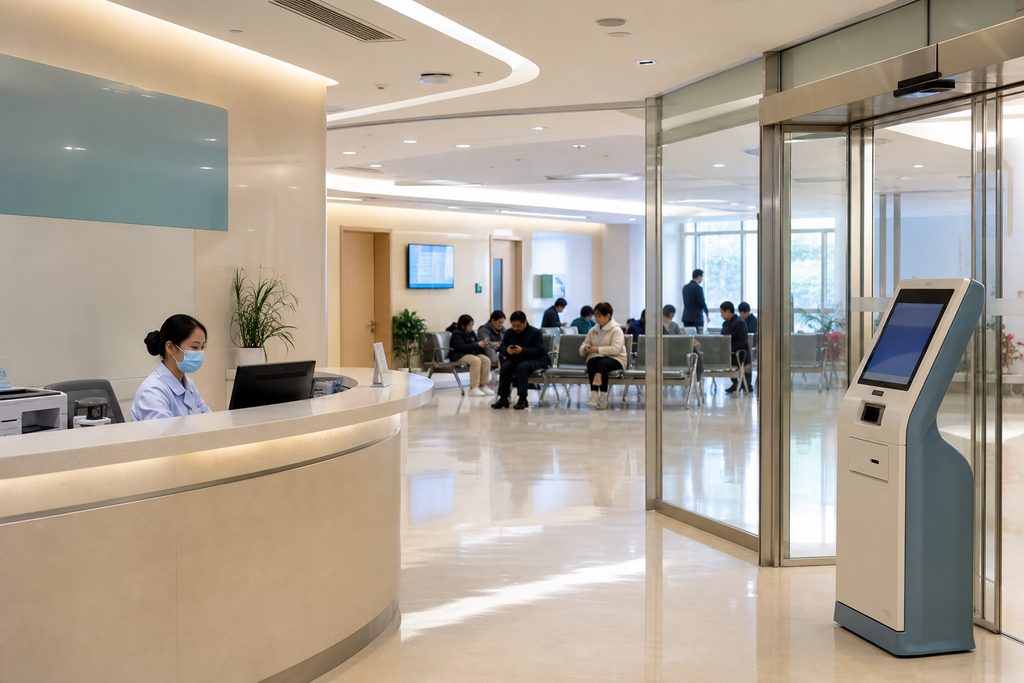
When 54-year-old David landed in Shanghai with a folder of cardiac test results, he assumed his next step was straightforward. He took a taxi to a famous hospital, walked through the main entrance, and asked the information desk to see a cardiologist. The clerk looked at him, then at the crowd of hundreds waiting in the lobby, and said two words: “Registration first.” David had no registration. No Chinese phone number. No hospital card. He was turned away. He spent the next three days trying to navigate a system he did not understand.
That moment of confusion is what this article addresses. The short answer to why can’t i just walk into a specialist clinic in China is this: China’s public hospitals operate on a mandatory, pre-booked registration system. Specialists do not accept unscheduled walk-ins. Every consultation—whether with a junior attending or a department chair—requires a confirmed appointment, a hospital-issued patient card, and often a same-day queue number retrieved in person. There is no receptionist who can simply slot you in if you arrive at the door.
This is not a policy designed to frustrate foreigners. It is the only way a system handling over 8 billion outpatient visits annually can function. But for an international patient who does not speak the language, the friction is real and immediate.
The Registration Gate: Why the Door Is Locked
China’s top-tier public hospitals—the ones listed on the Fudan ranking and in our top hospitals directory—see staggering daily volumes. A single institution like West China Hospital in Chengdu can record over 20,000 outpatient visits in one day. Peking Union Medical College Hospital in Beijing handles a comparable load. These are not boutique clinics. They are medical cities.
The system that keeps this manageable is called the real-name registration system. Every patient must have a hospital file linked to a government-issued ID. For Chinese citizens, that means their national ID card. For international patients, it means a passport. Without that file, you do not exist in the hospital’s database. No file, no appointment. No appointment, no consultation.
And here is the part that catches most visitors off guard: even after you secure an appointment slot online, you still cannot just walk into the specialist’s office. On the day of your visit, you must arrive early, queue at a self-service kiosk or a cashier window, and print a physical queue ticket. That ticket assigns you a sequence number for the specialist’s session. Miss the printing window—often a narrow 30 to 60 minutes before the scheduled time—and your appointment evaporates. The slot is released to someone else.
So when someone asks do Chinese hospitals accept walk-in international patients, the honest answer is no. Not for specialist care in the public system. The gate is real, and it is firmly shut to anyone who has not cleared the registration process in advance.
How to See a Specialist Doctor in China Without Referral
In many Western systems, the referral letter from a GP is the golden ticket. Without it, the specialist’s door stays closed. China flips this model on its head.
You do not need a referral from a primary care doctor. The gatekeeper is the registration platform itself, not another physician. This is a critical distinction for international patients. You can directly book a cardiologist if you have chest pain, a neurologist for persistent migraines, or an oncologist with a recent diagnosis in hand. No one will ask for a referral note.
The question that follows naturally is how to see a specialist doctor in China without referral. The pathway is through one of three registration channels.
The first is hospital-operated mini-programs within WeChat. Nearly every major public hospital runs its own appointment booking system there. You select the department, choose a date, pick a specific doctor if you know who you want, and pay the consultation fee. But there is a catch. These platforms are entirely in Chinese. They require a Chinese phone number for SMS verification. And they demand that you already have a hospital patient card number. For a first-time international patient, this channel is effectively blocked.
The second channel is third-party booking platforms. Companies like WeDoctor and Alibaba Health aggregate appointment slots across multiple hospitals. The interface is marginally more foreigner-friendly. But the same barriers apply: Chinese language, Chinese phone verification, and an existing hospital file.
The third channel—and the one that works for international patients—is the hospital’s international medical department or VIP clinic. These are separate units within public hospitals, staffed by senior specialists who often hold academic titles and have experience with overseas patients. The registration process is handled by English-speaking coordinators. Appointments can be arranged via email or phone. This is also the channel that allows you to book specialist appointment Beijing hospital online without hitting the WeChat wall. The trade-off is cost. Consultation fees in the international department run 1.5 to 2 times higher than in the general outpatient clinic. But you get an appointment that actually works.
The Walk-In Illusion: What Actually Happens at the Hospital Gate
There is one scenario where a walk-in is technically possible, and it is important to describe it accurately because confusion here causes real problems.
Public hospitals in China maintain emergency departments that operate 24/7. If you arrive with an acute condition—chest pain, a fracture, a high fever with signs of sepsis—you will be seen. The emergency department does not turn away patients. They will stabilize you, run tests, and if necessary, admit you through the emergency pathway.
But the emergency department is not a backdoor to specialist outpatient care. The doctor who treats you in the ER is an emergency physician, not a cardiologist or an orthopedist. If your condition requires specialist follow-up, you will be discharged with instructions to book an outpatient appointment. You will be right back at the registration gate.
Some international patients try a different tactic. They arrive at a private international hospital and ask to see a specialist immediately. This is where the answer to do Chinese hospitals accept walk-in international patients splits into two tracks.
Private international hospitals—United Family, Jiahui, Parkway, Raffles—do accept same-day walk-ins more readily. Their patient volumes are a fraction of the public hospitals. A walk-in at a private international hospital in Shanghai or Beijing might get you a consultation within an hour or two, assuming the specialist is on-site that day. But you will pay for the privilege. This brings us directly to the cost question.
Cost to See Specialist in Shanghai Private Hospital
The numbers matter. Patients researching medical travel want concrete figures, not vague assurances. Here is what specialist consultations actually cost across different hospital tiers in Shanghai, as of current pricing.
| Hospital Type | Initial Specialist Consultation Fee (USD) | What’s Included | Wait Time for Appointment |
|---|---|---|---|
| Public Hospital – General Outpatient | $7–$25 | Brief consultation (5–10 min), Chinese-language only | Days to weeks, depending on specialist demand |
| Public Hospital – Specialist/Expert Clinic | $40–$120 | Longer consultation, senior specialist, Chinese-language | 1–4 weeks typical; top names may book out months |
| Public Hospital – International/VIP Department | $150–$350 | English-speaking coordinator, senior specialist, private setting | 3–10 days typical |
| Private International Hospital | $200–$500 | Full English service, longer consultation, direct insurance billing often available | Same-day to 3 days |
The cost to see specialist in Shanghai private hospital starts around $200 and can reach $500 for an initial consultation with a department head. That figure covers the doctor’s time and the clinic’s overhead. It does not include any diagnostic tests, which are billed separately. An MRI at a private facility might add $800 to $1,200. Blood work could run $100 to $300.
Public hospital international departments sit in the middle. A consultation with a senior cardiologist at Zhongshan Hospital‘s international wing, for instance, typically falls in the $200 to $300 range. The same doctor in the general outpatient clinic might charge $15. The price difference buys you an English-speaking pathway, a private consultation room, and an appointment that was actually bookable from outside China.
Is it worth it? If you do not speak Chinese and you need a definitive answer from a top specialist, the international department or private hospital route is not a luxury. It is the functional minimum.
Medical Tourism China Specialist Consultation Process: Step by Step
The phrase medical tourism China specialist consultation process describes a sequence that, once you understand it, is logical. But the first time through, it feels like navigating a maze blindfolded. Here is the actual sequence.
Step one is document preparation. Before you contact any hospital or coordinator, you need a clear, translated summary of your medical history. This means recent imaging reports, blood work, pathology slides if relevant, and a chronological summary of your diagnosis and prior treatments. Chinese specialists will want to see the raw data, not just the conclusions. If your reports are in French, Arabic, or Russian, they must be translated into English or Chinese. Hospitals will not do this for you.
Step two is hospital and specialist selection. This is where the Fudan ranking becomes your compass. For oncology, you look at the top 10 cancer hospitals. For cardiac surgery, you check the specialty rankings. You match your condition to the institutions that handle the highest volumes of similar cases. Volume matters in complex care, and China’s top hospitals have volumes that dwarf most Western centers.
Step three is initial contact. If you are working through a hospital’s international department directly, you send your documents by email. A coordinator reviews them, consults the relevant department, and comes back with a preliminary assessment: yes, the specialist will see you, or no, your case is not within their scope. This step can take anywhere from two days to two weeks.
Step four is appointment confirmation and payment. Once the hospital agrees to see you, you pay the consultation fee—usually by wire transfer or credit card—and receive a formal appointment letter. This letter is essential for the next step.
Step five is the visa. International patients coming to China for medical treatment apply for an S2 visa, with the purpose annotated as medical treatment. The appointment letter from the hospital is a required supporting document. Family members accompanying the patient also apply for S2 visas. Processing times vary by embassy and nationality, but plan for two to four weeks.
Step six is arrival and the actual consultation. You arrive in China, go to the hospital on the appointed day, and meet the specialist. If you have a bilingual medical companion—whether arranged independently or through a coordination service—they handle registration, queue ticket printing, payment, and translation during the consultation. Without one, you are back to David’s situation: standing in a lobby, unable to read the signs, hoping someone speaks English.
Practical Considerations: Records, Payments, and What Happens After
Medical records are the foundation of everything. A Chinese specialist will not rely on a verbal history. They will scrutinize your original imaging, not just the radiologist’s report. If you had a CT scan in London, bring the DICOM files on a CD or USB drive. If you had a biopsy in Dubai, bring the pathology slides, not just the written report. The quality of the consultation depends entirely on the quality of the data you provide.
Payment is another friction point. Public hospitals in China, including their international departments, operate on a pre-payment model. You pay the consultation fee before you see the doctor. If the specialist orders tests, you pay for those tests before they are performed. If surgery is recommended, you pay a deposit before admission. Credit cards are accepted at international departments and private hospitals, but not always at general outpatient counters. Wire transfers are common for larger amounts. Direct insurance billing is standard at major private international hospitals but rare in public hospital settings. Most patients pay out of pocket and seek reimbursement from their insurer afterward.
Language is the barrier that compounds every other difficulty. Even in Shanghai and Beijing, English-speaking hospital staff outside the international departments are uncommon. Signage, prescription labels, discharge instructions—all in Chinese. A patient attempting this alone faces not just inconvenience but clinical risk. Misunderstanding a medication instruction or a follow-up protocol is not a theoretical concern.
After the consultation, if treatment or surgery is recommended, the hospital will provide a treatment plan and a cost estimate. This is the point where many international patients decide whether to proceed in China or return home with the specialist’s opinion. The specialist’s written assessment itself has value, even if you ultimately choose treatment elsewhere.
Frequently Asked Questions
Why can’t I just walk into a specialist clinic in China like I do in other countries?
China’s public hospitals operate on a pre-booked registration system driven by extreme patient volumes. A top hospital may see over 20,000 outpatients daily. Without a confirmed appointment and a hospital-issued patient card linked to your passport, no specialist will see you. The system is designed for throughput, not walk-in flexibility. International patients who arrive without an appointment are turned away at the information desk.
Can I book a specialist appointment at a Beijing hospital online from outside China?
You can, but not through the standard WeChat-based platforms that Chinese citizens use. Those require a Chinese phone number and an existing hospital file. The practical route for international patients is to contact the hospital’s international medical department directly via email or phone. English-speaking coordinators handle the booking. Alternatively, a medical coordination service can manage the registration on your behalf. Expect consultation fees in the $150 to $350 range through this channel.
What if I need to see a specialist urgently but do not have an appointment?
If the condition is acute—severe pain, suspected fracture, signs of a cardiac event—go to the emergency department of any major public hospital. You will be seen and stabilized. But the ER is not a pathway to specialist outpatient care. You will be discharged with a recommendation to book a specialist appointment through the standard registration system. For urgent but non-emergency needs, private international hospitals in major cities can often accommodate same-day or next-day walk-in consultations at a higher cost.
Is the cost to see a specialist in a Shanghai private hospital worth it compared to the public system?
It depends entirely on your language ability and your tolerance for navigating an unfamiliar system. A public hospital general outpatient consultation costs as little as $7, but you will be in a crowded, Chinese-only environment with no hand-holding. A private hospital consultation at $200 to $500 buys you English-speaking service, a longer appointment, and a dramatically simpler process. For most international patients without Chinese language skills, the private or international department route is not an indulgence—it is the only functional option.
What happens after the specialist consultation if I need surgery?
The specialist will provide a written treatment recommendation and, if surgery is indicated, a cost estimate and proposed timeline. You are under no obligation to proceed in China. Some patients take the specialist’s opinion back to their home country for a local surgeon to execute. Others decide to have the procedure in China, in which case the hospital’s international department coordinates admission, pre-operative testing, and scheduling. A deposit is required before admission. The total cost for major procedures in China’s top hospitals typically runs one-fifth to one-tenth of the equivalent in the United States, but final figures vary by hospital and case complexity.
Your Next Step
The Chinese specialist consultation system is not designed for international walk-ins. That is the reality. But it is a system that can be navigated once you understand the registration gate, the documentation requirements, and the channels that actually work for overseas patients. The key is preparation before you board the plane.
Our team at China Medical Services handles this preparation daily. We are not a hospital, and we do not provide medical advice or diagnoses. What we do is bridge the gap between international patients and China’s top-ranked specialists: we translate and organize your medical records, coordinate appointments through hospital international departments, and provide bilingual companions who ensure you are not standing alone in a lobby wondering where to go. If you are considering a specialist consultation in China, start the conversation early. The paperwork takes time, but the pathway exists.
For more medical information and treatment options in China, visit chinamedservices.com (China Medical Services).
