Celebrate Holidays During Medical Stay in China: A Practical Guide to Recovery and Cultural Immersion
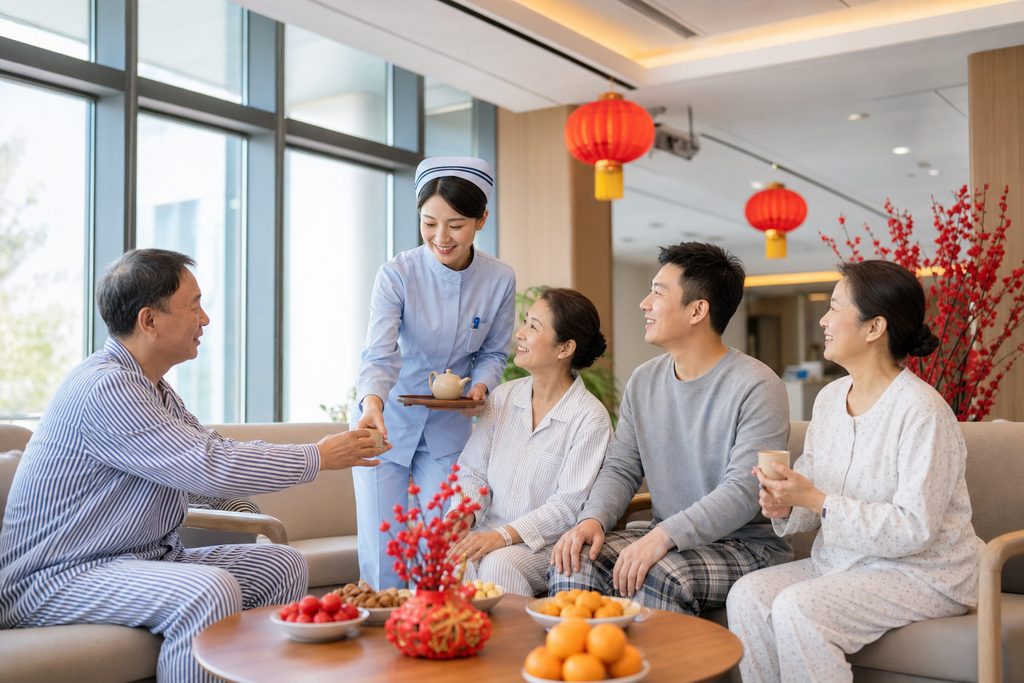
When 53-year-old Linda from Manchester booked her knee replacement, she timed it for late November. Her reasoning was simple: recover in Shanghai, and if she felt strong enough, experience the city’s famous Christmas markets from a wheelchair. She didn’t want a sterile, lonely recovery. She wanted to feel alive. Her question—”Can I actually celebrate holidays during a medical stay in China?”—is one our team fields constantly. The short answer is yes, but it requires planning that looks nothing like a typical vacation itinerary. Medical tourism packages China with holiday activities exist, but they demand a hard look at what “celebration” means when you are a patient first and a tourist second.
Celebrating During Recovery: The Short Answer
You can experience holiday festivities during a medical stay in China. But the type of procedure dictates everything. A minor cosmetic treatment might let you stroll through a lantern festival within days. Major orthopedic or cardiac surgery means your celebration might be watching fireworks from a hospital window. The real question to ask yourself is whether you can accept a heavily modified version of a holiday. If your expectation is a full-day excursion with rich food and late nights, you need to postpone the trip or separate the surgery from the sightseeing by at least three to four weeks. If you can find joy in a quiet, curated moment—a decorated hotel room, a short wheelchair outing to see lights—then the combination works.
Who This Is Right For — and Who It Isn’t
This blend of recovery and celebration suits a specific type of person. It is not for everyone, and being honest about that upfront saves real misery.
Typically a good candidate:
- You are traveling for a procedure with a predictable, short recovery window, such as a minor cosmetic surgery, a dental restoration, or a diagnostic workup.
- Your procedure is scheduled at least 10–14 days before the holiday, giving you time to pass the acute post-operative phase.
- You are traveling with a companion who can handle logistics while you rest.
- You define “celebration” as a sensory experience—seeing decorations, hearing music, tasting one special dish—rather than an endurance event.
Probably not a good candidate:
- You are undergoing a major open surgery, such as a cardiac bypass or a spinal fusion, where early mobilization is strictly controlled.
- You have a condition that makes crowds or air pollution a genuine health risk during recovery.
- You are traveling alone and would have no support if fatigue hits suddenly.
- You expect a holiday to look exactly like it does at home, with all the same foods and traditions.
There is no shame in being in the second group. A medical trip is an investment in your health. Protecting that investment matters more than a single day on the calendar.
The Options, Compared
When patients ask about combining surgery with holiday celebrations, they are really asking about three distinct models. Each has a different risk profile and price point.
| Approach | Procedure Timing vs. Holiday | Typical Mobility During Holiday | Realistic Activity Level |
|---|---|---|---|
| Strict Recovery-First | Surgery 3+ weeks before; holiday falls in late rehab phase | Walking with moderate limits | Half-day outing, restaurant meal, light walking tour |
| Modified Celebration | Surgery 7–14 days before; holiday in early recovery | Wheelchair or slow walking, frequent rest | 1–2 hours outside, hotel dining, driver-assisted sightseeing |
| Observation-Only | Surgery less than 7 days before; holiday in acute recovery | Bedside or hospital-room only | Decorations in room, video calls, window views of city lights |
Most patients who ask us about all inclusive surgery holiday packages China price are imagining the first model. The reality, however, is that many land in the second. That modified middle ground—where you are mobile but fragile—is where a bilingual companion makes the difference between a stressful ordeal and a gentle, memorable experience. You need someone who knows when to push the wheelchair forward and when to call the driver and get you back to the hotel.
How to Celebrate Christmas While Recovering from Surgery in Shanghai
Shanghai during Christmas is not a religious holiday for most locals, but the city embraces the commercial and aesthetic side with enthusiasm. The French Concession trees are strung with lights. Hotels from the Bund to Jing’an put up elaborate decorations. The Christmas markets, though smaller than their European counterparts, sell mulled wine and gingerbread. For a recovering patient, the key is choosing one single focal point and building the day around it, not trying to cover multiple locations.
If you are in the modified celebration phase, book a hotel with a Bund-view room. The Pudong skyline light show often incorporates seasonal colors in December. You can watch it from an armchair with your leg elevated. If your surgeon clears you for a short outing, arrange a private car—not a taxi you need to flag down—to take you to the Peninsula Hotel for their afternoon tea. It is calm, spacious, and designed for lingering. You sit, you eat one thing that feels festive, you go back. That is the celebration. Not a marathon. A moment.
For those still in the observation-only phase, our team has helped families decorate hospital rooms with small, battery-operated fairy lights and arranged for a hotel pastry chef to deliver a single slice of yule log cake. It sounds small. But when you are far from home and your body is healing, that small gesture lands differently. It becomes the thing you remember.
What These Packages Actually Cost
The phrase all inclusive surgery holiday packages China price suggests a neat, bundled number. The reality is more layered. What you are paying for is a coordination service layered on top of your medical bill. The medical cost itself depends entirely on the procedure and the hospital tier. The holiday coordination is separate.
A typical cost structure looks like this:
- Medical procedure: A knee replacement at a top-tier public hospital international wing might run $12,000–$20,000. A cosmetic procedure like a facelift at a JCI-accredited private hospital could range from $6,000–$12,000. These are the hospital’s own charges.
- Accommodation: A serviced apartment near the hospital, suitable for post-operative recovery, runs roughly $80–$150 per night. A five-star hotel for the “celebration” phase might be $200–$400 per night.
- Coordination and companion services: Bilingual medical companion services start from $200 per day. A video consultation with a top specialist to plan the trip runs $500–$800. VIP end-to-end coordination, which includes itinerary design around your recovery and holiday goals, ranges from $5,000–$8,000. Any consultation fee is credited in full toward that coordination if you proceed within 90 days.
- Holiday-specific logistics: A private car with a driver for a half-day outing costs approximately $100–$150. A wheelchair rental is often under $20 per day.
None of these figures are a fixed package price. They vary by hospital, case complexity, and season. The holiday component—the decorations, the special meal, the driver—is the most flexible part. You can spend very little and still create a meaningful day.
Practical Considerations: Records, Visas, and Post-Holiday Follow-Up
Planning a medical trip around a holiday adds a layer of logistical pressure that a standard medical trip does not have. You need to account for hospital staffing on public holidays. Chinese hospitals do not shut down entirely during Western Christmas, but some administrative offices operate with reduced hours. If your discharge paperwork or a final imaging study falls on December 25th, it may get done, but it may also slide to the 26th. Build in a buffer day.
Your visa is another fixed constraint. Medical treatment in China falls under the S2 short-stay visa category, not the M business visa. The S2 allows for private affairs, including medical treatment. You apply with an invitation letter from the hospital or a coordinating entity. Do not book flights until the visa is in your passport. Processing times can stretch during the winter holiday season at embassies worldwide.
Payment methods matter. Public hospitals typically require a deposit upfront and do not directly bill international insurance. You pay, you get a detailed receipt, and you seek reimbursement from your insurer. Private international hospitals like those in our private hospital network can often handle direct billing, which simplifies things considerably. Ask before you commit.
Follow-up after you return home is the piece most people forget. If you celebrate Christmas in Shanghai and fly home on December 28th, who sees you for a wound check in early January? You must have a local provider lined up before you leave China. Your Chinese surgeon can provide a detailed discharge summary and operative report. Hand-carry these. Do not pack them in checked luggage.
Frequently Asked Questions
No, not in the way most people imagine. The first week after any significant surgery is for pain management, wound care, and very limited mobility. You will not be walking the Great Wall. What you can do is plan a graduated schedule: strict rest for 7–10 days, then short, assisted outings, and finally, if your recovery allows, real sightseeing 3–4 weeks post-op. The question “can I combine surgery in China with sightseeing” is really a question about trip length. If you can stay for five or six weeks, the answer shifts from no to a cautious yes.
There is no single price because “all inclusive” means different things to different providers. A package that bundles a minor cosmetic procedure, a hotel stay, and a few tours might start around $8,000–$15,000 total. A package involving a major joint replacement, a month of recovery accommodation, and daily companion support will be significantly higher, often $25,000–$40,000 when you add up all components. Always ask for a line-item breakdown. The coordination fee is separate from the hospital bill. Any reputable service will make that distinction clear.
This is the hard question. The hospitals we connect patients with are among the top-ranked hospitals in China, with emergency departments that operate 24/7, including during holidays. If you experience unexpected pain, bleeding, or signs of infection, you go back to the hospital immediately. You do not wait because it is Christmas. Your companion’s role is to get you there fast and communicate clearly with the triage team. This is also why we recommend staying within 30 minutes of your treating hospital for the entire recovery period. A festive hotel 90 minutes away is not worth the risk.
The “best” hospital for this dual-purpose trip is not always the highest-ranked on a general list. You want a hospital with a strong specific department for your procedure—oncology, orthopedics, cardiology—and a location in a city that supports gentle tourism. Shanghai and Beijing have the most English-friendly infrastructure and the richest cultural offerings. But a city like Hangzhou or Chengdu can offer a slower pace and beautiful natural surroundings. Our team typically starts by matching your medical needs to a specialist department, then considers which city gives you the best recovery environment. The hospital’s medical quality comes first. The vacation potential is the tiebreaker.
Your Next Step
Spending a holiday in a foreign country while your body heals is not the same as a vacation. It is slower, quieter, and more vulnerable. But it can also be deeply meaningful. You are not just passing time. You are recovering in a place where the care is excellent and the world outside your window is entirely new. Our team helps patients plan that balance. We are not a hospital and we do not give medical advice. What we do is handle the coordination—the hospital matching, the bilingual companion who stays by your side, the logistics of getting you safely from a hospital bed to a quiet holiday moment and back again. If you are considering this, start with a conversation. A free consultation lets you explain your goals and hear what is realistically possible. You can reach us through our patient consultation page. There is no pressure and no commitment. Just an honest discussion about what your recovery could look like.
For more medical information and treatment options in China, visit chinamedservices.com (China Medical Services).
