Chinese Hospital Meals Explained: How to Order, Eat, and Navigate Dietary Rules
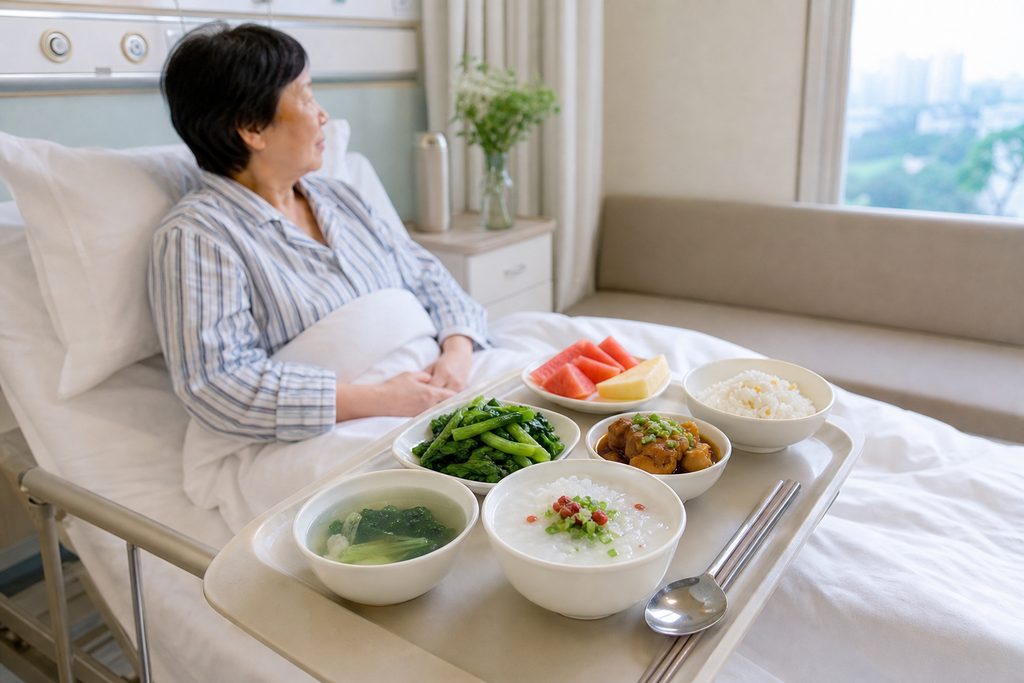
You’ve probably heard that hospital food is universally terrible. Bland trays, mystery meat, and jello that defies physics. That stereotype doesn’t quite hold up in China. Walking into a Chinese hospital ward for the first time, you’re more likely to smell ginger and rice porridge than boiled cabbage. The food system here is different. It’s deeply tied to cultural beliefs about healing. It’s also confusing if you don’t speak the language.
We’ve guided patients through hundreds of hospital stays across China. The meal question comes up early. What will I eat? Can I control it? How much does it cost? This article answers those questions directly. We’ll walk through the hospital food menu China price structure, how ordering works, the dietary rules that shape every meal, and what to do when the food doesn’t match your expectations.
Hospital Food in China: The Short Answer
You can order meals in a Chinese hospital. The typical daily cost runs from $5 to $25 USD, depending on the hospital tier and your dietary needs. That covers three basic meals. But “basic” doesn’t mean what you think. Most public hospital wards serve Chinese-style therapeutic meals designed around your condition. A post-surgery patient might receive black fish soup to promote wound healing. A cardiac patient gets low-sodium congee with steamed vegetables. The food is intentional.
The catch is choice. In a standard public ward, you don’t get a Western-style menu with 20 options. You get a daily set based on your doctor’s dietary order. International VIP wards offer more flexibility, including Western options and à la carte ordering. We’ll break down both scenarios.
Who This System Works For — and Who It Doesn’t
This meal system isn’t for everyone. Knowing where you fit helps you plan better.
It typically works well for patients who are comfortable eating Chinese home-style cooking, those who view food as part of the healing process, and anyone staying in an international or VIP ward with bilingual menu support. It also works for patients with specific dietary restrictions that align with Chinese therapeutic principles — low-fat, low-sodium, high-protein, soft-texture diets are standard here.
It can be genuinely difficult for patients with strict texture aversions to congee or soft foods, those who rely on familiar comfort foods from home to maintain appetite during recovery, and anyone with severe allergies to soy, sesame, or wheat. These ingredients are foundational in Chinese cooking. Cross-contamination awareness varies by hospital kitchen. Patients on ketogenic or very low-carb diets will also struggle with the rice-and-noodle base of most meals.
The Hospital Meal Options, Compared
Not all hospital food experiences are the same in China. The table below shows what changes as you move from a standard public ward to a private international wing.
| Feature | Standard Public Ward | VIP/International Ward |
|---|---|---|
| Daily meal cost | $5–$10 USD | $15–$25 USD |
| Menu style | Fixed daily set by diet order | À la carte, bilingual menu |
| Cuisine type | Chinese therapeutic only | Chinese, Western, and hybrid |
| Ordering method | Ward nurse collects order, or WeChat mini-program (Chinese only) | Paper menu, phone call, or app with English support |
| Customization | Minimal — based on medical diet category | Moderate — substitutions possible |
| Outside food allowed? | Generally no, except fruit | Often yes, with nurse approval |
| Special diets | Low-salt, diabetic, liquid, soft | Above plus vegetarian, halal, gluten-aware |
The standard ward column represents the experience for most Chinese patients. The VIP column is what we typically arrange for international patients. The price difference is modest by Western standards — an extra $10 to $15 per day for food you can actually identify and enjoy. For a two-week stay, that’s roughly $140 to $210 more. Most of our patients consider that money well spent.
What Food Do Chinese Hospitals Actually Serve?
This is the question behind the search. People want specifics, not abstractions. So here’s what lands on the tray.
Breakfast is almost always some form of congee — rice porridge — with pickled vegetables, a boiled egg, and steamed buns or mantou. It’s soft, warm, and easy to digest. Lunch and dinner follow a pattern: steamed rice, a clear soup, one protein dish, and one or two vegetable dishes. The protein might be steamed fish, braised chicken, or tofu. Vegetables are usually leafy greens stir-fried with minimal oil or simply blanched.
Therapeutic soups deserve their own mention. Chinese hospitals serve soups with purpose. Post-surgical patients get black fish soup, believed to speed wound closure. New mothers receive pork trotter and peanut soup for lactation. Respiratory patients might get pear and fritillary bulb soup. These aren’t optional garnishes — they’re core to the meal plan. Our team has seen Western patients initially skeptical of these soups become converts by day three. The ginger-scallion fish broth is genuinely restorative.
And yes, the hospital food menu China price for these therapeutic meals stays within that $5 to $25 daily range. The ingredients are simple. The value is in the preparation and the intent behind each dish.
How to Order Hospital Meals in Shanghai and Other Major Cities
The ordering process varies. In Shanghai’s international hospitals, it’s straightforward. In a public hospital, it requires navigation.
Shanghai’s private and international wings — places like Jiahui or United Family — give you a printed bilingual menu. You tick boxes for the next day’s meals and hand it to the nurse by mid-afternoon. Some use tablet-based ordering in the room. The hospital food menu China price is clearly listed per item, and you can often order extra snacks or beverages.
In a public hospital like Zhongshan or Ruijin, the system is more rigid. A nurse or hospital worker visits your bed each morning to confirm your meal plan. You might get a QR code for a WeChat mini-program, but it will be in Chinese characters only. The options are tied to a numeric diet code your doctor assigned — Diet 1 for liquid, Diet 2 for soft, Diet 3 for diabetic, and so on. You eat what the code dictates.
Dietary Rules in Chinese Hospital Wards: What You Need to Know
The dietary rules in Chinese hospital wards are not suggestions. They’re part of the treatment plan, and nurses enforce them.
The foundational rule is that food is medicine. Your doctor prescribes a diet category. The kitchen executes it. You don’t deviate without approval. A patient on a “cooling” diet after surgery won’t receive “heaty” foods like lamb or chili. A patient with dampness according to Traditional Chinese Medicine diagnosis won’t get dairy or greasy foods. These categories don’t map neatly onto Western nutritional science, but they’re taken seriously here.
Another rule: cold drinks are discouraged. Room-temperature water is standard. Ice water is rare. The belief is that cold liquids shock the digestive system and slow recovery. You can ask for it, but you’ll get a puzzled look.
Visitors bringing food face restrictions too. Most wards prohibit outside meals unless the nurse approves them. The concern is food safety and dietary interference. Your well-meaning colleague can’t just drop off takeout noodles. The nursing station will likely turn them away.
Halal and vegetarian requirements are manageable in larger cities. Many hospitals in Xi’an, Beijing, and Shanghai have halal-certified kitchen sections or partner with nearby halal restaurants for patient meals. Vegetarian options exist but are less common in standard wards — Chinese vegetarianism often includes fish or meat-based broths for therapeutic purposes. Clarify “strict vegetarian” with your care coordinator in advance.
Can I Order Outside Food to a Hospital in China?
The short answer is sometimes. The useful answer is more nuanced.
In VIP and international wards, the answer is usually yes, with conditions. You can order from delivery apps like Meituan or Ele.me, but the food goes through a nurse’s check first. Spicy, oily, or raw foods will likely be rejected if they conflict with your treatment plan. A patient recovering from gastrointestinal surgery won’t be allowed Sichuan takeout, no matter how much they crave it.
In standard public wards, the answer leans toward no. The nursing staff has limited bandwidth to screen outside deliveries. Some wards allow family members to bring in home-cooked meals in a thermos, particularly soups. But restaurant delivery is generally not permitted.
There’s a practical workaround. If you’re in an international ward and craving something specific, tell your nurse. They can often arrange a modified version through the hospital kitchen. Want pasta instead of rice? Many international wing kitchens can accommodate that. The key is asking a day ahead, not at mealtime.
This is where the medical tourism meal plan China concept becomes relevant. Patients traveling specifically for treatment often underestimate how much food affects their hospital experience. A pre-arranged meal plan — whether through the hospital’s international kitchen or a coordinated external service — removes daily friction. It’s not just about nutrition. It’s about having one less thing to negotiate when you’re already vulnerable.
What Hospital Meals Cost — and What Drives the Price
Let’s put numbers on the hospital food menu China price question. These are real ranges based on current hospital pricing across major Chinese cities.
A standard public ward meal plan costs 30 to 70 RMB per day. That’s roughly $4 to $10 USD. It covers three meals and sometimes an afternoon snack of fruit or yogurt. The food is simple, cooked in bulk, and nutritionally adequate.
An international or VIP ward meal plan runs 100 to 180 RMB per day — about $15 to $25 USD. This includes à la carte ordering, Western options, better ingredient quality, and the ability to customize. You might get a grilled chicken breast with steamed vegetables and mashed potatoes instead of braised pork with rice. Coffee and fresh juice are usually available.
What drives the variance? The hospital tier matters. A VIP ward at Peking Union Medical College Hospital charges more than a private room at a smaller city hospital. The city matters too — Shanghai and Beijing prices run higher than Chengdu or Wuhan. And your dietary complexity matters. A standard post-operative diet costs less than a customized plan for multiple allergies or religious requirements.
None of these prices include the room charge. They’re strictly for food. And they’re modest compared to what you’d pay for equivalent meal service in a Western hospital, where a single day’s meals can easily hit $40 to $60 without the therapeutic intentionality.
Practical Considerations for International Patients
A few logistics make the meal experience smoother or rougher. Plan for these.
Payment is almost never cash at the bedside. Hospital meals are charged to your deposit account and settled at discharge. In international wards, you might pay by card or WeChat for extra items like coffee or snacks. But the core meal plan is bundled into your overall hospital bill. Keep your deposit topped up — if it runs low, non-essential services including upgraded meals may pause.
Language is the biggest barrier. Standard ward menus and diet codes are in Chinese. Even in international wards, the English translations can be creative. “Braised lion head” is a giant pork meatball, not actual lion. “Husband and wife lung slices” is a cold Sichuan beef dish with no lungs involved. Having someone who can decode the menu prevents unpleasant surprises.
If you have religious dietary requirements, communicate them before admission. Halal, kosher, and strict vegetarian needs require kitchen-level coordination. A last-minute request rarely works. We include dietary requirements in the pre-admission checklist for every patient we coordinate.
Follow-up nutrition after discharge is worth considering. Chinese hospitals don’t typically provide detailed discharge meal plans. You leave with medication instructions and a vague “eat soft, warm foods” recommendation. If nutrition is important to your recovery, arrange a consultation with a clinical dietitian before you fly home. Some international hospitals in Shanghai and Beijing offer this as an add-on service.
Frequently Asked Questions
Can I bring my own snacks and supplements into a Chinese hospital?
Yes, within limits. Sealed, non-perishable snacks like protein bars, crackers, and nuts are usually fine. Fresh fruit is generally welcome. But supplements — vitamins, herbal products, protein powders — must be approved by your attending physician. Chinese hospitals are cautious about drug-herb interactions, and some Western supplements contain ingredients that interact with standard post-surgical medications. Declare everything.
What if I hate the food and can’t eat it?
This happens. The first step is telling your nurse. In an international ward, the kitchen can often prepare a plain alternative — steamed rice, clear soup, boiled eggs. In a standard ward, your options are narrower. Family can sometimes bring in approved home-cooked food. The worst-case scenario is supplementing with your own shelf-stable foods until discharge. We’ve seen patients survive a week on congee, protein bars, and determination. It’s not ideal, but it’s manageable.
Are there hospital dietitians who speak English?
In major international hospitals in Shanghai, Beijing, and Guangzhou, yes. Places like Jiahui International Hospital and United Family have English-speaking clinical dietitians on staff or on call. In standard public hospitals, dietitians rarely speak English. You’ll need an interpreter or a bilingual companion to translate your needs. Even then, the dietitian’s framework is Chinese therapeutic nutrition, not Western dietary guidelines. Adjust your expectations accordingly.
How does the “food as medicine” approach affect what I’m served?
Directly and constantly. Your meals are designed around your diagnosis, not your preferences. A patient with “excess heat” might get bitter melon and mung bean soup. A patient with “blood deficiency” gets red dates and black chicken soup. These assignments happen at admission and rarely change mid-stay. If you’re curious, ask your nurse to explain the reasoning — many are happy to share the traditional logic. If you’d rather not participate in TCM dietary therapy, request a “neutral” diet through your doctor. It won’t be fully Western, but it will be less intensely therapeutic.
Your Next Step
The food in a Chinese hospital is not an afterthought. It’s part of the treatment. Understanding that before you arrive changes the experience from confusing to manageable — even interesting.
Our team at China Medical Services coordinates hospital stays for international patients across more than 340 top-ranked hospitals in 37 cities. We handle the details: dietary requirements communicated before admission, bilingual menu translation during your stay, and practical workarounds when the system doesn’t bend. We are not a hospital. We don’t provide medical advice or make diagnoses. We’re the bridge between you and a healthcare system that operates differently than what you know.
If you’re planning treatment in China and the meal question is on your mind, get a free consultation with our coordination team. We’ll walk through what to expect at your specific hospital and how to make sure you’re fed in a way that supports your recovery — not fights it.
For more medical information and treatment options in China, visit chinamedservices.com (China Medical Services).
