Packing List for Medical Travel China: Beyond Clothes
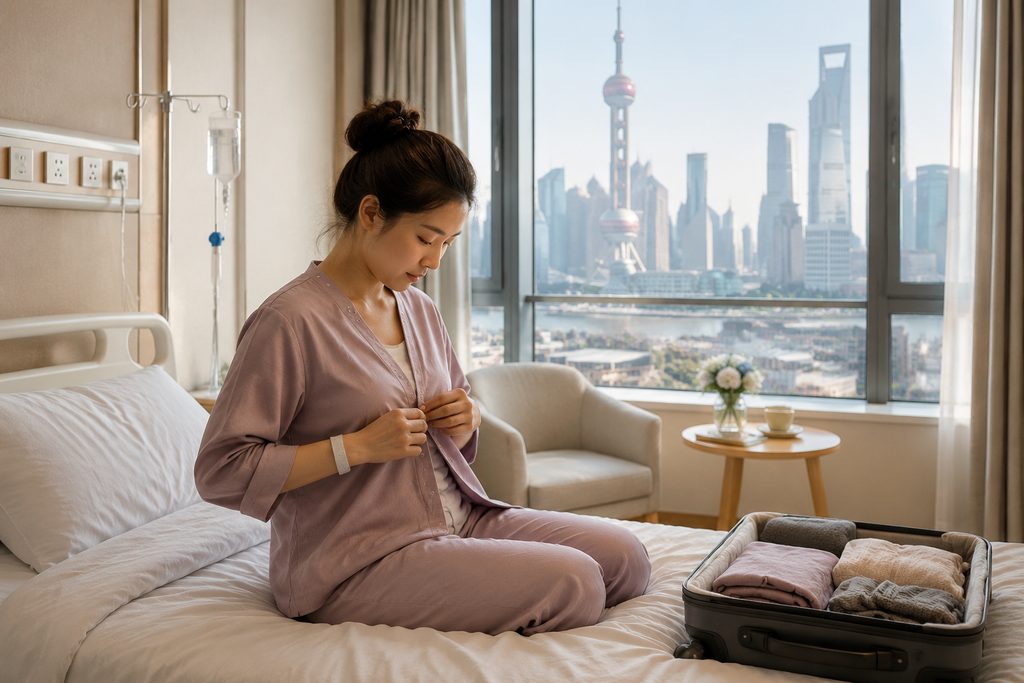
A study in the *Journal of Travel Medicine* noted that up to 30% of medical tourists report significant pre-trip anxiety, with “forgetting something critical” ranking as a top concern. That knot in your stomach isn’t about the procedure itself. It’s the quiet dread of landing in a new country and realizing you left the one document or device that makes recovery bearable. We have seen it too often. A patient arrives exhausted, only to spend the first precious hours hunting for a compatible charging adapter in a Shanghai convenience store.
That’s a waste of your energy.
Our team has spent years coordinating stays for international patients at over 340 top-ranked hospitals across 37 cities. We know the hospital rooms. We know the power outlets. We know what the hospital provides and, more importantly, what it does not. This isn’t a generic vacation checklist. This is a surgical logistics plan.
Key Takeaways
- A standard Chinese hospital room provides a bed, a cabinet, and a thermos—you are responsible for nearly all personal comfort items, including tissues and toilet paper.
- Your medical records are the single most valuable item you will carry; a missing pathology slide can delay a surgery by weeks.
- China uses 220V electricity and Type I/A/C plugs; a universal adapter is non-negotiable, but a small power strip with a short cord is the real lifesaver.
- Digital isolation is a genuine hurdle; plan your VPN and offline entertainment before you leave, as installing software in a hospital bed is a losing battle.
The Problem: A Hospital Room Is Not a Hotel Room
When you search for “what to bring to hospital in Shanghai,” you might picture a private suite with a welcome basket. Adjust that image. Even in the VIP and international wards of China’s elite medical institutions—places like Peking Union Medical College Hospital or Zhongshan Hospital—the focus is clinical excellence, not hospitality fluff. The bed will be firm. The lighting will be fluorescent. The pillow might feel like a bag of rice.
This isn’t a complaint. It’s a cultural reality. Chinese families traditionally play a massive role in inpatient care. They bring the meals, the blankets, the entertainment, and the emotional support. If you are traveling from abroad, you likely won’t have a local family to run to the supermarket for you. You are your own supply chain. You need a medical tourism packing checklist China hospitals won’t hand you. You need to become self-sufficient before you walk through the sliding doors.
Why a Surgical Packing Strategy Matters
Fatigue is the enemy of recovery. Every small friction point—a dead phone, a dry throat, a cold draft—pulls your body’s resources away from healing. A well-packed bag eliminates a thousand tiny, stressful decisions.
Infection Control and Personal Hygiene
Post-operative infection rates in top-tier Chinese hospitals are competitive with Western benchmarks. A 2023 study published in *Antimicrobial Resistance & Infection Control* showed that surgical site infection rates in major Chinese teaching hospitals hover around 1.5% for clean wounds. But you have a role to play. Hospital-provided soap can be harsh. Alcohol-based sanitizing wipes are your best friend. You will want to wipe down the side table, the bed rails, and the call button. Bring a travel pack of disinfectant wipes. It’s a medical travel essential China lists often overlook.
The Comfort-Outcome Connection
Sleep is when tissue repairs. But a hospital is a noisy place. Beeping pumps. Night checks. The hum of the air system. A pair of high-quality silicone earplugs and a contoured sleep mask are not luxuries. They are therapeutic devices. Also, pack lip balm. Operating rooms and air-conditioned wards are deserts. Cracked lips are a small misery you don’t need.
The Core Packing List for Surgery in China: Documents and Data
Forget clothes for a moment. If your suitcase gets lost, you can buy a shirt. You cannot buy your pathology slides at the airport. This is the spine of your trip. Get this right, and everything else is manageable.
| Item | Why It’s Non-Negotiable | Format |
|---|---|---|
| Passport & Visa | You need an S2 visa for short-term medical treatment. Photocopies are not enough for admission. | Physical original + digital scan in email |
| Full Medical Records | This means every scan, blood test, and doctor’s note from the last 5 years. Don’t curate. Bring it all. Chinese specialists want raw data. | Original films/CDs + printed reports |
| Pathology Slides & Blocks | If your case involves a tumor, the hospital pathologist will likely want to re-stain and confirm the diagnosis before a knife touches you. | Physical slides and paraffin blocks (borrow from your home hospital) |
| Medication List | Generic names only. “Tylenol” means nothing. “Acetaminophen 500mg” does. Include all supplements. | Printed, with dosages and frequency |
| Insurance/Travel Insurance | Chinese public hospitals require a deposit upfront. Your international insurance or travel policy is your route to reimbursement. | Printed policy number and emergency contact line |
What to Pack for Medical Travel to China: The Electronics Survival Kit
Your phone is your lifeline. It’s your translator, your map, your distraction, and your link to family. But the digital landscape in China is unique. You must prepare your devices before you step on the plane.
A Type I plug is standard in many older buildings, but you’ll see Type A and C sockets, too. A universal adapter is a start. But hospital beds often have one lonely socket, located three feet above the floor behind the bed. You cannot reach it while lying down. The solution? A compact power strip with a 10-foot cord. Plug it in once. Now you can charge your phone, your power bank, and your tablet from the bedside table. This is what a real medical travel essentials China list looks like—practical, not pretty.
Now, the internet. Many Western apps and services are restricted. Install a reliable, paid VPN on your phone and laptop before you leave. Test it. Update it. Do not assume you can just download it at the hotel. A local SIM card with data is cheap and easy to get at the airport, but it won’t bypass firewalls on its own. Also, download offline maps (Baidu Maps or an offline Google Maps area), a translation app with an offline Chinese package, and several days’ worth of Netflix shows. Hospital Wi-Fi is often slow and unstable.
What to Bring to Hospital in Shanghai and Beyond: The Comfort Kit
Let’s talk about the room itself. You’re settling in for a stay that could range from three days to two weeks. A little preparation transforms a sterile space into a recovery sanctuary.
You will need your own toiletries. The hospital provides a bed. It doesn’t provide shampoo, conditioner, body wash, or lotion. A small, quick-dry microfiber towel is essential; hospital towels are thin and changed infrequently. Flip-flops for the shower are a must, not a maybe. The floor is wet. You don’t want to slip, and you don’t want to pick up a fungal infection.
Clothing? Think loose. Think layers. A zip-up hoodie is perfect. You won’t want to pull a tight shirt over your head if you have an IV line or a surgical incision. Loose, elastic-waist pants are ideal. But the real hero of a surgical trip is a long, heavy charging cable. A 10-foot cable lets you scroll, read, or video-call while your phone is plugged into that distant wall socket. It changes everything.
The “Just in Case” Medical Travel Essentials China Demands
Your body will be under stress. Digestion might slow. Nausea from anesthesia or strong painkillers is common. A small pharmacy of familiar, over-the-counter remedies gives you a sense of control.
Pack a small bag with anti-diarrheal medication, a mild laxative, antacids, and any pain reliever you know your stomach tolerates. Bring a digital thermometer. Hospitals check vitals, but you know your own body best. A small notebook and pen are also vital. You might be groggy when the doctor rounds. Write down your questions. Scribble down the answers. Medical Mandarin is complex, and even with an interpreter, your own notes are your safety net.
A Note on Bleeding Risk: Many traditional Chinese herbal supplements can increase bleeding risk during surgery. Do not pack or take any supplements—garlic pills, ginseng, ginkgo, fish oil—without your surgeon’s explicit approval, ideally weeks before your flight.
Practical Considerations: Navigating the Financial and Communication Barrier
Do not panic. Large Chinese cities have excellent delivery services. Platforms like Meituan and Ele.me can deliver almost anything—toiletries, fruit, phone chargers—to the hospital lobby within 30 minutes. The challenge is the Chinese-only interface. This is where a bilingual coordinator becomes invaluable; they can order what you need in seconds, saving you hours of confusion.
Hospital meals are typically Chinese-style: rice porridge, steamed vegetables, soups. They are generally bland, which is good for recovery. Specialized diets—halal, low-sodium, diabetic—are often available but must be requested. If you have very specific or restrictive needs, pack some non-perishable, familiar snacks in your checked luggage. Protein bars and instant oatmeal packets are a comfort when the breakfast tray arrives with congee and you’re craving something else.
Your Next Step
Packing the right items is about removing friction. It lets you focus entirely on the reason you came: accessing world-class surgical care at a fraction of the cost. If you feel overwhelmed by the logistics, our team at China Medical Services handles the details. We are not a hospital. We are the bridge—coordinating your records, your visa guidance, and your stay so you arrive prepared. When you are ready to plan your journey, we are here to build a clear, step-by-step path forward.
Frequently Asked Questions
Yes. The hospitals used for international patients are JCI-accredited and follow the same international safety standards as top hospitals in the US and Europe. Surgical teams perform high volumes of procedures — often more than their Western counterparts — which studies show leads to better outcomes.
Costs vary by procedure and hospital, but international patients typically save 40-80% compared to US prices — even when factoring in travel and accommodation. A consultation with our team will give you an exact, all-inclusive quote with no hidden fees.
Send us your existing medical reports to get started. We handle everything from hospital selection and appointment scheduling to visa assistance and post-operative recovery planning. Your medical records are reviewed by the specialist before you even book a flight.
For more medical information and treatment options in China, visit chinamedservices.com (China Medical Services).
