Rare Blood Type Surgery China: Blood Supply Preparation Without the Panic
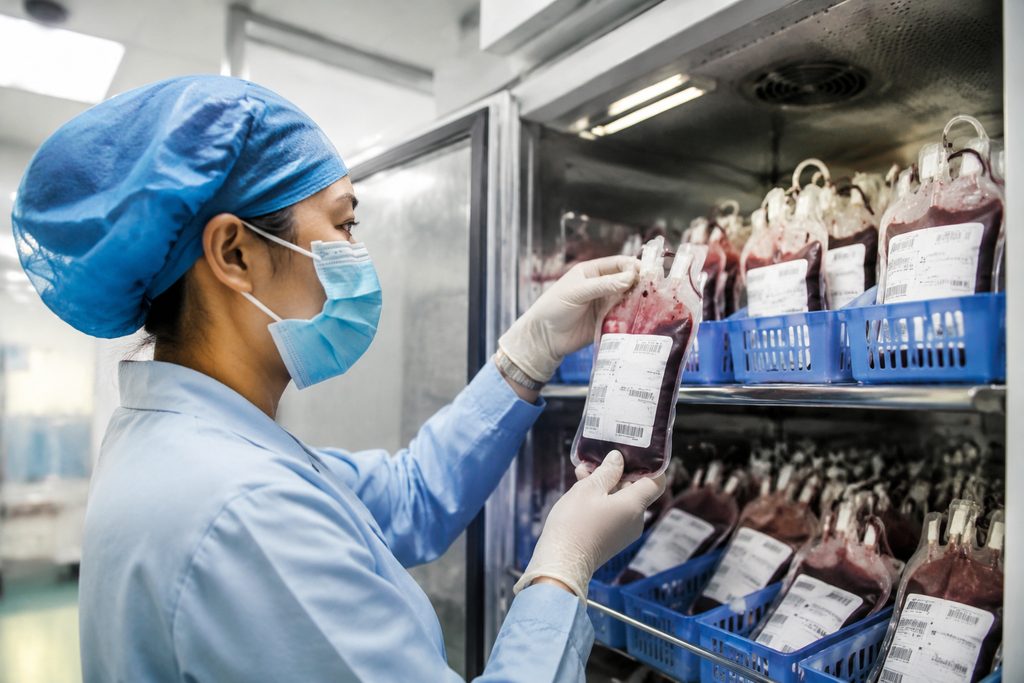
What if you needed surgery tomorrow but your blood type makes your local blood bank pause? For patients with rare phenotypes—the ones that show up in fewer than 1 in 1,000 people—the anxiety isn’t just about the procedure. It’s about whether the bag hanging by the operating table will be there when you need it. Our team has coordinated care for patients with Bombay phenotype, Rh null, and other rare types who came to China specifically because their home country couldn’t guarantee intraoperative blood coverage. The rare blood type surgery cost China is one part of that equation. The logistics of blood supply preparation are the part that keeps people up at night. Let’s walk through what actually happens.
How This Actually Works, Step by Step
The process isn’t magic. It’s methodical. Here is the real sequence, based on cases we’ve coordinated.
You send us your existing medical records. This includes your blood type documentation—ideally the full phenotype, not just ABO and Rh. The hospital’s transfusion medicine department reviews it. They check their own rare blood donor registry and the regional blood center’s frozen rare blood inventory. This takes three to five business days. They come back with one of three answers: we have compatible units in our frozen bank, we can recruit directed donors from our rare donor database, or we need more time to coordinate nationally.
If compatible units exist or donors can be recruited, the surgical team then evaluates your case. They estimate how many units the procedure typically requires. A cardiac surgery might need four to six units on standby. A complex spinal fusion might need two to four. That number drives the preparation timeline.
The hospital’s transfusion service then activates the supply chain. Frozen rare units get thawed and crossmatched. Directed donors get called in for collection. Every unit gets phenotyped again to confirm compatibility. This isn’t a same-day process. It’s a deliberate, multi-week sequence that prioritizes safety over speed.
What “Rare Blood Supply Preparation” Actually Means in Chinese Hospitals
Most patients assume “rare” means AB negative. It doesn’t. In transfusion medicine, a rare blood type means a phenotype found in less than 0.1% of the population. Bombay phenotype. Rh null—sometimes called “golden blood,” with fewer than 50 known carriers worldwide. Certain Kell, Duffy, and Kidd antigen combinations.
Chinese blood centers operate a national rare blood donor network. The Shanghai Blood Center, for example, maintains a frozen rare blood bank with thousands of phenotyped units. When a hospital in Chengdu needs two units of Fy(a-b-) for a surgical patient, they don’t start from scratch. They query the national database. If units exist frozen anywhere in the network, they can be shipped within 24 to 72 hours.
This network exists because China’s population of 1.4 billion creates a statistical advantage. Rare phenotypes may be rare per capita, but the absolute number of compatible donors in a population this size is larger than in smaller countries. That doesn’t guarantee a match. But it changes the probability.
For the rarest types—Rh null, for instance—no country can guarantee supply. What Chinese hospitals can do is coordinate internationally. They can work with the World Health Organization’s rare blood donor network. They can also use intraoperative cell salvage technology to recycle the patient’s own blood during surgery, reducing the number of donor units needed.
A Realistic Timeline
Patients often underestimate how long blood supply preparation takes. Here is what to expect, assuming no complications.
| Stage | What Happens | Typical Duration |
|---|---|---|
| Week 1–2 | Medical record submission and translation; blood type documentation reviewed by transfusion medicine | 5–10 business days |
| Week 3–4 | Transfusion service queries national rare blood donor registry; confirms availability or begins donor recruitment | 7–14 days |
| Week 5–6 | Directed donor collection (if needed); unit processing, phenotyping, and crossmatching | 10–14 days |
| Week 7–8 | Surgical scheduling confirmed; pre-operative assessment; visa processing (S2 visa for medical treatment) | 10–14 days |
| Week 9 | Arrival in China; final pre-op consultation; surgery | As scheduled |
This timeline assumes the rare units are available domestically. If international coordination is required—for example, sourcing Rh null units through the WHO network—add four to six weeks. Some patients choose to travel to China first for evaluation, then wait while the blood supply is secured. Others complete the entire preparation remotely and arrive only when surgery is confirmed.
Visa processing adds its own timeline. The S2 visa for medical treatment typically takes one to two weeks at most Chinese embassies and consulates, assuming all hospital documentation is in order. We’ve seen it take longer during peak seasons. Plan for three weeks to be safe.
What Can Go Wrong—and What Happens Then
The blood supply preparation fails. The national registry has no compatible units. Directed donors can’t be located or can’t donate in time. This happens. It’s rare, but it happens.
The hospital has options. They can expand the search internationally. They can adjust the surgical plan to minimize blood loss—using minimally invasive techniques, staging the procedure across multiple shorter operations, or employing hypotensive anesthesia. They can use intraoperative cell salvage aggressively. They can also use autologous blood donation: the patient banks their own blood in the weeks before surgery.
If none of these work, the surgery gets postponed or canceled. This is the honest answer. No reputable hospital will proceed with elective surgery without adequate blood coverage. The patient’s safety is non-negotiable.
What about cost? If preparation fails and surgery is canceled, the patient has already incurred costs for record review, transfusion service consultation, and any donor recruitment attempts. These are typically non-refundable. Our coordination fees follow the same principle—the work was done, the expertise was applied, but the outcome wasn’t guaranteed. We’re upfront about this from the first conversation.
Another failure mode: the patient arrives in China, and the crossmatch reveals new antibodies that weren’t detected in the initial phenotype report. This can happen if the patient has been transfused since their last blood typing. The hospital then has to restart the compatibility process. Surgery gets delayed. This is why we recommend repeat phenotyping within 30 days of travel.
How to Evaluate a Hospital’s Rare Blood Capability
Not every hospital that says “we can handle rare blood types” actually can. Here’s what to look for.
First, ask about their transfusion medicine department’s accreditation. In China, look for hospitals whose blood bank is accredited by the China National Accreditation Service for Conformity Assessment (CNAS) or that participate in the College of American Pathologists (CAP) external quality assessment program. These accreditations mean the lab’s procedures are regularly audited.
Second, ask about their rare blood donor registry access. A capable hospital should be able to query the national rare blood donor database directly. If they say they’ll “figure it out when you arrive,” walk away.
Third, ask about their frozen blood inventory. Frozen rare units can be stored for up to 10 years. A hospital that maintains its own frozen rare blood inventory is signaling serious transfusion medicine capability. Most don’t. The ones that do are typically large academic medical centers—the kind you’ll find in our top-ranked hospital database.
Fourth, ask about their cell salvage capability. Intraoperative cell salvage machines collect, wash, and reinfuse the patient’s own blood during surgery. This technology can reduce or eliminate the need for donor blood. It’s standard equipment in China’s top-tier operating rooms. Confirm it’s available for your procedure.
Fifth, ask about their contingency protocol. What happens if compatible blood can’t be found? A good answer includes specific alternatives: autologous donation, surgical technique modification, international sourcing. A bad answer is vague reassurance.
Practical Considerations: Records, Visa, Payment, and Follow-Up
Let’s talk about the non-medical logistics that determine whether this works.
Your blood type documentation needs to be detailed. “A negative” isn’t enough for rare blood surgery preparation. You need the extended phenotype: at minimum, Rh antigens (C, c, E, e), Kell, Duffy, Kidd, and MNS antigens. If you’ve been typed for rare antigens like Vel, Lan, or Jr(a), include that too. The more complete your phenotype, the faster the compatibility search.
The S2 visa is the correct category for medical treatment in China. It’s a short-stay visa for private affairs, including medical treatment. You’ll need an invitation letter from the hospital and documentation of your medical situation. Processing takes one to two weeks at most embassies. Your accompanying family members also apply for S2 visas.
Payment works differently than in Western hospitals. Chinese public hospitals require prepayment. You deposit funds at admission, and the hospital draws against that deposit as services are provided. The rare blood type surgery cost China ranges broadly—from $15,000 to $45,000 for complex procedures at top-tier hospitals, depending on the surgery type and blood preparation complexity. This is typically one-fifth to one-tenth of comparable US costs. But it’s still a significant upfront payment.
Insurance is almost always reimbursement-based. Chinese public hospitals don’t direct-bill international insurers. You pay, then claim. Private international hospitals in China do offer direct billing, but they may not have the same rare blood transfusion capability as large public academic centers. It’s a trade-off.
Follow-up care back home needs to be arranged before you travel. Your Chinese surgical team will provide discharge summaries and recommendations. Your home physician takes over from there. Telemedicine follow-up with your Chinese team is increasingly common and can be arranged.
Frequently Asked Questions
Can I get surgery in China with Rh null blood type?
Rh null is one of the rarest blood types in the world, with fewer than 50 known individuals globally. No hospital anywhere can guarantee compatible donor blood for an Rh null patient. What Chinese hospitals can do is use autologous blood strategies—preoperative autologous donation and intraoperative cell salvage—to minimize or eliminate the need for donor blood. International coordination through the WHO rare blood donor network is also possible but adds significant time and complexity. This is a case-by-case situation that requires extensive advance planning.
How is blood supply managed for rare blood types during surgery in China?
Chinese hospitals access a national rare blood donor registry and regional frozen rare blood banks. The transfusion medicine department queries the network for compatible units based on your extended phenotype. If frozen units exist, they’re thawed and crossmatched. If not, directed donors from the rare donor database are recruited. For the rarest types, international coordination may be required. The entire process typically takes six to eight weeks before surgery can be scheduled.
What is the rare blood type surgery cost China compared to other countries?
For complex procedures requiring rare blood preparation, costs at top-tier Chinese public hospitals typically range from $15,000 to $45,000. This includes the surgery itself, hospitalization, and blood supply preparation. Comparable procedures in the United States often exceed $100,000 to $150,000. The cost difference is driven by lower hospital fees, physician fees, and blood bank processing costs. The exact rare blood type surgery cost China depends on the procedure, the hospital, and the complexity of blood supply preparation.
Are there hospitals in China with rare blood supply for surgery that accept international patients?
Yes. Large academic medical centers in Beijing, Shanghai, and Guangzhou maintain the strongest transfusion medicine capabilities and have international patient departments. These hospitals are accustomed to coordinating rare blood supply for foreign patients. They can query the national rare blood donor network and, if necessary, coordinate internationally. The key is starting the process early—ideally eight to twelve weeks before your desired surgery date.
Can I book a rare blood type surgery package China that includes blood supply preparation?
Surgery packages that include rare blood supply preparation are not standardized products you can book online. Each case requires individualized transfusion medicine consultation, donor registry queries, and compatibility testing. What you can do is engage a medical coordination service to manage the process: submitting your records, obtaining a written transfusion medicine assessment, and coordinating the timeline. The coordination fee for this type of complex case typically starts from $300 for hospital appointment coordination, with more comprehensive packages available depending on the complexity.
Your Next Step
Rare blood type surgery requires a hospital that takes transfusion medicine seriously—and a coordination team that understands the timeline, the failure modes, and the backup plans. Our team at China Medical Services doesn’t perform surgery or guarantee blood supply. What we do is connect you with hospitals that have real rare blood capability, translate your records accurately, and coordinate the preparation process so you’re not navigating it alone from another continent.
If you’re considering surgery in China and your blood type makes things complicated, start with a conversation. Get a free consultation to discuss your situation. We’ll help you understand what’s possible, what the timeline looks like, and what questions to ask—no pressure, no commitment, just the information you need to make a clear decision.
For more medical information and treatment options in China, visit chinamedservices.com (China Medical Services).
