Visiting Hours Chinese Hospitals: What Family Must Know Before You Travel
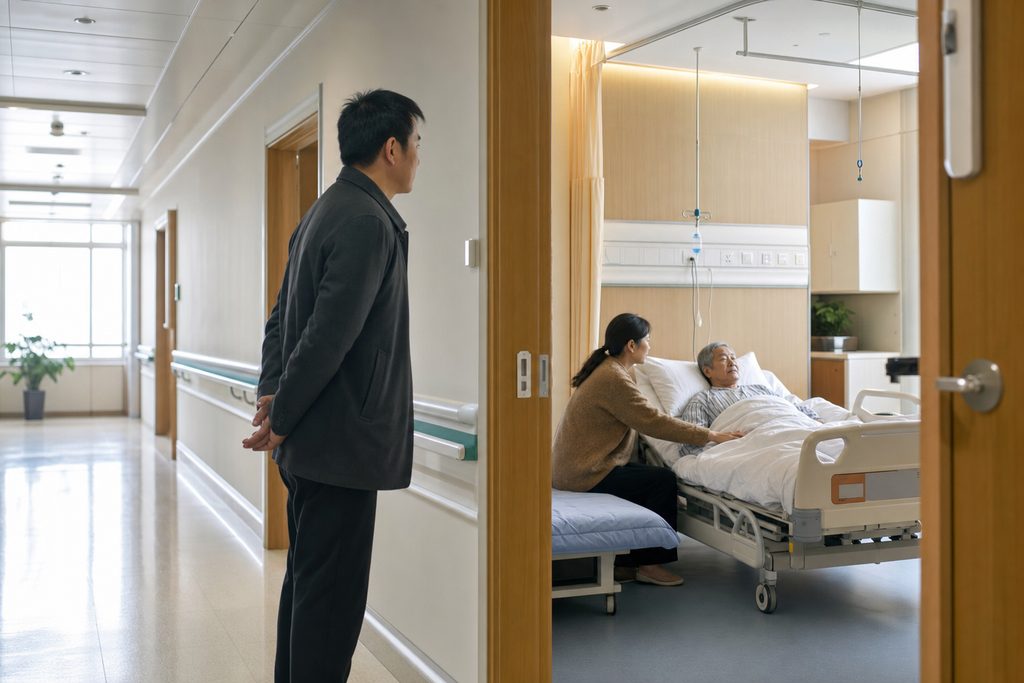
When 54-year-old Linda flew from London to Shanghai to be with her husband during his knee replacement at a top orthopedic center, she assumed she could stay by his side from morning until night. She had booked a hotel near the hospital, packed books to read at his bedside, and planned to help him through every meal. The reality hit her on the first afternoon: a nurse politely but firmly ushered her out at 3:30 PM. Linda spent the next three hours in a hospital courtyard, jet-lagged and confused, wondering what she had gotten wrong.
Her confusion is common. The Chinese hospital visiting hours policy is not a single, unified rule you can look up on one government website. It varies by hospital, by ward, and sometimes by the patient’s condition. But the patterns are consistent enough that knowing them in advance changes everything about how you plan your trip.
Chinese Hospital Visiting Hours: The Short Answer
Most public hospitals in China enforce a strict visiting window of 3:00 PM to 7:00 PM daily. Some extend it to 8:00 PM. Morning visiting is rare outside of ICU exceptions or VIP wards. The afternoon-only block is the default across Beijing, Shanghai, Guangzhou, and virtually every major city with a top-tier public hospital.
That is the headline. But it is not the whole story.
Private international hospitals operate differently. Their visiting policies are closer to what Western patients expect — open hours, sometimes 10:00 AM to 8:00 PM, with more flexibility for family. And within public hospitals, the international or VIP departments often have relaxed rules compared to the general wards. What Linda experienced was standard for a public orthopedic ward. Had her husband been admitted through the hospital’s international medical center, she might have stayed until 8:00 PM without issue.
The visiting hours are not arbitrary. Chinese public hospitals handle staggering patient volumes. A single orthopedic department at a major Shanghai hospital might manage over 200 inpatients at once, with rounds, procedures, and rehabilitation sessions packed into the morning and early afternoon. Family members in the corridors slow everything down. The afternoon window is the compromise between clinical efficiency and family support.
Who This Is Right For — and Who It Isn’t
Knowing the visiting rules in advance helps you decide whether to bring family at all. Not every situation calls for a companion waiting in the hallway.
Family accompaniment makes sense when:
– The patient is undergoing major surgery and will need help with decision-making during the pre-op consultation period
– The patient does not speak Mandarin and will rely on a family member for translation during doctor rounds
– You have arranged care through a hospital’s international department, where visiting hours are more generous and English-speaking staff are available
– The patient is a child or elderly and genuinely needs emotional support that staff cannot provide
Family accompaniment may be a poor use of time and money when:
– The procedure is minor and the hospital stay is 2–3 days
– You are counting on staying at the bedside all day — the Chinese hospital visiting hours policy simply will not allow it in most public wards
– The family member has their own health issues that make long hours in a crowded hospital waiting area risky
– You have not confirmed the specific ward’s visiting schedule before booking flights and hotels
A hard truth: in a standard Chinese public hospital ward, you will spend more hours outside the hospital than inside it. Four to five hours of access per day is the norm. If your presence is essential for translation or care decisions, you need to be in a ward where the rules bend — and those wards cost more.
The Options, Compared
Not all hospital settings in China treat family presence the same way. The table below lays out what you can expect across the three main types of facilities international patients encounter.
| Hospital Type | Typical Visiting Window | Family Access Flexibility | Who It Suits |
|---|---|---|---|
| Public Hospital – General Ward | 3:00 PM – 7:00 PM (strict) | One visitor at a time; no overnight stays except for pediatric or end-of-life cases | Budget-conscious patients comfortable with limited family presence |
| Public Hospital – International/VIP Ward | 10:00 AM – 8:00 PM (often flexible) | One to two visitors; private rooms may allow a family member to stay overnight for an additional fee | Patients who need a companion for translation or emotional support; those willing to pay 1.5–2× the standard rate |
| Private International Hospital | 10:00 AM – 8:00 PM or open | Flexible; private rooms routinely accommodate one overnight family member; some facilities provide a sofa bed | Families who prioritize a Western-style care environment with English-speaking staff and direct insurance billing |
If you are traveling specifically so a family member can be at the bedside throughout recovery, the private international hospital column is the only one that reliably delivers that experience. But it comes at a cost — often 3 to 5 times the price of a public general ward. The public international ward is the middle ground that many of the patients we work with choose: a senior specialist in a top-ranked hospital, a private room, and visiting hours that let a spouse or adult child be present for most of the waking day.
What Are Visiting Rules in Beijing Hospitals Specifically?
Beijing’s top hospitals see some of the highest patient volumes in the world. Peking Union Medical College Hospital, one of the institutions in our top-ranked hospital network, handles over 5 million outpatient visits annually. The inpatient wards run with military precision.
In Beijing public hospitals, the 3:00 PM to 7:00 PM window is nearly universal. Some departments add a short morning window — 7:00 AM to 8:00 AM — but this is typically for dropping off supplies, not for sitting with the patient. ICU visiting in Beijing is even tighter: 30 minutes per day, one person at a time, often scheduled by the nursing station the day before.
The international departments at Beijing hospitals operate under different rules. At China-Japan Friendship Hospital‘s international ward, for example, visiting hours typically run from 10:00 AM to 8:00 PM. Private rooms mean a family member can often stay later if arranged with the nursing staff. But this is not a guarantee — it is a case-by-case courtesy, not a published policy.
One Beijing-specific factor: traffic. If your hotel is in the city center and the hospital is in Haidian or Chaoyang district, a 4:00 PM arrival at the hospital gates means you get three hours with the patient before the 7:00 PM cutoff. Plan your accommodation around the hospital’s location, not the city’s tourist attractions.
Shanghai follows a similar pattern. Ruijin Hospital and Huashan Hospital enforce the afternoon window in general wards. Their international medical centers are more relaxed. Guangzhou’s hospitals, including the First Affiliated Hospital of Sun Yat-sen University, tend to be slightly more flexible in practice — but counting on flexibility without confirming it in advance is a gamble.
Hospital Visitor Restrictions China 2024: What Changed and What Didn’t
The COVID-19 pandemic rewrote visiting rules across China’s healthcare system almost overnight. In 2020 and 2021, most hospitals banned all visitors outright. By 2022, restrictions began easing, and 2024 has seen a return to pre-pandemic norms — with some lasting changes.
What returned to normal: the standard afternoon visiting window in public hospitals. The 3:00 PM to 7:00 PM block is back in force. Family members can enter the ward, sit with the patient, and help with meals.
What changed permanently: screening at hospital entrances. Most Beijing and Shanghai hospitals now require a quick temperature check and sometimes a health declaration QR code scan at the main gate. This is not the elaborate system of 2021 — it takes 30 seconds — but it is a step that did not exist before 2020. Masks are still common in hospital corridors, though rarely mandatory for visitors in 2024.
Another lasting shift: many hospitals now cap the number of visitors per patient at one or two, even during visiting hours. Pre-pandemic, it was not unusual to see three or four family members crowded around a bed. Those days are largely over. The one-visitor-at-a-time rule is now standard in Beijing and Shanghai public wards.
For international patients, the key takeaway is that hospital visitor restrictions China 2024 are stable and predictable. There is no longer the week-by-week uncertainty of the pandemic years. But you still need to confirm the specific ward’s current policy before you travel — especially if you are bringing more than one family member.
What It Costs to Have Family Present
Family presence during a hospital stay in China is not free. The costs are not hospital fees — they are the travel and accommodation expenses that add up quickly when you are staying near a hospital for one to three weeks.
A realistic budget for one family companion during a two-week surgical stay in Beijing or Shanghai:
– Round-trip economy airfare from North America or Europe: $1,200–$2,500
– Hotel near the hospital for 14 nights: $700–$2,100 ($50–$150 per night for a clean, mid-range room)
– Meals and local transport: $300–$500
– Visa fees for an S2 short-term private affairs visa: $140–$200, depending on nationality and processing speed
Total: roughly $2,500 to $5,300 for a two-week stay. That is the cost of having a family member nearby — not at the bedside all day, but available during the 4-to-5-hour daily window and on call for emergencies.
If you opt for a private international hospital where a family member can stay in the room overnight, the hospital bill itself will be higher, but you may save on hotel costs. United Family Beijing, for example, offers private inpatient rooms with a sofa bed for one companion. The trade-off is straightforward: pay more for the hospital room, pay less for the hotel.
Practical Considerations: Documentation, Language, and Daily Logistics
Visa: Get the category right. The family member accompanying a patient applies for an S2 visa, citing private affairs — specifically, accompanying a family member for medical treatment. The M visa is for commercial and trade activities and has nothing to do with medical travel. Using the wrong category can result in a rejected application or problems at the border. The hospital’s international department can provide a supporting letter confirming the patient’s admission, which strengthens the visa application. This is one of the documents we help patients and families prepare.
Language: Do not assume English will work. Outside of private international hospitals and the international departments of major public hospitals, English proficiency among nursing staff is limited. If the patient does not speak Mandarin and the family companion is the translator, you need to be present during doctor rounds. In public general wards, rounds typically happen between 8:00 AM and 10:00 AM — outside visiting hours. This is a genuine problem. The workaround is either to be admitted through an international ward where rounds are more flexible, or to hire a bilingual medical companion who can be present during clinical hours. Our team provides this service starting from $200 per day, handling translation during rounds, test explanations, and discharge instructions.
Payment: Plan for upfront costs. Chinese public hospitals require a deposit at admission, typically 10,000 to 50,000 RMB depending on the procedure. This is paid by the patient or family before treatment begins. International insurance with direct billing is accepted at private international hospitals like Jiahui and Parkway, but public hospitals — even their international wards — usually operate on a pay-first, claim-later basis. Bring a credit card with a sufficient limit or be prepared to make a wire transfer.
After discharge: The family role expands. Once the patient leaves the hospital, visiting hour restrictions disappear — but the need for support does not. A family companion who was limited to 4 hours a day in the hospital suddenly becomes a full-time caregiver at the hotel or serviced apartment. Plan for this transition. If the patient needs wound care, mobility assistance, or help managing medications, the companion should arrive prepared or budget for a private nurse during the first few days post-discharge.
Frequently Asked Questions
Can family visit patients in China hospitals outside of official visiting hours?
In public general wards, the answer is almost always no. The nursing staff enforce the hours strictly, and exceptions are rare — typically limited to end-of-life situations or pediatric cases where a parent is permitted to stay. In international wards and private hospitals, the answer is a qualified yes: you can often stay later if you arrange it with the head nurse, but it is a courtesy, not a right. Do not assume you can bend the rules just because you traveled a long way. Confirm the specific ward’s policy before you book anything.
What are visiting rules in Beijing hospitals for ICU patients?
ICU visiting in Beijing is extremely limited. Expect 30 minutes per day, one designated family member only, and a set time slot assigned by the ICU nursing station — often mid-afternoon. You may be required to wear a gown, mask, and shoe covers. Some ICUs do not permit any visitors and instead provide a daily phone update from the attending physician. This is not unique to China — ICU restrictions are tight worldwide — but the rigidity can be jarring if you are not prepared for it. Ask the international department coordinator to clarify the ICU’s exact policy before the patient is admitted.
Can more than one family member visit at the same time?
In most public hospitals, the rule is one visitor per patient at a time. Some hospitals allow two, but this is the exception rather than the norm in 2024. If you are traveling as a family group, expect to take turns. One person sits with the patient from 3:00 PM to 5:00 PM, the other from 5:00 PM to 7:00 PM. Private international hospitals are more flexible and may allow two visitors simultaneously, especially in larger private rooms.
What happens if a family member needs to make a medical decision but cannot be present during rounds?
This is a real gap in the system. Rounds happen in the morning, visiting hours are in the afternoon, and the two rarely overlap. If the patient cannot communicate independently with the medical team, you have three options: admit the patient through an international ward where family can be present during rounds, designate a bilingual medical companion with a medical power of attorney to act as your proxy during clinical hours, or rely on phone calls with the attending physician after rounds — which is unreliable given how busy Chinese specialists are. The international ward route is the cleanest solution, which is why many families choose it despite the higher cost.
Your Next Step
The Chinese hospital visiting hours policy is not designed to keep families out — it is designed to keep an overburdened public system functioning. Knowing the rules in advance means you can choose the right ward, the right hospital, and the right city for your situation instead of discovering the limitations on day one like Linda did.
Our team at China Medical Services helps international patients and their families navigate these logistics before they travel. We confirm visiting policies for your specific ward, coordinate with hospital international departments, and provide bilingual companions who can be present when family cannot. We are not a hospital. We do not diagnose or treat. We handle the coordination so you can focus on being present when it counts.
To understand your options for a specific hospital or procedure, request a free consultation. We will walk through the visiting rules, visa requirements, and accommodation logistics for your situation — no commitment, no pressure, just the information you need to make a clear decision.
For more medical information and treatment options in China, visit chinamedservices.com (China Medical Services).
