Coming to China for Medical Treatment: Your Full Step-by-Step Service and Support Guide
While patients in Canada wait a median 28.6 weeks for orthopedic surgery, surgeons at Beijing Jishuitan Hospital routinely perform over 300 joint replacements per month. The clinical outcomes match or exceed Western benchmarks. That gap in access is why a growing number of international patients are looking east. But a decision this big raises hard questions. What does the process actually look like? How do you find the right surgeon? And what about the price—specifically, the best hospital for cancer treatment in China cost?
We’ve seen the same confusion from hundreds of patients. The information exists, but it’s scattered, often in Mandarin, and rarely tells you what you actually need to know as a foreigner. This guide lays out the real sequence. No glossing over the paperwork. No pretending language isn’t a barrier. Just a clear path from your first inquiry to your return flight home.
How This Actually Works, Step by Step
The process starts long before you pack a suitcase. Most patients begin with medical records, not a plane ticket.
You send us your existing diagnostic reports, imaging files, and a brief history. We don’t need a novel. Just the facts: what’s been diagnosed, what treatments you’ve tried, and what you’re hoping to achieve. Our team translates these documents into clinical Chinese. This step alone can take 2-3 business days for a complex oncology file.
From there, we match your case to a department. Not just any department. We look at the Fudan University hospital rankings, which classify China’s top 100 hospitals into tiers from A++++ to A. For cancer, we might look at the oncology department at Fudan University Shanghai Cancer Center or the thoracic surgery team at Peking Union Medical College Hospital. The match depends on your specific diagnosis, not a generic “best hospital” list.
The chosen specialist reviews your file. This is a written second opinion. You get back a report in English. It tells you whether the Chinese team agrees with your current diagnosis, what treatment they recommend, and whether they think you’re a good candidate to travel for care. This report costs from $300–500 and is for reference only—not a prescription.
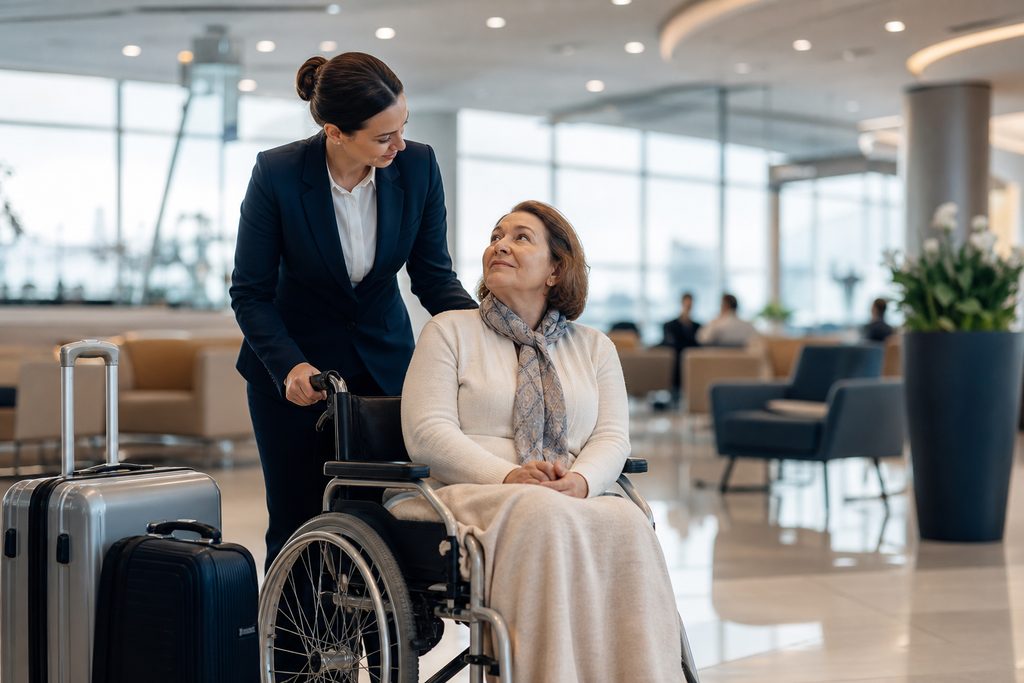
If the opinion makes sense and you want to move forward, we shift into coordination. We help you apply for an S2 visa with the hospital’s invitation letter. We schedule your first in-person consultation. We arrange a bilingual medical companion to meet you at the hospital entrance on day one.
You fly in. You see the specialist. You decide on a treatment plan. That’s the real sequence. No shortcuts. No magic.
Finding the Best Hospital for Cancer Treatment in China Cost and Quality
The phrase “best hospital for cancer treatment in China cost” bundles two separate questions. We’ll unbundle them.
First, quality. China’s top-tier oncology centers are not hidden gems. They’re massive, high-volume institutions. Fudan University Shanghai Cancer Center sees over 1.5 million outpatient visits annually. Sun Yat-sen University Cancer Center in Guangzhou manages more than 110,000 inpatient admissions each year. These are not small boutique clinics. They are factories of expertise, where a single surgeon might perform more esophagectomies in a month than a Western surgeon does in a year.
The Fudan rankings list the top 10 hospitals for oncology by reputation. But reputation alone is a blunt tool. For a specific cancer—say, nasopharyngeal carcinoma—you want the hospital that treats the most cases of that exact disease. Sun Yat-sen University Cancer Center is widely regarded as the global leader for that particular cancer because of its geographic location and patient volume. For liver cancer, you might look to Zhongshan Hospital Fudan University. The “best” hospital is diagnosis-specific.
Now, cost. A complex cancer surgery in the United States can run $100,000 to $300,000. At a top-tier Chinese public hospital, the same procedure—using the same robotic systems and international treatment protocols—often falls between $20,000 and $50,000. That’s the hospital bill. Our service coordination is separate and ranges from $300 for basic appointment help to $5,000–8,000 for full VIP end-to-end support.
This is where the math gets personal. If your insurance doesn’t cover care abroad, you’re paying out of pocket. The savings can be dramatic. But you’re also paying for flights, accommodation, and a companion. For a six-week stay in Shanghai for radiation therapy, budget another $5,000–8,000 for living expenses. The total cost is still a fraction of the U.S. price, but it’s not zero. We always advise patients to get a written second opinion first. That $300–500 investment can save you from a $30,000 trip that wasn’t right for you.
A Realistic Timeline
The calendar matters. A lot of patients assume they can email records on Monday and fly out on Friday. That’s not how it works. Here’s a realistic sequence with ranges, not promises.
| Stage | What Happens | Typical Duration |
|---|---|---|
| Document Preparation | You gather and send existing medical records, imaging, and pathology slides. | 3–7 days |
| Translation & Triage | We translate your file into clinical Chinese and match your case to the right department. | 2–4 business days |
| Written Second Opinion | The Chinese specialist reviews your file and returns a written report in English. | 5–10 business days |
| Decision & Planning | You review the opinion, ask follow-up questions, and decide whether to travel. | Variable (1–4 weeks) |
| Visa Processing | We provide the hospital invitation letter; you apply for an S2 visa at your local Chinese embassy or consulate. | 1–4 weeks |
| Appointment Scheduling | We coordinate your first in-person consultation date with the specialist. | 1–3 weeks lead time |
| Travel & First Consultation | You fly to China, meet your bilingual companion, and see the doctor. | Day 1 on the ground |
| Treatment & Recovery | Surgery, chemotherapy, or other treatment, plus initial recovery before you’re cleared to fly home. | 2–12 weeks |
The total lead time from first contact to first consultation is usually 6 to 10 weeks. Some patients move faster. But planning for two months is prudent. The visa alone can take a month if the embassy is backlogged.
And here’s a step people forget: pathology slides. If you want the Chinese team to re-examine your tumor tissue, you need to ship physical slides or paraffin blocks. That’s a whole separate logistical chain with customs forms and courier tracking. Add a week.
What Can Go Wrong — and What Happens Then
Honesty is the only thing that builds trust here. Things do not always go smoothly.
The most common snag: your records are incomplete. A patient sends a radiology report but no actual DICOM files on a CD. The Chinese radiologist needs those raw images to make an independent assessment. We catch this early in most cases, but it adds days while you request the disc from your home hospital.
Another failure mode: the specialist reviews your file and says no. They might determine that your cancer is too advanced for the treatment you’re seeking. They might recommend a clinical trial you can access at home instead. This happens. It’s disappointing, but it’s also the point of a second opinion. You just saved yourself an expensive, exhausting trip that wouldn’t have helped. The written opinion fee is not refundable—the work was done—but it did its job.
Sometimes the problem is on the ground. You arrive and the specialist you wanted is suddenly unavailable. A conference, an emergency surgery, a schedule change. Public hospitals are dynamic environments. This is where a bilingual companion earns their value. They don’t just translate. They navigate. They talk to the department coordinator, find out which senior colleague is covering, and get you seen. You might not see the named specialist, but you see someone in their team who has full access to your file and the same treatment protocols.
The hardest scenario: a complication during treatment. A post-surgical infection. An unexpected reaction to chemotherapy. You’re in a foreign country, you don’t speak the language, and something is wrong. This is the moment when having a dedicated coordinator matters most. We’re on the ground, in the hospital, advocating for you. We’re not doctors, but we make sure the doctors hear your concerns in real time. We also help you communicate with your family back home.
How to Find a Medical Interpreter in Beijing and Other Practical Hires
You might be wondering: can I just hire someone on my own? The short answer is yes, but the quality gap is wide. Searching for how to find a medical interpreter in Beijing brings up freelance platforms and translation agencies. Most of those interpreters are generalists. They can handle a business meeting. They are not prepared for a thoracic surgeon explaining a lobectomy in rapid Mandarin while you’re in a paper gown.
A medical interpreter needs to understand clinical terminology in both languages. They need to know hospital workflow—where to pay, where to get blood drawn, which window handles what. They need to be comfortable in a high-stress environment. A general interpreter who freezes when the doctor says “squamous cell carcinoma” is a liability.
Our bilingual companions are not just interpreters. They are hospital navigators. They’ve spent hundreds of hours in Beijing’s top hospitals, from Peking Union Medical College Hospital to Beijing Tiantan Hospital. They know the layout, the processes, and the staff. They handle registration, queue management, payment, and translation. They are your voice and your ears for the day. The cost starts from $300 per day.
Booking Spine Surgery Abroad in China: What to Verify
Spine surgery is one of the most common procedures international patients seek in China. The cost savings are significant. An affordable knee replacement surgery Shanghai price might run $8,000–15,000, compared to $35,000–50,000 in the U.S. Spine procedures follow a similar ratio.
When you book spine surgery abroad China, you’re not booking a hotel room. You’re selecting a surgical team. Verify the surgeon’s annual volume for your specific procedure. A surgeon who does 300 lumbar fusions a year is in a different league from one who does 30. Ask about the implant brand. Is it a globally recognized system like Medtronic or DePuy Synthes? Chinese hospitals use the same implants as Western hospitals, but you should confirm.
Also ask about the post-operative plan. Spine surgery isn’t just the operation. It’s the first 72 hours of monitoring, the drain removal, the first time you stand up. And then there’s the flight home. Sitting in an economy seat for 12 hours three days after a lumbar fusion is a bad idea. You need to plan for at least 10–14 days in Shanghai after surgery before you’re cleared to fly. Your companion can help coordinate a business-class return seat or an extended recovery stay.
Is Stem Cell Therapy Legal in China for Foreigners?
This question comes up constantly: is stem cell therapy legal in China for foreigners? The answer is nuanced and often misunderstood.
China allows stem cell therapies under specific regulatory frameworks. Clinical trials are permitted and must be registered. Certain approved treatments, particularly for hematological conditions, are standard practice. However, the landscape also includes unproven and unregulated offerings. Clinics that advertise “stem cell cures” for everything from autism to spinal cord injury are operating outside the bounds of evidence-based medicine.
For a foreign patient, the safest path is to seek stem cell treatment only through a top-tier public hospital that is conducting a registered clinical trial. These trials follow international protocols and have ethics committee oversight. If a clinic promises miraculous results with no trial registration and no published data, walk away. Our team can connect you with legitimate hematology and oncology departments that perform hematopoietic stem cell transplantation for conditions like leukemia and lymphoma. We do not facilitate unproven stem cell interventions.
Practical Considerations: Records, Visa, Payment, and Follow-Up
Let’s get into the specifics that trip people up.
Medical records. You need everything. Operative reports, pathology reports, radiology images on CD, a current medication list, and a summary letter from your primary doctor. The more you send, the better the Chinese specialist can assess your case. Incomplete records lead to a useless second opinion.
Visa. You will apply for an S2 visa, which covers short-term private affairs including medical treatment. The hospital’s invitation letter is a critical supporting document. We help you obtain this. The S2 visa typically allows a stay of up to 180 days. If your treatment requires longer, you may need an S1 visa. Your accompanying family member also applies for an S2. Do not apply for an M visa. That’s for commercial activities and will be rejected for medical travel.
Payment. Chinese public hospitals require upfront payment. You pay a deposit upon admission, and the hospital draws down from that deposit as services are rendered. International credit cards are accepted at international departments, but not always at standard cashier windows. We advise patients to have multiple payment methods ready. Some private international hospitals like United Family offer direct insurance billing. Most public hospitals do not.
Insurance. Check your policy. Some international insurers will reimburse treatment at JCI-accredited hospitals in China. You’ll need to pay upfront and file for reimbursement. We can provide the itemized invoices and medical reports you need for your claim.
Follow-up at home. Before you leave China, your Chinese medical team should provide a detailed discharge summary in English. This includes exactly what was done, what medications you’re on, and what your home doctor needs to monitor. We ensure this document is thorough. Your home oncologist or surgeon will need it to take over your care.
Frequently Asked Questions
There is no single best hospital for all cancers. The right choice depends on your specific diagnosis. For liver cancer, Zhongshan Hospital Fudan University is a global leader. For nasopharyngeal carcinoma, Sun Yat-sen University Cancer Center is unmatched. Cost varies by procedure complexity, but most complex cancer surgeries range from $20,000 to $50,000 at top public hospitals. We match your case to the department with the highest relevant volume and expertise.
You can search freelance platforms, but verifying clinical competence is difficult. Our bilingual companions are trained specifically for hospital environments. They know medical terminology in both English and Mandarin and understand the workflow of Beijing’s major hospitals. They handle registration, payment, and translation. The cost starts from $300 per day.
It depends entirely on what’s included. Some packages bundle a hotel, airport transfer, and a single clinic visit. Others include full case management, a written second opinion, hospital coordination, and a daily companion. Scrutinize the details. The hospital’s treatment charges are almost never included in a package price. We provide transparent, itemized coordination services so you know exactly what you’re paying for.
Stem cell therapy is legal within registered clinical trials and for approved indications like hematopoietic stem cell transplantation for blood cancers. Many advertised “stem cell treatments” are unproven and unregulated. Foreign patients should only pursue stem cell therapy through top-tier public hospitals with registered trials and ethics oversight. We do not facilitate unproven interventions.
You can get a detailed cost estimate after a specialist reviews your imaging and medical history. The estimate will include the surgeon’s fee, hospital stay, implant costs, and anesthesia. Unforeseen complications can change the final bill, but the estimate should be accurate within 10–15%. Always confirm the implant brand and the surgeon’s annual volume for your specific procedure before committing.
Your Next Step
The decision to travel for medical care is never just about cost. It’s about access, timing, and trust. We’ve seen patients arrive exhausted by long waits at home and leave China with a renewed sense of control over their health. Our role is to make the path straight. We translate records, connect you with the right specialists, and put a capable bilingual companion
For more medical information and treatment options in China, visit chinamedservices.com (China Medical Services).
