Limb Lengthening Surgery Cost China: Distraction Osteogenesis Full Journey Pricing and Support
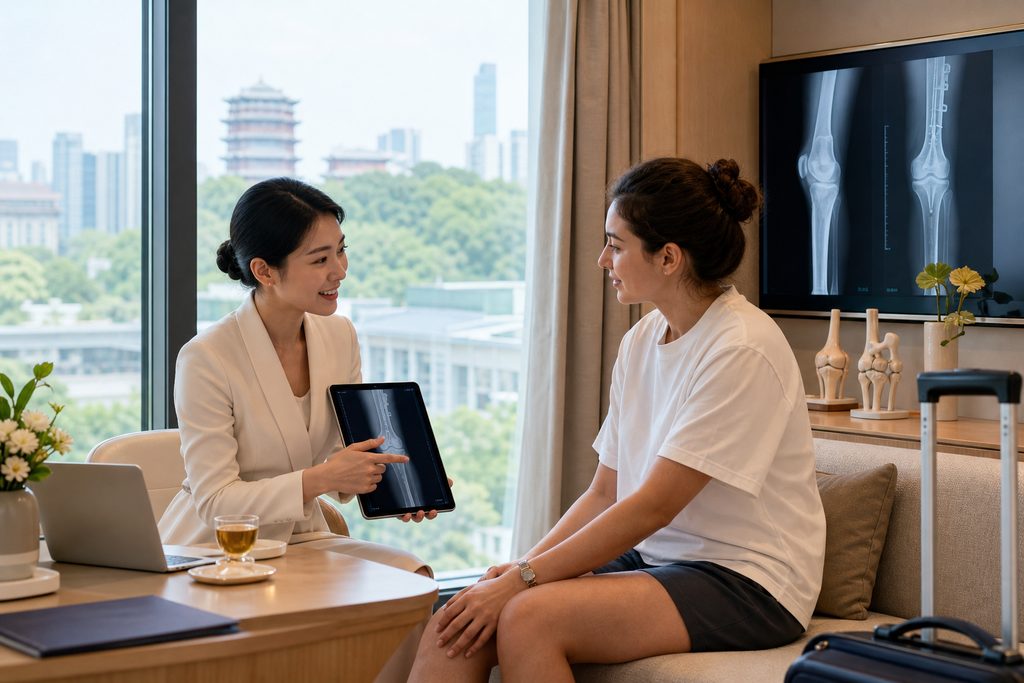
According to the International Society of Orthopedic Surgery and Traumatology, over 50,000 cosmetic limb lengthening procedures are performed globally each year, with Asia seeing the fastest growth. For many, the search starts with one question: what is the actual limb lengthening surgery cost China? A full bilateral femoral lengthening using precise internal nails typically ranges from $45,000 to $85,000 in China. This includes the implant, surgeon fees, hospital stay, and initial rehabilitation. That figure lands at roughly one-third to one-half of what patients pay in the United States or Western Europe. But a single number never tells the whole story. The final cost depends on the target gain, the specific implant technology, and the length of your stay—which can stretch from three months to over a year.
Limb Lengthening Surgery Cost China: The Short Answer
For a complete bilateral femoral lengthening of 5 to 8 centimeters using the PRECICE intramedullary nail system, patients should budget between $55,000 and $85,000. Tibial lengthening runs slightly lower, often $40,000 to $65,000. These figures cover the implant itself, operating room time, a private room during the acute hospital phase, and daily physiotherapy during the distraction and consolidation phases. They do not typically cover your flight, visa fees, long-term apartment rental, food, or the cost of a companion if you travel alone. The gap between the low and high end usually comes down to the hospital tier and whether you go through the standard public pathway or the international VIP department.
Who This Is Right For — and Who It Isn’t
This is a serious orthopedic procedure. It is not a cosmetic shortcut. The ideal candidate has realistic expectations about pain and the grueling daily physiotherapy routine required for months. You need to be in good general health, a non-smoker, and have the financial resources to stay in China for at least 90 to 120 days for a single segment lengthening.
Who should not pursue this? Anyone with a bleeding disorder, active infection, severe osteoporosis, or a history of non-union fractures faces significantly higher risks. Also, if you cannot take a minimum of three months away from work and family, or if you expect a pain-free experience, you are not ready for distraction osteogenesis. The psychological toll of being in a foreign country while your bones are slowly pulled apart is immense. We have seen patients underestimate this and struggle badly. Being honest about your mental resilience matters as much as your bone density scan.
The Options, Compared
Not all limb lengthening is created equal. The technology you choose dictates the cost, the pain level, and the scar footprint. Here is how the main methods stack up in China.
| Technology | Cost Range (USD) | Scarring | Pain Level | Weight-Bearing |
|---|---|---|---|---|
| PRECICE Internal Nail | $55,000 – $85,000 | Minimal | Moderate | Delayed (partial) |
| External Fixator (Ilizarov) | $20,000 – $35,000 | Significant | High | Early (full) |
| LON Method (Combined) | $30,000 – $45,000 | Moderate | High | Moderate |
The PRECICE nail is the gold standard for medical tourism limb lengthening China packages. It uses a magnetic gear mechanism controlled by an external remote control. No pins protrude through your skin, so the infection risk drops dramatically compared to the classic Ilizarov frame. The trade-off is cost. The pure external fixator is much cheaper, and you can put weight on it sooner, but you will live with a metal cage around your leg for months. The LON method is a hybrid: an internal nail combined with a temporary external frame. It is faster than pure external fixation but still leaves pin-site scars. For most international patients who can afford it, the internal nail offers the least disruptive recovery.
Distraction Osteogenesis Price China 2024: What Drives the Variance
The distraction osteogenesis price China 2024 landscape has shifted slightly upward due to the rising cost of imported implants. The PRECICE nail itself costs the hospital between $18,000 and $22,000, and that cost passes directly to you. A few Chinese manufacturers now produce competing magnetic nails, which can bring the implant cost down by 30%, but the clinical data is thinner. You need to ask explicitly which nail your surgeon plans to use.
Hospital tier is the second big lever. A public top-ranked orthopedic center might quote $45,000 for a procedure that a private international hospital lists at $75,000. The difference is not in surgical skill. It is in the environment. The private hospital will have English-speaking nurses, Western-style food, and a more hotel-like room. The public hospital delivers world-class surgical volume—often hundreds of these cases per year—but the ward may feel crowded and nobody will speak English. That is where a bilingual medical companion becomes essential.
Also, do not overlook the consolidation phase. Bone regenerates slowly. If you lengthen 6 centimeters, you need roughly 60 days of distraction plus another 90 to 120 days for the bone to harden before the nail can be removed. Every extra week in China adds to your living costs. Some patients return home during consolidation; others stay for daily supervised physiotherapy. That decision alone can swing your total outlay by $5,000 to $10,000.
How Much Does Limb Lengthening Cost in China When You Add the Hidden Fees?
When patients ask us “how much does limb lengthening cost in China,” they are usually comparing a single number to a quote from a US clinic. That comparison misses the full picture. A $65,000 surgical package in China might sound close to a $95,000 package in Florida. But break it down.
The Chinese quote often includes the implant, surgeon, anesthesiologist, a two-week hospital stay, and basic physiotherapy during admission. It does not include the external remote control device for the PRECICE nail, which can cost $3,000. It does not include the removal surgery a year later, which adds another $8,000 to $12,000. It does not include the blood thinners, the specialized walker, or the intensive outpatient physiotherapy you will need for months.
Plan for these extras:
- PRECICE external remote controller: $2,500 – $3,500
- Outpatient physiotherapy (per session): $50 – $100
- Monthly apartment rental near the hospital: $800 – $2,000
- Medical visa (S2) and document processing: $300 – $500
- Round-trip flights: $1,500 – $4,000 depending on class and origin
- Nail removal surgery after one year: $8,000 – $12,000
Add it up. A realistic all-in budget, including living expenses and hardware removal, sits between $75,000 and $110,000. Still substantially less than the $150,000 to $250,000 common in the US, but not the bargain the headline number suggests.
Best Limb Lengthening Hospitals in China: Where Surgical Volume Meets Technology
The best limb lengthening hospitals in China are concentrated in a few major cities. Beijing, Shanghai, and Guangzhou dominate. What sets a top center apart is not just the technology but the sheer repetition. A surgeon who performs 200 distraction osteogenesis cases per year has seen complications that a surgeon doing 20 cases per year has only read about. That pattern recognition matters when something goes wrong at week six.
Public orthopedic hospitals in Beijing affiliated with military or sports medicine institutes handle enormous trauma and reconstruction volumes. Their limb reconstruction departments often run dedicated wards just for lengthening and deformity correction. In Shanghai, several university-affiliated hospitals have pioneered the use of the latest weight-bearing internal nails, reducing the time patients spend wheelchair-bound. These hospitals consistently rank among China’s top 10 for orthopedics, as listed in our specialty department rankings.
Private international hospitals in these cities offer the same top surgeons but in a setting designed for foreigners. You get a private room, English-speaking staff, and direct insurance billing. The trade-off is cost—often 30% to 50% more than the public route. Some patients split the difference: surgery at a top public hospital with a bilingual medical companion, then transfer to a private rehabilitation center for recovery. Our team can help you evaluate which top-ranked hospitals best match your clinical needs and budget.
Is Distraction Osteogenesis Safe in China? The Data, Not the Hype
Is distraction osteogenesis safe in China? The honest answer is that safety depends far more on the specific hospital and surgeon than on the country. China’s top orthopedic centers publish complication rates comparable to leading centers in Germany and the US. A 2022 study in the Journal of Orthopaedic Surgery reported a deep infection rate of 2.1% for internal lengthening nails in a cohort of 340 patients at a major Shanghai center. That is in line with international benchmarks.
But the data also reveals a gap. Not every hospital offering this surgery has that level of quality control. The regulatory oversight is less uniform than in Germany, where limb lengthening is tightly controlled. In China, you must do your own due diligence. Ask the surgeon directly: How many of these specific procedures have you done? What is your personal complication rate for this nail system? Will you manage my consolidation phase, or will I be handed off to a junior resident? If the answers are vague, walk away.
The other safety factor is the implant itself. Counterfeit medical devices are a known issue in some markets. Reputable Chinese hospitals source PRECICE nails directly from NuVasive, the US manufacturer, with full traceability. Ask to see the implant packaging and verify the serial number. A trustworthy hospital will not hesitate to show you.
Practical Considerations: The Logistics That Make or Break Your Journey
Arriving in China for a three-month medical stay is not like booking a weekend trip. The practical layer can overwhelm you before the surgery even starts.
Visa and Documentation. You will need an S2 visa, which is the short-stay category used for private medical treatment. Your family members traveling with you also apply for S2 visas. The application requires an invitation letter from the Chinese hospital, a detailed treatment plan, and proof of financial means. Processing takes two to four weeks. Do not book flights until the visa is in your passport. Our team handles the hospital invitation letter coordination so the paperwork matches exactly what the embassy expects.
Payment. Chinese hospitals require a deposit before admission. For international patients, this often means a wire transfer of 50% to 100% of the estimated surgical cost before you arrive. Public hospitals rarely accept foreign credit cards or insurance directly. You will need to wire funds in advance or carry a substantial bank draft. Private international hospitals are more flexible and can often bill your insurer directly. Confirm the payment method in writing before you commit.
Language and Daily Life. Outside the private international hospitals, English is scarce. The physiotherapist who will push you through painful stretching exercises every day likely speaks only Mandarin. The pharmacy that dispenses your blood thinners will give you instructions you cannot read. A bilingual medical companion bridges this gap—translating during consultations, arguing with the pharmacy, and making sure you understand every step. This is not a luxury. It is a safety measure.
Follow-Up After Returning Home. Your bone will continue remodeling for a year after surgery. You need a local orthopedic surgeon willing to take over your care—reviewing X-rays, monitoring for late infection, and eventually removing the nail. Find this doctor before you leave for China. Send them the surgical protocol and get their agreement to manage your follow-up. Do not assume anyone will take on a complex case from another country without prior arrangement.
Frequently Asked Questions
Most patients achieve a functional gait, but “normal” is a loaded word. If you lengthen 8 centimeters, your biomechanics change permanently. Your gait will look different. You may have a slight limp when tired. Soft tissue—muscles, nerves, tendons—adapts more slowly than bone. Some tightness in the hips and knees can persist for years. Athletes who lengthen moderately, around 5 centimeters, often return to running and sports. Those who push for the maximum gain face a harder road. Physiotherapy adherence is the single biggest predictor of how well you walk afterward. Skip sessions, and you will regret it.
Non-union—where the new bone fails to harden—is the complication everyone fears. It happens in roughly 3% to 5% of cases. If the gap does not fill in, the surgeon may slow down the distraction rate or stop it temporarily. In more serious cases, you need a bone graft surgery, where bone is taken from your hip and packed into the gap. This adds months to your stay and thousands of dollars to your bill. Some surgeons inject bone morphogenetic protein to stimulate healing, but this is an off-label use and adds cost. Ask your surgeon about their protocol for slow consolidation before you sign the consent form.
Beware of packages under $30,000 for internal nail lengthening. These often use older external fixation technology, or they quote a price that only covers the hospital stay and excludes the implant cost. Some clinics advertise a low base price and then charge separately for the nail, the physiotherapy, and the accommodation. Read the fine print. A genuine all-inclusive medical tourism limb lengthening China package using a modern internal nail cannot realistically be delivered for less than $50,000 without cutting corners on implant quality or rehabilitation support. If a price seems too good to be true, it almost always is.
Your Next Step
Distraction osteogenesis is a life-changing procedure that demands clear information and honest planning. The cost in China offers genuine value compared to Western pricing, but only when paired with the right surgeon, the right implant, and a realistic recovery plan. Our team at China Medical Services does not perform surgery or offer medical advice. We connect you with the orthopedic departments best matched to your goals, coordinate the hospital invitation for your S2 visa, and provide bilingual companions who stay with you through the hardest weeks. When you are ready to explore your options, a consultation is the natural next step. Visit our patient services page to start the conversation—no commitment, just a clear-eyed look at what is possible.
A successful outcome starts long before the first incision. It starts with knowing exactly what you are signing up for, what you will pay, and who will be in the room. The rest is patience and physiotherapy.
For more medical information and treatment options in China, visit chinamedservices.com (China Medical Services).
