Children’s Hospitals in China: A Guide to Pediatric Centers for International Families
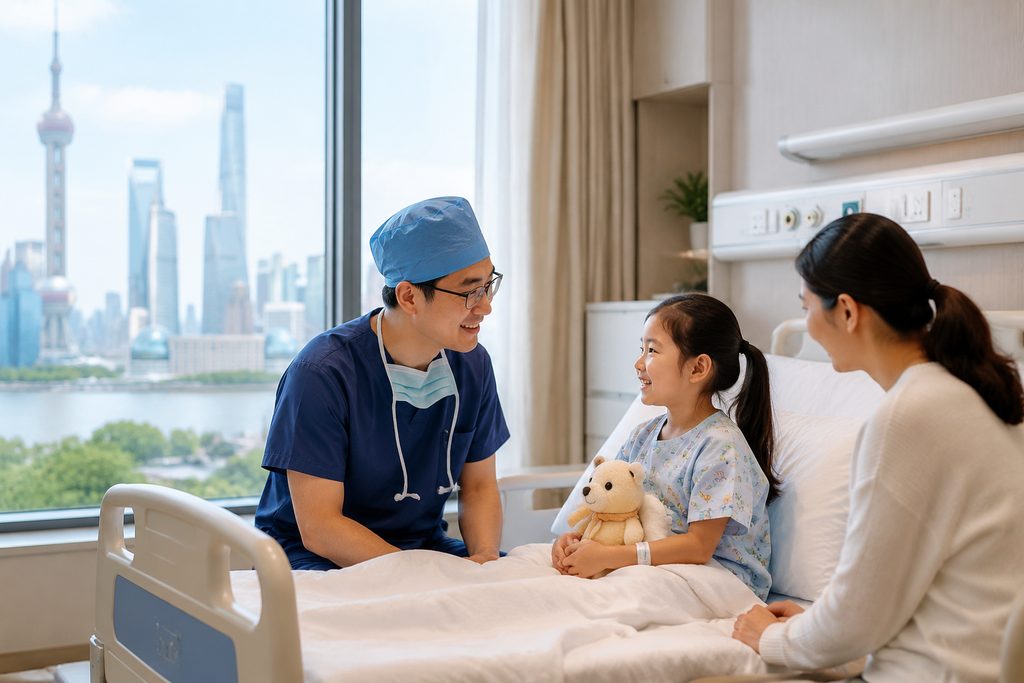
You have probably heard that taking a child to a hospital in a foreign country is a gamble you should never take. The image is one of chaos, language barriers, and questionable standards. That picture is about 15 years out of date. China now has dedicated pediatric centers with JCI accreditation, English-speaking international wards, and clinical volumes that dwarf most Western institutions. The real challenge is not quality. It is knowing which door to walk through.
Children’s Hospitals in China: The Short Answer
China’s top-tier pediatric centers deliver care on par with leading Western hospitals, often at 20% of the cost. The best children’s hospital China for international patients is typically the international division of a major public teaching hospital or a JCI-accredited private facility in Beijing or Shanghai. But here is the part most guides skip: you cannot just show up. The public system runs on a same-day queue model that will overwhelm any foreign family without preparation. Accessing the right level of care means planning the channel, not just the destination.
Who This Is Right For — and Who It Isn’t
We are direct with families about this. Traveling for a child’s medical care is not for everyone. Here is the honest breakdown.
Families who typically benefit:
- You need a complex pediatric surgery with a short waiting period. Cardiac and orthopedic volumes at major Chinese centers are among the highest globally.
- You are an expatriate already living in China and need a reliable, ongoing specialist for a chronic condition.
- You are seeking a specific treatment protocol, such as a particular minimally invasive approach, that has limited availability in your home country.
- Cost is a genuine barrier to care at home, and you are willing to trade the familiarity of your local system for affordability without sacrificing clinical standards.
Who should think twice:
- Your child is medically unstable for long-haul air travel. No hospital can mitigate that risk.
- You need a quick, one-off prescription refill. The process of establishing as a new international patient is too involved for that.
- You expect the entire clinical interaction to happen in your native language without a coordinator. Even in international wards, the deepest specialist discussions often default to Mandarin.
- Your home insurance requires in-network care and you have no out-of-network budget. While our coordination fees can be structured, the hospital bill itself is usually paid upfront and then reimbursed.
The Options, Compared
Not all pediatric care in China operates the same way. The table below lays out the three distinct channels available to an international family. The right choice depends entirely on the clinical complexity and your budget.
| Factor | Public Hospital VIP/International Ward | Private International Hospital | Standard Public Outpatient |
|---|---|---|---|
| Typical pediatric surgery cost Shanghai benchmark | $8,000 – $18,000 for moderate complexity | $20,000 – $45,000 for moderate complexity | $3,000 – $8,000 for moderate complexity |
| English-speaking staff | Yes, in the international department | Yes, throughout | Rarely. Bring a bilingual companion. |
| Appointment booking | Pre-arranged, scheduled slot | Pre-arranged, often same-week | Same-day queue. First-come, first-served. |
| Insurance | Pay upfront, reimbursed later | Direct billing often accepted | Cash or Chinese payment apps only |
| Best for | Complex surgery, top specialist access | Routine care, chronic management, comfort | Minor acute issues if you have local support |
The public VIP ward is where we see most surgical families land. You get the same senior surgeon who operates in the standard wing, but with a private room and a nurse who speaks English. The private international hospital is often the right answer for families asking how to find a good pediatrician in China for ongoing asthma or allergy management. The standard outpatient route? We rarely recommend it for a first-time visitor. The friction is too high.
What “Pediatric Center” Actually Means in the Chinese Hospital System
This is the part that surprises most parents. When you search for the best children’s hospital China for international patients, you might picture a standalone building with a playground and murals on the wall. Those exist. But the real clinical power sits inside massive general university hospitals.
Beijing Children’s Hospital, for instance, is a standalone monolith handling over 3 million outpatient visits a year. It is one of the national clinical research centers for pediatric diseases. Shanghai Children’s Medical Center, affiliated with Shanghai Jiao Tong University, runs a cardiac surgery program whose volume is staggering. These places are cities within cities. The waiting hall can feel overwhelming. That is not a sign of disorganization. It is the sheer scale of demand in a country of 1.4 billion people.
Then you have the pediatric departments inside the general giants. Peking Union Medical College Hospital runs a highly regarded pediatrics service. So does West China Hospital in Chengdu. The advantage here is seamless access to multidisciplinary teams. A child with a rare tumor gets the pediatric oncologist and the adult surgical subspecialist who has seen 5,000 similar cases. That crossover is harder to coordinate in a standalone children’s facility.
Private options like United Family Healthcare and Jiahui International Hospital offer a calmer environment. The walls do have murals. The waiting time is measured in minutes, not hours. But the surgical complexity they handle tops out lower. For a tonsillectomy or an MRI under sedation, they are excellent. For a congenital heart defect, you still want the public academic center’s VIP wing.
Is pediatric care in China safe for foreigners? The safety question is really about matching the condition to the right tier. A JCI-accredited international ward with a dedicated pediatric anesthesia team is as safe as any facility in London or Boston. A random walk-in clinic is not where you take a complicated child.
What It Costs
Numbers matter. Here is what we tell families to budget, based on actual cases coordinated through major centers.
A pediatric inguinal hernia repair, done laparoscopically in a Shanghai public VIP ward, typically runs between $4,500 and $6,500. That includes the surgeon’s fee, anesthesia, a private room for one night, and nursing care. The same procedure at a private international hospital in Shanghai pushes closer to $12,000. In the United States, uninsured cash prices often exceed $20,000.
More complex work scales predictably. A tetralogy of Fallot repair, one of the more common congenital heart surgeries, lands between $18,000 and $28,000 at a top cardiac center like Fuwai Hospital’s pediatric unit or Shanghai Children’s Medical Center. Western bills for the same operation routinely cross $150,000.
What drives the variance? The surgeon’s academic rank matters. A full professor with 30 years of experience commands a higher fee. The length of ICU stay is the biggest wildcard. A routine 24-hour observation is one price. A 5-day stay with ventilation is another. Hospital pharmacy charges also vary. Imported drugs cost more than domestic equivalents, sometimes by a factor of three.
Our written second opinion service for pediatric cases starts from $300. A top-specialist video consultation, where you speak directly with the surgeon who would operate, ranges from $500 to $800. Any of these fees credit fully toward our coordination service if you proceed with treatment within 90 days.
Practical Considerations: Records, Visas, and the First 48 Hours
You have decided to explore this path. The logistics are not trivial, but they are manageable with the right sequence.
Medical records come first. Every Chinese specialist will want to see the raw data, not just the summary report from your home physician. That means DICOM files from imaging, not JPEGs. Actual lab values, not a note saying “normal.” A translated summary in Chinese is helpful, but the original English reports carry more weight than a bad translation. We handle the certified translation as part of case preparation.
The visa is an S2. Not an M visa. The S2 is for short-term private affairs, which includes medical treatment. You will need an invitation letter from the hospital. The international department issues these routinely once a treatment plan is confirmed and a deposit is placed. Processing time at your local Chinese embassy or consulate is typically 4 to 7 business days. Both parents can apply under the same category as accompanying family members.
Payment is upfront. The hospital will require a deposit before admission. This is standard practice for all patients, domestic or foreign. The amount is an estimate of the total treatment cost. A credit card works at international wards. Wire transfers are common for larger surgical deposits. Your home insurance will reimburse you later; the hospital does not bill them directly except at a few private facilities.
The first 48 hours on the ground are disorienting. Even at a top children’s hospital Beijing price list in hand, the physical experience of navigating the campus is a lot. Registration counters, blood draw stations, and pharmacy windows are often in separate buildings. A bilingual medical companion who knows the floor plan and the queue system turns a 4-hour ordeal into a 90-minute process. This is not a luxury. It is the difference between a calm child and a melting-down one.
Frequently Asked Questions
Yes, at the right tier. JCI-accredited international wards and the VIP departments of Fudan-ranked university hospitals follow protocols that are audited and benchmarked globally. Pediatric anesthesia safety, infection control, and surgical outcomes data from these specific units are comparable to Western centers. The risk lies in accessing care through unvetted channels. A standard public clinic with no English capability and no experience with foreign patients is not the same product.
Start with the hospital, not the individual doctor. Identify a JCI-accredited private hospital or a public hospital’s international department in your city. These institutions credential their pediatricians to a consistent standard. Once you are in their system, you can request a specific doctor for follow-ups. Expatriate parent groups on platforms like WeChat are also surprisingly reliable for word-of-mouth recommendations, but always verify the hospital affiliation. A “famous doctor” practicing out of a small private clinic with no institutional backing is a red flag.
This is the question every parent asks and every glossy brochure avoids. Complications happen in every health system on earth. What differs is the response. In a major Chinese academic center, the senior attending physician is typically in-house or reachable within 30 minutes. The ICU capability to manage a crashing child is robust because these hospitals see high volumes of sick patients. The weak point is communication during a crisis. The family’s bilingual coordinator becomes essential to translate not just the words but the clinical reasoning in real time. You should also confirm before travel that your insurance covers medical evacuation. It is a remote possibility, but knowing the pathway exists reduces the psychological weight.
Not in the way you might book a cosmetic surgery package in another country. Pediatric care is too variable for a flat rate. What you can do is secure a detailed treatment estimate after a remote case evaluation. The hospital’s international department will review your child’s records, propose a plan, and issue a cost estimate with a defined range. That estimate becomes the basis for your deposit. Final billing reflects actual days in the ICU, actual drugs used, and actual consumables. Packages that promise a single all-in price for complex pediatric surgery should be viewed with skepticism.
Your Next Step
The information here gives you a framework. It cannot tell you which specific surgeon is right for your child’s particular anatomy. That requires a case review. Our team at China Medical Services is not a hospital and we do not provide medical advice. We are the operational layer that connects your family to the appropriate pediatric center, translates the clinical conversation, and manages the logistics on the ground. If you have records and a set of questions, we can put them in front of the right specialist. The consultation is free, and there is no pressure to commit. Sometimes the right next step is simply knowing your options.
For more medical information and treatment options in China, visit chinamedservices.com (China Medical Services).
