Hair Restoration Hospitals in China: A Guide to Costs and Clinics
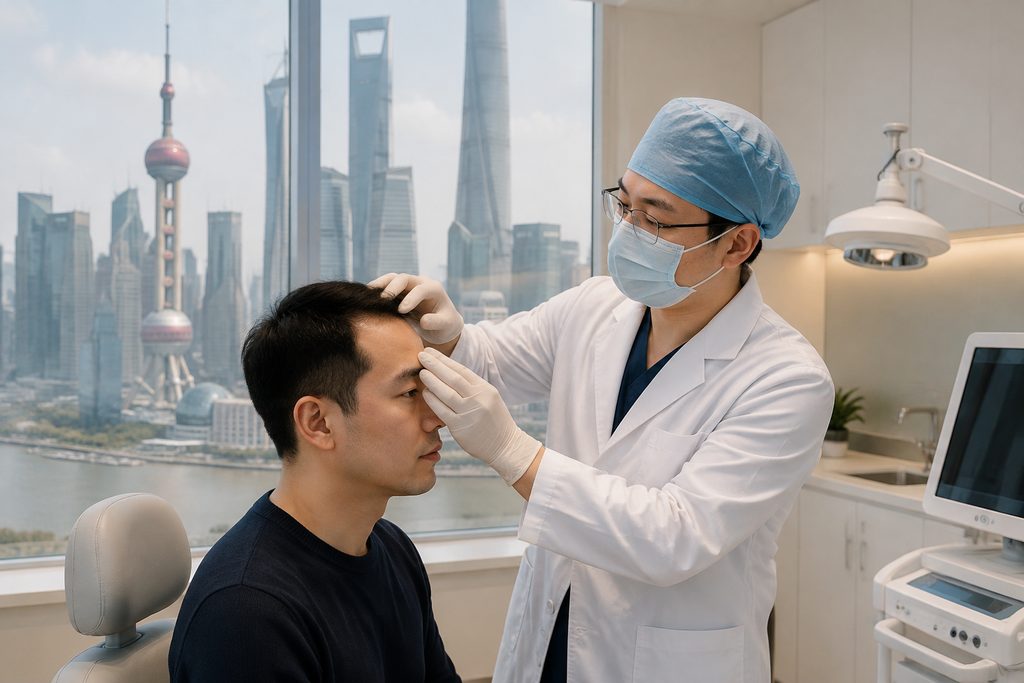
Hair Restoration Hospitals in China: The Short Answer
When 38-year-old David from Melbourne started losing his hairline in his early thirties, he did what most people do. He tried minoxidil. He bought laser combs. He watched his confidence erode with every photograph. By the time he began researching surgical options, he had already received quotes from clinics in Australia ranging from $18,000 to $25,000 for a 3,000-graft FUE procedure. Then a colleague mentioned something that changed his search entirely: hair transplant cost China averages between $2,500 and $8,000 for the same number of grafts at internationally accredited facilities.
That price gap is real. It is also not the whole story. China has world-class hair restoration clinics, particularly in Shanghai, Beijing, and Guangzhou. But navigating the system as a foreign patient requires understanding how public hospitals work, what “international department” means, and why the cheapest quote you find online is almost never the right one.
Who This Is Right For — and Who It Isn’t
Hair restoration surgery in China makes sense for a specific type of patient. It is not for everyone, and being honest about that saves people from expensive mistakes.
Good candidates typically include:
- Men and women with pattern hair loss stabilized by medication, seeking FUE or FUT procedures
- Patients quoted $15,000+ domestically who are willing to travel for a 60-80% cost reduction
- People comfortable with a 7-10 day stay in a major Chinese city
- Those with realistic expectations about density, healing, and the 12-month maturation timeline
Who should probably stay home:
- Anyone with active scalp infections, uncontrolled diabetes, or bleeding disorders
- Patients with diffuse unpatterned alopecia (DUPA), where donor hair is unreliable
- People expecting immediate results or “unlimited” grafts — no surgeon can deliver that
- Those unwilling to commit to post-operative follow-up, which may require local coordination after returning home
The Options, Compared
Cost is the headline, but the comparison that matters includes technique, accreditation, and what happens after you fly home.
| Destination | Typical FUE Cost (3,000 grafts) | Wait Time | Accreditation | Follow-Up Reality |
|---|---|---|---|---|
| United States | $15,000–$25,000 | 2–6 months | Varies by clinic | Local, straightforward |
| United Kingdom | £10,000–£18,000 | 3–9 months | Varies by clinic | Local, straightforward |
| Turkey | $2,000–$5,000 | Days to weeks | Mixed; many unaccredited | Often minimal aftercare |
| China (public tier-3) | $2,500–$6,000 | 2–6 weeks | Hospital-grade, some JCI | Requires coordination |
| China (private international) | $5,000–$10,000 | 1–4 weeks | JCI accredited | English support available |
Turkey wins on price alone. China wins when you factor in hospital infrastructure, surgeon training standards, and the availability of JCI accredited international hospitals that offer direct insurance billing and English-speaking staff. For patients who want a genuine medical facility rather than a high-volume cosmetic chain, the Chinese public hospital system — particularly in Shanghai — is the stronger choice.
Finding the Best Hair Restoration Clinic in Shanghai
Shanghai has become the default destination for international patients seeking hair restoration in China. The city hosts several tier-3 public hospitals with dedicated dermatology and plastic surgery departments, plus a cluster of private international clinics that cater specifically to foreign patients.
What makes a clinic worth your consideration? Three things matter more than marketing.
Surgeon credentials. In China, the most experienced hair restoration surgeons typically hold positions at teaching hospitals affiliated with major medical universities. They publish, they train residents, and they operate within a system that enforces standardized protocols. A surgeon at a top-tier Shanghai hospital has usually performed thousands of procedures — not because they advertise aggressively, but because the patient volume at Chinese public hospitals is enormous.
Facility standards. Look for hospitals that appear in the Fudan-ranked top 100 or hold JCI accreditation. These facilities maintain sterile operating environments, proper anesthesia monitoring, and complication management protocols that smaller cosmetic chains often lack.
Language and aftercare. This is where most foreign patients run into trouble. Even at excellent hospitals, day-to-day communication outside the international department can be difficult. Registration queues, payment windows, and follow-up scheduling all operate in Chinese. A bilingual medical companion — someone who handles check-in, translates instructions, and ensures you understand aftercare protocols — is not a luxury. It is the difference between a smooth recovery and a confusing one.
How Much Does FUE Hair Transplant Cost Abroad — and What Drives the Variation
The range is wide because the variables are real. A 2,000-graft procedure at a public hospital in Chengdu might cost $2,500. A 3,500-graft procedure at a private international clinic in Shanghai with English-speaking coordinators and premium aftercare might reach $9,000. Neither is “wrong” — they serve different patients.
Key cost drivers include:
- Graft count. Most FUE procedures range from 1,500 to 4,000 grafts. Price scales roughly linearly.
- Hospital tier. Public tier-3 hospitals charge less than private international clinics. The trade-off is language support and scheduling flexibility.
- International department access. Booking through a hospital’s VIP or international wing typically costs 1.5 to 2 times the standard rate — but includes English-speaking staff and expedited scheduling.
- Technique. FUE is standard. FUT (strip method) is less common in China but available at some facilities for patients who need maximum graft yield.
- Add-ons. PRP therapy, post-operative medications, and follow-up visits vary by clinic and are often quoted separately.
Our department directory lists hospitals by specialty, including dermatology and plastic surgery, so you can compare facilities before committing to a consultation.
Is Hair Transplant Safe in China? What the Evidence Shows
Hair transplantation is one of the safest elective surgical procedures when performed by qualified surgeons in accredited facilities. The complication rate for FUE — including infection, excessive scarring, and graft failure — is low, typically under 5% in published series from major centers.
The safety question for China specifically comes down to facility selection. A JCI-accredited hospital in Shanghai operates under the same sterilization, anesthesia, and patient-monitoring standards as a JCI-accredited hospital in Boston. The accreditation is not decorative. It requires documented protocols, regular inspections, and measurable outcomes.
Where risk increases is at unregulated clinics that advertise aggressively online, quote suspiciously low prices, and operate outside hospital oversight. These exist in every country, including China. The defense is straightforward: choose a hospital, not a storefront. Verify accreditation. Ask who performs the surgery and where it takes place.
For patients with underlying conditions — cardiovascular disease, diabetes, autoimmune disorders — a pre-operative medical review is essential. This is where a written second opinion from a Chinese specialist can clarify whether you are a suitable candidate before you book flights.
Practical Considerations: Visas, Payment, and Aftercare
Visa. Foreign patients traveling to China for medical treatment typically apply for an S2 visa, which covers short-stay medical treatment and private affairs. The S2 requires supporting documents from the treating hospital. Accompanying family members apply under the same category. Note that the M visa is for commercial and trade activities — it is not the correct category for medical travel. Requirements change, so confirm current rules with your nearest Chinese embassy or consulate.
Payment. Chinese public hospitals require prepayment for elective procedures. International credit cards are accepted at larger hospitals, but smaller facilities may require bank transfers or cash. Private international hospitals often bill insurance directly, though coverage for hair restoration is rare — most patients pay out of pocket.
Timing. Plan for a 7-10 day stay. Day one is consultation and pre-operative assessment. Day two is the procedure, which takes 6-10 hours depending on graft count. Days three through seven involve recovery and a follow-up check. You can fly home after the surgeon clears you, usually around day seven.
Aftercare. The first two weeks after surgery require careful washing, medication adherence, and avoiding strenuous activity. Most clinics provide written instructions in English. If not, arrange for translated guidance before you leave the hospital.
Frequently Asked Questions
You can arrange a remote consultation and pre-operative assessment from overseas, and some hospitals will provide a provisional treatment plan based on photographs and medical history. But Chinese public hospitals generally require an in-person consultation before scheduling surgery. This means your first trip includes both the consultation and, if you are cleared, the procedure — usually within the same week.
For a 3,000-graft FUE procedure, US clinics typically charge $15,000 to $25,000. In China, the same procedure at a tier-3 public hospital ranges from $2,500 to $6,000, and at a private international clinic from $5,000 to $10,000. The variation depends on hospital tier, city, and whether you book through the standard or international department. These figures are estimates — final quotes require a clinical assessment.
Serious complications are uncommon, but they can occur. Before you leave China, ask your surgeon for a written summary of the procedure, post-operative instructions, and contact information for follow-up questions. If a problem develops at home, you will need a local physician who can assess the situation. Some Chinese hospitals offer teleconsultation follow-up, but this is not universal. Plan for local backup before you travel.
It depends on what the agency actually does. A legitimate coordinator helps with hospital selection, appointment scheduling, translation, and logistics — and is transparent about fees. A problematic one promises guaranteed access to specific surgeons, collects large deposits, and provides no verifiable hospital relationship. Ask for the hospital’s name, confirm the appointment independently if possible, and be wary of anyone who discourages you from contacting the hospital directly.
Your Next Step
Hair restoration in China offers genuine value — not because it is cheap, but because the hospital infrastructure and surgical training at top-tier facilities are strong. The challenge is navigating a system designed for Chinese-speaking patients. That is where we come in.
We are not a hospital and we do not provide medical diagnoses. What we do is connect international patients with appropriate Chinese hospitals, coordinate appointments, arrange bilingual medical companions, and help with the logistics that make a medical trip manageable. If you are considering hair restoration in China and want to understand your options, start with a free consultation through our patient services page. No pressure, no obligation — just a conversation about what is realistic for your situation.
This article is for informational purposes only and does not constitute medical advice. Treatment decisions should be made in consultation with a qualified healthcare provider. Costs and availability vary by hospital and case complexity.
For more medical information and treatment options in China, visit chinamedservices.com (China Medical Services).
