BNCT in China: Access Pathway for Recurrent, Resistant Tumors
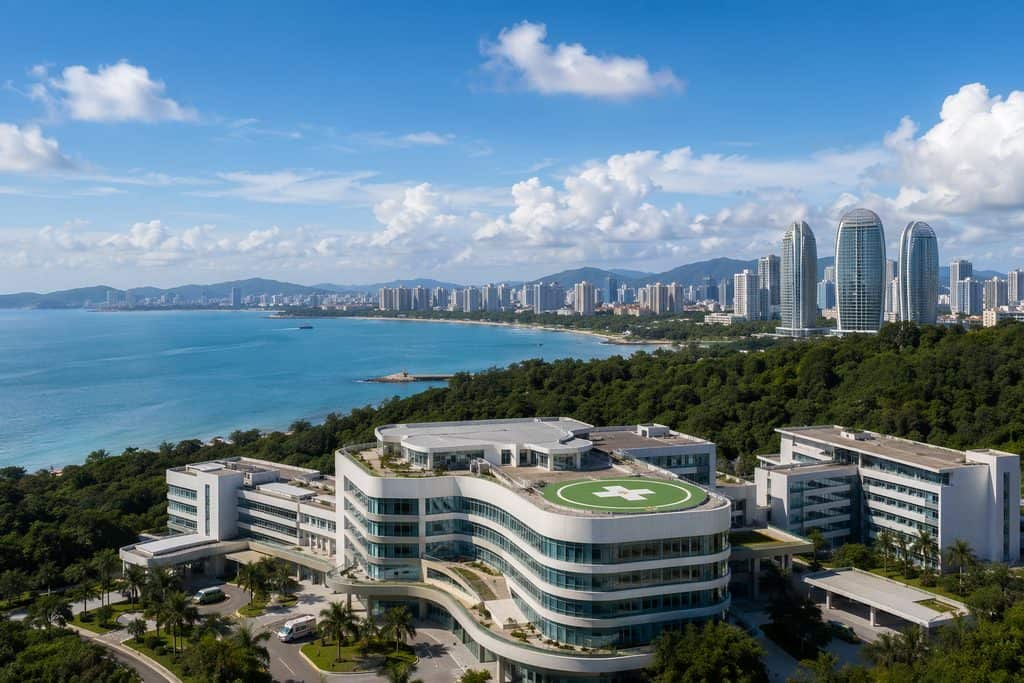
When 42-year-old Michael first heard the diagnosis, he had no idea where to start looking for treatment. Glioblastoma. Recurrent. His oncologist in Manchester had used the word “options” with a hesitation that made the room feel colder. Surgery was done. Standard radiation had run its course. Temozolomide was no longer holding the line. Then a friend sent him a single acronym: BNCT.
That moment—the pivot from despair to a specific, searchable term—is where many families find themselves. Boron Neutron Capture Therapy represents a fundamentally different approach to targeting cancer cells. It is not another chemotherapy. It is not standard photon radiation. It is a binary, two-step treatment that, in theory, spares healthy tissue while delivering a lethal blow to tumor cells that have absorbed a boron compound.
China has moved faster than most nations in making BNCT a clinical reality. For international patients facing resistant or recurrent tumors—glioblastoma, head and neck cancers, melanoma—the question shifts from “what is BNCT” to “how do I actually access it, and what will the bnct therapy cost China pathway look like for someone flying in from abroad?”
Our team coordinates these pathways. We do not provide medical advice. We are not doctors. We connect you with the hospitals that do.
How This Actually Works, Step by Step
The process is less abstract than it sounds. Here is the real sequence.
First, you send us your existing medical records. DICOM imaging files from your latest MRI or CT. Pathology reports. Treatment history—every chemotherapy regimen, every radiation dose and field. A brief summary of your current functional status. We need the raw data, not a polished narrative.
Our team translates these documents into clinical Chinese. Not machine translation. A human with medical terminology training prepares your file for a specialist’s review. This takes two to three business days.
We submit your case to the BNCT-capable center’s international patient office. A radiation oncologist and a medical physicist review your imaging. They assess whether your tumor’s location, size, and histology make you a candidate. Boron uptake varies by tumor type. Not every resistant tumor is a BNCT target.
You receive a written second opinion. It states candidacy, outlines a potential treatment protocol, and provides a cost estimate range. This document is for your reference—it is not a prescription, not a guarantee of treatment. You take it to your home oncologist. You discuss it. You decide.
If you proceed, we coordinate a video consultation with the treating team. You see the faces. You ask your questions directly. The hospital then issues the formal invitation letter required for your visa application.
You apply for an S2 visa at your nearest Chinese embassy or consulate. Processing times vary by country. Plan for two to four weeks.
You arrive. We meet you. A bilingual medical companion stays with you through every step—registration, pre-treatment imaging, the boron infusion, the neutron irradiation itself, and post-procedure observation. The treatment session itself is often a single day, though the hospital stay for monitoring extends longer.
What Is BNCT Treatment for Resistant Tumors, and Why Does It Matter Now?
Standard radiation therapy is a blunt instrument. Photons pass through everything. Even with IMRT or proton therapy, some healthy tissue receives dose. BNCT flips the script.
The patient receives an intravenous infusion of a boron-10 compound—typically borophenylalanine, or BPA. Tumor cells, hungry for amino acids, take up more boron than normal cells. After a few hours, the tumor is selectively loaded. Then comes the neutron beam.
Neutrons themselves are low-energy. They do little damage alone. But when a neutron hits a boron-10 atom, a fission reaction occurs. The boron nucleus splits into a high-energy alpha particle and a lithium-7 nucleus. These particles travel only about 5 to 9 microns—roughly the diameter of a single cell. The energy release destroys the boron-loaded tumor cell. Adjacent normal cells, which absorbed far less boron, are largely spared.
This is not theory. Japanese researchers at Kyoto University have treated over 500 patients since the 1990s. China’s program, centered at the Xiamen Humanity Hospital BNCT Center in collaboration with Neuboron Medtech, has been treating patients since 2022. The system uses an accelerator-based neutron source—no nuclear reactor required. That is the breakthrough that made hospital-based BNCT feasible.
For recurrent glioblastoma, where standard options have failed, BNCT offers a chance at local tumor control without the cumulative toxicity that makes re-irradiation so dangerous. For recurrent head and neck cancers—particularly squamous cell carcinomas that have exhausted surgical and radiation options—BNCT has shown response rates that justify serious consideration. A 2021 paper in the International Journal of Radiation Oncology reported a 71% overall response rate in a cohort of recurrent head and neck cancer patients treated with BNCT. These are not miracle numbers. They are real numbers, and for patients out of options, they represent a door.
A Realistic Timeline
Medical travel is not a sprint. From first contact to treatment day, here is what the calendar actually looks like.
| Stage | What Happens | Typical Duration |
|---|---|---|
| Days 1–5 | Record collection, patient summary drafted, initial consultation with our coordination team | 3–5 business days |
| Days 6–12 | Medical translation into clinical Chinese, internal quality check | 5–7 business days |
| Days 13–25 | Hospital review: radiation oncologist and physicist assess imaging and candidacy | 7–14 business days |
| Days 26–35 | Written second opinion delivered; patient discusses with home oncologist | 5–10 days (patient-dependent) |
| Days 36–50 | Video consultation scheduled and conducted with treating team; treatment plan confirmed | 10–15 days |
| Days 51–70 | Hospital issues invitation letter; S2 visa application and processing | 2–4 weeks (varies by embassy) |
| Days 71–80 | Travel to China, arrival support, pre-treatment imaging and lab work | 7–10 days |
| Days 81–90 | BNCT session: boron infusion, neutron irradiation, post-procedure observation | 1–3 days for treatment; 5–10 days inpatient monitoring |
The total timeline from first email to treatment day runs roughly 10 to 14 weeks. Some cases move faster. Some slower. The bottleneck is usually document translation quality and the hospital’s internal review queue—not the visa, not the travel.
One thing people forget: you need a valid passport with at least six months remaining before expiration. Check this now. A surprising number of cases stall at this trivial step.
What Can Go Wrong — and What Happens Then
Honesty is the only useful policy here. Things go sideways.
The most common failure point: the hospital reviews your imaging and determines you are not a candidate. BNCT requires adequate boron uptake in the tumor relative to surrounding tissue. A PET scan with fluorine-18-labeled BPA can predict this, but not every patient’s tumor biology cooperates. If you are declined, you receive the written opinion explaining why. Our team then helps you pivot—other Chinese centers may offer clinical trials, targeted therapies, or alternative radiation modalities. The second opinion fee is not refundable. The work was done. But the 90-day credit toward future coordination services applies.
Another scenario: the tumor is too large or too diffuse. BNCT works best on localized, solid tumors. Diffuse intrinsic pontine glioma, for instance, presents challenges. The neutron beam has depth limitations. If the tumor geometry does not work, the physicists will say so. This is not a rejection of you. It is physics.
Visa delays happen. Embassy processing times spike unpredictably. We cannot control a consular officer’s calendar. We can provide the documentation they need and advocate through the hospital’s international office. But the timeline is not ours to command.
Post-treatment complications are rare but real. Brain edema after glioblastoma BNCT is the most common. The treating hospital manages this with steroids and monitoring. Your hospital stay includes contingency for this. You are not discharged until the team is satisfied.
If treatment is completed but the tumor later recurs—BNCT is a local therapy. It treats the irradiated field. Distant recurrence elsewhere in the brain or body is a separate problem. BNCT is not a systemic cure. No one should pretend otherwise.
Is BNCT Available in China for International Patients? The Practical Answer
Yes. But availability does not mean walk-in access.
China’s clinical BNCT program operates at a limited number of centers. The Xiamen Humanity Hospital BNCT Center is the most established, using the Neuboron accelerator-based system. Other centers are in development or early clinical operation. The technology is not yet distributed across dozens of hospitals like a standard linear accelerator.
For international patients, the pathway runs through the hospital’s international medical department. You cannot simply register online and show up. The pre-review process described above is mandatory. The hospital needs to confirm candidacy before scheduling. This protects you from expensive, futile travel.
Language is a hard barrier. The clinical team may include English-speaking physicians, but nursing staff, administrative desks, and technical personnel operate in Mandarin. Without a bilingual companion, the experience is disorienting. A treatment day involves multiple handoffs—boron infusion in one unit, neutron irradiation in another, post-procedure monitoring in a third. Each transition requires communication. This is not a hotel. It is a hospital.
Payment is out-of-pocket. Chinese public health insurance does not cover international patients. Some private international insurance plans may reimburse BNCT, but you must confirm this with your insurer before committing. The hospital requires prepayment or a deposit. We help you understand the financial clearance process, but we do not handle your funds.
Best BNCT Centers Shanghai for Head and Neck Cancer: What to Actually Look For
Patients often search for “best BNCT centers Shanghai for head and neck cancer” because Shanghai is a familiar medical hub. The reality is more nuanced.
Shanghai’s major cancer institutions—Fudan University Shanghai Cancer Center, Shanghai Proton and Heavy Ion Center—are world-class. But BNCT is not yet a standard offering at every top-tier Shanghai hospital. The technology is concentrated where the accelerator infrastructure exists. Xiamen is the current clinical anchor. Other cities, including Shanghai, are advancing their programs, but operational status changes frequently.
So how do you evaluate a center? Look past the city name. Ask these questions.
Does the center use an accelerator-based neutron source or a research reactor? Accelerator-based systems are hospital-grade, designed for clinical workflow. Reactor-based BNCT, while historically important, is not practical for routine patient care. China’s program is accelerator-based.
What is the center’s treated case volume for your specific tumor type? A center may have treated 50 glioblastoma patients but only 3 head and neck cases. The learning curve matters. BNCT treatment planning—calculating neutron dose distribution, boron concentration curves—requires experience. Ask for numbers. A good center will share them.
Is there a dedicated medical physicist on the team? BNCT is as much a physics procedure as a medical one. The physicist calculates the neutron beam aperture, treatment time, and patient positioning. Without experienced physics support, the oncologist is flying blind.
Does the international patient office have a track record with foreign cases? Some hospitals treat international patients regularly. Others are still building that capability. The difference shows in visa support responsiveness, billing clarity, and English-language documentation.
Our role is to match you with the center that fits your specific tumor profile, not to push a particular hospital because it is famous. Fame and fit are not the same thing.
Boron Neutron Capture Therapy for Recurrent Glioblastoma China Price: The Numbers
The search query “boron neutron capture therapy for recurrent glioblastoma China price” reflects a universal concern. Patients need numbers.
The bnct therapy cost China range for a complete treatment course—including boron compound, treatment planning, neutron irradiation session, and associated hospital stay—typically falls between $40,000 and $70,000 USD. This is the all-in hospital charge.
Several factors push the number up or down. Tumor size and location affect treatment planning complexity. The number of irradiation fields matters. Length of inpatient monitoring after treatment varies. Pre-treatment imaging—a PET scan to assess boron uptake—adds cost if not already done at home.
Compare this to the United States, where BNCT remains largely in clinical trial settings with limited commercial access. Proton therapy, a less targeted modality for many recurrent tumors, runs $30,000 to $120,000 in the U.S. for a full course. Immunotherapy regimens for glioblastoma can exceed $100,000 annually. In that context, $40,000 to $70,000 for a single-session, highly targeted treatment with a different mechanism of action is a serious alternative.
This hospital cost is separate from our coordination services. Our fees are transparent and modular. A written second opinion from a BNCT specialist runs $300 to $500. A video consultation with the treating team, $500 to $800. Full on-the-ground coordination—visa documentation, airport pickup, bilingual companion for all hospital visits, accommodation guidance—ranges from $5,000 to $8,000 depending on complexity. Any consultation fee is credited in full toward coordination services if you proceed within 90 days.
Payment to the hospital is made directly. We never hold your treatment funds.
Practical Considerations: Records, Visa, and Follow-Up at Home
Your medical records are the foundation of this entire process. Incomplete records cause delays, misassessments, and sometimes outright rejection. Send everything.
Imaging must be in DICOM format on a CD or via secure digital transfer. Not JPEGs. Not PDFs of scans. The hospital’s physicist needs the raw data to perform treatment planning simulations. Pathology slides may be requested for re-reading. Treatment summaries must list chemotherapy agents, cumulative doses, and radiation fields with start and end dates. Your home oncologist’s contact information matters—the Chinese team may want to consult.
The S2 visa is the correct category for medical treatment in China. It is a short-stay visa issued for private affairs, including medical care. You need the hospital’s official invitation letter. Processing takes two to four weeks at most embassies. Bring your passport, the invitation letter, a completed visa application form, and a passport photo. Some embassies require proof of accommodation and a flight itinerary. We guide you through the specific requirements for your country.
Insurance reimbursement is your responsibility. Request a detailed, itemized invoice from the hospital before departure. The invoice should include diagnosis codes, procedure descriptions, and dates of service. Submit this to your insurer with the hospital’s treatment summary. Some insurers require pre-authorization. Do not skip that step.
Follow-up imaging is critical. BNCT’s effects evolve over months. Tumor necrosis can look like progression on early scans. Your home oncologist needs to understand the expected post-treatment imaging timeline. The Chinese team provides a follow-up protocol—typically MRI at 1 month, 3 months, 6 months, and 12 months post-treatment. Stick to it. Send the scans back to the treating team for review. They know what BNCT-treated tissue looks like over time.
Language at the hospital is Mandarin. Our bilingual companion handles registration, payment, pharmacy runs, and clinical translation. But after discharge, you are back in your home system. Ensure your home oncologist receives the English-language discharge summary.
Frequently Asked Questions
BNCT is most established for recurrent glioblastoma, recurrent head and neck cancers (particularly squamous cell carcinoma), and certain melanomas. Clinical experience also exists for meningiomas and some sarcomas. Candidacy depends on tumor location, boron uptake, and prior radiation history. Not every resistant tumor qualifies. The pre-review process answers this definitively for your specific case.
The hospital treatment cost typically ranges from $40,000 to $70,000 USD, covering the boron compound, treatment planning, neutron irradiation, and the associated inpatient stay. This does not include our coordination services, travel, accommodation, or visa fees. The final number depends on tumor complexity and required monitoring duration. You receive a specific estimate after the hospital reviews your records.
BNCT has a different side effect profile than conventional radiation. Acute effects are generally mild—fatigue, mild nausea during boron infusion. The primary late concern is brain edema for intracranial tumors, managed with steroids. Radiation necrosis can occur, as with any brain radiation. The selective nature of BNCT reduces but does not eliminate risk to surrounding normal tissue. The treating team discusses your individual risk profile during the video consultation.
Yes. One or two family members typically accompany the patient. They apply for an S2 visa, the same short-stay private affairs category used for medical treatment. The hospital’s invitation letter can include accompanying family members. We assist with this documentation. Accommodation near the hospital is available—we provide recommendations, but you book directly.
This happens. The written second opinion explains the medical and technical reasons. The fee for that opinion is not refundable—the specialist’s time and analysis were real. But the amount is credited in full toward any future coordination service with us within 90 days. We also help you explore alternative Chinese centers or different treatment modalities that may fit your case. A “no” on BNCT is not a dead end.
Your Next Step
The information here is a map, not a prescription. BNCT represents a genuine option for patients facing tumors that have stopped responding to standard tools—but it is not for everyone, and candidacy is a medical determination, not an administrative one.
Our organization, China Medical Services, connects international patients with China’s top-tier hospitals. We do not treat. We do not promise outcomes. We handle the logistics—record translation, hospital matching, visa documentation, bilingual accompaniment—so that you and your family can focus on the decision that matters.
If BNCT is on your radar, send us your records. We will get you a straight answer on candidacy, cost, and timeline. Start with a free consultation to discuss your case. The path forward begins with a single, concrete step.
Request your free consultation today.
For more medical information and treatment options in China, visit chinamedservices.com (China Medical Services).
