240-Hour Transit Visa-Free Medical Evaluation: A Complete Guide to Short-Stay Health Assessments in China
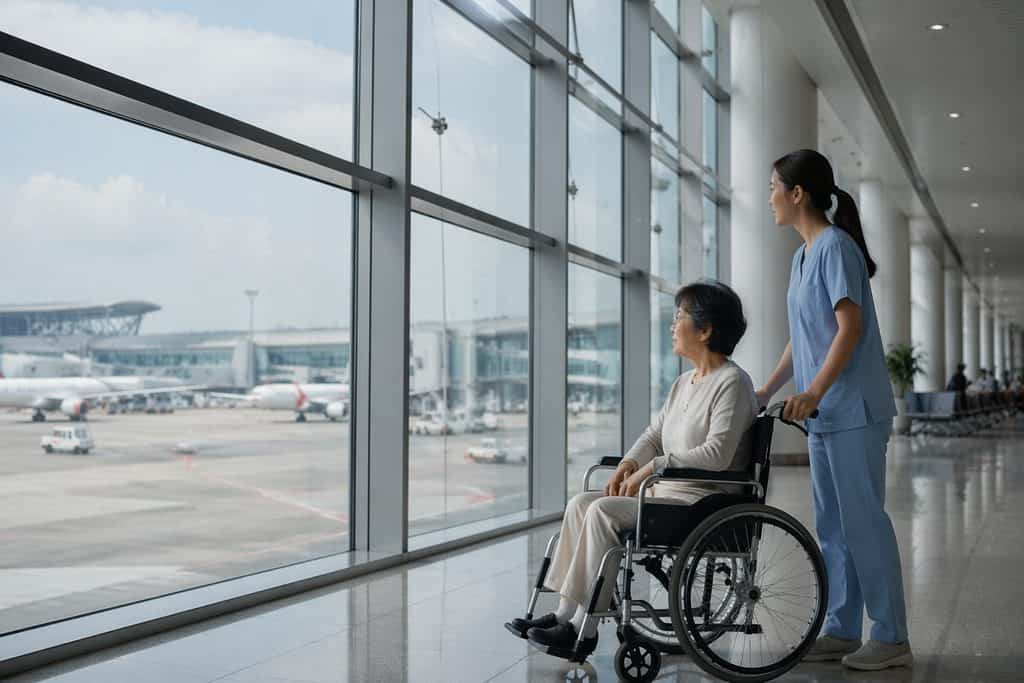
While patients in Canada wait a median 27.4 weeks for an MRI at a publicly funded facility, a full-body health screening at a top-tier Shanghai hospital—including labs, imaging, and a specialist consultation—can be wrapped up in under five hours. The results land in your inbox before your outbound flight boards. That stark gap in speed and access is what makes China’s 240-hour transit visa-free policy more than a travel convenience. It’s a strategic window for a comprehensive medical evaluation without the months-long visa process most people assume is mandatory.
The Short Answer
Yes, you can get a comprehensive physical exam in China without a visa. The 240-hour (10-day) transit visa-free policy lets passport holders from 54 eligible countries enter specific Chinese cities for a short stay—no visa application, no consulate visits, no waiting. A standard executive health screening costs between $300 and $800, often completed in half a day. The catch? You must arrive via a third country, depart to a third country, and stay within the permitted region. Point-to-point roundtrips from your home country don’t qualify.
Who This Is Right For — and Who It Isn’t
This pathway works brilliantly for a specific kind of traveler. It’s a terrible idea for others. Let’s be direct about both.
Typically a good candidate:
- You’re already traveling through Asia and have a 10-hour+ layover in Shanghai, Beijing, or Guangzhou
- You want a baseline health assessment—cardiac screening, cancer markers, full-body imaging—without the insurance hurdles or scheduling delays back home
- You’re considering future medical treatment in China and want to evaluate a hospital’s facilities and specialists in person before committing
- You need a specific diagnostic test (like a whole-body MRI or low-dose CT lung screening) that’s expensive or backlogged in your home country
- You’re comfortable navigating a foreign healthcare system and can communicate your needs clearly—or you’ve arranged a bilingual coordinator
Should not pursue this:
- You have an acute, unstable condition that could deteriorate during travel
- You’re seeking treatment for a complex condition that requires multiple follow-up visits—the 10-day window is too tight for surgery or extended therapy
- You need a procedure that carries significant risk of complications requiring prolonged hospitalization
- You’re flying roundtrip from your home country with no third-country connection—the transit policy won’t apply, and you’ll be denied entry
- You expect Western-style hand-holding throughout the process—Chinese public hospitals are efficient but can feel impersonal without a companion
The Options, Compared
Not all short-stay medical evaluations are created equal. Here’s how the main pathways stack up for an international patient seeking a health assessment in China:
| Option | Visa Required | Typical Cost (USD) | Time to Complete | Best For |
|---|---|---|---|---|
| Transit visa-free health screening | No (240-hr transit) | $300–800 | 4–6 hours | Healthy travelers wanting a fast baseline check |
| S2 short-stay medical visa + full workup | Yes (S2, 30–90 days) | $500–2,000 | 1–3 days | Patients with known conditions needing deeper investigation |
| Private international hospital executive physical | No (transit) or S2 | $800–2,500 | 4–8 hours | Those wanting English-speaking staff and insurance direct billing |
| Public hospital VIP/international department | No (transit) or S2 | $400–1,200 | 5–7 hours | Cost-conscious patients wanting top specialists with English support |
If you’re healthy and just want reassurance, the transit screening at a public hospital’s international department hits the sweet spot—affordable, fast, and thorough. If you already have a known condition and need a deeper dive, the private international hospital route gives you more time with the doctor and smoother insurance handling. The S2 visa path is overkill for a simple checkup; reserve it for when you’ve already decided on treatment in China.
What a “China Short Stay Medical Evaluation Package” Actually Includes
Search for “China short stay medical evaluation packages” and you’ll find a bewildering range of offerings. Let’s cut through the marketing. Here’s what a legitimate half-day executive screening at a top-tier Chinese hospital typically covers—and what it doesn’t.
Standard inclusions at a reputable hospital:
- Blood panel: complete blood count, liver and kidney function, lipid profile, fasting glucose, HbA1c
- Tumor markers: CEA, AFP, CA19-9, and others depending on gender and age
- Imaging: chest X-ray or low-dose CT, abdominal ultrasound
- Cardiac: resting ECG, sometimes a basic echocardiogram
- Physical examination by an internal medicine specialist
- Written summary report in English (confirm this before booking—not all hospitals provide it automatically)
Generally not included:
- Whole-body MRI or PET-CT (these are add-ons, typically $500–1,500 extra)
- Colonoscopy or gastroscopy (requires separate preparation and sedation time)
- Specialist consultations beyond internal medicine (cardiology, oncology, etc. are booked separately)
- Treatment of any condition discovered during the screening
- Translation of imaging files or raw data—you’ll usually get the report, not the DICOM files
One thing worth knowing: Chinese health screening centers are built for volume and speed. At Huashan Hospital’s international medical center in Shanghai, a full executive physical moves through stations with near-industrial efficiency—blood draw, imaging, ECG, consultation—often completed in under four hours. That’s not rushed care. It’s a system designed to process thousands of screenings monthly, and the repetition breeds competence. But if you want a leisurely, conversational experience with your doctor, this isn’t it. You’ll get thoroughness, not warmth.
How to Book a Health Screening in Beijing on Transit
The mechanics of booking are where most first-timers stumble. Chinese public hospitals don’t operate like Western clinics. You can’t just call the front desk and schedule an appointment in English. Here’s the realistic path for someone trying to figure out how to book a health screening in Beijing on transit.
Your first hurdle is that most hospital registration systems require a Chinese phone number and ID. The international departments at major hospitals—Peking Union Medical College Hospital, China-Japan Friendship Hospital, Beijing Friendship Hospital—do accept foreign passport holders, but their online booking portals are typically in Chinese. Walking in on the day is possible but risky; you might wait hours or find the screening center fully booked.
The practical workflow looks like this:
Step one: Identify the hospital. For a transit screening in Beijing, the international departments at Peking Union Medical College Hospital or China-Japan Friendship Hospital are the most established options. Both have English-capable staff and dedicated screening packages. Our Beijing hospital directory lists facilities with verified international departments.
Step two: Contact the international department directly—by email, not phone. Chinese hospital phone lines are rarely answered in English. Send a clear email stating you’re arriving under the 240-hour transit policy, your planned dates, and the screening package you’re interested in. Expect a response within 2–3 business days.
Step three: Confirm the report language. Some hospitals default to Chinese-only reports unless you explicitly request English. The international departments usually provide bilingual reports, but verify this in writing.
Step four: Arrange payment. Most public hospital international departments accept international credit cards, but not all. Some require cash or UnionPay. Confirm before you arrive. A standard screening package in Beijing runs $400–700.
Step five: Plan your transit logistics. You’ll need at least 8–10 hours between flights to comfortably complete a screening—4–5 hours for the exam itself, plus airport transit time and a buffer for delays. Overnight layovers are ideal; you can do the screening in the morning and fly out in the evening.
A common question we hear: can I just book this myself? Yes, if you’re persistent and comfortable with uncertainty. But if you want the appointment locked in before you board your flight, with a confirmed English report and someone meeting you at the hospital entrance, that’s where a coordination service earns its keep. More on that at the end.
What It Costs
Let’s talk numbers. The medical checkup China 240 hour transit visa cost breaks into two buckets: the screening itself and the logistics around it. Here’s what you’re looking at for a standard executive physical at a top-tier hospital in Shanghai or Beijing.
Screening costs (hospital fees):
- Public hospital international department: $400–800 for a standard package
- Public hospital VIP center: $500–1,200 for a premium package with additional imaging
- Private international hospital (United Family, Jiahui): $800–2,500, depending on depth
- Add-on whole-body MRI: $500–1,500 extra
- Add-on low-dose CT lung screening: $150–300 extra
Logistics costs (if using a coordination service):
- Bilingual medical companion for the day: from $300 (handles registration, translation, navigation)
- Airport transfer round-trip: $200
- Appointment coordination: from $300 (secures the booking before you travel)
These figures are ranges. The final number depends on the hospital, the specific tests included, and whether you need additional specialist consultations based on findings. A basic screening at a public hospital international department—blood work, ultrasound, chest X-ray, ECG, physical exam—typically lands around $500. That’s roughly a third of what a comparable executive physical costs at a private clinic in Singapore or Hong Kong, and a fraction of what it runs in the United States.
One financial detail worth understanding: Chinese public hospitals operate on a pay-upfront model. You settle the bill before the screening begins. If your international insurance covers preventive health checks, you’ll need to pay first and file for reimbursement afterward. Private international hospitals like United Family often handle direct billing with major insurers—something to factor in if convenience matters more than cost.
Practical Considerations: Transit Rules, Documentation, and Language
The 240-hour transit policy is generous but rigid. Misunderstanding the rules can leave you stranded at immigration with no path forward. Here’s what actually matters.
Transit rule fundamentals: You must arrive from Country A, enter China, and depart to Country B. Country A and Country B cannot be the same. A Los Angeles–Shanghai–Los Angeles itinerary does not qualify, even if you’re only in Shanghai for 8 hours. But Los Angeles–Shanghai–Tokyo does. The policy covers 54 nationalities, including the US, Canada, UK, Australia, and most EU countries. You’re restricted to the city or region you entered through—land in Shanghai, and you stay within Shanghai, Jiangsu, and Zhejiang. Land in Beijing, and you stay within Beijing, Tianjin, and Hebei.
Documentation you need:
- Passport with at least 6 months validity
- Confirmed onward ticket to a third country departing within 240 hours
- Arrival card (filled out on the plane or at immigration)
- Hotel booking confirmation (immigration may ask where you’re staying)
- Printed confirmation of your hospital appointment—this isn’t mandatory but helps if questioned about your purpose
Language reality: Outside the international departments of major hospitals, English is scarce. Nurses, technicians, and administrative staff in public hospitals communicate in Mandarin. Signage is increasingly bilingual in Shanghai and Beijing, but don’t count on it. Even in international departments, the English proficiency varies. You’ll get by, but nuanced conversations about symptoms or concerns are difficult without a translator. This is the single biggest friction point, and it’s why many patients bring a companion or use a coordination service.
After you return home: You’ll leave China with a report, not a treatment plan. The screening identifies issues—it doesn’t resolve them. If something concerning shows up, you’ll need follow-up in your home country. Make sure you have a primary care physician who can interpret the results and order additional tests if needed. Chinese lab reference ranges sometimes differ slightly from Western standards; a doctor familiar with both systems can contextualize the numbers.
Frequently Asked Questions
No. The transit visa-free policy requires a third-country routing. A direct roundtrip—New York to Shanghai and back to New York—makes you ineligible. You’d need either a stopover in a third country (New York–Shanghai–Tokyo, for instance) or a proper S2 short-stay visa obtained in advance from a Chinese consulate. The S2 takes 4–7 business days and requires an invitation letter from the hospital, which reputable international departments can provide.
The 240-hour transit permit cannot be extended. If a screening reveals a condition requiring immediate attention, you’d need to leave China as scheduled and apply for an S2 medical visa from outside the country to return for treatment. This is the hard constraint of the transit pathway—it’s designed for evaluation, not intervention. For anyone with a known condition who suspects they might need treatment, the smarter move is to apply for the S2 visa upfront and avoid the logistical scramble.
For the standard executive packages, yes—often more so. Chinese health screening culture emphasizes comprehensive blood panels and imaging in a way that Western preventive care typically doesn’t. A $500 package in Shanghai frequently includes tumor markers and abdominal ultrasound that would be considered “extra” or “not indicated” in a Western annual physical. The trade-off is less time with the doctor. You’ll get a detailed report, but the consultation portion may be brief. If something abnormal appears, the doctor will flag it—but you’ll likely discuss it for five minutes, not thirty.
For international patients seeking the best hospitals Shanghai transit visa medical assessment, three stand out. Huashan Hospital’s international medical center runs a polished screening operation with English-speaking staff and a track record of handling transit patients. Zhongshan Hospital (Fudan University) offers premium packages through its VIP clinic, with access to some of China’s top cardiology and oncology specialists if follow-up is needed. On the private side, Jiahui International Hospital provides a Western-style experience with native English-speaking physicians and direct insurance billing—at roughly double the public hospital price. Each has strengths; the right choice depends on your budget and how much hand-holding you want. Our Shanghai hospital listings include detailed profiles of each facility’s international department capabilities.
Yes, you’ll need to fast for 8–12 hours before blood work—water is fine, but no food. The physical exam portion typically runs 3–5 hours from check-in to final consultation. Most hospitals schedule screenings in the morning (7:30–8:00 AM start) so results are ready by early afternoon. If you’re on a tight transit schedule, aim for a morning screening, collect your preliminary results by 2:00 PM, and head to the airport for an evening flight. The full written report may take 24–48 hours, but the key findings—anything requiring immediate attention—will be discussed with you on the spot.
Your Next Step
A 240-hour transit window can absolutely accommodate a thorough medical evaluation—if you know which hospital to choose, how to book it, and what to expect when you walk through the doors. The policy removes the visa barrier. The remaining challenges are logistical: finding the right facility, securing an appointment that aligns with your flight schedule, and ensuring you leave with a report you can actually use back home.
That’s the work we do at China Medical Services. We’re not a hospital and we don’t provide medical advice or diagnoses. What we do is bridge the gap between international patients and China’s top-ranked medical institutions—hand
For more medical information and treatment options in China, visit chinamedservices.com (China Medical Services).
