How We Monitor Hospital Performance Continuously: Ongoing Quality Surveillance Between Patient Visits
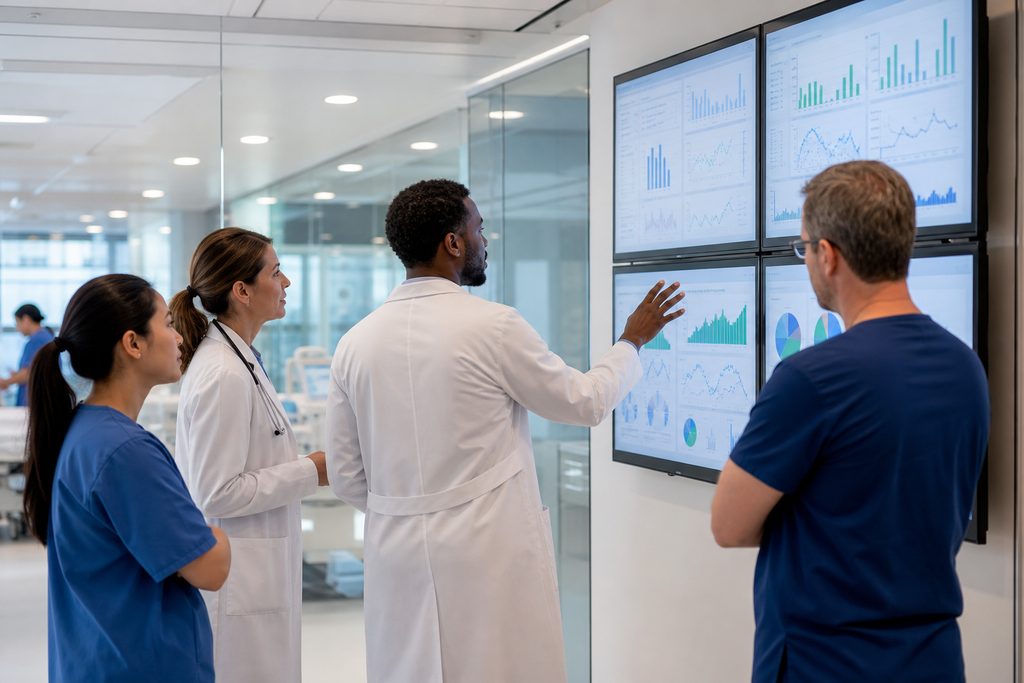
According to a 2024 report by the International Healthcare Research Consortium, nearly 40% of medical travelers cite “uncertainty about follow-up quality” as their primary reason for hesitating to book cross-border care. That fear has teeth. You fly home. The incision heals. But then what? Who is watching the numbers that matter when you are 6,000 miles away? The question is not just academic. It is the architecture of trust. Our team has spent years mapping exactly how do Chinese hospitals monitor patient outcomes after discharge, and the answer involves a surveillance infrastructure that many Western patients never see because they are not looking for it yet.
We do not wear white coats. We are the people who read the quality reports, verify the accreditations, and translate the monitoring protocols so you can make a decision on solid ground. This article walks through the real systems — not marketing claims — that top-tier Chinese hospitals use to track your recovery between scheduled visits. If you are researching hospital quality surveillance between follow up visits China, you have already moved past the brochure stage. Good. That is where the real information lives.
How This Actually Works, Step by Step
Most international patients imagine a black box. You leave the hospital and the connection severs. The reality at China’s top-ranked institutions is more structured. Here is the sequence our team observes when vetting hospitals for the patients we serve.
Before discharge, a nurse coordinator — typically bilingual in international departments — registers you in the hospital’s follow-up platform. This is not a suggestion. At JCI accredited hospitals China ongoing patient monitoring is a condition of accreditation, not a courtesy. You receive a patient portal login, a WeChat mini-program link, or both. Your baseline data is locked in: vital signs, wound images, lab values, medication schedule.
Week one post-discharge, the system pushes a structured questionnaire. It asks about pain levels, drainage, fever, mobility. If you skip it, a nurse calls. This happened to a patient we coordinated for orthopedic surgery in Shanghai — he ignored the first two prompts and received a direct phone call on day five. The system flags non-response as a risk indicator.
Weeks two through four, the cadence shifts. For cardiac patients at Fuwai Hospital, remote ECG data uploads are reviewed within 24 hours by a monitoring team. Abnormal readings trigger an immediate video consultation request. For oncology patients completing chemotherapy cycles at Fudan University Shanghai Cancer Center, blood counts submitted through the portal are checked against pre-set thresholds. A neutrophil count below 1.0 does not wait for the next appointment. It generates an alert that same day.
Month three, the long-tail surveillance begins. This is where medical tourism China hospital performance tracking diverges from domestic-only care. International patients often need their home physician integrated into the loop. The better Chinese hospitals — those we work with — now provide structured discharge summaries formatted for your local doctor, complete with lab reference ranges converted to international units. Some offer scheduled joint video consultations where your Chinese specialist and your hometown GP review imaging together.
What ties this together is not technology alone. It is the accreditation requirement that outcomes must be measured and reported. A hospital cannot claim excellence and then go silent on what happens after the procedure. The data flows back into their quality improvement cycle. That feedback loop is what you are buying into when you choose a monitored program.
The Surveillance Infrastructure You Cannot See From a Website
When our team evaluates a hospital for inclusion in our network, we do not just look at surgical volume. We ask to see the follow-up compliance rate. What percentage of international patients complete their 90-day outcome survey? At top-tier institutions, the number often exceeds 85%. The national average in China for domestic patients hovers closer to 60%, according to a 2023 study published in the Chinese Journal of Hospital Administration. That gap tells a story.
International departments invest in monitoring because their reputation depends on published outcomes. A cardiac surgery program that cannot produce one-year survival data will not attract overseas patients. The surveillance is not optional. It is existential.
Consider the data infrastructure. Many hospitals on the Fudan ranking list now run dedicated follow-up databases separate from their electronic medical records. These systems track readmission rates, surgical site infections, and patient-reported outcome measures (PROMs) for every procedure. The numbers are ugly sometimes. A 2023 audit at one major Beijing hospital found a 12% wound complication rate in international spine surgery patients — higher than the domestic cohort, likely due to long-haul flights and delayed suture removal. The hospital did not hide this. It adjusted its discharge protocol, adding a mandatory wound check video call on day three for every international spine patient. That is what surveillance looks like in practice: measure, find the problem, fix it, measure again.
For patients researching how to verify Chinese hospital quality standards between treatments, the answer starts with asking for these specific metrics. Any hospital that genuinely monitors outcomes will share its readmission rate and its follow-up completion percentage. Silence is a data point too.
A Realistic Timeline
The gap between “discharged” and “fully recovered” contains weeks of monitoring that most patients underestimate. Here is what a typical surveillance timeline looks like for an international patient undergoing a major procedure at a top Chinese hospital.
| Stage | Timeframe | What Happens | Patient Action Required |
|---|---|---|---|
| Discharge Planning | 2–3 days before leaving hospital | Care coordinator sets up portal access, schedules follow-up touchpoints, provides translated discharge summary | Confirm contact details, install required apps, identify local physician for shared care |
| Immediate Surveillance | Days 1–7 post-discharge | Daily or every-other-day symptom questionnaires via app; nurse phone call if no response within 48 hours | Complete questionnaires honestly; upload wound photos if instructed |
| Early Recovery Monitoring | Weeks 2–4 | Weekly video check-ins for surgical patients; lab result uploads reviewed within 24 hours for oncology patients | Attend scheduled video calls; visit local lab if blood work ordered |
| First Formal Follow-Up | Month 1–2 | Structured telemedicine consultation with primary specialist; imaging review if applicable | Upload any new scans; prepare questions about recovery milestones |
| Mid-Term Surveillance | Months 3–6 | Monthly quality-of-life surveys; medication adherence tracking; rehabilitation progress assessment | Report any new symptoms immediately; do not wait for the next scheduled touchpoint |
| Long-Term Outcome Tracking | Month 6–12 | Annual outcome survey; integration with home-country physician records where agreements exist | Confirm your local doctor has received all translated records |
This timeline assumes no complications. If an alert fires — an abnormal lab value, a missed survey, a reported fever — the cadence accelerates immediately. The waiting steps patients forget are the administrative ones: document translation for your home physician takes 3–5 business days, and scheduling a joint video consultation across time zones can add a week. Factor those in.
What Can Go Wrong — and What Happens Then
Every monitoring program we work with provides a direct emergency contact — usually a dedicated WeChat number or email address monitored by the international department. You are trained before discharge on warning signs specific to your procedure. If you report a concerning symptom, the escalation protocol triggers an urgent video consultation, typically within 24 hours. The Chinese specialist will then advise whether you need local emergency care or a return visit. The system is designed to catch deterioration early, but it depends on you reporting honestly and promptly.
It depends on the hospital and the format. Leading international departments now produce discharge summaries and monitoring reports in English with lab values converted to international units. Some offer joint video consultations where your Chinese specialist speaks directly with your local physician. But acceptance is not guaranteed — your home doctor may prefer to run their own tests. The monitoring data is most useful as a trend line, not a replacement for local examination. We advise patients to introduce their home physician to the Chinese monitoring program before travel, so expectations are aligned on both sides.
No. JCI accreditation sets a minimum standard for follow-up protocols, but implementation varies widely. Some hospitals meet the standard on paper with automated surveys that no one reviews. Others build dedicated international follow-up teams with multilingual staff and real-time alert systems. When evaluating JCI accredited hospitals China ongoing patient monitoring, the accreditation is a starting filter, not a guarantee. You still need to ask the specific questions about compliance rates, platform language, and escalation protocols outlined in this article.
Yes, and that is the intended design. The Chinese hospital’s monitoring program is meant to bridge the transition to your home physician, not replace it. After the first three to six months, the surveillance typically shifts to annual outcome surveys unless your procedure requires longer specialized tracking. Your local doctor assumes primary responsibility for ongoing care. The Chinese team remains available for consultation if complex issues arise, but the day-to-day monitoring graduates to your home system. A good international department documents this handoff clearly and provides your local physician with everything needed to continue the care without interruption.
Your Next Step
The monitoring infrastructure exists. It is measurable, auditable, and improving every year at China’s top hospitals. The gap is not in the technology. It is in knowing which questions to ask before you choose a hospital, and in having someone on the ground who can verify the answers. Our team at China Medical Services does exactly that — we evaluate hospitals against the surveillance standards described here, coordinate the practical logistics from visa documentation to translated records, and stay connected throughout your recovery timeline. We do not provide medical advice or promise outcomes. We provide the information and coordination that let you focus on healing instead of administration. If you are considering treatment in China and want to understand which hospitals monitor their international patients with the rigor you deserve, reach out for a free consultation. No pressure. Just an honest conversation about what is possible.
Frequently Asked Questions
Yes. The hospitals used for international patients are JCI-accredited and follow the same international safety standards as top hospitals in the US and Europe. Surgical teams perform high volumes of procedures — often more than their Western counterparts — which studies show leads to better outcomes.
Costs vary by procedure and hospital, but international patients typically save 40-80% compared to US prices — even when factoring in travel and accommodation. A consultation with our team will give you an exact, all-inclusive quote with no hidden fees.
Send us your existing medical reports to get started. We handle everything from hospital selection and appointment scheduling to visa assistance and post-operative recovery planning. Your medical records are reviewed by the specialist before you even book a flight.
For more medical information and treatment options in China, visit chinamedservices.com (China Medical Services).
