Trigger Finger Surgery Cost China: Full Release Procedure Pricing and Recovery Guide
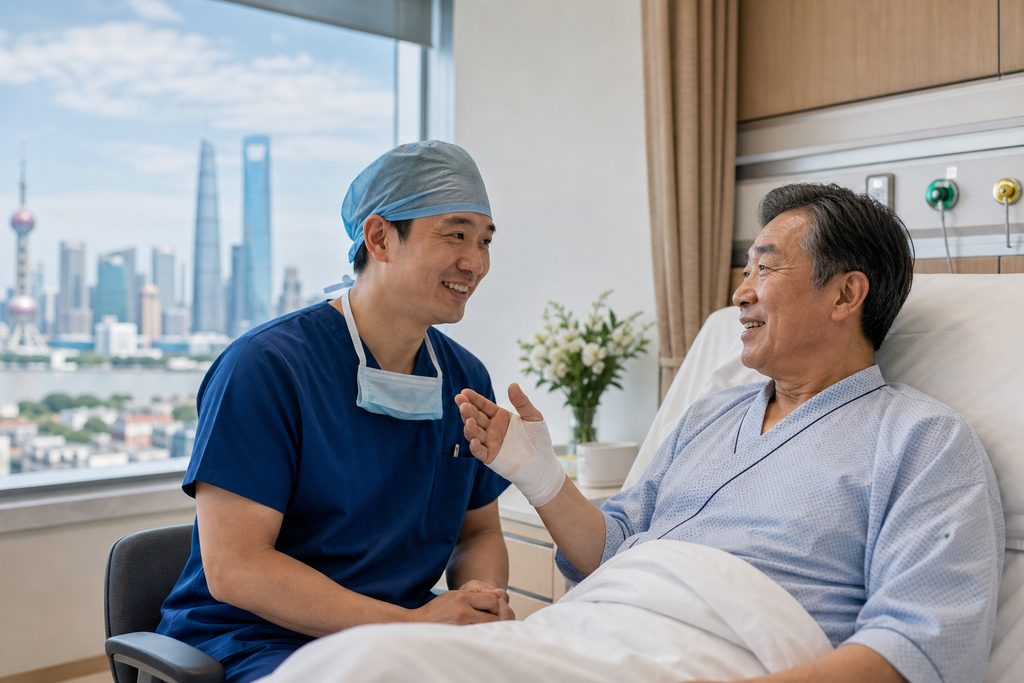
You have probably heard that traveling abroad for surgery means rolling the dice on quality. The numbers tell a different story. A percutaneous or open trigger finger release in a top-tier Chinese hospital typically costs between $800 and $2,500 — roughly one-fifth to one-tenth of the $5,000 to $10,000 price tag common in the United States. That figure includes surgeon fees, operating room time, and a short-course of hand therapy. It does not include your flight or hotel. But the real question is not just about the trigger finger surgery cost China presents. It is about whether you can get the same precision here as you would at home. The short answer: yes, if you choose the right facility.
Trigger Finger Surgery in China: The Short Answer
A straightforward trigger finger release in a Chinese public hospital’s international department costs between $800 and $2,500. Private international hospitals run higher, from $2,000 to $4,000. The procedure itself takes 15 to 20 minutes under local anesthesia. You walk out the same day. Most patients regain full finger motion within two to three weeks. The variance in price comes down to three things: whether you need open surgery or a simpler percutaneous release, which hospital tier you select, and whether you use the public system’s VIP international wing or a fully private facility. But no single number fits every case, and the lowest price is not always the smartest path.
Who This Is Right For — and Who It Isn’t
Traveling internationally for a hand procedure makes sense for a specific profile of patient. It is not for everyone. Here is who typically benefits most.
Good candidates:
- You have a confirmed diagnosis of stenosing tenosynovitis (trigger finger) that has not responded to splinting or corticosteroid injections over three to six months.
- You are uninsured, underinsured, or facing a high deductible in your home country that makes the local cash price unaffordable.
- You are already planning travel to China for business or family and can add a medical stop without significant extra flight cost.
- You need release on multiple fingers — the savings multiply, while the travel cost stays fixed.
- You are comfortable with a compressed timeline: remote consultation, one pre-op visit, surgery, and a single post-op check before flying home.
Who should think twice:
- You have complex hand trauma, rheumatoid arthritis with severe joint deformity, or a history of failed prior releases. These cases require prolonged, in-person follow-up that is hard to manage from abroad.
- Your trigger finger is mild and intermittent. A long flight for a 15-minute procedure is disproportionate. Try another round of conservative treatment first.
- You require general anesthesia for anxiety or medical reasons. While available, this adds risk and cost that narrow the savings gap.
- You cannot arrange a local hand therapist back home for post-operative rehab. The surgery itself is fast; the recovery discipline matters more.
The Options, Compared
Not all trigger finger releases are the same. The table below breaks down the genuine alternatives you will encounter when researching treatment in China.
| Procedure Type | Setting | Anesthesia | Incision | Cost Range (USD) | Return to Desk Work |
|---|---|---|---|---|---|
| Percutaneous Release | Outpatient clinic | Local | Needle puncture (no stitches) | $800–$1,500 | 2–5 days |
| Open Release (Public VIP Wing) | Hospital day surgery | Local with sedation option | ~1 cm (1–2 stitches) | $1,200–$2,500 | 5–10 days |
| Open Release (Private International Hospital) | Private surgical suite | Local or regional block | ~1 cm (dissolvable stitches) | $2,000–$4,000 | 5–10 days |
| Multiple Finger Release (per additional finger) | Same as primary procedure | Same as primary | Same approach | Add $400–$800 per finger | Adds minimal recovery time |
For a straightforward single trigger finger with a well-trained hand surgeon, the percutaneous approach in a public hospital international wing delivers the best value. You avoid general anesthesia, the wound is a pinprick, and the cost stays under $1,500. But if your surgeon suspects anatomical variations — or if the triggering has persisted so long that the pulley is severely thickened — an open release gives better visualization and a more complete release. The private international hospital option makes sense if you want guaranteed English-speaking staff, direct insurance billing, and a hotel-like recovery environment. That convenience adds roughly $1,000 to $1,500 to the bill.
What “Trigger Finger Release Procedure Price Shanghai” Actually Buys You
Shanghai concentrates some of China’s strongest hand surgery departments. When you see a trigger finger release procedure price Shanghai listing, you need to know what is bundled and what is not. At a public hospital international department like Huashan Hospital’s hand surgery unit — ranked among China’s top departments for hand and microsurgery — the quoted price typically covers the surgeon’s fee, operating room time, local anesthetic, a single post-operative dressing change, and a brief hand therapy instruction session. It does not include the initial consultation fee ($100–$200), pre-operative blood work ($50–$100), or any custom splinting ($50–$150). These add-ons are modest but real. Budget $300 to $500 above the quoted surgical fee for the full episode of care.
Private hospitals like Jiahui International Hospital in Shanghai quote an all-inclusive package price. You pay more upfront, but there are no surprise line items. The package wraps in the consultation, labs, surgery, and one follow-up visit. For patients who value predictability over the absolute lowest cost, this model reduces anxiety. The trade-off is clear: you pay roughly double for the bundled convenience and Western-style service flow.
How Much Does Trigger Finger Surgery Cost in China: The Real Drivers
Many patients ask how much does trigger finger surgery cost in China as if there is a single answer. The range exists for specific reasons. Here is what moves the needle.
Hospital tier is the biggest lever. A municipal-level hospital in a second-tier city like Chengdu or Wuhan might charge $600 to $1,000 for the same procedure that costs $1,500 to $2,500 at a nationally ranked center in Beijing or Shanghai. The surgeon’s skill may be comparable — China produces excellent hand surgeons across many cities — but the international patient infrastructure differs dramatically. A hospital in a smaller city may have no English-speaking staff, no experience with overseas billing, and no pathway for remote follow-up. The savings evaporate if you cannot communicate with your care team.
Surgeon seniority matters less than you might think for this procedure. Trigger finger release is a bread-and-butter hand surgery case. A competent attending surgeon performs hundreds per year. You do not need the department chair. Paying a premium for a named professor adds little clinical value for a straightforward release. Reserve that investment for complex revision cases or concurrent procedures.
The number of fingers treated in one session changes the math. If you have triggering in both thumbs and an index finger, doing all three under one anesthetic block costs less than staging them separately. The incremental fee per additional finger is typically $400 to $800. That is where the economics of traveling for treatment really tilt in your favor.
Is Trigger Finger Surgery Safe in China: What the Data Shows
Safety is the question that keeps people awake at night. Is trigger finger surgery safe in China? The honest answer requires separating the top tier from the rest. China has over 35,000 hospitals. The top 5% — roughly 1,700 institutions — operate at standards comparable to high-income countries. The complication rate for elective hand surgery in these hospitals is low. Infection rates for clean hand procedures run well under 1% in accredited international departments. Nerve injury during trigger finger release is rare — published series from major Chinese hand centers report rates below 0.5%, consistent with global benchmarks.
But that safety record depends on where you go. A hospital listed in the Fudan ranking for hand surgery or orthopedics has been vetted by peer review. Our database covers 340+ top-ranked hospitals across 37 cities, each verified against national ranking data. These are the institutions where international standards of sterilization, surgical checklists, and adverse event reporting are routine. Walk into an unaccredited private clinic in a lower-tier city that markets directly to medical tourists, and the safety calculus changes. There is no mandatory public reporting of surgical complications in China, so you must rely on institutional reputation and third-party accreditation like JCI.
The practical safety step is simple: choose a hospital that treats international patients regularly. The hand surgery department at Huashan Hospital in Shanghai, for instance, performs over 10,000 hand procedures annually. Volume breeds competence. A surgeon who does 20 trigger finger releases a week has seen every anatomical variation and complication. That experience is your safety net.
Trigger Finger Treatment Abroad Recovery Time: Week by Week
Recovery after a trigger finger release is fast, but it is not instant. Understanding the trigger finger treatment abroad recovery time helps you plan your travel window realistically.
Day 0 (surgery day): The procedure takes under half an hour. Your finger will be numb for a few hours. You leave with a light bandage. No driving. Keep the hand elevated. Mild aching is normal. You can use the hand for light activities immediately — typing, eating, holding a phone.
Days 1–3: Remove the outer bandage after 24–48 hours as instructed. Keep the small adhesive strip dry. You can shower with a waterproof cover. Start gentle finger bending and straightening exercises — the surgeon or therapist will give you a sheet of instructions. Stiffness is your enemy; movement prevents scar tethering. Some swelling and bruising around the palm is expected.
Days 4–7: The puncture site or small incision is healing. Stitches, if any, come out around day 7–10. Most patients doing desk work can return by day 5. Grip strength is still reduced — do not lift anything heavier than a coffee cup with that hand.
Weeks 2–3: Full range of motion typically returns. The “clicking” or catching sensation should be gone. Some patients feel a tender nodule in the palm where the pulley was released; this softens over weeks. You can resume driving and most daily activities. Avoid heavy gripping or power tools until week 4.
Weeks 4–6: Grip strength returns to near-normal. Scar tenderness fades. For manual laborers, a graded return to full duties is advised. Hand therapy is rarely needed beyond the initial exercise sheet for a simple single-finger release.
The compressed timeline means most international patients can fly home 7 to 10 days after surgery, once the wound is checked and stitches are removed. Flying earlier is possible but uncomfortable if swelling is still present. Plan for a 10-day stay to be safe.
Best Hospital for Trigger Finger Release China: Where to Look
There is no single best hospital for trigger finger release China. The right choice depends on your priorities: absolute surgical volume, English-language support, or integrated international patient services. Here are the institutions that consistently appear at the top of hand surgery rankings and international patient feedback.
Huashan Hospital, Fudan University (Shanghai): The hand surgery department here is among the most prolific in the world. Over 10,000 hand procedures per year. The international medical center provides English-speaking coordination, and the surgeons are accustomed to treating overseas patients. This is the reference center for complex hand cases. For a simple trigger finger, you may be scheduled with a senior attending rather than a department head — which is exactly what you want. Volume and routine produce the best outcomes for bread-and-butter cases.
Peking Union Medical College Hospital (Beijing): PUMCH’s orthopedics department is consistently ranked in the top tier nationally. The international medical services department handles the full patient journey in English. Wait times for elective hand surgery are short — often one to two weeks from consultation to procedure. The cost runs toward the higher end of the public hospital range, around $1,800 to $2,500.
Jiahui International Hospital (Shanghai): A private, JCI-accredited hospital with full English-language service, direct billing with major international insurers, and a Western-trained hand surgery team. The all-inclusive package price removes financial uncertainty. This is the lowest-friction option for patients who want a familiar care model and are willing to pay $2,500 to $4,000 for it.
Beijing United Family Hospital: Another JCI-accredited private option with English-speaking staff, insurance direct billing, and a comfortable inpatient environment if you need an overnight stay. Trigger finger release here is an outpatient procedure. The cost aligns with Jiahui’s range.
For patients seeking the best balance of clinical quality and cost, the public hospital international wing model — Huashan or PUMCH — is hard to beat. You get a high-volume surgeon operating in a top-ranked department with English coordination support, at roughly one-third the cost of a private international hospital. The trade-off is a less polished administrative experience. Paperwork may take longer. The waiting area will be busier. These are not luxury experiences, but they are safe, efficient, and effective.
If you are open to cities beyond Shanghai and Beijing, the orthopedics and hand surgery departments at West China Hospital in Chengdu and Ruijin Hospital in Shanghai also maintain strong reputations and treat international patients. The cost in Chengdu trends lower than in Shanghai, reflecting the difference in city living costs rather than surgical quality.
Practical Considerations: Records, Visa, and Payment
Getting from a Google search to a healed finger requires some paperwork. Here is what you need to line up before you book a flight.
Medical records: Bring a recent referral letter or clinic note confirming the diagnosis of trigger finger and documenting what conservative treatments you have tried. Include any ultrasound or MRI reports if you have them, though these are rarely required for a straightforward trigger finger. If you have had steroid injections, note the dates and number of injections. Surgeons want to know this — multiple recent injections can thin the skin and alter the surgical approach.
Visa: Foreign nationals traveling to China for medical treatment apply for an S2 visa, which covers short-term private affairs including medical care. Your accompanying family member applies for the same category. The hospital’s international department will provide an invitation letter and treatment confirmation — these documents are required for the visa application. Do not book flights until the visa is approved. Processing times vary by embassy, but budget four to six weeks. The M visa is for commercial and trade activities and is not appropriate for medical travel.
Payment: Public hospital international departments typically require payment in advance — cash, UnionPay, or major credit cards. They do not directly bill international insurance. You pay, get a detailed receipt and medical report, and submit the claim to your insurer yourself. Private international hospitals like Jiahui and United Family can bill many international insurers directly. Confirm this with your insurer and the hospital before committing. The consultation fee and deposit are usually due at registration. The balance is settled at discharge.
Language: Surgeons at top-tier international departments speak functional to fluent English. Nurses and administrative staff may not. Do not assume seamless English communication at every step. A bilingual medical companion bridges the gaps — navigating registration, translating during pre-op instructions, and ensuring you understand post-operative care. This is not about hand-holding. It is about preventing the kind of miscommunication that leads to a wound getting wet too early or a therapy exercise being done incorrectly.
Follow-up at home: Arrange a hand therapist or orthopedic follow-up in your home country before you travel. Your Chinese surgeon will provide a discharge summary and rehabilitation protocol. Hand that to your local provider. The post-operative course for a trigger finger release is straightforward enough that most primary care physicians or physical therapists can manage it. If a complication arises — infection, nerve symptoms, recurrence — you need someone local who can examine you. Telemedicine follow-up with the Chinese surgeon is possible but limited by the physical exam requirement.
Frequently Asked Questions
Yes, for a routine percutaneous or open release. By day 10, the wound is closed, stitches are out, and the risk of post-operative bleeding or infection is low. The main concern on a long-haul flight is swelling. Keep the hand elevated on a pillow, flex your fingers periodically, and consider a compression glove. If you have a history of blood clots, discuss prophylactic measures with the surgeon. Flying earlier than day 7 is possible but not recommended — you want at least one wound check before leaving the country.
Recurrence after a properly performed release is uncommon — reported rates are under 3%. If it does recur, it usually happens within the first few months. The most common cause is incomplete release of the A1 pulley. Your local hand surgeon can evaluate this with a physical exam and ultrasound. A revision release is possible. The cost of traveling back to China for a revision would need to be weighed against having it done locally. This is why choosing a high-volume hand surgeon in China matters from the start — experience reduces the odds of an incomplete release.
For a single trigger finger, the math is borderline. If your local cash price is $5,000 and the China option costs $1,500 plus a $1,200 flight and $500 in accommodation, you save about $1,800. That is real money, but it comes with the friction of international travel and the absence of easy follow-up. The equation shifts dramatically if you need two or three fingers released. Three fingers at $5,000 each locally versus $2,500 total in China plus the same travel costs — the savings exceed $10,000. That is when the trip makes undeniable financial sense.
Yes. Trigger finger release is a standardized procedure globally. Chinese hand surgeons train on the same principles, publish in the same international journals, and many have completed fellowships in Europe or North America. The instruments, sutures, and post-operative protocols are equivalent. The difference is not in the surgical technique but in the system around the surgery — administrative processes, nursing ratios, and the physical environment. A top-tier Chinese hand department delivers surgical care on par with any Western center. The pre-op waiting area just looks different.
Your Next Step
Trigger finger surgery in China is a practical option when the numbers work in your favor and you select a hospital with demonstrated international patient experience. The procedure itself is low-risk, the recovery is quick, and the cost differential is real — especially for multiple fingers. Our team at China Medical Services does not perform surgery or offer medical advice. We connect you with ranked hospitals, coordinate your remote consultation, and handle the logistics that make international medical travel stressful. If you want to understand whether this path fits your situation, reach out for a free consultation. We will review your records, suggest appropriate hospitals, and give you a clear picture of the timeline and cost — no pressure, no commitment.
For more medical information and treatment options in China, visit chinamedservices.com (China Medical Services).
