Bunion Surgery Cost China 2025: Full Hallux Valgus Correction Packages & Recovery Support
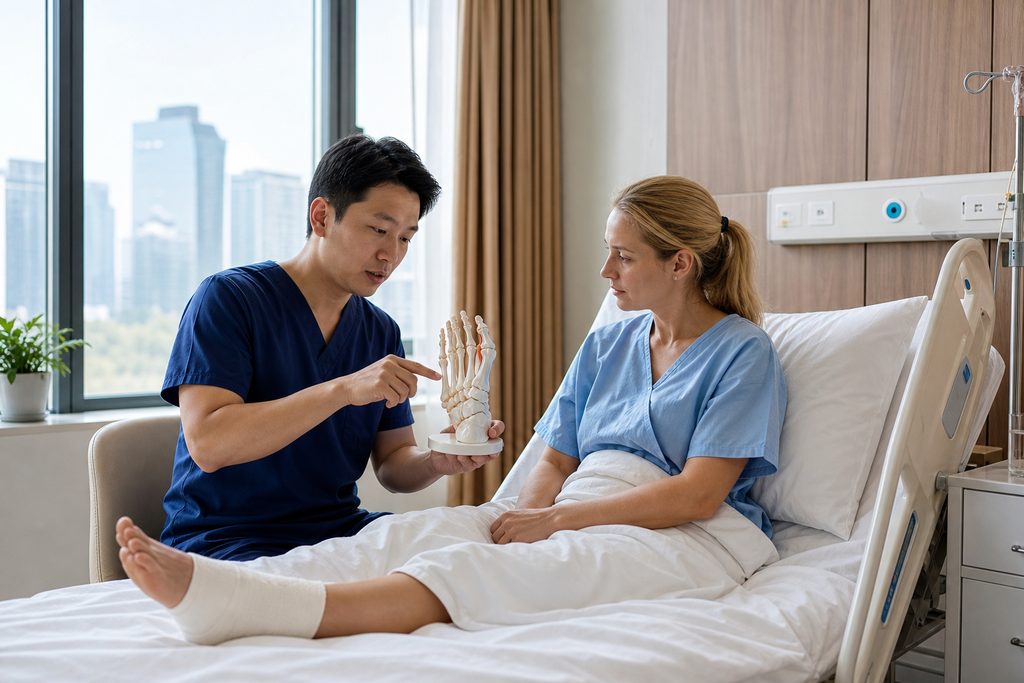
According to a 2019 study in the Journal of Foot and Ankle Research, symptomatic hallux valgus affects approximately 23% of adults aged 18–65, with prevalence climbing past 35% in those over 65. That is a staggering number of people walking around with a bony protrusion that turns every step into a negotiation with pain. When conservative measures fail—wider shoes, orthotics, anti-inflammatories—surgery becomes the logical next step. And for many, the cost of that surgery at home stops them cold. The bunion surgery cost China 2025 averages between $3,500 and $7,000 for a full package, including hospital fees, surgeon charges, anesthesia, and a standard inpatient stay. That figure sits at roughly one-fifth to one-seventh of the out-of-pocket expense in the United States, where uninsured or high-deductible patients routinely face bills exceeding $25,000. The question is not just about price, though. It is about whether the quality, safety, and recovery support infrastructure exist to make traveling 7,000 miles for foot surgery a rational decision. They do. But only if you know exactly what you are walking into.
How This Actually Works, Step by Step
The process of arranging hallux valgus correction in China follows a logic that rewards preparation and punishes shortcuts. Here is the sequence our team navigates with patients every week.
You send your existing records. Recent weight-bearing X-rays of both feet, any MRI or CT imaging if you have it, a summary from your orthopedic surgeon or podiatrist back home, and a basic medical history form. We translate these into clinical Chinese. This step matters more than most people assume. A high-quality preoperative X-ray showing the intermetatarsal angle and the degree of sesamoid displacement tells a surgeon exactly which osteotomy approach makes sense—distal chevron, scarf, or proximal. Without it, you are asking someone to bid on a job they cannot see.
A written second opinion comes back. A foot and ankle specialist at a top orthopedic department reviews your file and provides a written analysis: whether surgery is indicated, which procedure they would recommend, the expected inpatient duration, and a rough recovery timeline. This document costs $300–500 and carries no obligation. But it does something valuable: it gives you a concrete plan to evaluate before you book a single flight.
You speak to the surgeon. If the written opinion makes sense, the next step is a video consultation. You sit in your living room. The surgeon sits in theirs. You ask the questions that matter to you: How many of these procedures do you perform annually? What fixation method do you use—screws, plates, absorbable pins? What is your personal revision rate? A top-specialist video consultation runs $500–800. Many patients find the 30-minute conversation alone worth the price, simply for the clarity it provides.
You decide, and we coordinate. Once you commit, our team handles hospital registration, inpatient scheduling through the international medical department, visa support documentation for your S2 visa, and a full logistical plan covering airport pickup, accommodation near the hospital, and a bilingual medical companion for every clinical touchpoint. You arrive, you have surgery, you recover in the hospital for the prescribed period, and you fly home with a structured rehabilitation protocol.
What the Full-Service Package Actually Covers
The search term “hallux valgus correction full package price China” suggests a desire for an all-in number. Fair enough. But “all-in” means different things depending on who is quoting it. Here is what a properly structured package through an international medical coordination service includes—and what it does not.
A comprehensive package for unilateral hallux valgus correction typically covers: the surgeon’s fee, the anesthesiologist’s fee, operating room charges, the cost of fixation hardware (commonly titanium screws or plates), standard preoperative lab work and imaging, a private room in the international ward for two to four nights, postoperative medications during the inpatient stay, and one follow-up wound check and dressing change before departure. The price range for this level of service falls between $3,500 and $7,000 per foot, varying primarily by hospital tier and surgeon seniority.
What it does not cover: your international airfare, your S2 visa application fee, accommodation before admission or after discharge, meals outside the hospital, extended physiotherapy sessions beyond the initial protocol, or treatment for any unrelated medical conditions discovered during preoperative screening. These are not hidden charges. They are simply outside the scope of the surgical package, and any honest coordinator will list them upfront.
Bilateral correction—both feet at the same time—is occasionally performed but far less common. Most surgeons advise against it unless the deformities are mild and the patient is young and fit. The recovery from bilateral surgery is significantly harder: you are non-weight-bearing on both feet simultaneously, which means a wheelchair or a very determined approach to knee-walking for several weeks. The cost for bilateral correction generally runs $6,000 to $11,000, reflecting the additional OR time and extended inpatient stay rather than a simple doubling of the unilateral price.
| Cost Component | Unilateral (One Foot) | Bilateral (Both Feet) |
|---|---|---|
| Surgical package (surgeon, anesthesia, OR, hardware) | $2,800–5,500 | $5,000–9,000 |
| Inpatient stay (2–4 nights, private room) | $400–900 | $600–1,200 |
| Preoperative labs & imaging | $150–300 | $200–400 |
| Postoperative follow-up & dressing change | $150–300 | $150–300 |
| Estimated total surgical cost | $3,500–7,000 | $6,000–11,000 |
| Coordination & bilingual companion (from) | $800–1,200 | $1,000–1,500 |
| Airport transfer (round-trip) | $200 | $200 |
These figures reflect treatment at a top-tier public hospital’s international medical department. Private international hospitals in cities like Shanghai or Beijing may quote 20–40% higher, with the tradeoff being a more hotel-like environment and fully English-speaking nursing staff. The clinical outcome depends on the surgeon, not the thread count of the sheets. We tend to emphasize that distinction.
A Realistic Timeline
Every patient wants to know “how long to recover from bunion surgery abroad.” The question contains an implicit anxiety: if something goes wrong, you are far from home. The timeline below assumes an uncomplicated distal chevron or scarf osteotomy with screw fixation—the most common approaches for moderate hallux valgus. Significant deviations occur with more severe deformities requiring proximal osteotomy or fusion.
| Phase | Timeframe | What Happens |
|---|---|---|
| Remote evaluation & planning | 2–4 weeks before travel | Records submitted, translated, reviewed. Written second opinion delivered. Video consultation completed. Surgical date tentatively reserved. |
| Visa processing | 1–3 weeks | S2 visa application submitted with hospital invitation letter. Processing times vary by consulate and season. Expedited options exist in some jurisdictions. |
| Arrival & preoperative screening | Days 1–3 in China | In-person consultation, repeat X-rays if prior films are older than 3 months, blood work, ECG, anesthesia clearance. Surgery scheduled typically 1–2 days after clearance. |
| Surgery & inpatient stay | Days 3–7 | Procedure itself takes 60–90 minutes. Inpatient stay of 2–4 nights for pain management, wound monitoring, and initial mobilization training with a postoperative shoe. |
| Early recovery in China | Week 2 | Discharge from hospital. First dressing change and wound check at day 10–14. Sutures removed at approximately 14 days if non-absorbable. Patient stays in nearby accommodation. |
| Return travel | End of week 2–3 | Fit to fly once wound is clean, dry, and showing no signs of infection. Compression stockings recommended. Aisle seat advised for leg elevation. |
| Protected weight-bearing | Weeks 3–6 | Walking in a rigid postoperative shoe. No barefoot walking. Swelling is normal and may persist for months. Physiotherapy begins if available locally. |
| Return to normal footwear | Weeks 6–12 | Transition to wide, stiff-soled shoes. Swelling gradually subsides. Full athletic activity typically cleared at 3–4 months. |
That is the textbook timeline. Life sometimes writes a different script. Swelling can linger for six months. A small percentage of patients develop superficial wound issues that delay suture removal by a week. The key variable is not the surgeon’s skill—it is how faithfully you follow the postoperative instructions when no one is watching.
What Can Go Wrong—and What Happens Then
Let us address the question patients search for but rarely phrase bluntly: “is bunion surgery in China safe for international patients?” The honest answer is that safety is not a binary property of a country. It is a function of the specific hospital, the specific surgeon, and the systems in place to catch problems before they cascade.
The most common complication of hallux valgus surgery worldwide is recurrence of the deformity, occurring in roughly 5–10% of cases depending on the study and the follow-up period. This is not unique to any country. It is a risk inherent to the procedure itself, particularly when the underlying biomechanical cause—hypermobile first ray, flatfoot deformity, tight gastrocnemius—is not addressed. A competent surgeon evaluates the whole foot, not just the bump.
Other known complications include: deep vein thrombosis (rare in foot surgery but real, especially on long-haul flights shortly after the procedure), superficial wound infection (2–4% incidence), nerve injury causing numbness along the medial border of the great toe (often temporary, occasionally permanent), overcorrection into hallux varus (the toe drifts the wrong way), and hardware irritation requiring a second minor procedure to remove screws.
What happens if a complication occurs after you have returned home? This is the question that keeps people awake. The answer depends on the nature of the problem. A superficial wound infection is managed by any competent local podiatrist or orthopedic surgeon—you do not need to fly back to China for antibiotics and wound care. A recurrence or hardware failure is more involved. The hospital in China will review your follow-up X-rays remotely and provide a written opinion. If revision surgery is indicated, you face a choice: have it done locally or return to the original surgeon. Most top Chinese orthopedic departments maintain communication with international patients for at least 12 months postoperatively. You are not abandoned. But you do need a local provider willing to collaborate—ideally one identified before you travel.
What to verify before committing: Ask the surgeon directly about their personal revision rate, not the department’s aggregate statistic. Ask what postoperative imaging protocol they follow. Ask whether they use a locking plate construct or simple screws—the former provides more stable fixation but costs more. Ask who manages complications if you are back in your home country. If the answers are vague, walk away. There are other surgeons.
How to Evaluate a Hospital for Foot Surgery in China
The search for the “best orthopedic hospital in China for foot surgery reviews” reflects a sensible instinct. But “best” is slippery. A hospital that excels at spinal deformity surgery does not necessarily have a dedicated foot and ankle unit. What you want is a department with a subspecialty foot and ankle team—surgeons who do nothing but this all day, every day.
China’s hospital ranking system, the Fudan University Hospital Rankings, publishes an annual orthopedics specialty reputation list. Hospitals that consistently appear in the national top 10 for orthopedics include Peking University Third Hospital, Shanghai Sixth People’s Hospital, and West China Hospital in Chengdu. These institutions have dedicated foot and ankle divisions with surgeons performing several hundred hallux valgus corrections annually. Volume matters. A surgeon who performs 200 scarf osteotomies a year has seen variations and complications that a surgeon performing 20 simply has not encountered.
Look beyond the brand name. Ask: Does the surgeon publish on hallux valgus specifically? A quick PubMed search by surgeon name tells you whether they contribute to the academic literature on the procedure you need. Does the hospital have an international medical department with English-speaking coordinators, or will you be navigating the general outpatient system alone? The latter is possible but brutal without Mandarin. Our database covers 340+ top-ranked hospitals across 37 cities, and we can tell you which ones have mature international patient pathways for orthopedic surgery and which ones do not.
Private international hospitals like United Family Healthcare or Jiahui International Hospital offer a different value proposition: English-speaking surgeons (often Western-trained), direct insurance billing, and a patient experience closer to what you would expect in a private hospital in North America or Europe. The tradeoff is cost—typically 30–50% higher than a public hospital’s international wing—and sometimes lower surgical volumes for niche procedures. For a straightforward hallux valgus correction, either pathway can work. For a complex revision or a severe deformity, the high-volume public specialist often has the deeper experience.
Practical Considerations: Records, Visa, Payment, and Follow-Up
The logistics of “medical tourism bunion removal China all inclusive” are less glamorous than the marketing brochures suggest. Here are the specifics that determine whether your trip runs smoothly or becomes an exercise in frustration.
Medical records. You need weight-bearing AP and lateral X-rays of both feet taken within the past three months. If you have had prior foot surgery, bring the operative notes. A summary letter from your primary care physician confirming fitness for elective surgery is helpful. All documents must be translated into Chinese for the hospital’s medical records department. Our team handles this translation, but if you are arranging things independently, budget $100–200 for professional medical translation—Google Translate will not suffice for a radiology report.
Visa. The correct category for medical treatment in China is the S2 visa, which covers short-term private affairs including medical visits. The hospital’s international department provides an invitation letter that you submit with your application. Processing takes one to three weeks depending on the consulate. Your accompanying family member applies for their own S2 visa. Do not let anyone tell you to apply for an M visa—that is for commercial and trade activities, and misrepresentation can get your application denied.
Payment. Chinese public hospitals require prepayment. You deposit a sum—typically the full estimated surgical package cost—at admission, and any surplus is refunded at discharge. International departments accept wire transfers and major credit cards. Private international hospitals may offer direct billing with certain insurers. Confirm the payment method before you travel. Showing up with a personal check is not a plan.
Follow-up at home. Identify a local podiatrist or orthopedic surgeon before you leave for China. Schedule an appointment for two to three weeks after your return so they can take over wound care and monitor your progress. Send them the operative note and postoperative protocol from your Chinese surgeon. Most local providers are willing to handle routine follow-up for a procedure performed elsewhere, though a minority may be reluctant. It is better to find out which camp yours belongs to before you have a healing incision and no one to look at it.
Frequently Asked Questions
The bunion surgery cost China 2025 for a standard unilateral hallux valgus correction ranges from $3,500 to $7,000, inclusive of surgeon fees, anesthesia, hardware, and a short inpatient stay. In the United States, the same procedure typically costs $15,000 to $30,000 for uninsured or high-deductible patients, and even insured patients may face $5,000–10,000 in out-of-pocket costs after deductibles and coinsurance. The savings are real, but they must be weighed against travel costs and the logistical complexity of surgery abroad.
Is it safe to have bunion surgery in China as a foreigner?
Safety depends on selecting a hospital with a dedicated foot and ankle subspecialty team and an established international patient pathway. Top orthopedic centers in China report complication rates for hallux valgus surgery comparable to those published in Western literature—2–4% superficial infection, 5–10% recurrence
For more medical information and treatment options in China, visit chinamedservices.com (China Medical Services).
