Knee Arthroscopy in Shanghai: Sports Medicine and Local Support Without the Wait
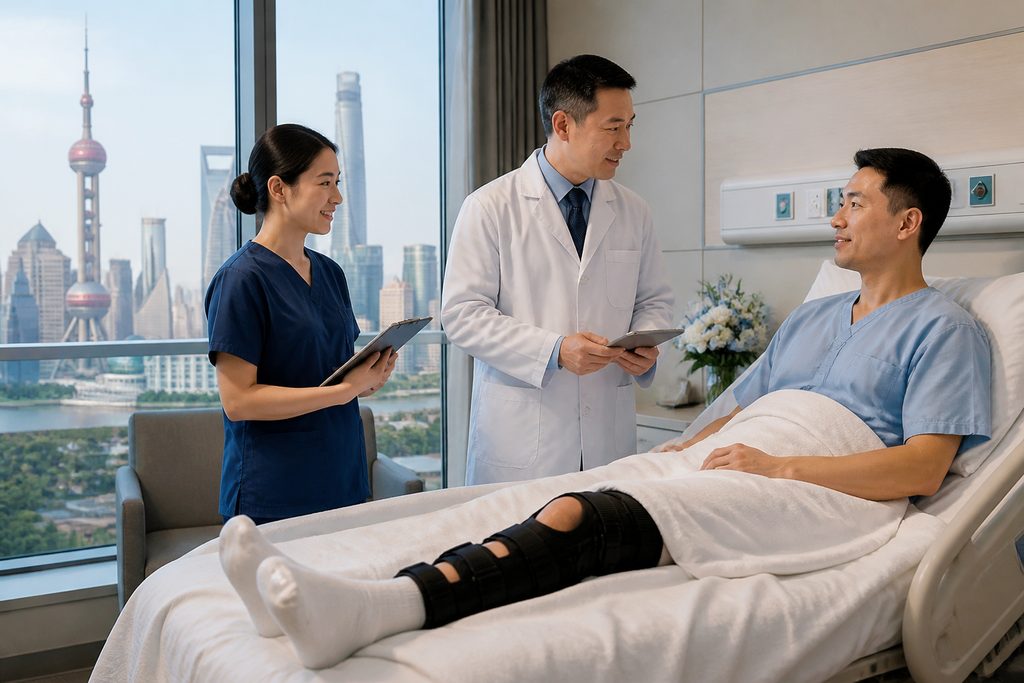
A torn meniscus doesn’t just hurt. It steals your Saturday morning game, makes stairs a negotiation, and turns a simple walk into a calculation. You know you need it fixed. What you don’t know is whether flying halfway around the world for the procedure is a smart move or a reckless gamble. A 2023 report from the International Medical Travel Journal noted that over 60% of medical travelers cite cost and wait times as their primary motivators for seeking care abroad. For a knee arthroscopy, the math is stark: a procedure costing $15,000 to $35,000 in the United States often comes with a surgical slot months away. In Shanghai, the knee arthroscopy price Shanghai hospitals quote starts from around $3,000 to $6,000. The wait? Often measured in days, not seasons.
Key Takeaways
- The knee arthroscopy price Shanghai clinics charge typically ranges from $3,000 to $6,000, a fraction of Western costs, with no compromise on surgical volume or technology.
- Shanghai’s top sports medicine departments handle a caseload that dwarfs most Western centers, driving a level of subspecialist expertise that is hard to match elsewhere.
- Navigating a Chinese public hospital without Mandarin fluency is the single biggest barrier—expect chaos at registration and zero English signage in standard outpatient halls.
- You cannot book surgery remotely from overseas through the standard public channel; a physical consultation is mandatory, and that’s where local coordination becomes essential.
The Problem: A Waiting Game Your Knee Can’t Afford
In Canada and the UK, the benchmark for orthopedic surgery wait times has become a national frustration. The Canadian Institute for Health Information reported that in 2023, only 59% of patients received knee surgery within the recommended 26-week benchmark. That’s half a year of cartilage grinding, muscle atrophy setting in, and compensation injuries creeping up the kinetic chain. In the US, the barrier isn’t always the wait—it’s the bill. Even with insurance, a high-deductible plan can leave a patient staring at a $10,000 out-of-pocket invoice for a routine scope.
This isn’t a minor inconvenience. Delaying an arthroscopy for a repairable meniscus tear can turn a tidy trim into a more complex repair, or worse, accelerate degenerative changes that a scope can’t reverse. The decision to travel for surgery is a decision to stop that clock. But it only works if you land in a system that can actually deliver—not just a cheaper price, but a faster, competent pair of hands.
Why Shanghai’s Sports Medicine System Delivers Results
Shanghai isn’t a single-hospital town. It’s a dense cluster of academic medical centers that serve a domestic population of over 240 million people in eastern China. The volume is staggering, and in orthopedics, volume translates directly to pattern recognition.
Clinical Volume Drives Better Outcomes
Consider the numbers. A busy US sports medicine surgeon might perform 150 to 200 knee arthroscopies a year. At a place like Shanghai Sixth People’s Hospital—a national center for orthopedics—the department handles thousands of knee procedures annually. A 2020 study published in The Lancet examining surgical outcomes in China noted that high-volume centers demonstrated significantly lower complication rates for common orthopedic procedures compared to low-volume peers. When a surgeon sees your specific meniscal tear pattern five times a week instead of five times a month, the intraoperative decisions become reflexive. They’ve seen the rare variant, the unexpected loose body, the trickier repair technique. For you, that means less time under anesthesia and a more precise intervention.
Technology and Efficiency at Scale
Walk into a Shanghai public hospital at 7:30 AM and you’ll see a system running at a pace that feels unfamiliar. Registration kiosks process hundreds of patients an hour. MRI slots run late into the evening. The operating theaters often run on a block schedule that maximizes throughput. This isn’t assembly-line medicine—it’s a structural response to immense demand. And the equipment matches the volume. Shanghai’s top-tier hospitals routinely use 4K arthroscopy towers, radiofrequency wands, and all-suture implants that are standard in any top US center. The difference is not the tool. It’s how many times the person holding it has used it this month.
Cost Advantage Without Quality Compromise
Let’s address the obvious objection head-on. Does a lower knee arthroscopy price Shanghai hospitals offer mean a lower standard of care? The structural reasons for the price gap are straightforward. A surgeon’s salary in China, while high by local standards, is a fraction of a US orthopedic surgeon’s compensation. Hospital overhead, malpractice insurance, and pharmaceutical costs are all substantially lower. These are economic differences, not quality differences. The implants—from companies like Smith & Nephew or Arthrex—are the same multinational brands used globally. The sterilization protocols at JCI-accredited or Fudan-ranked hospitals meet international benchmarks. You’re not paying less for a worse product. You’re paying less because the entire cost structure of the system is different.
What a Knee Arthroscopy Package in Shanghai Actually Includes
When you search for knee surgery packages China providers offer, you’re not buying a standardized product off a shelf. Each hospital bundles services differently, and understanding the components is how you avoid surprises. A typical package at a public hospital’s International VIP wing will include the surgeon’s fee, the operating theater charge, the anesthesia fee, the implant cost, and a short inpatient stay—often 1 to 3 nights for a standard meniscectomy or ACL reconstruction. What it frequently excludes: the pre-operative MRI (if you haven’t brought your own), post-operative physiotherapy sessions, and any medications you take home.
Private international hospitals like Jiahui or United Family bundle things more comprehensively, with English-speaking nursing staff, Western-style private rooms, and clearer billing. But the knee surgery packages China private hospitals provide come at a premium—still far below US rates, but notably higher than public VIP wards. You’re choosing between a more familiar patient experience and a more austere but clinically excellent environment. Neither choice is wrong. The mistake is not knowing the difference before you arrive.
| Cost Component | US Approximate Range | Shanghai Approximate Range |
|---|---|---|
| Surgeon & Hospital Fee | $12,000 – $28,000 | $2,500 – $5,000 |
| Anesthesia | $1,500 – $3,000 | $300 – $600 |
| Implant (if ACL) | $2,000 – $5,000 | $800 – $2,000 |
| Pre-op MRI | $1,000 – $3,000 | $100 – $300 |
| Post-op Physio (per session) | $100 – $250 | $30 – $80 |
How to Identify the Best Sports Medicine Hospital in Shanghai for You
The question “which is the best sports medicine hospital Shanghai has?” doesn’t have a single answer. It depends on your injury, your budget, and your tolerance for a non-English environment. Shanghai Sixth People’s Hospital runs one of the largest orthopedic departments in the country. Its sports medicine division handles complex multiligament reconstructions that smaller centers refer away. Huashan Hospital, affiliated with Fudan University, is another heavyweight—its sports medicine unit is tightly integrated with a renowned hand surgery department, making it a strong choice for upper-extremity athletes, but its knee caseload is equally robust.
Then there’s the private sector. Jiahui International Hospital employs fellowship-trained sports medicine surgeons who have practiced in the US or Europe, and the entire clinical workflow is built around an English-speaking patient experience. The trade-off is cost—still a fraction of US prices, but higher than a public hospital VIP ward. When our team evaluates which best sports medicine hospital Shanghai option fits a patient, we look at three things: the specific injury pattern, the surgeon’s annual volume for that exact procedure, and the patient’s need for English-language communication during the recovery stay. A professional athlete with a posterolateral corner injury needs a very different setup than a weekend warrior with a simple medial meniscus tear.
Is Knee Arthroscopy Safe in Shanghai? The Data and the Realities
This is the question that keeps people up at night. Is knee arthroscopy safe in Shanghai? The short answer is yes, at the right hospital, with the right preparation. The longer answer requires understanding what “safe” means in a medical travel context. Surgical site infection rates at top-tier Chinese orthopedic centers are comparable to international benchmarks—generally below 1% for clean arthroscopic procedures. A 2022 review in the Journal of Hospital Infection examining orthopedic surgical site infection rates across Asian centers found that JCI-accredited and nationally ranked hospitals performed at parity with Western centers.
The risk that is harder to quantify is the risk of miscommunication. A surgical consent form signed without full comprehension. A post-operative instruction misunderstood. A pain medication allergy not clearly conveyed. These are not theoretical risks. They happen when patients rely on translation apps instead of a human interpreter who understands medical terminology. The procedure itself, performed by a high-volume surgeon in a modern operating theater, is not the primary risk. The primary risk is everything that happens around the procedure—the consultation, the nursing care, the discharge instructions. That’s the gap that makes the difference between a smooth recovery and a stressful one.
Practical Considerations: Documentation, Visas, and Payment
You’ll need a current MRI—ideally within the last three months—and a written referral or summary from your home orthopedic surgeon. Bring the actual DICOM files on a CD or USB, not just the radiology report. The surgeon in Shanghai will want to review the raw images. For the visa, foreign patients traveling for medical treatment apply for an S2 visa, which covers short-term private affairs including medical care. Your accompanying family member applies under the same category. The hospital will provide an invitation letter and a treatment confirmation document as part of the application package. Visa processing times vary by country, so start this process at least six to eight weeks before your intended travel date.
Payment is another practical hurdle. Public hospitals in China operate on a pre-payment system. You deposit a lump sum at admission, and the hospital draws down from that balance. Credit cards are accepted at international VIP wings, but standard outpatient departments may require cash or domestic Chinese payment platforms like WeChat Pay. International private hospitals accept major credit cards and often work with international insurers, but public hospitals generally do not handle direct insurance billing. You pay first and seek reimbursement later. Plan your financial logistics accordingly, and confirm the accepted payment methods with the specific hospital before you fly.
Frequently Asked Questions
Not through the standard public outpatient system. A surgeon must see you in person, review your imaging, and conduct a physical exam before scheduling the operation. What you can arrange in advance is a video consultation with the specialist through the hospital’s international department, which allows the surgeon to review your case and confirm that you are a surgical candidate. The actual surgery date gets locked in after that in-person visit.
When patients ask how much does knee arthroscopy cost in China, the answer depends on the hospital tier. At a top public hospital’s VIP wing, expect $3,000 to $6,000 for a standard meniscectomy. A private international hospital runs $8,000 to $15,000. Compare this to $15,000 to $35,000 in the US, and the savings cover your flight, accommodation, and a family vacation with money left over.
This is the hardest question, and the honest answer is that continuity of care across borders is imperfect. Your Shanghai surgeon will provide a detailed operative report and post-operative protocol. You should identify a local orthopedic surgeon before you travel who is willing to take over follow-up care. Most surgeons will accept a colleague’s patient for post-op management, but you must arrange this proactively, not after a problem arises. Our team helps patients compile a complete medical record package—in English—specifically for this handoff.
When you’re ready to book knee arthroscopy Shanghai medical tourism services, the process starts with a case review. You send your MRI, your medical history, and your specific goals. The service matches you with an appropriate surgeon and hospital, arranges the video consultation, and then coordinates the visa invitation letter, hospital registration, and an in-person interpreter for your consultation and admission. You are not booking a surgery online. You are booking the coordination that gets you to the right surgeon’s office, with someone who speaks both languages standing next to you.
Most US and European insurers do not have direct billing agreements with Chinese public hospitals. Some international plans and high-end expatriate policies do cover treatment at private international hospitals like Jiahui or United Family. Check your policy for “worldwide coverage” or “Asia-Pacific coverage” exclusions. If your insurer requires pre-authorization, start that process early and get written confirmation. For most patients, the model is self-pay with subsequent reimbursement, and the hospital will provide an itemized invoice and medical record in English for your claim.
Your Next Step
You now have a clear picture of what a knee arthroscopy in Shanghai involves—the costs, the hospitals, the safety data, and the logistical realities. The decision to travel for surgery is never just about the price tag. It’s about timing, expertise, and whether you can navigate the system without burning unnecessary energy. Our team at China Medical Services handles the coordination layer—matching your case to the right high-volume sports medicine department, setting up the video consultation, and ensuring you have an interpreter at your side when you walk into the hospital. We don’t provide medical advice or perform surgery. We make sure you understand every step before you take it. If you’re ready to explore whether this path makes sense for your knee, get a free consultation and we’ll walk through your options together. No pressure. Just clarity.
For more medical information and treatment options in China, visit chinamedservices.com (China Medical Services).
