Surgery at Liaoning Provincial People’s Hospital: The Complete Guide for International Patients
Have you ever wondered if you could access advanced surgical care without the six-month waiting lists or six-figure price tags that have become standard in so many Western healthcare systems?
We see this question every day. A patient in London needs a hip replacement but is told to wait 18 months. A family in Vancouver faces a quote of $28,000 for a procedure their insurance only partially covers. They start searching for alternatives. They find Shenyang. And that is when the real questions begin — because knowing a hospital exists is not the same as knowing how to navigate it safely from 8,000 kilometers away.
Our team has spent years building the pathways that connect international patients with China’s most capable surgical centers. Liaoning Provincial People’s Hospital in Shenyang is one of those centers. It handles over 2 million outpatient visits annually and performs tens of thousands of surgeries each year across more than 60 clinical departments. The volume is significant. But for a foreign patient, volume is meaningless without a clear, transparent process. This article lays out exactly what that process looks like — what the hospital offers, what it costs, how to book, and what no one tells you about recovering from surgery in Northeast China.
Key Takeaways
- Liaoning Provincial People’s Hospital performs over 70,000 surgeries annually, with cardiac and orthopedic volumes that rival major Western academic centers.
- Total surgery package costs for international patients in Shenyang typically run 60-80% lower than equivalent US private-pay rates, even when using the hospital’s VIP international channel.
- The hospital does not have a walk-in international patient desk — all foreign patients must coordinate through a pre-arranged channel with documentation submitted in advance.
- You cannot book a surgery date from overseas without a prior in-person consultation, but a structured remote evaluation can determine candidacy before you book a flight.
The Problem: When Your Surgery Back Home Is Priced Out of Reach
A coronary artery bypass graft in the United States now averages $123,000 for uninsured or underinsured patients, according to a 2023 analysis by the Kaiser Family Foundation. In Canada, the median wait time between specialist consultation and elective orthopedic surgery hit 27.4 weeks in 2023, per the Fraser Institute’s annual survey. For patients who are in pain, losing mobility, or facing progressive cardiac decline, those numbers are not abstract policy debates. They are a countdown they cannot afford.
Medical tourism is often sold as a simple transaction — choose a destination, pay less, fly home cured. The reality is messier. Language barriers turn a simple pre-op blood draw into a two-hour ordeal. Payment systems that demand cash deposits up front clash with insurance reimbursement timelines. And if something goes wrong after you return home, your local doctor has never heard of the surgeon who operated on you.
These are the problems that make people abandon the search entirely. They decide the risk is too high. They wait. They pay the higher price. But a growing number of patients are finding that the risk can be managed — if you pick the right hospital and the right support structure from the start.
Why Liaoning Provincial People’s Hospital Delivers Results for International Patients
Clinical Volume That Translates to Surgical Precision
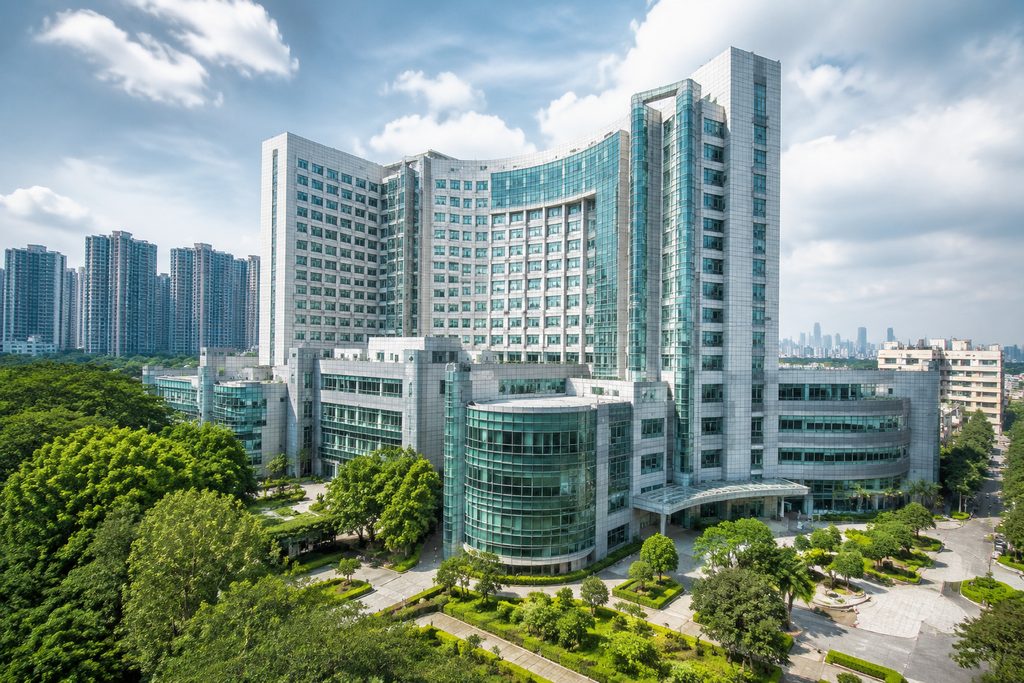
Liaoning Provincial People’s Hospital is not a boutique medical tourism facility. It is a 3,500-bed public tertiary hospital that serves as the primary referral center for Liaoning Province’s 42 million residents. Its cardiovascular surgery department alone performs more than 1,200 open-heart procedures annually. The orthopedics department handles joint replacements, spinal surgeries, and trauma cases at a pace that keeps its surgical teams operating five days a week, often in dual-room setups.
What does volume mean for a patient? A 2015 study published in The Lancet examining over 2 million surgical cases found that for complex procedures like esophagectomy and pancreatic resection, hospitals performing more than 20 cases per year had mortality rates 30-40% lower than low-volume centers. Liaoning Provincial People’s Hospital clears that threshold many times over in its core surgical specialties. The teams here see the rare complications because they see everything — and that pattern recognition is what keeps complication rates low.
Technology Infrastructure Without the Marketing Hype
The hospital deployed the Da Vinci robotic surgical system for minimally invasive procedures in urology, gynecology, and thoracic surgery in 2019. Its hybrid operating suite allows cardiac surgeons to switch between catheter-based interventions and open surgery without moving the patient — a setup that fewer than 15% of US hospitals had as of 2021, according to the Society of Thoracic Surgeons. The imaging center runs 3.0T MRI and dual-source CT scanners that produce the kind of high-resolution studies that surgical planning demands.
But the technology that matters most to an international patient is not the robot. It is the digital infrastructure that allows the hospital’s international coordination office to receive, translate, and circulate your medical records before you ever set foot in Shenyang. That capability — the ability to get a specialist’s eyes on your case remotely — is what determines whether your trip will be a productive surgical stay or an expensive fact-finding mission.
Cost Structure: Why Shenyang Surgery Packages Are Different
The question every patient asks first is about the Liaoning Provincial People’s Hospital international patient price list. Here is the honest answer: there is no single published price list that covers every procedure for every international patient. The hospital quotes on a case-by-case basis, factoring in the specific procedure, the surgeon’s seniority, the ward class you select, and whether you go through the standard public channel or the VIP international department.
But we can give you real benchmarks. A total hip replacement through the international VIP channel at a top Shenyang hospital typically runs between $12,000 and $18,000 all-in — including the prosthesis, surgeon fees, anesthesia, a private room, and in-hospital rehabilitation. The same procedure at a US hospital, billed to an uninsured patient, averages $39,000 to $45,000 for the hospital charges alone, not counting surgeon and anesthesia fees. A cardiac bypass graft in Shenyang falls in the $15,000 to $22,000 range. In the US, the uninsured price averages over $120,000.
These are not loss-leader prices designed to attract foreign patients. They reflect the structural economics of Chinese healthcare: lower labor costs, high patient throughput, and a hospital financing model that does not depend on maximizing revenue per procedure. Quality does not suffer for it — Liaoning Provincial People’s Hospital maintains ISO 15189 accreditation for its laboratory services and has been designated a National Clinical Key Specialty site in cardiovascular medicine, a distinction awarded only after rigorous government audit.
What a Surgery Package in Shenyang Actually Includes — and What It Does Not
If you search for a surgery package cost Shenyang for foreigners, you will find vague promises and outdated numbers. Let us be specific. A properly structured surgery package at Liaoning Provincial People’s Hospital, coordinated through the international channel, should include these line items:
| Package Component | What It Covers | Typical Cost Range (USD) |
|---|---|---|
| Pre-admission evaluation | Specialist consultation, required imaging, lab panels, anesthesia clearance | $800 – $1,500 |
| Surgical procedure | Surgeon fee, operating room, anesthesia, standard implants/prosthetics | $8,000 – $18,000 (varies widely by procedure) |
| Inpatient stay | Private VIP ward, nursing care, standard medications, meals | $200 – $400 per day |
| Post-operative rehabilitation | In-hospital physiotherapy, discharge planning, follow-up imaging | $1,000 – $2,500 (depending on stay length) |
| International coordination fee | Document translation, appointment scheduling, billing liaison, discharge summary translation | $800 – $1,200 |
What is not included: airfare, visa fees, accommodation outside the hospital, extended rehabilitation after discharge, treatment for unrelated conditions discovered during pre-op screening, and any revision surgery required due to complications. You need to budget for a companion’s expenses as well — recovery in a foreign city is not something most patients should attempt alone.
Also understand this: the package price you receive is a quote, not a fixed contract. If the surgical team discovers during the procedure that a more complex intervention is required, the cost will adjust. This is standard practice in any surgical setting anywhere in the world. A reputable coordinator will make sure you understand the contingency scenarios before you sign anything.
How to Book Surgery at Liaoning Provincial People’s Hospital as a Foreigner: The Real Sequence
The most common question we receive is some variation of how to book surgery at Liaoning Provincial People’s Hospital as a foreigner. Patients often assume they can email the hospital, pick a date, and show up. That is not how it works. Chinese public hospitals — even their international departments — do not schedule surgery for a patient they have never examined in person.
Here is the sequence that actually produces results:
Step 1: Remote case evaluation. You submit your existing medical records — imaging studies, lab reports, specialist notes, current medication list — in digital format. These are translated into Chinese and reviewed by the relevant department at the hospital. The review typically takes 5 to 7 business days. The output is a written assessment: is your case suitable for treatment at this hospital, what additional tests will be required upon arrival, and a preliminary treatment plan.
Step 2: In-person consultation. You travel to Shenyang on an S2 visa — the short-stay category used for private affairs including medical treatment. You attend a face-to-face consultation with the surgical team. They will order any additional tests the remote review flagged. This phase usually takes 2 to 4 days. Only after the surgeon has examined you and reviewed the completed workup will a surgery date be set.
Step 3: Admission and surgery. Once the date is confirmed, you are admitted — typically the day before or the morning of the procedure. The hospital requires a deposit covering the estimated total cost, paid in advance. International bank transfers, UnionPay, and major credit cards are accepted through the hospital’s international billing office.
Step 4: Recovery and discharge. Inpatient recovery duration depends entirely on the procedure. A laparoscopic cholecystectomy may require only 2 nights. A knee replacement may keep you in the hospital for 7 to 10 days, with daily physiotherapy sessions. Before discharge, you receive a translated discharge summary, operative report, imaging on CD or via secure digital transfer, and a medication plan.
You cannot compress this sequence into a single week. Plan for a minimum of 10 to 14 days in Shenyang for a moderate-complexity surgery, and 3 to 4 weeks for major joint replacement or cardiac surgery. Rushing the pre-op workup is how mistakes happen.
Does Liaoning Hospital Have English Speaking Coordinators? And Other Staffing Realities
The question does Liaoning hospital have English speaking coordinators comes up in nearly every initial consultation. The answer is yes — but with important nuance. The hospital’s international medical service office employs dedicated English-speaking patient coordinators who handle scheduling, billing inquiries, and basic translation during consultations. These are hospital employees, not third-party agents, and they understand the clinical workflows.
However, their availability is not unlimited. They manage a caseload that includes both international patients and domestic VIP patients. They are not assigned to you 24/7. Outside of scheduled appointments and during evenings, you will encounter nursing staff and administrative personnel whose English proficiency is limited. This is a reality of receiving care in a Chinese public hospital, even a top-tier one.
This is where the distinction between a hospital coordinator and a dedicated medical companion becomes critical. A hospital coordinator works for the hospital — their primary responsibility is to keep the hospital’s processes moving. A bilingual medical companion works for you — navigating the physical hospital campus, waiting in pharmacy queues, translating the surgeon’s post-op instructions at the bedside, and troubleshooting when your meal order arrives wrong. Both roles matter. Understanding what each one does — and does not do — prevents the kind of frustration that can sour an otherwise successful surgical experience.
When patients ask us for a best hospital in Shenyang for international patients review, they are often really asking: will I be understood? Will I be safe? Liaoning Provincial People’s Hospital ranks among the top three hospitals in Liaoning Province by the Fudan University hospital rankings, and its cardiovascular and neurology departments consistently place in the regional top tier. The clinical capability is there. The English-language infrastructure exists but is thinner than what you would find at a private international hospital in Shanghai or Beijing. That is a trade-off you make for the cost advantage and the clinical volume Shenyang offers.
Practical Considerations: Visas, Payments, and Post-Op Life in Shenyang
Let us address the logistics that trip people up.
Visas. For medical treatment in China, you apply for an S2 visa at the Chinese embassy or consulate in your home country. The application requires an invitation letter from the hospital — Liaoning Provincial People’s Hospital’s international office can issue this once your case has been accepted for evaluation. The S2 typically allows a stay of up to 180 days, which covers even extended surgical recovery timelines. Your companion applies for the same S2 category. Do not let anyone tell you to apply for an M visa — M is for commercial and trade activities and is not appropriate for medical travel. Some patients search for a medical visa China surgery fast track Liaoning option. There is no special fast-track visa category. The S2 process is straightforward when you have proper hospital documentation, but it is not instant. Budget 2 to 4 weeks for visa processing.
Payments. The hospital requires a deposit before admission — typically 80-100% of the estimated total. Payment methods include international wire transfer, UnionPay, Visa, and Mastercard. If you plan to seek reimbursement from your home-country insurer, obtain pre-authorization before you travel. The hospital will provide itemized invoices and translated documentation, but they will not bill your insurer directly. You pay, then you claim.
Recovery in Shenyang. Shenyang is a city of 9 million people with cold winters and hot summers. If you are having orthopedic surgery, consider the season — navigating icy sidewalks on crutches in January is not ideal. The area around the hospital has several international-grade hotels where you can recover after discharge. A serviced apartment with a kitchenette will cost $50 to $80 per night. You need to stay close enough for follow-up appointments but comfortable enough to rest. Plan for at least one follow-up visit at the 10-14 day mark after discharge before you are cleared to fly.
Frequently Asked Questions
You can get a detailed, procedure-specific quote after the hospital reviews your medical records and determines what is clinically necessary. No reputable hospital will give you a fixed price for surgery sight-unseen — there are too many variables. What you should receive is a written estimate with a clear breakdown of what is included and what could cause the price to change. If someone offers you a flat “package price” with no prior case review, walk away.
Liaoning Provincial People’s Hospital has a full intensive care unit, 24-hour emergency surgical capability, and the specialist coverage to manage complications in-house. The hospital’s complication and mortality rates for standard procedures are tracked and are consistent with international benchmarks. However, you need to understand that pursuing malpractice claims across international borders is extraordinarily difficult. The real safeguard is choosing a hospital with the volume and systems to minimize complications in the first place, and having a support team on the ground who can escalate concerns immediately if something does not feel right.
Most will, provided the records are properly translated and include operative notes, implant specifications, imaging, and a discharge summary. We have seen orthopedic surgeons in the US and UK accept Chinese surgical documentation without issue when it is complete and professionally translated. The key is getting the right documents in the right format before you leave Shenyang. Do not assume the hospital will automatically provide everything your home doctor needs — ask for a specific checklist and verify it before discharge.
Shenyang is a major metropolitan city with low violent crime rates and a significant expatriate presence due to its manufacturing and academic sectors. The challenge is not safety in the conventional sense — it is navigation. Hospital signage, pharmacy labels, food delivery apps, and taxi communication are all in Chinese. Thousands of foreign patients have managed this successfully, but almost all of them had some form of local language support. Do not attempt a surgical trip to Shenyang solo unless you have a clear plan for interpretation and daily logistics.
Your Next Step
Liaoning Provincial People’s Hospital offers what many international patients need: high surgical volume
For more medical information and treatment options in China, visit chinamedservices.com (China Medical Services).
