Your TCM Treatment at Xiamen Hospital: Our Full Coordination Guide
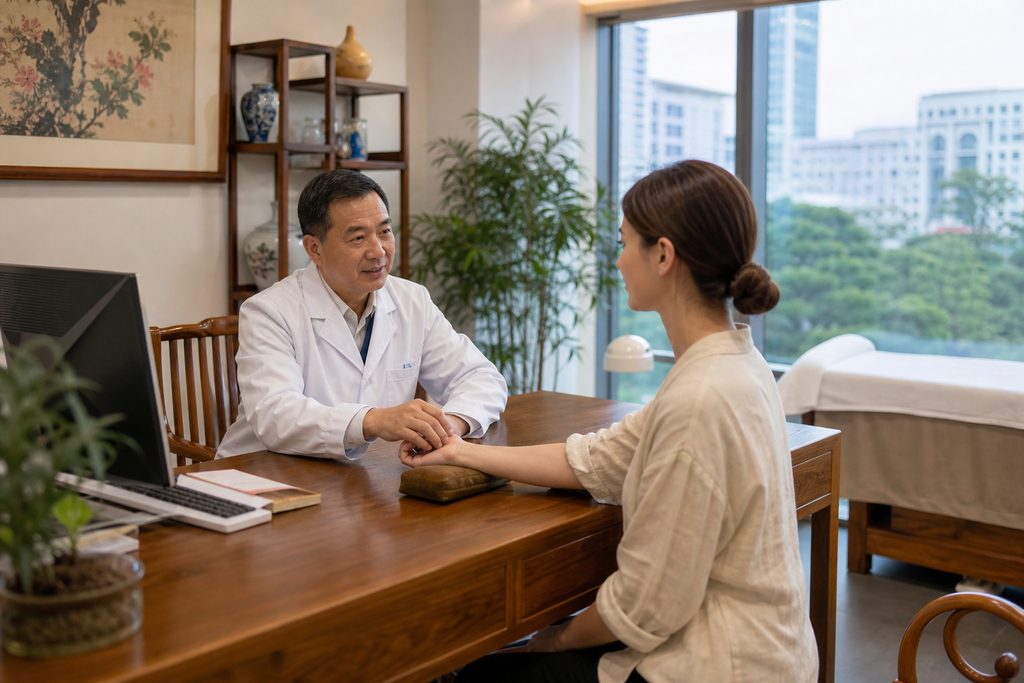
When 54-year-old Linda from Manchester finally booked her flight, she wasn’t thinking about acupuncture needles. She was thinking about the stack of documents on her kitchen table. MRI reports. Referral letters. A half-filled S2 visa application. The shoulder pain she’d managed for seven years had worn her down. Her local options felt exhausted. She’d read about Xiamen Hospital of Traditional Chinese Medicine. The outcomes looked promising. The logistics looked impossible.
That’s where our team steps in.
We don’t provide medical care. We provide the scaffolding around it. Think of us as the team that handles the paperwork, the scheduling, the language barrier, and the thousand small decisions that turn a daunting overseas medical trip into a structured, manageable plan. This guide explains exactly how we coordinate your TCM treatment at Xiamen Hospital of Traditional Chinese Medicine—from the first email to your follow-up care back home.
The Short Answer
We coordinate your entire journey through a four-phase process: remote evaluation, pre-arrival preparation, on-the-ground support, and post-treatment follow-up. The typical timeline from first contact to treatment start is 3 to 6 weeks. The TCM treatment cost at Xiamen hospital varies significantly—a two-week pain management program typically ranges from $2,800 to $6,500, depending on the specific therapies prescribed and whether you choose a standard or VIP inpatient ward. These are real numbers. What drives the variance is the complexity of your condition and the treatment protocol the attending physician designs after reviewing your case.
The caveat is this: TCM is not a single intervention. It’s a system. Your treatment might include acupuncture, herbal medicine, tuina massage, moxibustion, cupping, dietary therapy, or some combination. The cost reflects that breadth. And no responsible coordinator can quote you a fixed price before a physician has reviewed your medical history. Anyone who does is guessing.
Who This Is Right For — and Who It Isn’t
We’ve coordinated TCM care for enough international patients to know when it makes sense and when it doesn’t. Being honest about both saves everyone time.
Good candidates typically share these traits:
- You have a chronic condition where conventional Western treatments have plateaued—persistent pain, digestive disorders, autoimmune conditions, or post-stroke rehabilitation are common examples
- You’re seeking integrative care rather than emergency intervention; TCM excels at gradual, systemic rebalancing
- You’re willing to commit to a treatment course of at least 7 to 14 days; single-session acupuncture exists, but meaningful outcomes require consistency
- You have a documented medical history we can share with the TCM team for pre-arrival evaluation
Situations where this path probably isn’t the right fit:
- You need acute surgical intervention or emergency care—TCM hospitals are not trauma centers
- You’re looking for a quick fix in 2 or 3 days; TCM’s therapeutic logic doesn’t work that way
- Your condition requires continuous high-tech monitoring that a TCM inpatient ward isn’t designed to provide
- You’re unwilling to take herbal decoctions or undergo needle-based therapies; these are core modalities, not optional add-ons
If you fall into that second group, we’ll tell you. Our reputation depends on matching the right patients to the right resources, not on maximizing bookings.
The Options, Compared
When international patients consider TCM in China, the choice isn’t simply “Xiamen or nothing.” There’s a landscape. Understanding it helps you make a confident decision rather than a hopeful guess. Here’s how the genuine alternatives stack up:
| Factor | Xiamen Hospital of TCM | Private TCM Clinics (China) | TCM Practitioners (Home Country) |
|---|---|---|---|
| Physician qualification | Board-certified, hospital-credentialed senior TCM physicians; many hold professorships | Varies widely; some excellent, some with minimal formal training | Credentialing depends on local regulations; scope often limited |
| Treatment modalities available | Full spectrum: acupuncture, herbal pharmacy, tuina, moxibustion, cupping, dietary therapy, physiotherapy integration | Usually 1–3 modalities; limited herbal dispensary | Often acupuncture-only; herbal access restricted by import laws |
| Typical cost for 2-week program | $2,800–$6,500 (inpatient); includes therapies, herbs, basic ward | $1,500–$4,000 (outpatient only; no accommodation) | $800–$2,500 (outpatient; limited session frequency) |
| International patient infrastructure | Dedicated international coordinator desk; English-capable staff in VIP wing | Rarely; language barrier is significant | Not applicable |
| Herbal medicine quality | Hospital-grade dispensary; raw herbs and prepared decoctions; quality-controlled sourcing | Variable; source verification difficult for foreigners | Often limited to pre-packaged granules; import restrictions apply |
| Integration with Western diagnostics | Can review your existing MRI/CT/bloodwork alongside TCM diagnosis | Limited; may not have access to or training in Western imaging | Usually works in parallel; rarely integrated |
For most international patients we work with, the hospital setting wins on two fronts: breadth of modalities and accountability. A hospital-credentialed physician carries a license that matters. A private clinic may or may not. The trade-off is cost—you’re paying for infrastructure, quality control, and the coordination layer that makes a foreign hospital navigable. Whether that premium is worth it depends on the complexity of your condition.
How We Coordinate Your Care at Xiamen Hospital of Traditional Chinese Medicine: The Four-Phase Process
This is the section that answers how does Xiamen Hospital of Traditional Chinese Medicine coordinate care for international patients through our team. The hospital has its own international patient desk. We work alongside it, handling the pieces that fall between institutional processes and personal needs.
Phase 1: Remote Evaluation (Week 1–2)
Everything starts with your medical records. We request a translated summary of your condition, recent diagnostic reports, imaging results, and a list of current medications. Our team handles the translation into Chinese—you don’t need to find a certified medical translator on your own. This package goes to the relevant department at Xiamen Hospital of Traditional Chinese Medicine, typically the pain management or internal medicine team depending on your presenting complaint.
A senior TCM physician reviews your file. Within 5 to 10 business days, you receive a written preliminary assessment. This document outlines whether your condition falls within the hospital’s treatment scope, what modalities are likely to be recommended, and an estimated treatment duration. It is not a prescription. It is a feasibility analysis. The cost for this written second opinion is from $300 to $500, and if you proceed to treatment in Xiamen, that fee is credited in full toward our on-the-ground coordination service.
Some patients opt for a video consultation at this stage—$500 to $800 for a session with the senior specialist. You can describe your symptoms directly, ask questions about the proposed approach, and hear the physician’s reasoning. It builds trust before you commit to travel. Not required. But useful.
Phase 2: Pre-Arrival Preparation (Week 2–4)
Once you decide to proceed, the logistics engine starts. We handle the following in parallel:
Treatment scheduling. We coordinate with the hospital’s international desk to reserve an inpatient bed or outpatient treatment slots for your target dates. This is not a guarantee of a specific physician—hospital staffing rotates—but it locks in your treatment window. Our hospital appointment coordination fee starts from $300. If we cannot secure the dates we agreed upon, that fee is refunded in full.
Visa documentation. For medical treatment in China, you need an S2 visa with the purpose annotated as medical treatment. We provide the official hospital invitation letter and treatment confirmation documents required by the Chinese embassy or consulate in your country. We also prepare a supporting letter explaining your itinerary. We don’t process the visa—that’s between you and the consulate—but we ensure your documentation package meets current requirements. The S2 visa typically allows a stay of up to 180 days. Your accompanying family member applies for the same category.
Accommodation and arrival briefing. Xiamen is a coastal city on China’s southeast coast, and the hospital is located on Xianyue Road in the city center. We provide a curated list of nearby hotels and serviced apartments, ranging from budget-appropriate to luxury, all within a 15-minute walk or short taxi ride. Our airport transfer service is $200 round-trip. You’ll also receive a pre-arrival briefing document covering local transportation, SIM card purchase, meal options near the hospital, and cultural norms that affect a hospital stay.
Phase 3: On-the-Ground Support (Treatment Period)
You land in Xiamen. Our bilingual medical companion meets you at the airport or your hotel on Day 1. This person is your bridge for the duration of treatment.
What they do: register you at the hospital, create your medical record card, escort you to each department for intake assessments, translate conversations with your attending physician, explain your treatment schedule, accompany you during acupuncture or tuina sessions if you want them there, handle pharmacy pickups for herbal prescriptions, and manage payment at the hospital cashier. They don’t make medical decisions. They make sure you understand what’s happening and that nothing gets lost in translation.
The bilingual companion service is from $300 per day, available in half-day or full-day blocks. Most patients book full-day support for the first 2 or 3 days, then taper to half-day as they learn the hospital layout and build rapport with the nursing staff.
Your treatment itself depends entirely on the physician’s protocol. A typical chronic pain program might include daily acupuncture, tuina massage every other day, a customized herbal decoction taken twice daily, and moxibustion therapy three times per week. Some patients also receive dietary counseling from the hospital’s nutrition team. The rhythm is intensive. That’s the point—TCM works through accumulated effect, not isolated sessions.
Phase 4: Post-Treatment Follow-Up
Before you leave Xiamen, your physician provides a discharge summary and a continuing care plan. This typically includes an herbal prescription you can fill at the hospital pharmacy to take home, lifestyle recommendations, and guidance on when to seek follow-up care locally.
We arrange a video follow-up consultation 4 to 6 weeks after your return, included in our coordination fee. You can discuss your progress, any lingering symptoms, and whether additional remote herbal adjustments make sense. The hospital’s pharmacy can ship prepared decoctions internationally in many cases—we coordinate the logistics and customs documentation.
This is also the point where many patients ask: is TCM in China effective for chronic pain? The evidence base is substantial, though it doesn’t always fit neatly into Western research frameworks. A 2022 systematic review published in the Journal of Pain Research analyzed 39 randomized controlled trials and found that acupuncture provided clinically meaningful pain reduction for chronic low back pain, osteoarthritis, and migraine compared to sham acupuncture and standard care. The effect sizes were moderate but durable—pain relief persisted at 12-month follow-up in multiple studies. Xiamen Hospital of Traditional Chinese Medicine’s pain management department treats over 8,000 inpatients annually, and their integrated approach combining acupuncture with herbal medicine is what distinguishes hospital-based TCM from single-modality treatment elsewhere.
What It Costs: A Real Breakdown
Let’s put numbers on the table. These are the costs you’ll actually encounter, separated into what goes to the hospital and what goes to coordination services.
| Cost Category | Estimated Range (USD) | Notes |
|---|---|---|
| Written second opinion (remote) | $300–$500 | Credited toward coordination if you proceed to treatment within 90 days |
| Video consultation with senior TCM specialist | $500–$800 | Optional; also creditable toward coordination |
| Hospital appointment coordination | from $300 | Refundable if we cannot secure your treatment window |
| Two-week inpatient TCM treatment program (hospital fee) | $2,800–$6,500 | Includes ward bed, physician fees, therapies, and herbal medicine; varies by ward class and treatment intensity |
| Bilingual medical companion | from $300/day | Half-day or full-day; most patients use 5–7 full-day equivalents over two weeks |
| Airport transfer (round-trip) | $200 | Xiamen Gaoqi International Airport to hotel/hospital |
| VIP end-to-end coordination (optional) | $5,000–$8,000 | All-inclusive coordination for patients wanting white-glove service; includes premium accommodation booking, dedicated vehicle, and extended companion hours |
A realistic total for a two-week treatment journey—including mid-range coordination, companion support, and standard ward accommodation—falls between $4,500 and $9,000. The TCM treatment cost at Xiamen hospital itself represents roughly 60–70% of that total. Compare this to a two-week multidisciplinary pain program in the United States, which can run $25,000 to $45,000, or in the UK where NHS wait times for pain management often exceed 18 weeks for initial consultation alone. The value proposition isn’t just about price. It’s about access to a treatment system that may not exist in your home country at all.
One thing that surprises patients: the hospital pharmacy is a separate payment from the treatment fee. Herbal prescriptions filled at discharge typically cost $80 to $300 depending on the formula complexity and quantity. Budget for it separately.
Practical Considerations: Documentation, Payment, and What Nobody Tells You
Some logistics are obvious. Others only become apparent when you’re standing at the hospital registration desk with the wrong paperwork. Here’s what matters.
Medical records. Bring everything. Original imaging discs, not just reports. A medication list with generic names. Any previous TCM treatment records if you have them. The attending physician will want to see what’s been tried before. Digital copies on your phone are fine as backup, but hospitals in China still work heavily with paper and physical media.
Payment methods. The hospital accepts UnionPay cards, WeChat Pay, Alipay, and cash in RMB. International credit cards work inconsistently—Visa and Mastercard are accepted at the international desk but not at every hospital payment counter. We advise patients to set up Alipay Tour Pass before arrival or carry sufficient cash. Our companion handles payment logistics on treatment days, so you’re not fumbling with unfamiliar systems while in discomfort.
Insurance. Most international health insurance plans do not directly bill with Chinese public hospitals. You pay upfront and file for reimbursement. We provide itemized receipts and translated treatment summaries formatted for insurance submission. Check with your insurer before travel about TCM coverage—some plans cover acupuncture but not herbal medicine, or require pre-authorization. This is your responsibility. We’ll support it but can’t guarantee reimbursement.
Language. Outside the international desk and VIP ward, English is rare. Nursing staff, pharmacy technicians, and cafeteria workers speak Mandarin and the local Minnan dialect. Our companion bridges this gap during treatment hours. Outside those hours, download a translation app and learn five phrases. It helps.
What traditional Chinese medicine packages China for foreigners actually include. This phrase shows up in a lot of search queries, and it’s worth clarifying. The hospital does not sell pre-packaged “TCM packages” in the way a spa sells wellness retreats. What you receive is a physician-designed treatment protocol specific to your diagnosis. Some departments do offer structured programs—for example, the rehabilitation department has a standardized post-stroke recovery protocol that includes acupuncture, physical therapy, and herbal medicine in a defined sequence. But these are medical programs, not consumer products. If you see a website offering a one-click “TCM package” with a fixed price and no medical review, walk away. That’s not how a licensed hospital operates.
Understanding what is the process for getting TCM treatment in Xiamen means accepting that the physician, not the patient or the coordinator, determines the treatment plan. Our job is to get you in front of that physician with everything they need to make a sound clinical decision.
Frequently Asked Questions
Is it safe to have surgery in China?
Yes. The hospitals used for international patients are JCI-accredited and follow the same international safety standards as top hospitals in the US and Europe. Surgical teams perform high volumes of procedures — often more than their Western counterparts — which studies show leads to better outcomes.
How much does medical treatment cost in China?
Costs vary by procedure and hospital, but international patients typically save 40-80% compared to US prices — even when factoring in travel and accommodation. A consultation with our team will give you an exact, all-inclusive quote with no hidden fees.
How do I start the process?
Send us your existing medical reports to get started. We handle everything from hospital selection and appointment scheduling to visa assistance and post-operative recovery planning. Your medical records are reviewed by the specialist before you even book a flight.
Yes. The hospitals used for international patients are JCI-accredited and follow the same international safety standards as top hospitals in the US and Europe. Surgical teams perform high volumes of procedures — often more than their Western counterparts — which studies show leads to better outcomes.
Costs vary by procedure and hospital, but international patients typically save 40-80% compared to US prices — even when factoring in travel and accommodation. A consultation with our team will give you an exact, all-inclusive quote with no hidden fees.
Send us your existing medical reports to get started. We handle everything from hospital selection and appointment scheduling to visa assistance and post-operative recovery planning. Your medical records are reviewed by the specialist before you even book a flight.
For more medical information and treatment options in China, visit chinamedservices.com (China Medical Services).
