Knee Replacement for Wheelchair Users in China: Accessible Full-Service Coordination
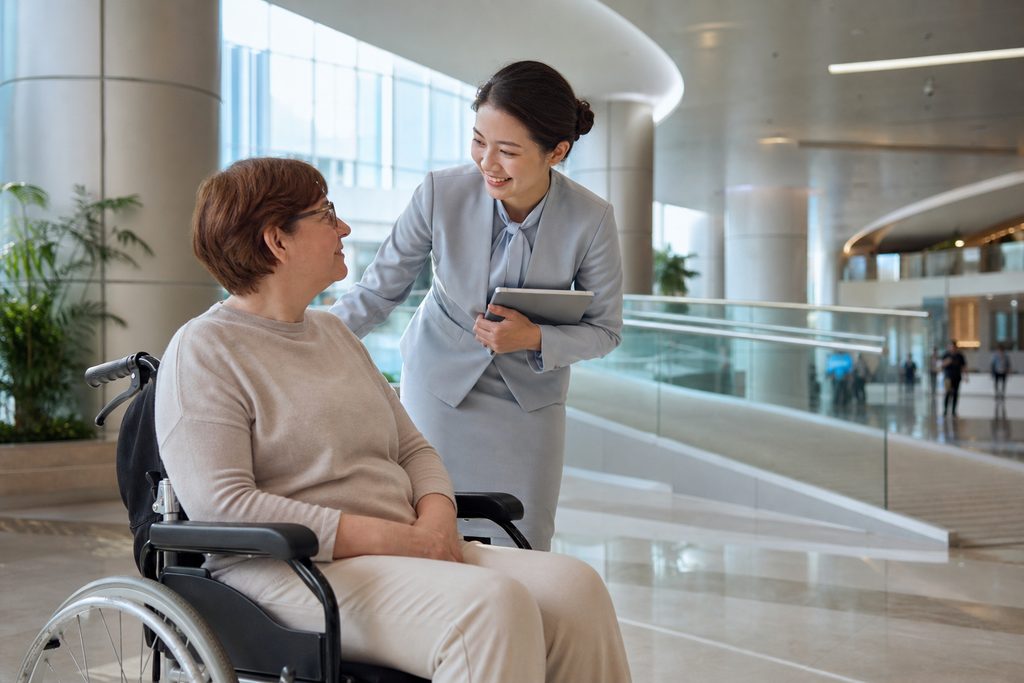
You have probably heard that traveling abroad for a major surgery while using a wheelchair is impossibly complicated. The logistics alone feel overwhelming. But the reality has shifted. For patients facing years-long wait times or prohibitive costs at home, a structured, full-service path now exists. The key is understanding that knee replacement for wheelchair users cost China is not just about a lower number on a hospital bill. It is about a system designed to handle high-volume, complex cases with dedicated coordination that starts before you ever leave your home.
Key Takeaways
- Top-tier Chinese orthopedic centers perform thousands of knee replacements annually, with surgeons often completing 200–500 procedures per year—volumes that consistently correlate with fewer complications.
- Full-service coordination handles wheelchair-accessible transport, hospital admission, bilingual accompaniment, and rehabilitation lodging as a single workflow, removing the need for patients to piece together logistics alone.
- Hospitals in China’s public system are high-volume environments with limited English-speaking staff; without a dedicated coordinator, navigating registration, imaging, and ward transfers from a wheelchair is genuinely difficult.
- Any decision should begin with a remote written second opinion from the target hospital, using your existing X-rays and medical records, to confirm surgical candidacy and a realistic recovery plan before committing to travel.
The Problem: When Mobility Loss Meets a Broken Healthcare Queue
Knee osteoarthritis severe enough to require replacement does not politely wait for a surgery slot. For someone already using a wheelchair due to end-stage joint destruction, every month of delay means further muscle atrophy, increased dependence on caregivers, and a shrinking window for meaningful recovery. In Canada, the median wait time from specialist referral to total knee arthroplasty reached 23.6 weeks in 2023, and that number stretches far longer in certain provinces. The UK’s NHS reports that nearly 30% of patients wait over 18 weeks from referral to treatment. For a wheelchair user, waiting half a year or more is not just inconvenient. It is physically degenerative.
In the United States, the barrier is different but equally brutal. The average cash price for a total knee replacement without complications hovers around $35,000 to $50,000. For uninsured patients or those with high-deductible plans, that number is a wall. And none of that includes the cost of accessible lodging, extended physical therapy, or the home modifications many wheelchair users need post-operatively. The patient is stuck: wait until their condition worsens, or drain their savings. That binary choice is what drives thousands of patients each year to look beyond their borders.
Why High-Volume Chinese Orthopedic Centers Deliver Results
The structural advantage is straightforward. China’s top public hospitals operate at a scale that fundamentally changes the surgeon’s learning curve. When a single orthopedic department performs over 1,500 knee replacements annually, the surgical team encounters complications, anatomical variations, and complex revision cases with a frequency that smaller centers simply cannot match. This is not a theory. A 2023 study published in The Journal of Arthroplasty analyzing over 600,000 total knee arthroplasties found that surgeons performing more than 100 cases annually had significantly lower 90-day complication rates compared to low-volume peers. Many attending surgeons in China’s Fudan-ranked orthopedic departments are operating at two to five times that threshold.
Clinical Volume Drives Better Outcomes for Complex Patients
A wheelchair-bound patient presents specific challenges: often worse preoperative deformity, poorer bone quality from years of disuse, and higher risk of intraoperative fracture. These are precisely the cases where surgeon experience matters most. A surgeon who has managed 50 similar complex primaries in the past year approaches the case differently than one who sees a handful annually. The data supports this. Research from the Lancet Commission on Global Surgery has repeatedly identified surgical volume as an independent predictor of lower mortality and revision rates. In China, the concentration of complex cases at major referral centers means the team has already seen your situation before. Multiple times. This month.
Technology Deployed at Scale, Not as a Marketing Line
Computer-navigated knee replacement and robotic-arm assisted surgery are not niche offerings at China’s flagship hospitals. They are standard tools deployed in high-throughput operating theaters. Peking University Third Hospital, for instance, integrates computer navigation into its routine joint replacement workflow to improve component alignment in patients with severe deformities—exactly the presentation common among long-term wheelchair users. Better alignment means less wear, lower revision risk, and a joint that feels more stable during the critical first weeks of mobilization. For a patient who has not walked in years, that mechanical precision translates directly into confidence when standing for the first time.
Cost Advantage Without Quality Compromise
Let us address the elephant in the room directly. A total knee replacement at a top-tier Chinese public hospital typically ranges from $12,000 to $20,000 USD for international patients, depending on implant choice and length of stay. That is roughly one-third to one-half of the US cash price. The reason is structural, not a reflection of quality. China’s hospital infrastructure is subsidized differently, surgeon compensation models are not tied to fee-for-service billing the way they are in the US, and implant costs are lower due to domestic manufacturing and centralized procurement policies. The clinical outcomes data tells the same story. A 2022 registry-based study comparing Asian and Western total knee arthroplasty cohorts published in Clinical Orthopaedics and Related Research found no significant difference in 5-year implant survival rates when controlling for patient characteristics. The quality is equivalent. The price is not.
Can Wheelchair-Bound Patients Get Knee Replacement in China? Eligibility and the Gateway Process
The short answer is yes, but candidacy is determined case by case. No responsible surgeon will operate without first reviewing your medical records, imaging, and a detailed history. This is where the remote evaluation process becomes critical. The typical workflow begins with a written second opinion. You submit your existing knee X-rays (weight-bearing AP and lateral views are essential), a recent set of lab work including inflammatory markers and complete blood count, and a thorough medication list. The Chinese orthopedic team reviews these materials and provides a written analysis: whether surgery is indicated, what specific approach they recommend, and whether any preoperative optimization is needed first.
For wheelchair users, the team pays particular attention to several factors. The degree of flexion contracture matters—a knee that has been fixed in a bent position for years requires a different surgical approach and a longer, more careful rehabilitation. Bone density is another red flag. Years of non-weight-bearing frequently lead to significant osteopenia, which may influence implant choice. And cardiovascular status must be cleared for surgery, since deconditioning from prolonged wheelchair use can mask underlying issues. None of these are automatic disqualifiers. But they must be identified and planned for before you board a plane.
How Does Full Service Knee Surgery Coordination Work in China for Wheelchair Users
This is where the concept of medical facilitation shifts from a luxury to a necessity. A full-service coordination model handles the entire chain: hospital selection and appointment scheduling, visa documentation support, wheelchair-accessible airport transfer, hospital admission paperwork, bilingual accompaniment through every consultation and imaging appointment, and discharge to an accessible rehabilitation facility or hotel. It is not a concierge. It is a logistics layer that sits between you and a healthcare system that was not designed for foreign patients who cannot walk.
The coordination typically begins 4 to 6 weeks before your intended travel date. After the remote second opinion confirms surgical candidacy, the coordination team works with the hospital’s international department to secure a surgery slot. This is not queue-jumping. It is scheduling through the hospital’s official international patient channel, which operates in parallel to the domestic outpatient system. The team then issues the documentation needed for your S2 visa application—a short-stay visa used for private medical treatment in China. Meanwhile, they confirm accessible ground transportation with a vehicle that can accommodate a wheelchair without requiring a transfer to a standard seat, and they book accommodation equipped with a roll-in shower and grab bars near the hospital.
Once you land, the bilingual medical companion meets you at the airport. This person is not a translator on a phone. They are physically present for every step: the initial surgical consultation, the preoperative blood work and ECG, the anesthesia assessment, the admission to the orthopedic ward, and the postoperative rehabilitation sessions. They also handle the practical friction that wears down patients: paying for imaging at a separate window, picking up medications from the hospital pharmacy, coordinating with the nursing station about dietary needs. For a wheelchair user, these small logistical tasks compound quickly. Having someone handle them is the difference between a focused recovery and a draining ordeal.
Accessible Knee Surgery Packages for Disabled Patients Abroad: What a Coordinated Plan Actually Includes
The term “package” is often misused to imply a fixed-price, one-size-fits-all product. Realistically, no ethical provider can offer that for a surgery as variable as a knee replacement in a wheelchair-dependent patient. What you should expect instead is a structured plan with transparent line items that can be adjusted based on your medical needs. A well-designed coordination plan for international knee replacement for immobile patients typically covers several distinct components.
| Coordination Component | What It Covers | Typical Timing |
|---|---|---|
| Remote Written Second Opinion | Review of existing X-rays, labs, and history by the target hospital’s orthopedic team; written surgical candidacy assessment | 2–3 weeks before travel decision |
| Visa Documentation Support | Official hospital invitation letter and treatment plan summary for S2 visa application | 3–4 weeks before travel |
| Wheelchair-Accessible Airport Transfer | Vehicle equipped with ramp or lift; direct transport to hospital or hotel without passenger transfer | Day of arrival |
| Bilingual Medical Companion | In-person accompaniment for all consultations, admissions, imaging, pharmacy visits, and rehab sessions | Daily during hospital stay and key outpatient visits |
| Hospital Admission Coordination | Registration, deposit payment, ward orientation, nursing communication regarding mobility needs | Day of admission |
| Accessible Accommodation Arrangement | Booking of hotel or serviced apartment with roll-in shower, grab bars, and elevator access near the hospital | 2 weeks before arrival through discharge |
| Post-Discharge Rehabilitation Liaison | Coordination with hospital-affiliated physiotherapy department or nearby rehab center; scheduling of follow-up X-rays and surgeon review | 2–6 weeks post-operatively |
This is not a bundled price that includes the hospital’s surgical fee, implant cost, or anesthesia charge. Those are paid directly to the hospital according to its international patient rate schedule. The coordination service fee is separate and covers the logistics layer. The distinction matters. It means you are not paying a markup on your surgery. You are paying separately for the navigation layer that makes the surgery possible.
Practical Considerations: Mobility, Documentation, and the Recovery Timeline
Planning to book knee replacement surgery China with disability support requires a realistic timeline. This is not a one-week trip. The typical inpatient stay for a primary total knee replacement in China is 5 to 7 days, during which time the surgical team monitors wound healing, manages pain, and begins the first phase of mobilization. For a patient who has been wheelchair-dependent, this initial mobilization is often slower and more deliberate. The physical therapy team will work on range-of-motion exercises, gradual weight-bearing with a walker, and transfers from bed to chair.
After discharge, most international patients move to a nearby accessible hotel or serviced apartment rather than flying home immediately. The reason is practical: the highest-risk period for deep vein thrombosis and surgical site infection is the first two to three weeks post-operatively. Staying within reach of the surgical team for at least two weeks after discharge allows for wound checks, suture or staple removal, and a follow-up X-ray to confirm implant position before you board a long-haul flight. That flight itself carries a temporarily elevated DVT risk, and your surgeon will want to clear you for travel. Expect to remain in China for a total of 4 to 6 weeks from admission to departure.
Documentation is non-negotiable. You will need your passport with at least six months of remaining validity, the hospital’s invitation letter for the S2 visa, a detailed medical summary from your home physician, and all original imaging on CD or USB. Digital copies sent by email are helpful for the initial review, but the surgical team will want to load the original DICOM files into their planning software. Bring a medication list that includes generic drug names, dosages, and prescribing indications. And bring a caregiver. Even with full-service coordination, the physical and emotional demands of major surgery in a foreign country are significant. A family member or friend who can stay with you through the hospital admission and early recovery is invaluable.
Frequently Asked Questions
This is the scenario that keeps patients awake at night, and it is exactly why the remote written second opinion is the mandatory first step. A reputable coordination service will not book your travel until the Chinese surgical team has reviewed your imaging and labs and confirmed in writing that surgery is indicated. The remote evaluation is not a guarantee of outcome, but it filters out the cases where surgery would be inappropriate or dangerous. If the team identifies a reversible barrier—uncontrolled diabetes, a low-grade infection, severe anemia—they will tell you before you travel so you can address it at home first.
You will leave China with a detailed discharge summary in English, a copy of your operative note, and a USB containing your pre- and post-operative X-rays. These documents are designed to be handed directly to your local orthopedic surgeon or primary care physician for continuity of care. Before you travel, identify a local provider who is willing to accept post-operative care for a surgery performed abroad. Some surgeons are hesitant to do this. Having the remote second opinion report and the Chinese surgeon’s contact information available for peer-to-peer consultation often eases that hesitation. The coordination team can facilitate a handover call if needed.
The honest answer is that it depends on why you were in the wheelchair. If the primary reason was severe knee osteoarthritis with fixed flexion deformity and pain that made weight-bearing impossible, then knee replacement can be transformative. Many patients who were wheelchair-bound due to joint destruction alone do walk independently with a walker within weeks and progress to a cane within months. But if the wheelchair use was driven by neurological conditions, severe spinal pathology, or advanced cardiopulmonary disease, the knee replacement will fix the knee—it will not fix the other problems. The remote evaluation specifically looks for these distinctions. The goal is to align expectations with reality before a single incision is made.
Top-tier Chinese hospitals manage complications according to international standard protocols. The orthopedic department has in-house access to interventional radiology for suspected pulmonary embolism, infectious disease consultation for suspected joint infection, and revision surgery capability if mechanical issues arise. The coordination team’s role during a complication is to ensure clear communication between the medical team, the patient, and the family—and to assist with any extended stay logistics. This is not a scenario anyone wants, but it is one for which the system is prepared.
Your Next Step
The decision to travel internationally for a knee replacement while using a wheelchair is weighty and personal. It should begin with information, not marketing. Our team at China Medical Services connects you directly with orthopedic departments at China’s top-ranked hospitals for an independent written second opinion. We are not a hospital and we do not provide medical advice. We handle the logistics layer—documentation, scheduling, accessible transport, and bilingual accompaniment—so that you can focus entirely on your recovery. When you are ready to explore whether this path makes sense for your specific situation, request a free initial consultation. There is no cost and no commitment. Just a clear, evidence-based conversation about what is possible.
For more medical information and treatment options in China, visit chinamedservices.com (China Medical Services).
